Digital transformation failures often trace back to C-level leadership gaps. In Saudi Arabia and the UAE, executives face unique pressures: aligning technology investments with Vision 2030 and AI Strategy 2031, navigating multicultural teams, and driving operational efficiency amid rapid market shifts. This guide unpacks the leadership strategies, workforce development priorities, and governance frameworks that separate successful transformations from costly failures.
Table of Contents
- Prerequisites: Aligning Leadership With Vision 2030 And Workforce Development
- Leadership Roles And Responsibilities In Digital Transformation
- Technology Leadership And Tools For Transformation
- Stepwise Leadership Process For Guiding Transformation
- Common Mistakes To Avoid And Recovery Strategies
- Expected Results And Outcomes: Metrics And Success Benchmarks
- Transform Your Digital Leadership With Singleclic Solutions
- Frequently Asked Questions
Key Takeaways
| Point | Details |
|---|---|
| Vision alignment drives success | Leadership aligned with Vision 2030 and AI Strategy 2031 increases transformation credibility and funding access. |
| Adaptive management boosts adoption | Inclusive leadership raises success rates by 40% through culturally aware change management. |
| Technology accelerates efficiency | AI, cloud, and WhatsApp Business API integration improve communication efficiency over 35% in KSA and UAE enterprises. |
| Communication mistakes derail projects | Poor cross-cultural communication reduces adoption by 35%, making structured dialogue critical. |
| Clear KPIs validate progress | Track operational efficiency gains, workforce upskilling completion, and alignment metrics to measure transformation ROI. |
Prerequisites: Aligning Leadership with Vision 2030 and Workforce Development
Before launching transformation initiatives, you need foundational alignment. Your strategy must map directly to Saudi Vision 2030 or the UAE AI Strategy 2031. These national agendas shape funding, regulatory compliance, and stakeholder expectations. 88% of CEOs in Saudi Arabia express high confidence in growth prospects linked to digital transformation aligned with Vision 2030 reforms. That confidence translates into board approvals and budget allocations.
Workforce readiness remains a bottleneck. Many teams lack cloud computing skills, data analytics expertise, or AI literacy. Prioritize upskilling in these areas for 2026. Partner with regional training institutes or deploy microlearning platforms to close gaps quickly. A digital transformation roadmap for MENA helps identify skill deficits before they stall projects.
Governance structures matter equally. Establish data compliance protocols that meet local regulations, including PDPL in Saudi Arabia and data residency rules in the UAE. Secure stakeholder buy-in early by demonstrating how transformation initiatives support national economic diversification goals. Without these prerequisites, even the best technology fails to deliver.
Key readiness checklist:
- Documented alignment between transformation goals and Vision 2030 or AI Strategy 2031 objectives
- Skills gap analysis for cloud, AI, and data analytics across leadership and frontline teams
- Data governance framework addressing PDPL compliance and cross-border data flows
- Stakeholder map showing executive sponsors, change champions, and resource allocation
Leadership Roles and Responsibilities in Digital Transformation
Your role as a C-level leader extends beyond approving budgets. You must articulate a clear vision that connects transformation outcomes to business strategy. Leaders in Saudi Arabia and UAE must combine visionary strategy with adaptive change management to guide digital transformation effectively. That means translating technical jargon into business impact for boards and frontline managers alike.
Adaptive change management separates successful leaders from those who watch projects collapse. You cannot impose rigid timelines on complex cultural shifts. Instead, monitor adoption signals, adjust communication cadence, and empower middle managers to surface roadblocks. Inclusive leadership styles that respect cultural nuances in KSA and UAE workplaces increase transformation success rates by 40%. This requires active listening sessions, multilingual communication plans, and recognition programs that celebrate incremental wins.
Communication skills matter more than technical expertise. Your ability to lead multicultural teams directly impacts adoption velocity. Saudi and Emirati teams value hierarchy and relationship building, while expatriate staff may expect faster decision cycles. Bridge these expectations through structured check-ins and transparent progress dashboards. A digital transformation roadmap for C-level success provides frameworks for balancing diverse team dynamics.
Core leadership responsibilities:
- Articulate transformation vision in terms of customer outcomes, revenue growth, and operational efficiency gains
- Champion workforce development by allocating budget for training and creating learning time within work schedules
- Model adaptive behavior by publicly adjusting plans based on frontline feedback and pilot results
- Build coalitions across departments to prevent siloed transformation efforts that duplicate costs
Pro Tip: Schedule monthly “transformation town halls” where you answer unfiltered questions from all levels. This transparency builds trust and surfaces hidden resistance before it derails timelines. Understanding the role of digital leaders in KSA helps contextualize these responsibilities within regional expectations.
Technology Leadership and Tools for Transformation
AI and automation form the backbone of operational efficiency gains. Deploy AI for predictive maintenance in manufacturing, customer service chatbots in retail, or fraud detection in banking. These applications reduce manual workload and accelerate decision cycles. The WhatsApp Business API integration in KSA and UAE increased operational communication efficiency by over 40% for large enterprises by automating customer inquiries and internal notifications.

Cloud adoption enables scalability but introduces cybersecurity and data sovereignty challenges. Choose providers with local data centers in Saudi Arabia or the UAE to meet residency requirements. Implement zero-trust security architectures and conduct quarterly penetration tests. Data governance policies must define access controls, encryption standards, and incident response protocols before migration begins.
Below is a comparison of key digital leadership tools and their measured impact:
| Tool Category | Primary Use Case | Efficiency Gain | Implementation Complexity |
|---|---|---|---|
| AI Decision Support | Predictive analytics for supply chain and demand forecasting | 50% faster decision cycles | Medium – requires clean data pipelines |
| Cloud ERP (Odoo, Dynamics 365) | Unified financial, HR, and operations management | 30% operational cost reduction | High – needs process redesign |
| RPA (UiPath) | Automate repetitive tasks like invoice processing | 60% time savings on manual processes | Low – modular deployment |
| WhatsApp Business API | Customer service automation and internal notifications | 40%+ communication efficiency | Low – API integration with CRM |
| Low-Code Platforms (Cortex) | Rapid app development without coding | 70% faster app delivery | Medium – requires training |
Pro Tip: Start with low complexity, high impact tools like RPA to build organizational confidence. Quick wins fund larger investments in AI and cloud infrastructure. Explore AI in digital transformation to understand implementation nuances, and compare options in top digital transformation tools for 2026.
Stepwise Leadership Process for Guiding Transformation
Follow this ordered sequence to plan, execute, and sustain transformation aligned with Vision 2030 and AI Strategy 2031.
-
Align vision with national strategic agendas. Map each transformation initiative to specific Vision 2030 pillars such as economic diversification, digital government, or smart city development. Document this alignment in business cases to secure funding and regulatory approvals.
-
Assess organizational readiness. Conduct skills gap analysis, technology infrastructure audits, and cultural readiness surveys. Identify departments with high change fatigue or resistance. Prioritize investments in areas with executive sponsorship and operational pain points.
-
Develop comprehensive change management plans. Define communication cadence, training schedules, and incentive structures. Appoint change champions in each department who report adoption metrics weekly. Address cultural nuances by tailoring messaging for Saudi, Emirati, and expatriate audiences.
-
Leverage technology to enhance decisions and efficiency. Deploy AI for data-driven insights, cloud platforms for collaboration, and automation for repetitive tasks. Integrate systems using APIs to eliminate data silos. A step by step digital transformation roadmap details integration best practices.
-
Invest in continuous workforce training and cultural adaptation. Launch microlearning modules on new tools, host quarterly skill refreshers, and create mentorship programs pairing digital natives with senior staff. Celebrate learning milestones publicly to normalize ongoing development.
-
Monitor KPIs rigorously and adjust leadership approach. Track metrics like:
- System adoption rates across departments
- Time saved on manual processes
- Employee satisfaction scores post-training
- Alignment score with Vision 2030 milestones
Review dashboards monthly with leadership teams and pivot strategies when metrics plateau or decline.
Common Mistakes to Avoid and Recovery Strategies
Neglecting change management causes 70% of transformation failures globally. Leaders often focus on technology while ignoring the human side of adoption. Without structured communication, training, and incentives, employees revert to legacy processes. Strong communication and management skills tailored to multi-cultural teams increase project adoption rates by 35% in Saudi Arabia and the UAE. Recovery strategy: pause rollouts, conduct listening sessions to surface concerns, and co-create solutions with frontline teams.
Poor communication across multicultural teams reduces adoption velocity. Saudi and UAE workforces include locals, Arab expatriates, and international staff with different communication preferences. Relying solely on English emails alienates Arabic-speaking employees. Recovery strategy: implement multilingual communication plans, use visual dashboards, and host in-person town halls with live translation.
Underestimating workforce development delays progress. Leaders assume employees will self-learn new tools, but most need guided training. Skills gaps in AI, cloud, and data analytics persist when training budgets get cut. Recovery strategy: reallocate 10% of transformation budget to training, partner with local universities for certification programs, and track skill acquisition as a core KPI.
Ignoring Vision 2030 alignment risks funding and project viability. Government incentives, grants, and procurement preferences favor initiatives that support national strategies. Projects disconnected from these agendas face budget scrutiny. Recovery strategy: retrofit existing projects by documenting their contribution to economic diversification, job creation, or digital government goals. Engage with leading digital transformation growth frameworks to strengthen alignment narratives.
Pro Tip: Create a “transformation risk register” updated monthly, listing top 5 risks and mitigation plans. Share it transparently with leadership teams to normalize course correction. Learn from managing multicultural teams effectively to preempt communication breakdowns.
Expected Results and Outcomes: Metrics and Success Benchmarks
Operational efficiency improvements of up to 30% signal effective leadership. Track cost per transaction, cycle time for approvals, and error rates in financial reporting. These metrics validate that new systems deliver tangible value. Inclusive leadership styles that respect cultural dynamics raise digital adoption success rates by 40%, measured through system login frequency, feature usage depth, and employee satisfaction surveys.
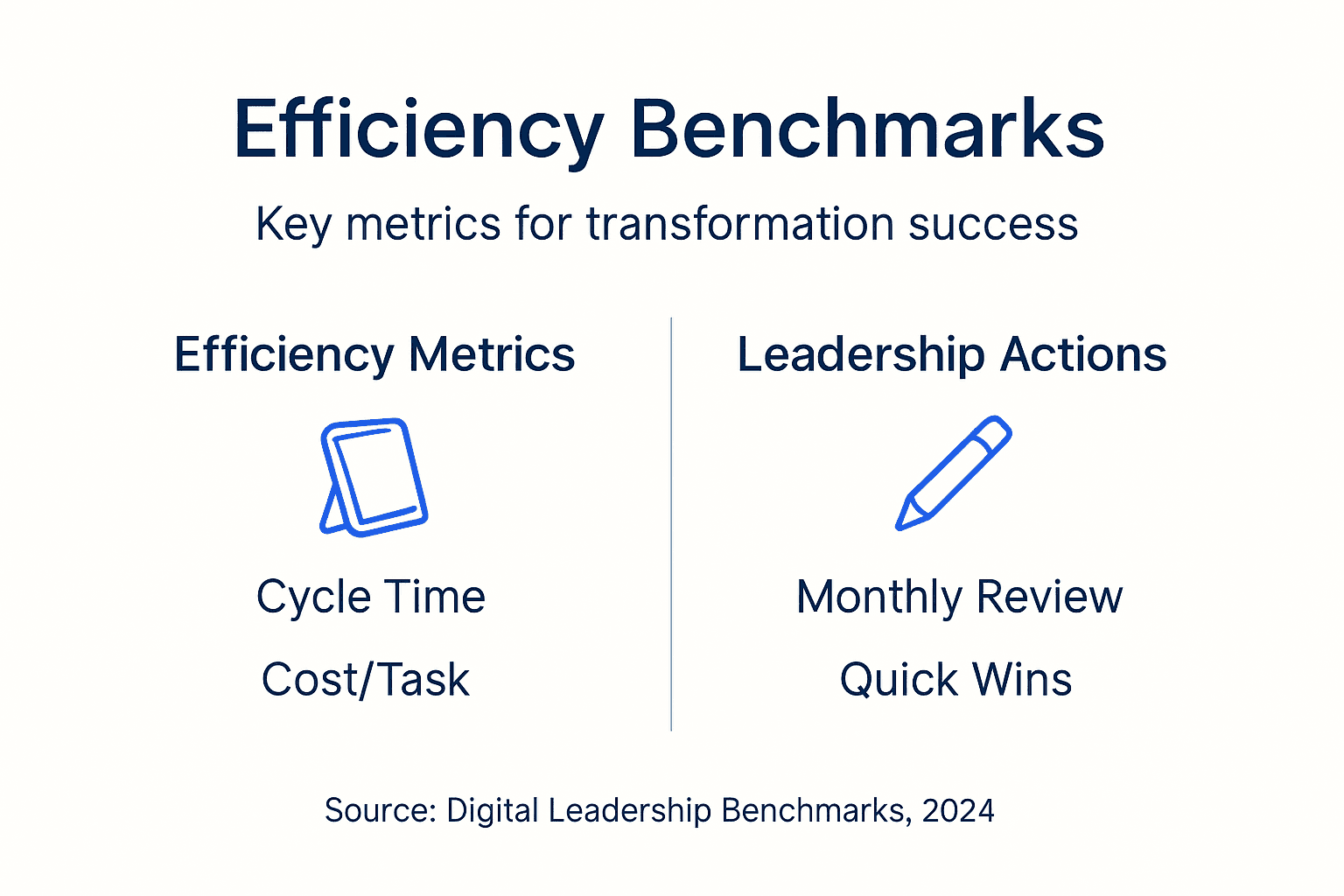
AI-driven tools reduce decision-making time by 50% when integrated properly. Monitor the time from data request to executive decision across functions like procurement, HR, and sales. Shorter cycles enable faster market responses and competitive advantage. Communication improvements over 35% within teams manifest as reduced email volume, faster issue resolution, and higher meeting effectiveness scores.
Sustainability requires ongoing alignment with Vision 2030 and AI Strategy 2031. Measure this through:
- Percentage of transformation budget allocated to Vision 2030 aligned initiatives
- Number of projects contributing to national KPIs like non-oil GDP growth or digital service adoption
- Employee retention rates post-transformation, indicating cultural integration success
Below are key metrics and success benchmarks to track:
| Metric | Target Benchmark | Measurement Frequency | Success Indicator |
|---|---|---|---|
| Operational Efficiency Gain | 20-30% cost reduction | Quarterly | Sustained improvement over 2 years |
| Digital Adoption Rate | 80%+ active system users | Monthly | Consistent usage across all departments |
| Decision-Making Speed | 50% faster from data to action | Quarterly | Reduced approval cycle times |
| Communication Efficiency | 35%+ improvement in team collaboration scores | Bi-annually | Higher employee satisfaction ratings |
| Vision 2030 Alignment | 100% of major projects mapped to national goals | Annually | Maintained funding and regulatory support |
| Workforce Upskilling | 90% completion of required training modules | Quarterly | Reduced skill gap incidents |
Review these metrics in monthly leadership meetings. Adjust strategies when any metric falls below target for two consecutive periods. Explore digital transformation success factors to refine your measurement approach.
Transform Your Digital Leadership with Singleclic Solutions
Leading transformation demands more than vision. You need tools that automate workflows, AI that accelerates decisions, and partners who understand KSA and UAE regulatory landscapes. Singleclic delivers end-to-end solutions tailored for C-level executives driving operational efficiency.
Our business process automation guide shows how to eliminate manual bottlenecks using IBM BAW and UiPath RPA. Integrate AI into your ERP systems to unlock predictive insights. Learn how the role of AI in ERP transforms financial planning and inventory management. Before selecting platforms, assess ERP readiness to avoid costly missteps.
With 60+ enterprise clients including QNB and Dubai Healthcare City, we combine technology excellence with regional expertise. Let us help you meet Vision 2030 goals and sustain competitive advantage.
Frequently Asked Questions
What specific leadership skills matter most for digital transformation in KSA and UAE?
Visionary strategic thinking, adaptive change management, and multicultural communication top the list. You must translate technical initiatives into business outcomes and navigate diverse team dynamics. Inclusive leadership styles that respect hierarchy while encouraging innovation drive 40% higher adoption rates.
How do I upskill my workforce for AI and cloud technologies in 2026?
Partner with regional training providers offering certifications in AWS, Azure, and AI tools. Deploy microlearning platforms for on-demand skill development. Allocate 10% of transformation budget to training and track completion rates as a core KPI. Create mentorship programs pairing digitally skilled staff with those needing support.
Which technology tools deliver the fastest ROI in MENA markets?
RPA tools like UiPath offer 60% time savings on manual processes with low implementation complexity. WhatsApp Business API improves communication efficiency by 40%+ with minimal setup. Start with these quick wins to build organizational confidence before tackling complex AI or cloud migrations.
How do I measure if my transformation aligns with Vision 2030 goals?
Map each initiative to specific Vision 2030 pillars such as economic diversification or digital government. Track the percentage of your transformation budget allocated to aligned projects. Monitor whether initiatives contribute to national KPIs like non-oil GDP growth or digital service adoption rates.
What should I do if employee adoption rates remain low after launch?
Pause further rollouts and conduct listening sessions to surface concerns. Co-create solutions with frontline teams rather than imposing top-down fixes. Enhance multilingual communication, increase training frequency, and recognize early adopters publicly. Adjust incentive structures to reward system usage and skill development.
How can I recover from poor communication mistakes during transformation?
Implement multilingual communication plans covering Arabic and English. Use visual dashboards to track progress transparently. Host in-person town halls with live translation to address concerns directly. Appoint change champions in each department to facilitate two-way dialogue and surface hidden resistance early.