Only a small fraction of digital transformation efforts succeed, yet many C-level executives in Saudi Arabia’s construction and healthcare sectors still struggle to define what effective digital leadership truly means. With global benchmarks set by American digital leaders, pressure is mounting to move beyond traditional management styles. This guide highlights fresh perspectives and actionable insights, helping leaders drive technology adoption with clarity and confidence in these complex industries.
Table of Contents
- Defining Digital Leadership In Modern Enterprises
- Types And Functions Of Digital Leaders
- Essential Traits For Transformational Success
- Strategic Decision-Making In Construction And Healthcare
- Challenges And Risks In Digital Transformation
- Best Practices For Effective Digital Leadership
Key Takeaways
| Point | Details |
|---|---|
| Digital Leadership Defined | Digital leadership is a strategic mindset that blends technical understanding, strategic thinking, and interpersonal skills to guide organizations through technological change. |
| Roles of Digital Leaders | Key digital leader roles include Chief Digital Officer, Technology Architect, and Digital Innovation Manager, each driving different aspects of digital transformation. |
| Essential Traits for Success | Successful digital leaders exhibit pragmatism, sustainability, and strong communication skills, enabling effective navigation of complex technological landscapes. |
| Challenges in Digital Transformation | Organizations face risks like cultural resistance and cybersecurity threats, necessitating comprehensive risk management strategies during digital transitions. |
Defining Digital Leadership in Modern Enterprises
Digital leadership represents a transformative approach to organizational management, specifically tailored for technology driven environments. Emerging research demonstrates that digital leadership is more than a traditional management role – it is a strategic mindset and behavioral framework designed to navigate complex technological landscapes.
At its core, digital leadership encompasses several critical dimensions that distinguish it from conventional leadership models. These dimensions include strategic technological vision, adaptive decision making, continuous learning orientation, and the ability to drive organizational change through digital innovation. Leaders in this domain must possess a unique blend of technical understanding, strategic thinking, and interpersonal skills that enable them to guide teams through rapid technological transformations.
In the context of Saudi Arabia and regional markets like the United Arab Emirates, digital leadership takes on additional significance. Organizations are increasingly recognizing that effective digital leaders can leverage technologies like low code platforms – such as Cortex – to accelerate business process optimization and create more agile operational models. The most successful digital leaders understand that technological implementation is not just about tools, but about creating a holistic ecosystem of innovation, collaboration, and continuous improvement.
Pro tip: Develop a continuous learning mindset by dedicating at least 5 hours per week to understanding emerging technological trends and their potential business applications.
Types and Functions of Digital Leaders
In the rapidly evolving technological landscape, digital leaders emerge as multifaceted professionals with diverse roles and strategic functions. Recent research exploring digital leadership roles reveals a complex taxonomy of leadership types, each tailored to address specific organizational digital transformation needs.
The primary types of digital leaders can be categorized into several key archetypes. The Chief Digital Officer focuses on overall digital strategy and transformation, bridging technological innovation with business objectives. Technology Architects design complex digital infrastructures, ensuring seamless system integration and scalability. Digital Innovation Managers drive creative technological solutions, continuously exploring emerging technologies like artificial intelligence, blockchain, and low code platforms such as Cortex. Data Strategy Leaders specialize in leveraging data analytics, transforming raw information into strategic insights that guide organizational decision making.
In the Saudi Arabian and United Arab Emirates markets, digital leaders play a crucial role in driving technological adoption and creating adaptive organizational cultures. These professionals must possess a unique combination of technical expertise, strategic thinking, and change management skills. They are responsible for not just implementing new technologies, but fundamentally reimagining business processes, creating more agile and responsive organizational structures that can quickly adapt to technological disruptions.

Below is a comparison highlighting digital leadership roles and their organizational impact:
| Digital Leader Type | Main Responsibility | Business Impact |
|---|---|---|
| Chief Digital Officer | Drives overall digital strategy | Accelerated digital transformation |
| Technology Architect | Designs digital infrastructures | Reliable and scalable systems |
| Digital Innovation Manager | Leads technology-driven innovations | Faster adoption of new solutions |
| Data Strategy Leader | Harnesses data for decision making | Data-driven business growth |
Pro tip: Develop a comprehensive digital skills portfolio by regularly participating in cross-functional technology workshops and maintaining certifications in emerging digital transformation methodologies.
Essential Traits for Transformational Success
Comprehensive research on digital leadership competencies reveals six critical traits that distinguish successful transformational leaders in the digital era. These essential characteristics go beyond traditional management approaches, requiring a holistic and adaptive mindset that can navigate complex technological landscapes.
The six core competencies of transformational digital leaders include being pragmatic, sustainable, facilitative, communicative, catalytic, and informed. Each trait plays a crucial role in driving organizational change. Pragmatism ensures leaders make realistic technological decisions, while sustainability focuses on long-term strategic impacts. Facilitative skills enable leaders to create collaborative environments that support digital innovation, particularly in regions like Saudi Arabia and the United Arab Emirates where technological adoption is rapidly evolving. The communicative trait emphasizes the importance of clear, transparent communication during digital transformation processes, helping teams understand and embrace technological changes.
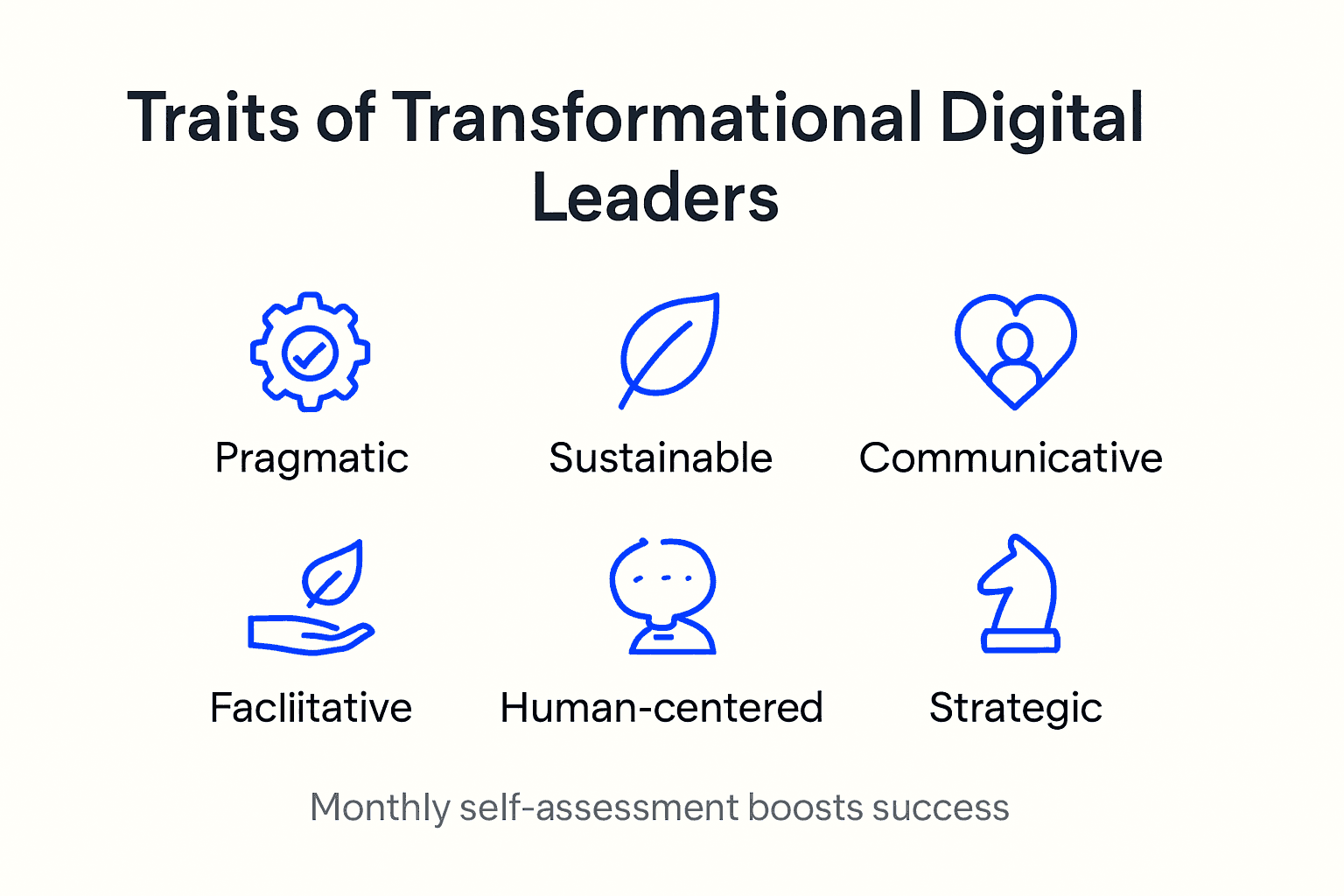
Beyond these core competencies, successful digital leaders must also demonstrate advanced human-centered skills. This includes developing a vision that motivates teams, empowering innovation across organizational boundaries, and maintaining dynamic adaptability. In practice, this means being able to leverage tools like low code platforms such as Cortex, understanding complex technological ecosystems, and creating organizational cultures that embrace continuous learning and technological evolution.
Pro tip: Conduct a monthly self-assessment of your digital leadership competencies, identifying areas for improvement and creating targeted development plans to enhance your transformational capabilities.
Strategic Decision-Making in Construction and Healthcare
Leadership competencies in digital transformation have become increasingly complex, demanding strategic approaches that transcend traditional management methodologies. In the rapidly evolving sectors of construction and healthcare in Saudi Arabia and the United Arab Emirates, digital leaders must navigate intricate technological landscapes while maintaining operational excellence and innovation.
In the construction industry, strategic decision-making requires a comprehensive set of competencies including advanced software proficiency, strategic thinking, robust leadership skills, and technological adaptability. Digital leaders must leverage tools like low code platforms such as Cortex to streamline project management, enhance communication, and optimize complex workflows. Similarly, in healthcare, digital leadership demands a nuanced approach that balances technological innovation with patient-centric care. Leadership 4.0 competencies emphasize digital literacy, emotional intelligence, and the ability to foster continuous learning cultures that can rapidly adapt to technological shifts.
The intersection of strategic decision-making in construction and healthcare reveals common challenges and opportunities. Both sectors require leaders who can effectively integrate emerging technologies, manage digital transformation risks, and create organizational cultures that embrace innovation. This involves developing advanced capabilities in data analytics, understanding complex technological ecosystems, and creating adaptive strategies that can respond quickly to technological disruptions and market changes.
Here is a summary of strategic decision-making requirements in construction and healthcare sectors:
| Sector | Key Competencies Required | Example Benefit |
|---|---|---|
| Construction | Software proficiency, adaptability | Streamlined project management |
| Healthcare | Digital literacy, emotional intelligence | Improved patient care and efficiency |
Pro tip: Develop a quarterly technology scanning process to systematically evaluate emerging digital technologies relevant to your specific industry sector, ensuring proactive rather than reactive technological adaptation.
Challenges and Risks in Digital Transformation
Systematic research on digital transformation risks reveals a complex landscape of challenges that organizations in Saudi Arabia and the United Arab Emirates must navigate carefully. The high failure rate of digital projects underscores the critical need for comprehensive risk management strategies that address technological, cultural, and strategic dimensions of organizational change.
Key risks in digital transformation span multiple domains. Cultural resistance emerges as a primary challenge, where employees may struggle to adapt to new technological systems and workflows. Technological integration issues can create significant operational disruptions, particularly when implementing complex solutions like low code platforms such as Cortex. Stakeholder misalignment further compounds these challenges, as different organizational levels may have conflicting perspectives on digital strategy and implementation approaches.
Cybersecurity represents another critical risk dimension in digital transformation efforts. Organizations must develop robust security frameworks that protect against potential data breaches and cyber attacks while maintaining operational efficiency. This requires a holistic approach that combines technological safeguards, employee training, and continuous risk assessment. In the context of Saudi Arabia’s rapidly digitizing economy, digital leaders must balance innovation with comprehensive risk mitigation strategies that protect organizational assets and maintain stakeholder trust.
Pro tip: Implement a quarterly digital risk assessment process that systematically evaluates technological vulnerabilities, cultural readiness, and strategic alignment across your organization.
Best Practices for Effective Digital Leadership
Research on digital leadership practices reveals a comprehensive framework for transformative leadership in technology driven environments. Effective digital leaders must develop a sophisticated approach that goes beyond traditional management techniques, integrating strategic foresight, technological understanding, and organizational adaptability.
Key best practices encompass several critical dimensions. Strategic governance requires leaders to align technological capabilities with organizational objectives, particularly in regions like Saudi Arabia and the United Arab Emirates undergoing rapid digital transformation. This involves developing a holistic view that integrates technological innovation with broader business strategies. Leaders must cultivate relational capital by fostering collaborative environments, leveraging tools like low code platforms such as Cortex to enhance team communication and productivity. The ability to build connected, adaptive organizational cultures becomes paramount in driving successful digital initiatives.
Technological awareness and continuous learning represent another crucial dimension of effective digital leadership. Leaders must maintain a proactive approach to understanding emerging technologies, developing resource coordination skills that allow for swift implementation of innovative solutions. This requires a balanced approach that combines technical expertise with transformational leadership principles. In practice, this means creating organizational ecosystems that support continuous learning, embrace technological experimentation, and maintain flexibility in the face of rapid technological changes.
Pro tip: Develop a personal learning protocol that dedicates at least 5 hours weekly to exploring emerging technologies, attending virtual conferences, and engaging with digital innovation thought leaders.
Empower Your Digital Leadership Journey with Singleclic
The article highlights the critical challenges digital leaders face in the Kingdom of Saudi Arabia, including navigating complex technological landscapes and driving transformative change with tools like low code platforms such as Cortex. Leaders must overcome cultural resistance, align stakeholders, and ensure agile decision making to accelerate business process optimization and innovation. Singleclic understands these obstacles and offers tailored solutions that empower digital leaders to move beyond digitalization toward true operational optimization.
Unlock your organization’s full potential with Singleclic’s comprehensive digital transformation services. From ERP & CRM Implementation using Odoo and Microsoft Dynamics 365 to Business Process Automation with IBM BAW, our expertise orients your leadership team to successfully manage change and embrace emerging technologies. Discover the power of Cortex, our Arabic-enabled, on-premise low-code platform, designed specifically for MENA enterprises to automate and evolve business processes without writing a single line of code. Visit Singleclic today to begin accelerating your company’s digital leadership capabilities and secure your competitive advantage now.
Frequently Asked Questions
What is digital leadership?
Digital leadership is a transformative approach to organizational management focused on navigating technology-driven environments. It involves a strategic mindset, adaptive decision-making, and the ability to drive change through digital innovation.
What are the key traits of successful digital leaders?
Successful digital leaders possess traits such as pragmatism, sustainability, facilitative skills, strong communication, catalytic abilities, and being well-informed, which help them manage complex technological landscapes effectively.
What roles do digital leaders play in organizations?
Digital leaders fulfill various roles, including Chief Digital Officers who drive overall digital strategy, Technology Architects who design digital infrastructures, and Digital Innovation Managers who lead technological solutions and creative strategies.
How can organizations effectively support their digital leaders?
Organizations can support their digital leaders by fostering a culture of collaboration, providing continuous learning opportunities, and aligning digital strategies with business objectives to enhance agility and innovation.