Telecom order to cash is the revenue engine that turns a customer’s sales order into collected cash, and it works best when built as three TM Forum Open Digital Architecture flows: Order-to-Payment, Request-to-Change, and Termination-to-Confirmation. Get those three flows integrated across CRM, order management, and billing, and cash accelerates on its own.
Three moves fix most of the leakage process managers see today:
- Prioritize CRM → OSM → BRM integration before touching individual point fixes. Disconnected systems are the root cause behind almost every downstream dispute and delay.
- Enforce billing-initiated sequencing so a billing account exists before a service activates. This single rule prevents “zombie services,” active but unbilled, which quietly drain revenue.
- Close the loop between billing and fulfillment with reconciliation jobs that catch orders stuck between systems before they age into write-offs.
Run this as a quick audit:
- Can you trace every order from capture to cash in one system view?
- Does billing get notified before or after provisioning?
- How many days, on average, sit between activation and the first invoice?
If you cannot answer all three confidently, your order to cash process has a structural gap, not just an operational hiccup.
Key Takeaways
Telecom order to cash succeeds when CRM, order orchestration, and billing operate as one integrated flow governed by TMF ODA’s three core processes.
| Point | Details |
|---|---|
| Align to TMF ODA | Structure O2C around Order-to-Payment, Request-to-Change, and Termination-to-Confirmation flows. |
| Sequence billing before provisioning | Use two-phase billing so services never activate without a billing account behind them. |
| Treat changes like new orders | Apply full validation and real-time prorating to every Request-to-Change. |
| Track KPIs by system source | Pull DSO and cash lag from BRM, fallout and cycle time from CRM and OSM. |
| Modernize with integrated tooling | Singleclic connects Cortex, Dynamics 365, and IBM BAW to close CRM-to-billing gaps. |
Table of Contents
- What telecom order-to-cash means inside TM Forum ODA
- Which sub-processes actually make up telecom O2C?
- How should CRM, OSM, and BRM connect in practice?
- What operational habits actually shorten DSO?
- What breaks most often, and how do you fix it fast?
- Which KPIs actually tell you the process is healthy?
- How do you roll out an O2C project without breaking revenue?
- How does Singleclic approach telecom O2C modernization?
- Advanced analytics and AI applications for forecasting, billing accuracy, and dispute management
- Impact of regulatory compliance on the O2C process in telecom
- Customer experience management within the O2C cycle
- Risk management in telecom O2C, including fraud detection and mitigation
- Ready to modernize your telecom billing process?
- Frequently asked questions about telecom order to cash
- Sources
What telecom order-to-cash means inside TM Forum ODA
Telecom order to cash covers everything between “customer signs” and “cash lands in the bank,” and TM Forum’s ODA gives that span a formal shape. It breaks the journey into three flows: Order-to-Payment for new sales, Request-to-Change for modifications, and Termination-to-Confirmation for exits. The O2C journey technically begins the moment a valid sales order exists, not at the quote stage.
Aligning to ODA matters because it standardizes the contract between systems:
- CRM owns order capture and customer data.
- Order and Service Management (OSM) owns orchestration and fulfillment sequencing.
- Billing and Revenue Management (BRM) owns rating, invoicing, and payment application.
That separation of concerns is what makes APIs, event flows, and vendor swaps possible without rebuilding the whole stack each time.
Which sub-processes actually make up telecom O2C?
Order management in telecom is not one process. It is a chain of distinct sub-processes, each with its own failure modes and its own owner.
- Quote-to-order and order capture: converts an approved quote into a submittable order, checking feasibility, credit standing, and KYC requirements before anything moves downstream. Auto Order and Direct Order features carry pricing and approvals forward so nothing gets re-keyed.
- Order orchestration and decomposition: OSM breaks a complex order into suborders and routes each piece to the right fulfillment system.
- Provisioning and fulfillment: resource allocation and service activation, often across multiple network and inventory systems.
- Billing and rating: usage-to-payment conversion, from CDR mediation through invoice generation to cash application.
- Change and termination flows: Request-to-Change and Termination-to-Confirmation, each requiring their own validation and prorating logic.
How should CRM, OSM, and BRM connect in practice?
Picture the flow in three lanes. CRM captures the order and customer intent. An integration layer validates and transforms that order. OSM orchestrates fulfillment, talking to inventory, activation systems, and BRM in whatever sequence the service requires. Payment gateways and the general ledger sit downstream of BRM, closing the loop back to cash.
Oracle’s implementation guidance shows exactly how granular this gets: Siebel CRM creates a SalesOrderABM message, transforms it into an EBM, and enqueues it for OSM to pick up. OSM itself then queries inventory, triggers network activation through ASAP, and generates the billing artifacts BRM needs to open an account.
A few architecture decisions carry outsized weight:
- Mediation and inventory (UIM) sit between the network and billing, translating raw usage into billable events and tracking resource assignment.
- Event-driven integration (JMS queues) suits high-volume order flows better than tightly coupled synchronous calls, since it absorbs traffic spikes without blocking upstream systems.
- Two-phase billing, billing-initiated then billing-fulfilled, costs a bit more integration effort up front but prevents the account-provisioning mismatch that single-phase billing leaves exposed.
Pro Tip: Design your JMS consumers to scale independently of your order capture volume. A holiday promotion spike in CRM orders should never stall the billing queue behind it.
What operational habits actually shorten DSO?
Most telecom revenue cycle problems are not technology failures. They are process gaps that technology then amplifies. A handful of habits consistently move the needle on days sales outstanding and dispute volume.
Enforce validation and feasibility checks at the quote-to-order stage, not after. Every order that falls out of orchestration because of a missing credit check or an infeasible service address costs more to fix downstream than it would have cost to block upfront.
Treat Request-to-Change with the same rigor as a new order. Process managers routinely underestimate this: a plan change or add-on service needs full dependency revalidation and real-time prorating, not a shortcut patch on the existing record.
Adopt two-phase billing as standard practice, not an edge-case configuration. Sequencing billing-initiated records before provisioning closes the gap where services go live with no billing account behind them.
- Automate CDR mediation and run an Online Charging System for prepaid traffic, since real-time authorization stops balance overdrafts before they happen.
- Put cross-functional SLAs in writing between sales, fulfillment, and finance, so nobody assumes another team owns a stalled order.
Pro Tip: If your dispute rate spikes right after a promotional launch, check your Request-to-Change proration logic first. That’s where telecom billing process gaps hide most often.
What breaks most often, and how do you fix it fast?
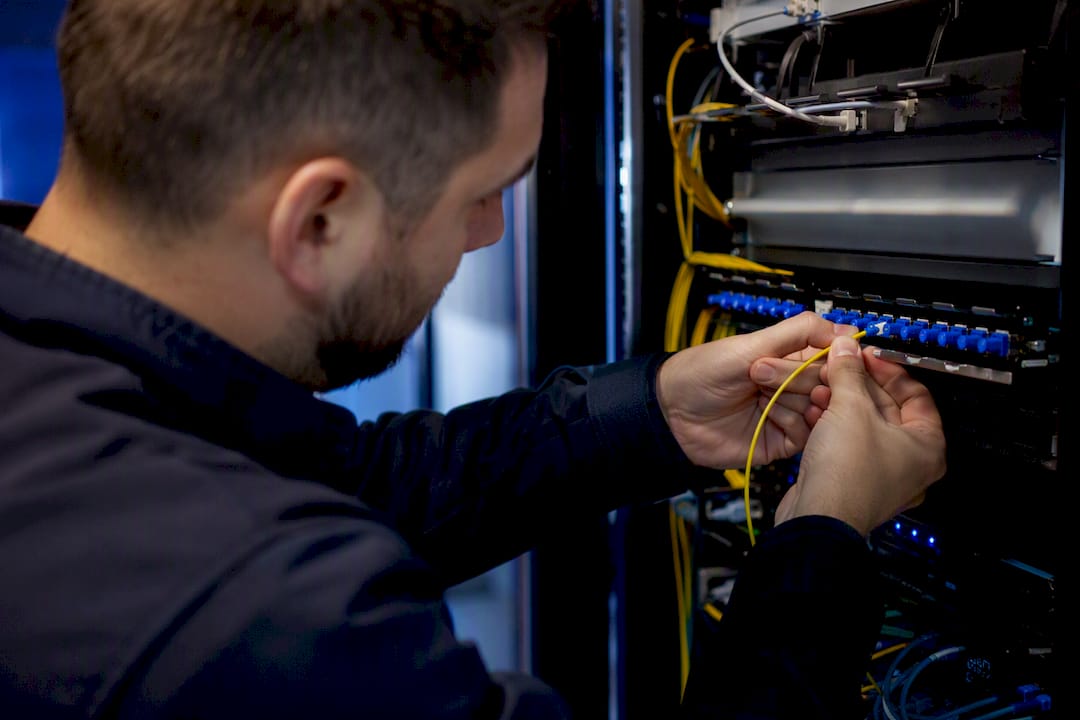
Fulfillment fallout, services activating while billing sits unaware, tops the list of recurring failures. The fix is procedural: enforce billing-initiated sequencing and run daily reconciliation jobs that flag any active service without a matching billing account.
Data quality issues between CRM and BRM cause a close second wave of problems, usually mapping mismatches on product codes or customer identifiers. A canonical data model with explicit transformation rules removes most of this friction at the source.
Interface latency and queued message bottlenecks show up under volume. Splitting large orders into mini-EBMs and scaling consumer capacity independently keeps queues from backing up during peak periods.
Billing disputes and slow cash application usually trace back to unclear invoices. Auto-matching rules and a prioritized collections workflow shrink the manual review backlog considerably.
Which KPIs actually tell you the process is healthy?
A short KPI set, tracked by system of origin, tells you more than a dozen vanity metrics. DSO and cash application lag come from BRM. Order cycle time and order fallout rate come from CRM and OSM jointly. Billing accuracy, the percentage of usage that goes unrated or unbilled, comes from BRM and mediation logs. Dispute resolution time spans CRM case data and BRM adjustment records.
- Daily fallout alerts catch stuck orders before they age into write-offs.
- A weekly DSO trend line surfaces collection slippage early.
- An invoice-aging heatmap by customer segment highlights where collections effort should concentrate.
Building these dashboards on integrated CRM and ERP data, rather than manual exports, is the difference between a live control tower and a monthly postmortem, a point covered in more depth in this piece on real-time operational visibility.
How do you roll out an O2C project without breaking revenue?
A phased approach with clear gates keeps cutover risk contained. Design the data model and orchestration plan first, build connectors and mapping rules second, test in stages, then cut over with a pilot before a full switch.
- Design: lock the canonical data model and the orchestration decomposition plan, mapping which order types route to which sub-order flows.
- Build: develop CRM-to-OSM and OSM-to-BRM connectors, along with the transformation rules that keep data consistent across systems.
- Test: run unit tests on individual APIs, integration tests across JMS and API flows, full end-to-end tests against staging mediation and activation systems, then a shadow run reconciling billing output against expected results.
- Cutover: pilot with a limited customer segment, freeze changes, run parallel systems briefly, then fully switch.
- Stabilize: reconcile post-cutover transactions and confirm sign-off from sales, operations, and finance.
- Set explicit rollback criteria before cutover day, not during it.
- Require stakeholder sign-off from each affected function, not just IT.
- Schedule a post-cutover reconciliation window to catch any orders that crossed systems mid-migration.
Guidance on avoiding the most common failure points during this kind of rollout is covered in how to avoid common implementation failures.
How does Singleclic approach telecom O2C modernization?
Singleclic builds telecom order-to-cash modernization around three connected capabilities: Cortex for low-code orchestration and approval workflows, Microsoft Dynamics 365 for CRM and ERP integration, and IBM BAW for process automation where legacy systems need to talk to each other.
- Cortex connects order capture, approval chains, and legacy billing interfaces without a rebuild of the underlying systems.
- Dynamics 365 integration handles the CRM side: order capture, customer data, and the handoff into orchestration.
- IBM BAW automates the manual steps between systems that usually cause fulfillment fallout.
If your order cycle time or DSO numbers suggest a structural gap rather than a one-off glitch, a discovery assessment is the logical next step.
Advanced analytics and AI applications for forecasting, billing accuracy, and dispute management
Telecom financial management increasingly depends on analytics layered over the O2C data flow, not bolted onto it after the fact. Forecasting models that draw on order cycle time, fallout rate, and historical DSO trends give finance teams a much sharper view of expected cash timing than static monthly reports ever could.
Billing accuracy improves when anomaly detection flags rating discrepancies before an invoice goes out, rather than after a customer disputes it. A model trained on historical usage-to-payment data can flag CDRs that fall outside expected volume or cost patterns for a given account, catching mediation errors early instead of during collections.
Dispute management benefits from the same pattern. Categorizing disputes by root cause, pricing error, usage misread, provisioning delay, lets teams route each case to the right resolution path automatically instead of triaging manually. That routing alone tends to compress dispute resolution time meaningfully, since the case reaches the right specialist on the first pass.
None of this requires replacing BRM or OSM. It requires a data layer that pulls consistently from both, which is precisely where AI-enabled business applications add value without disrupting the underlying transaction systems. Singleclic’s approach to this kind of layered automation is outlined further in AI business process automation.
Impact of regulatory compliance on the O2C process in telecom
Regulatory requirements touch nearly every stage of telecom service invoicing, from data residency rules governing where customer billing data can live, to consumer protection regulations dictating invoice clarity and dispute timelines. Compliance is not a separate workstream bolted onto O2C. It shapes how the process itself gets designed.
KYC and credit verification requirements at order capture exist partly to satisfy regulatory obligations around identity verification, particularly for prepaid services in markets with strict anti-fraud rules. Build these checks into quote-to-order validation, and compliance becomes a natural byproduct of good process design rather than a bolt-on audit step.
Billing transparency rules increasingly require itemized charges and clear proration disclosures on invoices, which puts pressure directly on the usage-to-payment flow. An operator whose mediation and rating engine cannot produce a clean audit trail for every charge risks both regulatory penalties and a spike in billing disputes from confused customers.
Data residency and retention rules also affect architecture choices. Where billing and customer data can physically reside, and how long records must be retained, shapes decisions about cloud versus on-premise deployment for BRM and CRM systems. For operators in tightly regulated markets, this is often the deciding factor behind choosing an on-premise or hybrid deployment model over a fully cloud-hosted stack.
Customer experience management within the O2C cycle
Customer experience inside O2C is mostly invisible until something breaks, and then it becomes the only thing the customer remembers. A clean quote-to-order handoff, a service that activates when promised, and an invoice that matches what the customer expected are the three moments that build or erode trust in the billing relationship.

Order status visibility matters more than most operators assume. Customers who can track their order through provisioning file far fewer support tickets than those left waiting on a black box, since much of the frustration comes from not knowing whether anything is happening at all.
Self-service capability around Request-to-Change requests, upgrading a plan, adding a line, changing a billing date, reduces both cost and friction when the backend proration logic is solid enough to support it in real time. Where that logic is weak, self-service just moves the failure point earlier without fixing it.
Invoice clarity closes the loop. A bill that itemizes usage, prorated charges, and one-time fees in plain language prevents a large share of billing disputes before they start. Customers rarely dispute a bill they understand, even when it costs more than expected.
Risk management in telecom O2C, including fraud detection and mitigation
Revenue risk in telecom O2C comes from three main directions: subscription fraud at order capture, usage fraud during service consumption, and payment fraud at the cash application stage. Each needs a different control, and none of them work well as an afterthought bolted onto a finished process.
Subscription fraud, someone opening an account with stolen or synthetic identity data, gets caught (or missed) at the KYC and credit-check stage of quote-to-order. Weak validation here is the cheapest fraud to prevent and the most expensive to unwind once a fraudulent account has racked up usage.
Usage fraud shows up as SIM cloning, roaming abuse, or bypass fraud on international traffic. Real-time charging through an Online Charging System is the primary defense for prepaid accounts, since it authorizes and reserves balance per session rather than settling after the fact. Postpaid accounts need usage-pattern anomaly detection instead, since there’s no real-time balance check to lean on.
Payment fraud, chargebacks and stolen card usage at the payment gateway, needs its own layer of transaction screening separate from the network-side controls. Treating all three fraud types as one generic “risk” bucket is a common mistake. They need distinct detection logic, distinct owners, and distinct escalation paths, even though they all ultimately hit the same revenue line.
A practitioner’s take on why implementation rigor wins
Most O2C failures trace back to a shortcut taken during integration design, not a flaw in strategy. Rigor at the architecture stage is what protects cash flow later.
Ready to modernize your telecom billing process?
If your team has been patching order-to-cash gaps with manual reconciliation and spreadsheet workarounds, you already know the ceiling on that approach. Singleclic delivers telecom O2C modernization by connecting Cortex, Dynamics 365, and IBM BAW into one orchestration layer, so CRM, order management, and billing actually talk to each other instead of passing files back and forth.
The advantage is speed of integration without a rip-and-replace of your existing billing platform. Cortex sits on top of legacy systems and modern ones alike, connecting approvals, order data, and billing artifacts without forcing a wholesale system migration. That means a shorter path from diagnosis to measurable DSO improvement than a full platform overhaul would allow.
Start with a discovery assessment. Singleclic’s team will map your current order-to-cash flow against the CRM → OSM → BRM architecture outlined above and identify exactly where cash is getting stuck. Learn more about the ERP and CRM foundation behind this approach on the Microsoft Dynamics 365 overview page, or explore how business process automation fits into a broader O2C modernization plan.
Frequently asked questions about telecom order to cash
What is the difference between order to cash and billing in telecom?
Billing is one stage inside the broader order-to-cash process. O2C spans the entire journey from order capture through provisioning, billing, and cash collection, while billing specifically covers rating usage and generating invoices.
Which system owns orchestration in a telecom O2C architecture?
Order and Service Management (OSM) owns orchestration. It receives validated orders from CRM, decomposes them into suborders, and routes fulfillment tasks to activation, inventory, and billing systems.
Why does two-phase billing matter for telecom order to cash?
Two-phase billing creates the billing account before provisioning starts, then adds usage charges after activation. Skipping this sequencing produces active services with no billing record, a common source of unrecovered revenue.
How do you measure telecom order to cash performance?
Track DSO and cash application lag from BRM, order cycle time and fallout rate from CRM and OSM jointly, and billing accuracy from mediation and rating logs. Each metric needs its own system of record to stay trustworthy.
Can existing CRM and billing systems be modernized without a full replacement?
Yes. Low-code platforms like Cortex can connect legacy CRM, billing, and approval workflows without a full system migration, which shortens the path to measurable cash flow improvement.
Sources
- Order to Payment business process (Oracle Communications Digital Business Experience)
- What is telecom billing and why it matters for operators (ASTPP billing)