TL;DR:
- Effective requirements must be clear, testable, feasible, and regionally aligned for successful digital projects.
- Stakeholder involvement, cultural context, and continuous validation are critical for gathering robust regional requirements.
- Rigorous requirement discipline significantly improves ROI and reduces rework in KSA and UAE digital transformations.
Incomplete business requirements are one of the most expensive mistakes an organization can make during digital transformation. In KSA and UAE, where Vision 2030 mandates are accelerating project timelines and regulatory standards are tightening, the cost of getting requirements wrong extends far beyond budget overruns. Projects stall, technology investments miss their mark, and entire transformation programs lose executive confidence. This guide gives you a structured, region-specific approach to gathering, validating, and governing business requirements so your digital initiatives deliver measurable outcomes from day one.
Table of Contents
- Defining effective business requirements: Key elements and pitfalls
- Preparing for requirement gathering: Stakeholder alignment and cultural context
- Step-by-step requirement gathering: Proven techniques and tools
- Managing scope changes and ensuring continuous requirement validation
- KSA/UAE digital transformations: Why requirement rigor separates winners from laggards
- Accelerate digital transformation with expert-led requirement gathering
- Frequently asked questions
Key Takeaways
| Point | Details |
|---|---|
| Requirements clarity drives success | Clear and actionable requirements minimize risks and enable smooth digital transformation. |
| Stakeholder alignment is critical | Engage all key players early and tailor requirements for cultural and regulatory context in KSA/UAE. |
| Continuous validation prevents failure | Revisit and validate requirements throughout the project to avoid costly rework. |
| Localize for long-term ROI | Align requirements with Vision 2030 and local processes to ensure adoption and measurable value. |
Defining effective business requirements: Key elements and pitfalls
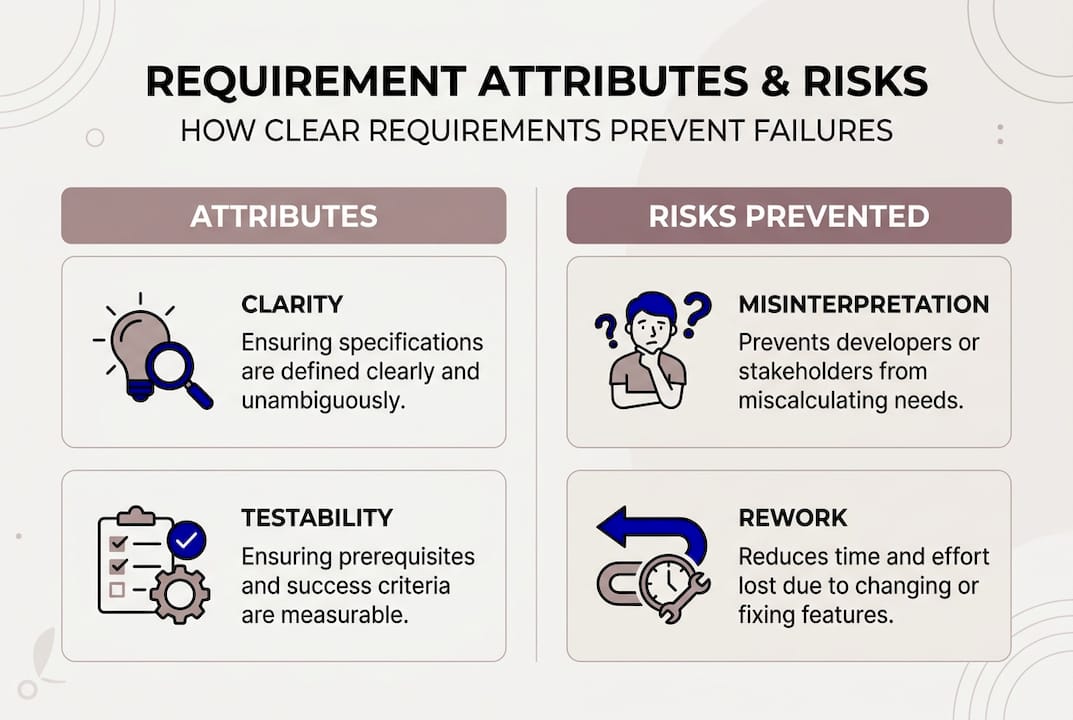
A business requirement is not just a wish list. It is a precise, testable statement that describes what a system or process must do to support a specific business outcome. Effective requirements share four core attributes: clarity, testability, feasibility, and regional alignment. Clarity means any stakeholder reading the requirement reaches the same interpretation. Testability means you can design a scenario to confirm the requirement is met. Feasibility means it can actually be built within your constraints. Regional alignment means it accounts for Arabic language support, local regulatory compliance, and cultural workflow norms specific to KSA and UAE.
When these attributes are missing, projects suffer. Hidden stakeholder conflicts and unarticulated needs often derail requirement clarity before a single line of code is written. One powerful technique for surfacing unspoken needs is the 5 Whys method: ask “why” five consecutive times in response to a stated need, and you will almost always uncover the real business driver underneath the surface request.
Here are the red flags to watch for when reviewing requirements:
- Vague action verbs like “manage,” “handle,” or “support” with no defined outcome
- Requirements that reference undefined external systems or unnamed data sources
- Conflicting requirements from different departments with no resolution noted
- Missing localization details such as currency format, language, or regulatory references
- No acceptance criteria attached to the requirement
The table below maps requirement attributes to the risk types they prevent:
| Requirement attribute | Risk type prevented |
|---|---|
| Clarity | Misinterpretation and rework |
| Testability | Unverifiable deliverables |
| Feasibility | Budget and timeline overruns |
| Regional alignment | Regulatory non-compliance |
| Acceptance criteria | Scope disputes at sign-off |
For deeper context on how to structure your requirements analysis for digital transformation, it helps to map each requirement back to a specific business objective before any technical design begins.
Pro Tip: Before finalizing any requirement, run a frontline localization check. Have a regional team member review the language, workflow logic, and compliance references. This single step dramatically improves adoption rates in KSA and UAE implementations.
Preparing for requirement gathering: Stakeholder alignment and cultural context
Having defined what effective requirements are, the next step is ensuring the right team and context are in place before any gathering session begins. The most common reason requirement workshops fail is not a lack of methodology. It is the wrong people in the room.
Every requirement gathering effort in a GCC digital transformation project should include representatives from these roles:
- IT and architecture: Assess technical feasibility and integration constraints
- Frontline operations: Surface the day-to-day realities that executives often miss
- C-suite sponsor: Align requirements with strategic priorities and authorize decisions
- Compliance and legal: Preempt regulatory friction before it becomes a project blocker
- Finance: Validate cost assumptions embedded in requirements
Cultural context matters enormously in this region. Hierarchical decision-making norms in KSA and UAE mean that frontline staff may hesitate to contradict senior leaders in open sessions. You need to design your workshops to create safe channels for honest input, such as anonymous pre-session surveys or small-group breakouts. Consensus-building takes longer here, and that is not a weakness. It is a feature that produces stronger buy-in when managed well.
Cultural and regulatory gaps and Vision 2030 alignment are frequent sources of process debt in regional digital transformation projects. Understanding the digital trends shaping KSA and UAE helps you frame requirements within the broader transformation agenda your leadership is already committed to.
“Organizations that fail to map requirements to local regulatory and cultural realities spend an average of 30% more on rework during digital transformation rollouts.”
Before your first requirement session, complete this stakeholder prework checklist:
- Identify all impacted business units and assign a representative from each
- Distribute a pre-read covering project scope, objectives, and known constraints
- Map regulatory requirements relevant to the project (data residency, PDPL, sector-specific rules)
- Confirm executive sponsorship and decision authority for each stakeholder group
- Review any existing CRM benefits and operational data from KSA UAE to establish a performance baseline
Step-by-step requirement gathering: Proven techniques and tools
With the right team and regional alignment established, you can proceed to the actual methods of gathering robust requirements. A structured process prevents the two most common failures: capturing too little detail early and capturing too much irrelevant detail late.
Follow these steps in sequence:
- Prework and context setting: Distribute scope documents, review existing process maps, and confirm business objectives with the executive sponsor.
- Stakeholder workshops: Run structured sessions using techniques like use case mapping, process walkthroughs, and scenario-based questioning.
- Documentation and categorization: Translate workshop outputs into formal requirements, categorized by functional, non-functional, and regulatory types.
- Peer review and conflict resolution: Have requirements reviewed by representatives from each stakeholder group to surface conflicts before sign-off.
- Traceability mapping: Link every requirement to a specific business objective and a planned test case.
- Formal sign-off: Obtain written approval from the executive sponsor and compliance lead before moving to design.
Validating requirements early and often prevents costly rework during digital transformation. The comparison below shows how traditional and Agile approaches differ in the GCC context:
| Dimension | Traditional approach | Agile approach |
|---|---|---|
| Timing | Front-loaded, fixed | Iterative, evolving |
| Stakeholder involvement | Initial phase only | Continuous |
| Change management | Formal change requests | Sprint-level adjustments |
| Risk of scope creep | High if changes arise late | Lower with regular reviews |
| Fit for GCC regulatory projects | Moderate | High with governance overlay |
Version control for requirements is non-negotiable in large digital projects. Every change to a requirement must be logged with a date, rationale, and approver. This creates an audit trail that protects your project during regulatory reviews and vendor disputes. A well-managed requirements management workflow also makes onboarding new team members significantly faster.
Pro Tip: Track your requirements defect rate after each elicitation cycle. This is the percentage of requirements that needed revision after the first review. A rate above 20% signals that your elicitation process needs structural improvement, not just more time.
Managing scope changes and ensuring continuous requirement validation
After gathering requirements, the focus shifts to continuous control and validation to secure project outcomes. Scope creep is the gradual expansion of a project beyond its original boundaries, and it is especially common in digital transformation because stakeholders naturally think of new ideas as they see the system take shape.

Scope creep prevention requires ruthless prioritization and ongoing stakeholder validation. The antidote is a governance model that makes scope changes visible, deliberate, and cost-aware. Every new request should go through a formal impact assessment before it is accepted.
Use this validation cycle after each major project milestone:
- Requirement audit: Review all active requirements against current business priorities.
- Stakeholder sign-off refresh: Confirm that each requirement still reflects the business need it was written to address.
- Defect rate review: Measure how many requirements were flagged during the last development or testing sprint.
- Scope change log review: Assess the cumulative impact of all approved changes on timeline and budget.
- Executive alignment check: Present a summary to the C-suite sponsor and confirm continued strategic fit.
“Projects that conduct structured requirement validation checkpoints at each milestone reduce total rework costs by up to 40% compared to those that validate only at project end.”
Your digital transformation roadmap for executives should include scheduled validation gates, not just technical milestones. Treat requirement health as a leading indicator of project health. A digital roadmap built for operational excellence always includes these checkpoints as formal governance events, not optional reviews.
Pro Tip: Involve at least one frontline stakeholder in every validation cycle, not just senior managers. Business needs at the operational level shift faster than strategy, and catching those shifts early saves significant rework downstream.
KSA/UAE digital transformations: Why requirement rigor separates winners from laggards
After working with over 60 enterprise clients across KSA, UAE, and Egypt, one pattern stands out clearly. The organizations that achieve measurable ROI from digital transformation are not necessarily the ones with the biggest technology budgets. They are the ones that invest in getting requirements right before any vendor is selected or any platform is configured.
Too many regional enterprises focus on the technology decision and treat requirement gathering as a formality. The result is a technically sound system that nobody uses because it was built for a process that does not reflect how the organization actually works. Frontline localization is key for transformation stickiness and measurable ROI in regional projects.
Vision 2030 frontrunners share a discipline that is easy to overlook: they treat requirement gathering as a strategic activity, not an administrative one. Culture-aligned requirements produce faster stakeholder buy-in, reduce rework cycles, and create systems that people actually trust. Imported requirements, copied from international templates without localization, consistently underperform in GCC contexts.
The uncomfortable truth is that most digital project failures in this region are not technology failures. They are requirement failures. Fixing that starts at the top, with executives who insist on rigor, localization, and continuous validation as non-negotiable standards. For organizations tracking ROI through digital solutions, requirement discipline is the single highest-leverage investment you can make before a project begins.
Accelerate digital transformation with expert-led requirement gathering
Getting requirement gathering right is one of the highest-return investments you can make before a digital project begins. Singleclic brings 10 years of regional delivery experience and 70 consultants across KSA, UAE, and Egypt to help you build a requirement process that is rigorous, locally aligned, and built for scale.
Whether you need support designing your automation strategies for executives, assessing your ERP readiness for implementation, or building a structured requirements management workflow, our team is ready to accelerate your path from requirements to results. Reach out to Singleclic and take the first step toward transformation that actually sticks.
Frequently asked questions
What are the biggest mistakes in business requirement gathering?
Hidden stakeholder conflicts, unarticulated needs, and scope creep are the top failure factors. Failing to involve frontline staff and skipping formal sign-off processes compound these risks significantly.
How can KSA/UAE businesses tailor requirements to local needs?
Align requirements with Vision 2030 goals, address sector-specific regulatory requirements, and validate language and workflows with regional teams before finalizing. Cultural and regulatory alignment is critical for sustainable adoption in KSA and UAE contexts.
What KPIs should executives track during requirement gathering?
Track requirements defect rate, stakeholder approval cycle time, and business value delivered post-implementation. Measuring requirements defect rate helps you benchmark and continuously improve your elicitation process.
How often should requirements be validated in large-scale digital projects?
Requirements should be validated after each core milestone and whenever business priorities shift significantly. Early and frequent validation is the most effective way to prevent costly rework in large digital transformation programs.
Recommended
- How to analyze business requirements for digital transformation
- Digital Transformation Roadmap for Business Growth Success
- Step by Step Digital Roadmap for Operational Excellence
- Singleclic: Download the 7-step digital transformation checklist for leaders to drive growth, align stakeholders, and optimize operations—start today.
- Upgrade business technology: a step-by-step guide for UK leaders