Complex requirements often get lost in translation when construction firms and healthcare providers operate across Saudi Arabia and the UAE. For executives leading digital transformation, clarity, traceability, and collaboration are more than buzzwords—they are the backbone of effective project delivery. By focusing on systematic documentation and organization of requirements from high-level goals to detailed specifications, leaders lay a solid foundation for optimized workflows and improved stakeholder alignment.
Table of Contents
- Step 1: Assess Current Requirements Management Processes
- Step 2: Define Standardized Requirements Documentation Practices
- Step 3: Implement Collaborative Requirements Validation Steps
- Step 4: Integrate Digital Tools For Tracking And Automation
- Step 5: Verify And Optimize Workflow Effectiveness
Quick Summary
| Key Message | Explanation |
|---|---|
| 1. Assess current processes | Understand your existing requirements management to identify gaps and inefficiencies. |
| 2. Standardize documentation | Establish clear templates and naming conventions to ensure consistency across the organization. |
| 3. Implement collaborative validation | Involve stakeholders and technical teams in requirement reviews for completeness and clarity. |
| 4. Integrate digital tools | Use a dedicated requirements management tool to enhance tracking, automation, and collaboration. |
| 5. Monitor workflow effectiveness | Regularly review metrics and make iterative improvements to ensure ongoing efficiency and effectiveness. |
Step 1: Assess current requirements management processes
Before you can optimize your requirements management workflow, you need to understand exactly where you are today. This means taking an honest, systematic look at how your organization currently documents, organizes, and tracks requirements from the moment they arrive through project completion. For healthcare organizations in Saudi Arabia and the UAE managing complex clinical systems or construction firms coordinating multi-site projects, this assessment becomes the foundation for everything that follows.
Start by documenting your existing processes end to end. Walk through a typical requirement as it moves through your organization. Where does it originate? Who captures it first? How does it get communicated to the teams that need to implement it? What happens when a requirement changes mid-project? You’ll likely find that different departments handle this differently, and that’s normal. The goal isn’t perfection at this stage but clarity. According to HHS requirements management best practices, systematic documentation and organization of requirements from high-level to detailed stages is essential for maintaining alignment with stakeholder needs.
Next, evaluate how well your current requirements are defined. This is where many organizations stumble. A requirement that seems crystal clear to one person might be interpreted completely differently by someone else. Are your requirements concise and testable? Can someone read a requirement and definitively determine whether it’s been met? Do you have clear traceability, meaning you can track each requirement back to the original business need and forward to the tests that verify it was actually built correctly? Interview your project managers, developers, quality assurance teams, and stakeholders. Ask them what frustrates them most about how requirements are currently handled. You’ll hear consistent patterns about missing information, late changes, unclear definitions, or broken communication chains. These pain points are valuable data for your assessment.
Also examine your tools and documentation systems. Whether you’re using spreadsheets, specialized requirements management software, or something in between, document what you currently have in place. Does your system provide traceability across the entire lifecycle? Can multiple teams access and update requirements simultaneously without creating conflicting versions? For organizations in construction and healthcare sectors managing demanding regulatory environments, the ability to audit and track every change to a requirement becomes critical. If you’re running this assessment across multiple locations in Saudi Arabia and the UAE, consider whether your current setup scales across geographic and organizational boundaries. Many teams discover that their tool choices were made years ago and no longer fit their current reality. A low-code platform like Cortex can help bridge gaps between legacy systems and modern workflow requirements without requiring extensive custom development.
Gather metrics on your current state. How long does it typically take for a requirement to move from proposal to approval? How many requirements experience scope creep or changes during development? What percentage of defects discovered during testing trace back to unclear or missed requirements? These baseline metrics will let you measure improvement once you implement changes. Document your findings in a clear assessment report that outlines your current state, identifies specific gaps, and highlights the teams most affected by these gaps. This becomes your roadmap for the optimization work ahead.
Pro tip: Interview both your requirements stakeholders and the technical teams who implement them separately, as they often have different perspectives on what’s working and what’s broken in your current process. This dual perspective reveals blind spots that single-group interviews typically miss.
Step 2: Define standardized requirements documentation practices
Now that you understand your current state, it’s time to establish clear standards for how requirements should be documented across your entire organization. Standardization removes ambiguity, speeds up communication, and ensures that whether a requirement originates from a hospital administrator in Dubai or a construction site manager in Riyadh, it follows the same format and contains the same essential information.
Start by defining what goes into every requirement document. Every requirement should include a unique identifier so you can reference it consistently. Include a clear title that describes what the requirement addresses. Write the requirement statement itself in plain language that stakeholders and technical teams both understand. Add acceptance criteria that define exactly what success looks like and how you’ll know when the requirement is satisfied. Include the priority level, the stakeholder who requested it, the date it was created, and any dependencies on other requirements. This structured approach to documentation ensures nothing gets lost in translation. Good documentation practices establish data integrity and traceability through structured workflows involving version control, review cycles, and access control, which directly supports your requirements management process.
Create templates that everyone uses consistently. A template removes the guesswork about what information belongs in a requirements document. It also makes requirements easier to search, organize, and update. Your templates should include sections for business context (why this requirement exists), technical specifications (how it should work), constraints (what limitations apply), and related documentation links. For healthcare organizations managing patient data systems or construction firms coordinating building projects, templates should include fields for regulatory compliance considerations and risk factors specific to your industry. Test your templates with a pilot group before rolling them out organization-wide. Ask for feedback on whether the format captures what people need and whether it’s easy to complete. Good templates reduce the time it takes to write requirements while improving their quality.
Establish clear naming conventions and terminology standards. If your organization uses different terms for the same concept, confusion spreads quickly. One team might call something a “user story” while another calls it a “functional requirement.” One department might refer to a feature as a “module” while another calls it a “component.” Document your preferred terminology and ensure everyone understands the definitions. Create a glossary that team members can reference when they’re unsure about terminology. This becomes especially important when you have teams distributed across Saudi Arabia and the UAE working on the same project. A shared vocabulary eliminates the back and forth that slows down projects.
Implement version control discipline. Every requirements document should clearly show which version you’re currently viewing. When changes are made, document who made them, when they made them, and why. This creates an audit trail that proves your requirements have been properly managed and traced. If a defect is discovered later, you can determine which version of the requirement was in effect when it occurred. Define when and how changes to requirements are approved. Most organizations require that any change to a requirement after a certain approval point must go through a formal change control process. This prevents scope creep and ensures that the impact of requirement changes is understood before they’re approved.
Set access control and security standards for your requirements documentation. Not all requirements should be visible to everyone. Healthcare organizations handling patient information have strict regulatory requirements about who can access which data. Construction firms may have proprietary information about building designs or costs. Define role-based access so that people see only the requirements they need to do their work. Establish how requirements are stored, whether you use centralized databases, shared drives, or specialized requirements management tools. Make sure your storage approach supports both security and collaboration.
Document your standards in a requirements management guide that serves as your single source of truth. This guide should explain your templates, your naming conventions, your version control process, your approval workflows, and your access control rules. Make this guide easily accessible to everyone who creates or reviews requirements. Train your teams on these standards before you expect them to use them. Many organizations find that investing in even a brief training session dramatically improves compliance with new standards.
Pro tip: Start with one department as a pilot when implementing new requirements documentation standards, then use their experience to refine your approach before rolling it out across the entire organization.
Step 3: Implement collaborative requirements validation steps
Validation is where your requirements get tested against reality. This is the step where you verify that what you documented actually makes sense, is technically feasible, and will solve the business problem it’s meant to address. Collaborative validation ensures that multiple perspectives uncover issues early before expensive development work begins.
Start by assembling validation teams that represent different viewpoints. You need business stakeholders who understand what problem the requirement solves. You need technical experts who understand system architecture and constraints. You need quality assurance professionals who think about how things could fail. For healthcare organizations in Saudi Arabia implementing new patient management systems, include clinical staff who will use the system daily. For construction firms in the UAE managing project delivery, include site managers and safety officers. When these diverse perspectives come together, they catch gaps and inconsistencies that single-discipline reviews miss. Collaborative requirements validation emphasizes stakeholder involvement and iterative reviews to ensure requirements are correct, complete, consistent, and reflect actual user needs while promoting shared understanding and consensus.
Structure your validation process as a series of reviews rather than a single event. Early in the process, conduct a requirements review where stakeholders examine drafts before they’re finalized. Have technical teams review requirements for feasibility. Have quality assurance teams review them for testability. Each review cycle should produce feedback that gets incorporated into the next version. Rather than waiting months until development is complete to discover that a requirement doesn’t work, you discover it in weeks or days during review. This iterative approach prevents costly rework. When you’re working across multiple office locations in Saudi Arabia and the UAE, asynchronous review processes work better than trying to schedule everyone into one meeting. Post requirements for review, give teams a deadline to provide feedback, then incorporate comments and post the updated version for next review cycle.
Use prototypes and models to make requirements concrete. Sometimes a requirement sounds clear when written down but becomes confusing when someone tries to build it. A prototype, even a simple sketch or wireframe, helps everyone visualize the same thing. For construction projects, this might mean 3D models or site mock-ups. For healthcare systems, it might mean screen mockups or workflow diagrams. These visual representations spark questions and conversations that lead to better requirements. You discover that one stakeholder imagined the system working one way while another imagined it differently. Better to have that conversation during validation than after months of development.
Implement transparent communication practices where all feedback is documented and visible. When someone raises a concern about a requirement, document it clearly. Explain why the requirement stands as written, or modify it based on the feedback. Make this record available so everyone understands which concerns were addressed and which were intentionally accepted as trade-offs. This transparency builds trust and prevents the same questions from being asked repeatedly across different meetings.
Create acceptance criteria with your validation team rather than deciding them in isolation. Walk through each requirement and ask your validators how they would know it was successfully implemented. What specific test could you run to prove it works? What scenarios should it handle correctly? This conversation often reveals gaps in the original requirement. It ensures that when development is complete, you all agree on what success looks like.
Schedule regular validation checkpoints throughout your project, not just at the beginning. Requirements that seemed perfect in month one might encounter technical constraints discovered in month three. New information about regulations or business priorities might emerge. Plan to review and revalidate requirements at regular intervals. This keeps your requirements current and ensures your project stays aligned with real business needs as circumstances change.
Pro tip: Record validation meetings or document feedback in shared tools like our low-code platform Cortex so that people who couldn’t attend live discussions can still understand the rationale behind requirement decisions and feel included in the validation process.
Step 4: Integrate digital tools for tracking and automation
Manual spreadsheets and email chains don’t scale. When you’re managing requirements across healthcare systems in Saudi Arabia or construction projects spanning the UAE, you need digital tools that provide real-time visibility, reduce human error, and automate routine tasks. The right requirements management tool transforms how your teams collaborate and how quickly you can respond to changes.
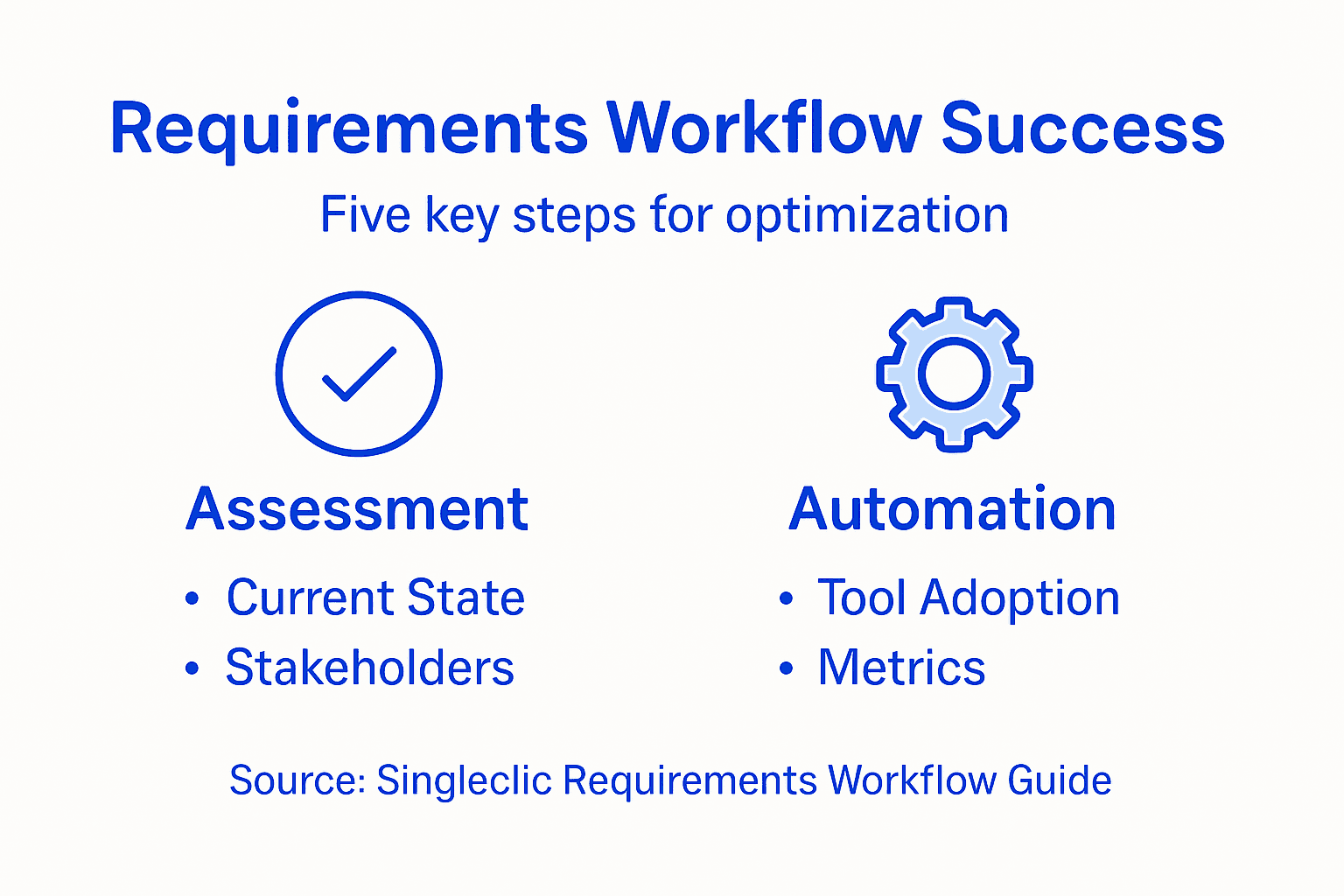
Start by evaluating what your organization actually needs from a requirements management tool. Do you need the ability to track requirements across multiple projects simultaneously? Do you require automated notifications when requirements change so stakeholders stay informed without manually checking status? Do you need traceability that shows exactly which requirements led to which test cases and which code changes? For healthcare organizations managing patient safety critical systems, you may need compliance reporting that proves your requirements were properly managed and validated. For construction firms, you might prioritize mobile access so site managers can view and update requirements from the job site. Top requirements management tools provide tracking, documentation, version control, collaboration, and integration capabilities that reduce errors and automate workflows for complex projects across industries.
Consider whether you want a dedicated requirements management tool or if you can accomplish your goals with existing systems you already use. Some organizations use project management platforms that have basic requirements tracking. Others use collaboration tools like shared documents with version control built in. Some use specialized requirements management software designed specifically for this purpose. Each approach has trade-offs. A dedicated tool often provides more sophisticated features like impact analysis that shows what breaks if you change a requirement. General purpose platforms are easier to adopt because your teams already know how to use them. Your choice depends on your project complexity, team size, and budget. For many mid-sized organizations in the Middle East, low-code platforms like Cortex offer a middle ground, allowing you to build customized requirements management workflows that integrate with your existing systems without requiring extensive custom development.
Here’s a comparison of requirements management tools and their business impact:
| Tool Type | Key Benefits | Typical Challenges | Best For |
|---|---|---|---|
| Dedicated management software | End-to-end traceability | Higher cost, steep learning | Large/regulatory projects |
| Low-code platform integration | Customizable workflows | Requires some initial setup | Multi-site, growing organizations |
| Spreadsheets/shared docs | Simple and inexpensive | Limited automation, scaling | Small projects, startups |
When you select a tool, prioritize features that address your biggest current pain points. If your current problem is that requirements get lost or forgotten, focus on tools with strong search and organization capabilities. If stakeholders complain about not knowing when requirements change, prioritize automated notifications. If your teams struggle with understanding how requirements connect to each other, look for tools with strong visualization and dependency tracking. Don’t get tempted by feature lists that sound impressive but don’t solve your actual problems.
Integrate your requirements management tool with your development tools. Your requirements shouldn’t live in isolation. They should connect to your version control system so you can see which code commits address which requirements. They should connect to your testing tools so test results automatically feed back to requirement status. They should integrate with your project management system so team members see both what needs to be built and progress on building it. This integration eliminates the time wasted manually updating status across multiple systems and ensures everyone works from a single source of truth.
Start your tool implementation with a pilot group or a single project. Don’t try to migrate all your historical requirements and all your teams at once. Choose one team that’s open to change and one project that’s starting fresh. Work with them to set up the tool according to your standards, test the workflows, and identify what needs to be adjusted. Once this pilot succeeds, you’ll have concrete evidence of benefits that makes the broader rollout easier. You’ll also have captured best practices you can teach to other teams.
Train your teams thoroughly on the new tool. Even the best tool fails if people don’t know how to use it effectively. Provide training not just on the mechanics of the software but on your requirements management process and how the tool supports it. Create documentation or video tutorials so people can refresh their memory without having to ask for help every time. Assign tool champions within each team who become the go-to experts and help others adopt the tool smoothly.
Monitor tool adoption and usage. After implementation, track whether teams are actually using the tool as intended or reverting to their old processes. Look for requirements that aren’t being updated or teams that are maintaining parallel documentation outside the tool. Identify barriers to adoption and address them quickly. Sometimes it’s a usability issue with the tool. Sometimes it’s insufficient training. Sometimes it’s resistance to change that requires management support. The sooner you address these issues, the sooner you’ll realize the benefits of the tool investment.
Pro tip: Automate as many routine tasks as possible in your requirements management tool, such as status updates based on linked artifacts, automated notifications when deadlines approach, and impact analysis reports that run automatically when requirements change, so your team spends time on thinking and decision making rather than data entry.
Step 5: Verify and optimize workflow effectiveness
Implementing a new requirements management process is just the beginning. The real work happens in measuring whether your workflow actually delivers the benefits you expected and then systematically improving it over time. Verification and optimization ensure that your investment in better requirements management continues to pay dividends long after the initial implementation.

Start by establishing baseline metrics before you make major changes. How long does it currently take for a requirement to move from submission to approval? How many requirements experience scope creep during development? What percentage of defects discovered in testing trace back to unclear requirements? How many hours does your team spend in requirements meetings each week? These baseline numbers give you a starting point for comparison. After you implement your new workflow, you’ll measure the same metrics to see whether things actually improved. Without baselines, you won’t know if your improvements are real or just perception. Document these metrics in a way that’s easy to track over time, perhaps in a dashboard that updates automatically from your requirements management tool.
Below is a summary of key metrics for verifying workflow effectiveness:
| Metric | What It Measures | Why It Matters |
|---|---|---|
| Requirement cycle time | Speed from submission to approval | Tracks process efficiency |
| Scope creep rate | Frequency of requirement changes | Indicates clarity and control |
| Defects from requirements | Errors tied to unclear specs | Highlights impact on product quality |
| Meeting hours/week | Time spent on requirements | Reveals workflow overhead |
Once your new workflow is running, collect both quantitative and qualitative data about its effectiveness. The quantitative data comes from your metrics. Are cycle times actually shorter? Are you catching more issues during requirements validation instead of during testing? Is the number of change requests decreasing? The qualitative data comes from asking people how the workflow feels. Is it easier or harder to work with? Does it feel like extra bureaucracy or genuine improvement? Ask your project managers, developers, quality assurance teams, and stakeholders separately. They’ll have different perspectives on what’s working. Workflow optimization requires systematically identifying bottlenecks and using both qualitative and quantitative data to iteratively refine processes ensuring operational excellence and efficiency gains.
Identify specific bottlenecks in your workflow. Where do requirements get stuck waiting for approval? Where do teams wait for information from other teams? Where do people spend the most time on non-value-adding activities? Often you’ll find that your biggest bottlenecks aren’t where you expected them to be. You might have thought the problem was slow requirements review, but the real issue is that nobody knows who’s supposed to approve requirements. You might have thought requirements took too long to write, but the actual problem is that people keep getting pulled into unrelated meetings and can’t focus. Interview people about these bottlenecks. Ask them where they personally feel the workflow breaks down. Their answers will point you toward the highest-impact improvements.
Make targeted improvements based on what you discover. If approval is slow, clarify who has decision authority and empower them to make decisions faster. If requirements keep changing because they’re unclear, invest more in validation before they’re approved. If teams struggle with terminology, do additional training on your glossary. If your tool isn’t being used because it’s hard to access from the field, address that access issue. Make one or two key improvements, then measure the impact before moving to the next round. Trying to fix everything at once creates chaos and makes it impossible to know which changes actually helped.
Monitor key performance indicators on an ongoing basis. Set up your requirements management tool to automatically generate reports showing cycle time, approval rates, defect rates, and other metrics that matter to your organization. Review these metrics monthly or quarterly depending on your project schedule. Look for trends. If cycle times are creeping back up, investigate why. If defect rates are increasing, it might signal that your validation process needs attention. Don’t wait for a crisis to look at the numbers. Regular monitoring lets you catch problems early and make adjustments before they become serious.
Create a culture of continuous improvement around your requirements management workflow. Make it clear that the workflow isn’t perfect and that you expect people to suggest improvements. Establish a regular cadence, perhaps quarterly, where you review metrics, discuss what’s working and what isn’t, and agree on one or two improvements to try. When people see their suggestions being implemented and the results measured, they become invested in the process. They stop viewing requirements management as something done to them and start viewing it as something they help optimize.
Re-baseline your metrics periodically to reset your expectations. After you’ve been running your improved workflow for six months or a year, establish new baseline metrics. This prevents improvement from plateauing because people lose sight of progress. When you show that cycle time has dropped by 40 percent compared to the original baseline, it reinforces that the effort was worthwhile. It also establishes new targets for the next round of improvements.
Pro tip: Establish an enterprise workflow optimization process that connects your requirements management improvements to broader operational metrics like project delivery time, defect rates, and customer satisfaction, so you can demonstrate to leadership that requirements management optimization directly impacts business outcomes.
Unlock Seamless Requirements Management with Singleclic Solutions
If you struggle with inconsistent documentation, unclear approval workflows, or limited traceability across your projects in Saudi Arabia, UAE, or Egypt, you are not alone. The article highlights common challenges such as scattered communication, lack of standardized templates, and inefficient manual tools that hinder your ability to deliver projects on time and within quality standards. At Singleclic, we understand these pain points and offer tailored digital transformation strategies to help you streamline and optimize your requirements management processes.
Leverage our proven expertise in Business Process Automation, ERP & CRM Implementation, and our powerful low-code platform, Cortex, designed specifically for MENA enterprises, to build collaborative, transparent, and agile workflows. Cortex enables your teams to manage evolving requirements in real time without downtime, ensuring complete traceability and seamless integration with your existing systems. Visit Singleclic to discover how we empower healthcare, construction, banking, and government organizations to eliminate bottlenecks and accelerate project success. Don’t let outdated processes cost you time and resources. Take the next step now toward requirements management excellence.
Frequently Asked Questions
How can I assess my current requirements management processes?
Begin by documenting your existing workflow for handling requirements from inception to completion. Walk through a typical requirement to identify its origin, how it’s communicated, and any changes that occur during the project.
What should I include in my requirements documentation to ensure clarity?
Each requirement should have a unique identifier, a clear title, a concise statement, acceptance criteria, priority level, and any dependencies. Use a template to standardize this information and avoid ambiguity.
How can I validate requirements effectively during the management process?
Form validation teams that include business stakeholders, technical experts, and quality assurance professionals. Conduct iterative reviews to gather diverse feedback on requirements before finalization.
What steps should I take to integrate digital tools into my requirements management workflow?
Evaluate your needs, such as tracking capabilities and real-time notifications, and choose a requirements management tool that fits. Implement the tool with a pilot project to test its effectiveness before a full rollout.
How can I measure the effectiveness of my new requirements management workflow?
Establish baseline metrics on cycle times, defects, and approval rates before implementing changes. Afterward, track these metrics regularly to evaluate improvements and identify any bottlenecks in your process.
Recommended
- Enterprise Workflow Optimization Process for Maximum ROI
- 7 Reasons Why CRM Odoo is the Best Choice for Growing Businesses | Singleclic
- Unlocking Business Growth with Odoo CRM: 6 Key Benefits for CEOs and SMBs | Singleclic
- The Implementation Stages of a Successful ERP | Singleclic
- Barista Workflow Optimization for Fast, Consistent Espresso