Operational roadblocks often slow progress just when efficiency is most crucial. For C-level executives and IT leaders in Saudi Arabia and UAE, defining digital platforms is not just a technical exercise but a strategic move that shapes daily decision-making and long-term growth. As enterprises in healthcare and banking face rising industry complexity, this article sheds light on how integrated digital platforms can become the backbone of smarter business process automation and sustainable organizational transformation.
Table of Contents
- Defining Digital Platforms And Their Impact
- Types Of Platforms For Enterprise Optimization
- Key Features Driving Business Automation
- Healthcare And Banking Sector Applications
- Risks, Costs, And Strategic Considerations
- Avoiding Common Pitfalls And Maximizing Value
Key Takeaways
| Point | Details |
|---|---|
| Role of Digital Platforms | Digital platforms are transforming how organizations operate by breaking down silos and enabling interconnectivity. |
| Enterprise Platform Types | Different types of platforms, such as communication and integration, serve unique business optimization needs. |
| Business Automation Features | Key features like intelligent workflow orchestration and real-time data integration enhance operational efficiency. |
| Strategic Implementation Guidelines | Successful digital transformation requires alignment with business objectives and continuous stakeholder engagement. |
Defining Digital Platforms And Their Impact
Digital platforms have emerged as transformative technological ecosystems that fundamentally reshape how organizations interact, innovate, and create value. Systematic literature reviews reveal the complexity and multifaceted nature of these technological infrastructures, which extend far beyond traditional software applications.
At their core, digital platforms represent integrated technological environments that enable multiple participants to connect, collaborate, and exchange resources. These platforms create dynamic interaction spaces where businesses, developers, consumers, and service providers can seamlessly engage. In regions like Saudi Arabia and UAE, digital platforms are becoming critical infrastructure for digital transformation strategies across industries such as banking, healthcare, and government services.
Key characteristics of digital platforms include:
- Facilitating multi-sided interactions
- Supporting real-time data exchange
- Enabling scalable ecosystem development
- Providing modular and extensible architectures
- Supporting rapid innovation and integration
Digital platform ecosystem research demonstrates their profound impact on economic and technological landscapes. Our low-code platform Cortex exemplifies these principles by providing businesses with flexible, Arabic-enabled infrastructure that allows complex process automation without extensive coding requirements.
The strategic significance of digital platforms lies in their ability to break down traditional organizational silos, create network effects, and generate value through interconnectedness. They represent more than technological solutions – they are fundamental redesigners of business models and interaction paradigms.
Pro tip: When evaluating digital platforms, prioritize solutions offering seamless integration, scalability, and robust security features tailored to your specific organizational ecosystem.
Types Of Platforms For Enterprise Optimization
Platform diversity in enterprise environments reveals multiple technological architectures designed to address complex organizational needs. In the Industry 4.0 era, digital platforms have become critical infrastructure for businesses seeking to enhance operational agility, communication, and innovation across diverse sectors.
Enterprise optimization platforms can be categorized into several strategic types, each serving unique organizational requirements:
- Communication Platforms: Enabling seamless internal and external interactions
- Integration Platforms: Connecting disparate systems and data sources
- Process Automation Platforms: Streamlining repetitive tasks and workflows
- Data Analytics Platforms: Providing advanced insights and predictive capabilities
- Collaboration Platforms: Supporting team coordination and knowledge sharing
Marketplace Platforms represent another significant category, supporting complex digital ecosystem interactions. In regions like Saudi Arabia and UAE, these platforms are instrumental in transforming traditional business models by creating interconnected digital environments that facilitate multi-sided interactions.

Our low-code platform Cortex exemplifies this evolution by providing Arabic-enabled infrastructure that allows organizations to design, automate, and optimize complex business processes without extensive coding requirements. By offering real-time workflow modifications and deep enterprise system integrations, such platforms empower businesses to rapidly adapt to changing market dynamics.
The following table summarizes how different types of enterprise platforms contribute to business objectives:
| Platform Type | Primary Business Goal | Typical Use Case |
|---|---|---|
| Communication | Enhance collaboration | Company-wide messaging tools |
| Integration | Unify data and systems | ERP system connectors |
| Process Automation | Optimize workflows | Automated invoice processing |
| Data Analytics | Support decision-making | Real-time sales dashboards |
| Collaboration | Enable team productivity | Shared document editing suites |
| Marketplace | Expand reach & transactions | B2B/B2C digital marketplaces |
Digital platforms are not just technological solutions, but strategic instruments for organizational reinvention and competitive differentiation.
Pro tip: When selecting an enterprise optimization platform, prioritize solutions that offer scalability, robust integration capabilities, and alignment with your specific industry ecosystem.
Key Features Driving Business Automation
Business automation represents a transformative approach to organizational efficiency, leveraging technological capabilities to streamline complex operational processes. Enterprise automation strategies have become increasingly sophisticated, enabling businesses in Saudi Arabia and UAE to reimagine their operational frameworks with unprecedented precision and adaptability.
The key features driving modern business automation encompass several critical technological capabilities:
- Intelligent Workflow Orchestration: Designing seamless, adaptive process sequences
- Real-Time Data Integration: Connecting disparate systems instantaneously
- Predictive Analytics: Anticipating operational challenges and opportunities
- Automated Decision Making: Implementing AI-driven decision protocols
- Scalable Infrastructure: Supporting dynamic organizational growth
Our low-code platform Cortex exemplifies these advanced automation principles by providing Arabic-enabled infrastructure that allows organizations to design, modify, and optimize complex business processes without extensive technical expertise. By enabling runtime workflow changes and supporting deep enterprise system integrations, such platforms empower businesses to rapidly respond to evolving market demands.
Successful business automation transcends technological implementation – it represents a strategic reimagination of organizational potential.
In regions like Saudi Arabia and UAE, where digital transformation is a critical economic priority, these automation features are not just technological enhancements but fundamental drivers of competitive advantage. They enable enterprises to reduce operational friction, minimize human error, and allocate human resources toward more strategic, creative endeavors.
Pro tip: When evaluating business automation solutions, prioritize platforms offering comprehensive integration capabilities, real-time adaptability, and alignment with your specific industry ecosystem.
Healthcare And Banking Sector Applications
Digital transformation strategies are reshaping critical sectors like healthcare and banking across Saudi Arabia and UAE, creating unprecedented opportunities for operational innovation. These digital platforms represent more than technological upgrades – they are comprehensive ecosystems enabling fundamental reimagination of service delivery and organizational capabilities.
In the healthcare sector, digital platforms drive transformative changes through several key capabilities:
- Integrated Patient Management: Centralizing patient data and care coordination
- Telemedicine Infrastructure: Enabling remote diagnostic and consultation services
- Predictive Health Analytics: Anticipating medical risks and personalized interventions
- Secure Medical Record Systems: Ensuring data privacy and seamless information exchange
- Administrative Process Automation: Streamlining hospital operations and resource allocation
Similarly, digital banking transformation encompasses sophisticated technological integrations that redefine financial service paradigms. Our low-code platform Cortex supports these sectors by providing Arabic-enabled infrastructure that allows organizations to design complex, secure, and adaptable digital workflows without extensive coding requirements.
Digital platforms are not merely technological tools, but strategic enablers of sector-wide digital transformation and innovation.
In regions like Saudi Arabia and UAE, where technological advancement is a national priority, these digital platforms represent critical infrastructure for economic diversification and service optimization. They enable healthcare providers and financial institutions to enhance operational efficiency, improve customer experiences, and develop more responsive, data-driven organizational models.
Pro tip: When implementing digital platforms in healthcare or banking, prioritize solutions offering robust security, seamless integration capabilities, and scalable architectural design.
Risks, Costs, And Strategic Considerations
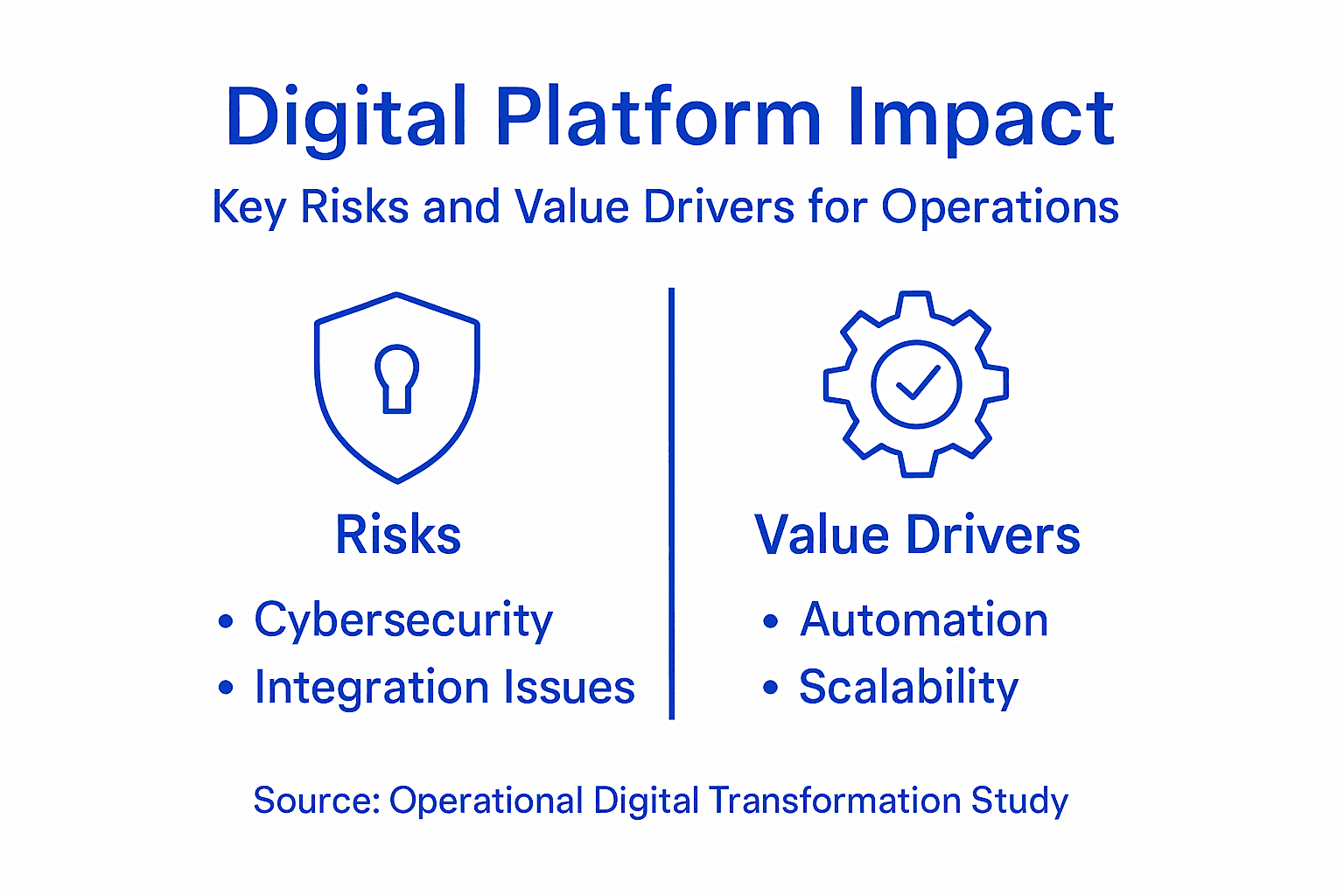
Digital platform governance presents complex challenges for organizations in Saudi Arabia and UAE, requiring sophisticated strategic planning and risk management approaches. The digital transformation journey involves navigating multifaceted technological, operational, and regulatory landscapes that demand comprehensive understanding and proactive mitigation strategies.
Key risks and strategic considerations include:
- Cybersecurity Vulnerabilities: Protecting sensitive organizational data
- Regulatory Compliance: Ensuring adherence to regional and international standards
- Technology Integration Challenges: Managing complex system interconnections
- Operational Dependency: Mitigating risks of technological disruptions
- Financial Investment Requirements: Balancing implementation costs with potential returns
Operational risk management frameworks are critical for organizations adopting digital platforms. Our low-code platform Cortex addresses these challenges by providing Arabic-enabled infrastructure with built-in security features, compliance tools, and scalable architectural design that minimizes implementation risks.
Strategic digital transformation requires holistic approaches that balance technological innovation with robust risk management protocols.
In regions like Saudi Arabia and UAE, where technological advancement is a national priority, organizations must develop nuanced strategies that consider technological capabilities, financial implications, and long-term organizational objectives. This involves creating adaptive frameworks that can rapidly respond to emerging technological trends while maintaining operational stability and security.
Pro tip: Conduct comprehensive risk assessments and develop multi-layered mitigation strategies before implementing digital platforms, focusing on technological, financial, and human resource dimensions.
Here is a concise comparison of digital platform adoption challenges and mitigation strategies:
| Challenge | Business Impact | Mitigation Strategy |
|---|---|---|
| Cybersecurity threats | Data loss, reputation damage | Multi-layered security controls |
| Integration difficulties | Delayed projects | Use open APIs and standards |
| Regulatory compliance | Legal penalties, delays | Regular compliance audits |
| Change resistance | Low adoption, inefficiencies | Staff training and engagement |
| High upfront costs | Budget overruns | Phased implementation plan |
Avoiding Common Pitfalls And Maximizing Value
Digital transformation initiatives frequently encounter significant challenges that can undermine their strategic potential. Organizations in Saudi Arabia and UAE must develop sophisticated approaches that transcend technological implementation, focusing instead on comprehensive organizational adaptation and strategic alignment.
Critical strategies for avoiding common digital platform pitfalls include:
- Strategic Vision Alignment: Ensuring technology investments directly support business objectives
- Change Management: Developing robust organizational culture transformation processes
- User Experience Design: Creating intuitive, accessible platform interfaces
- Continuous Learning: Implementing iterative evaluation and improvement mechanisms
- Stakeholder Engagement: Involving all organizational levels in digital transformation
Enterprise digital strategy requires meticulous planning and execution. Our low-code platform Cortex addresses these challenges by providing Arabic-enabled infrastructure that supports flexible, user-centric design and seamless organizational integration.
Successful digital transformation is not about implementing technologies, but about reimagining organizational capabilities and human potential.
In regions like Saudi Arabia and UAE, where technological innovation is a national strategic priority, organizations must develop adaptive frameworks that balance technological sophistication with practical, measurable outcomes. This involves creating holistic approaches that consider technological capabilities, human factors, and long-term strategic objectives.
Pro tip: Develop comprehensive measurement frameworks that track both technological performance and strategic business impact, ensuring your digital platform delivers tangible value beyond initial implementation.
Elevate Your Operations with Tailored Digital Platform Solutions
The article highlights the critical challenge organizations face in seamlessly integrating scalable digital platforms that enable real-time collaboration, process automation, and deep system integration. Businesses in Saudi Arabia, UAE, and beyond must overcome risks like cybersecurity vulnerabilities and regulatory compliance while driving innovation and agility. Pain points such as operational dependency, integration complexities, and the demand for adaptive workflows are central to thriving in today’s digital economy.
At Singleclic, we understand these challenges intimately. Our expertise in ERP/CRM Implementation, Business Process Automation, and AI-powered low-code platforms equips organizations to move beyond mere digitalization into true optimization. Our Arabic-enabled low-code platform, Cortex, empowers enterprises to design, automate, and modify business processes dynamically without extensive coding. This aligns perfectly with your goal of achieving real-time workflow changes and deep enterprise system integrations as discussed in the article. By leveraging Singleclic’s proven solutions, your organization can break down silos, reduce operational friction, and confidently navigate digital transformation with robust security and scalability.
Start transforming how your teams collaborate and operate today. Discover how to harness the power of digital platforms strategically, reduce risks, and deliver measurable business outcomes by exploring our offerings at Singleclic. Learn more about our Business Process Automation expertise and the game-changing capabilities of our Cortex low-code platform designed specifically for MENA enterprises.
Take the next step toward redefining your organizational potential with Singleclic. Contact us now to build a resilient digital platform foundation that grows with your evolving business needs.
Frequently Asked Questions
What are digital platforms?
Digital platforms are integrated technological environments that enable multiple participants, such as businesses, developers, and consumers, to connect, collaborate, and exchange resources, fundamentally reshaping how organizations operate.
How do digital platforms enhance organizational efficiency?
Digital platforms enhance efficiency by facilitating multi-sided interactions, supporting real-time data exchange, enabling scalable ecosystem development, and streamlining workflows through automation.
What types of platforms are available for enterprise optimization?
Enterprise optimization platforms include communication platforms, integration platforms, process automation platforms, data analytics platforms, collaboration platforms, and marketplace platforms, each addressing unique organizational needs.
How can businesses maximize the value of digital platforms?
Businesses can maximize value by aligning technology investments with strategic objectives, implementing robust change management processes, ensuring intuitive user experience design, and continuously assessing performance and improvement strategies.