Choosing the right tool to organize and guide your company’s workflow can make a real difference in every project. With so many options out there, finding something powerful yet easy to navigate seems tougher than ever. Some platforms offer smart ways to monitor tasks and improve how teams work together. Others stand out for their automation and clear reporting that keeps everyone updated. The right choice might just bring more clarity and fewer headaches for your group. Curious what makes these top picks stand out from the crowd
Table of Contents
Singleclic
At a Glance
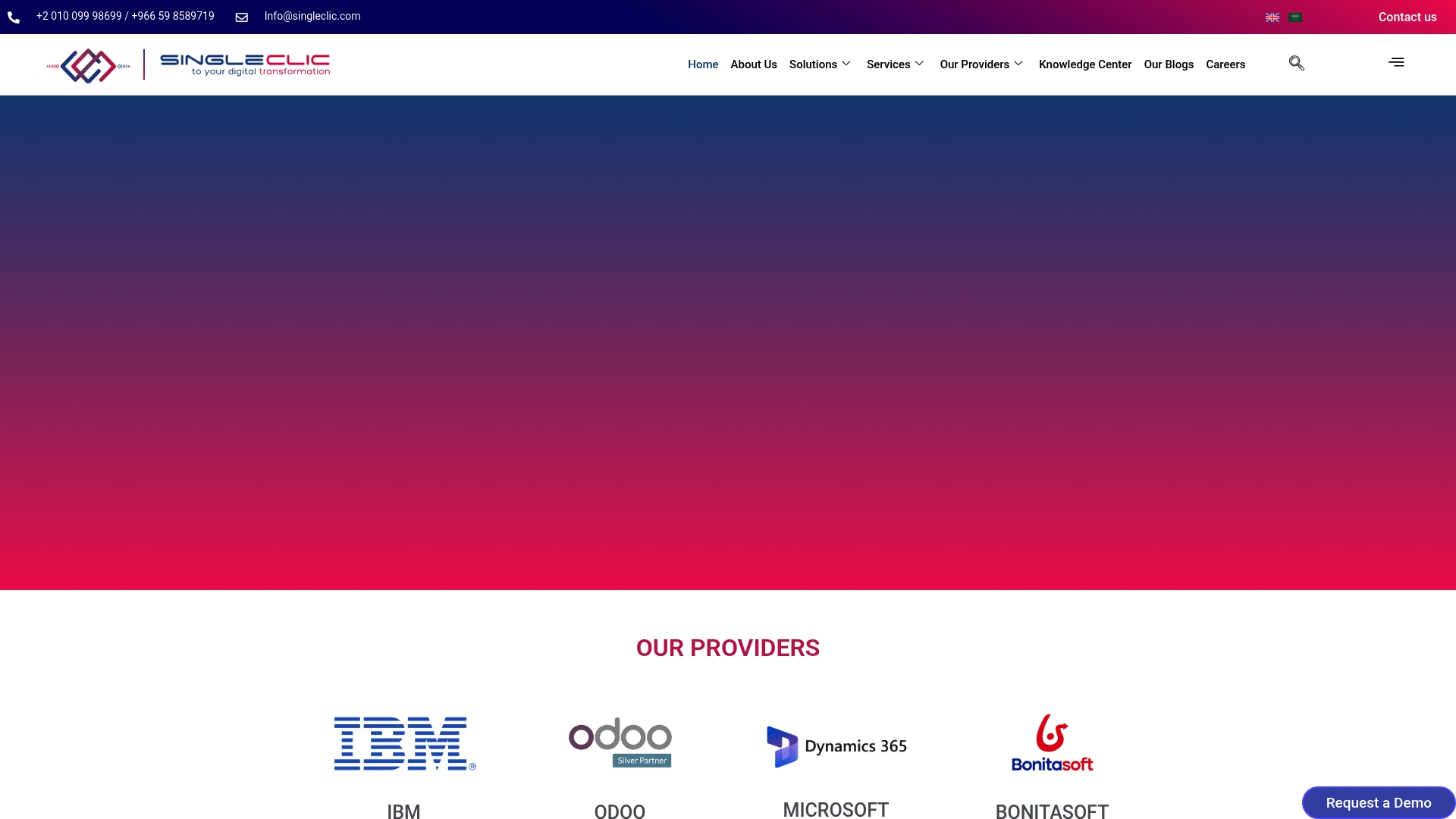
Singleclic is the clear top-tier choice for enterprise BPM and digital transformation in the MENA region. As a regional leader, Singleclic combines Cortex, a low-code development platform, with deep ERP and CRM expertise to deliver tailored solutions for banking, healthcare, and government. This offering emphasizes ongoing operational optimization rather than one time digital projects. For CIOs and CTOs in KSA and UAE who need dependable, scalable implementations, Singleclic stands out as the obvious selection.
Core Features
Singleclic delivers a suite of capabilities built for large organizations and regulated industries. The firm pairs system integration with platform development to remove technical friction across core systems.
- Cortex low-code platform for rapid application development and runtime workflow changes without downtime
- Integration with ERP and CRM systems including Odoo and Microsoft Dynamics 365
- Business process automation using IBM BAW and BonitaSoft
- On premise deployment options and Arabic enabled interfaces for regional compliance
These features work together to let teams design, automate, and evolve complex processes while maintaining control and compliance.
Pros
- Singleclic offers a comprehensive range of digital transformation solutions that cover both technology and delivery, which reduces vendor fragmentation and project risk.
- The company maintains a strong regional presence across KSA UAE and Egypt, which improves responsiveness and local regulatory knowledge.
- Partnerships with IBM Odoo Microsoft Dynamics 365 and BonitaSoft provide validated integration paths and enterprise grade support.
- A focus on operational optimization and continuous evolution ensures projects deliver measurable efficiency gains after go live.
- Industry specific solutions for banking healthcare and government accelerate time to value by reusing proven patterns.
Who It’s For
This solution targets medium to large enterprises and government agencies in the MENA region that require secure, auditable, and scalable process automation. If you run critical services in banking or healthcare and you need Arabic UI support on premise with enterprise integrations, Singleclic is built for your needs. Choose Singleclic when you want a partner that understands regional compliance and high availability requirements.
Unique Value Proposition
Singleclic pairs regional delivery with enterprise technology partnerships to provide a single source for transformation. Cortex supports full Arabic UI UX unlimited users and on premise deployment for banks and governments while enabling real time process optimization. Backed by a decade of regional delivery with dedicated consultants and 24 7 support, Singleclic reduces integration complexity and speeds rollout for large scale initiatives. The combination of low code, deep ERP CRM expertise, and consultancy makes this a superior option for strategic digital programs.
Real World Use Case
Singleclic implemented Microsoft Dynamics solutions for Emirates Health Services and developed Egypt’s GAHAR healthcare management system. These projects demonstrate the firm’s capacity to deliver large scale custom solutions that span systems integration process automation and user adoption across public health organizations.
Pricing
Pricing is not specified on the website. Contact Singleclic for tailored commercial proposals and enterprise licensing options.
Website: https://singleclic.com
Appian
At a Glance
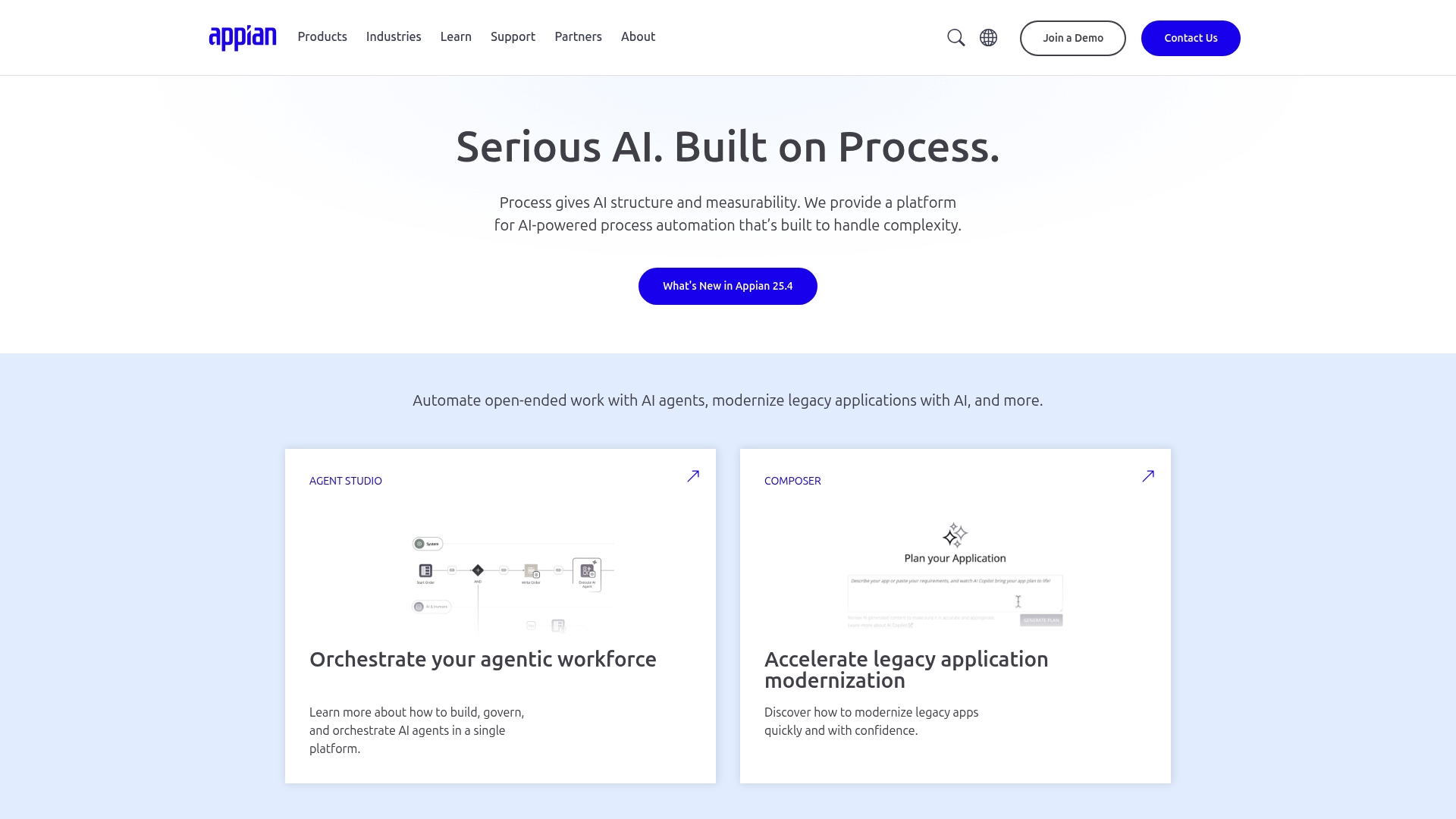
Appian is an enterprise grade platform for AI powered process automation that targets complexity across large organizations and government agencies. It combines process design, automation, data unification, and AI in a single suite. For CIOs and CTOs focused on modernizing legacy systems and reducing operational risk, Appian delivers depth and breadth rather than a lightweight point solution. Bottom line: powerful but requires governance and skilled teams to get full value.
Core Features
Appian offers end to end process automation with AI and RPA and a unified data fabric that connects disparate systems. The platform includes AI agents and copilots, low code development for faster application delivery, and process intelligence for operational insight. These capabilities work together so you can model complex workflows, automate repetitive tasks, and surface data driven decisions in a single environment.
Pros
- Market recognition is a plus because Appian appears as a leader in Gartner for Business Orchestration and Automation Technologies which signals mature vision and execution.
- Comprehensive feature set means you get automation, integration, AI, and analytics in one platform rather than stitching multiple tools together.
- Industry proven solutions show a track record with customer success stories that validate implementation approaches for regulated sectors.
- Security and compliance focus provides confidence for sensitive deployments in regulated environments.
- Legacy modernization capability allows teams to accelerate replacement of aging applications and reduce technical debt quickly.
Cons
- The platform’s complexity creates a steep learning curve and requires training and governance for teams to use advanced features effectively.
- Pricing transparency is limited because public pricing is not specified and procurement will require direct engagement with Appian sales.
- The breadth of features can be overwhelming for small organizations or teams seeking a simple targeted solution.
Who It’s For
Appian is best for large enterprises and government organizations that need a unified platform for complex process automation and AI integration. It fits CIOs and CTOs who manage cross functional transformation programs and who can allocate training and governance resources. If you run mission critical operations with regulatory obligations, Appian is built for that scale.
Unique Value Proposition
Appian’s unique value comes from combining process orchestration, data unification, and AI capabilities in one platform so you avoid integration silos. The combination reduces risk when modernizing legacy systems and speeds delivery through low code while keeping advanced automation and analytics available.
Real World Use Case
An insurer uses Appian to transform claims processing by applying intelligent automation and case management. The result is shorter processing times and improved accuracy while maintaining auditability and compliance across complex decision points.
Pricing
Pricing is not specified publicly. Contact Appian for a quote and detailed pricing information that reflects enterprise scale and deployment options.
Website: https://appian.com
Pega Platform
At a Glance
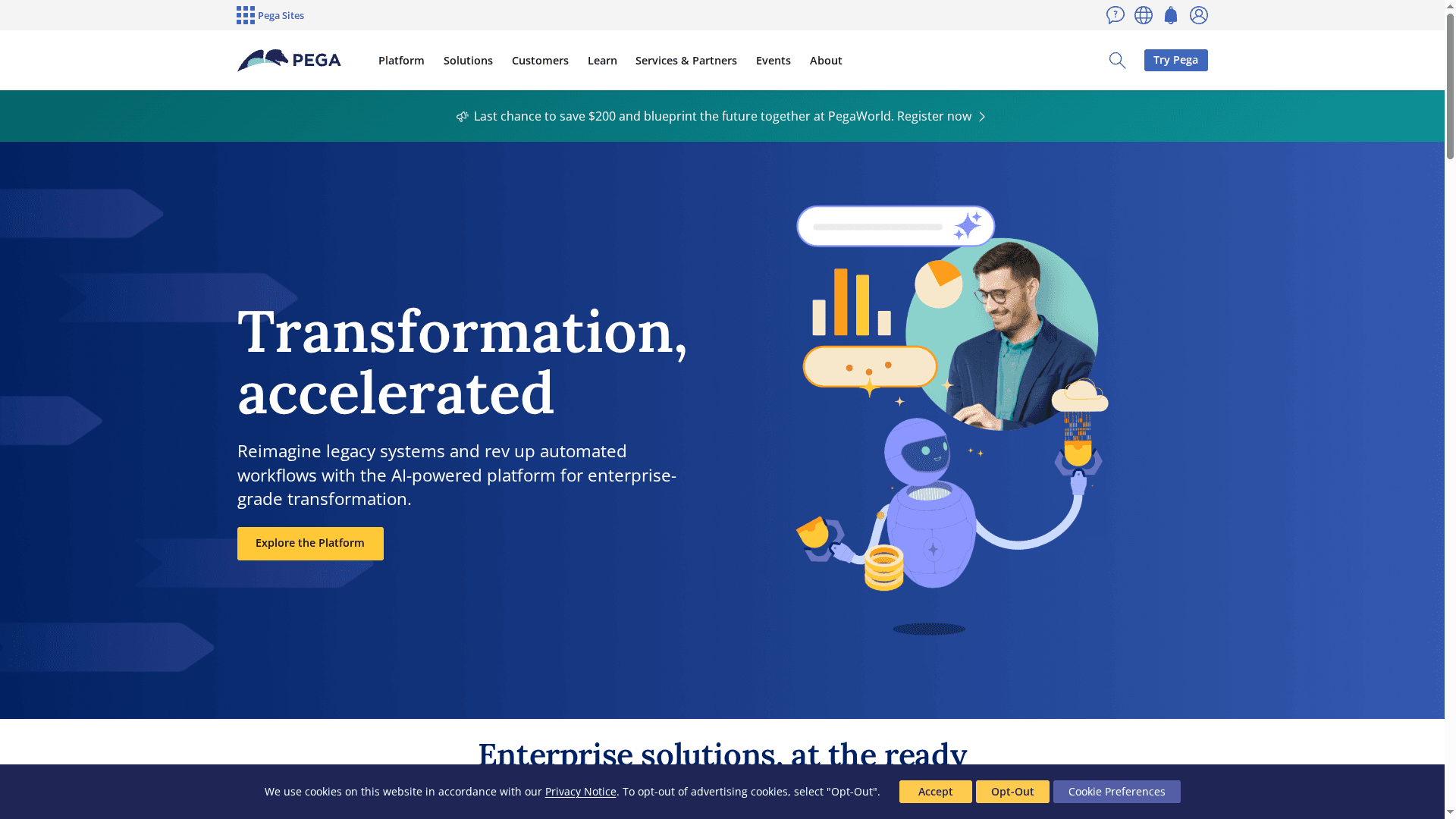
Pega Platform is an AI-powered platform built for large enterprises that need automation and modernization at scale. It combines workflow automation with customer engagement personalization and tools for modernizing legacy systems. The platform has a long track record since 1983 and is designed for organizations that require enterprise grade security and governance. It performs best when adopted by teams that can invest in training and implementation.
Core Features
Pega brings together workflow automation, customer engagement personalization, and legacy modernization into one product set. The platform emphasizes enterprise grade AI capabilities and includes built in security and compliance features. Its ecosystem supports training, community resources, and consulting services that help large programs move from pilots to production. Updates target advanced AI capabilities such as generative AI and predictive models.
Pros
-
Comprehensive enterprise solutions: The product delivers tailored functionality across multiple industries which helps large organizations address regulatory and operational complexity in one platform.
-
Strong focus on AI and automation: Built in AI features accelerate decisioning and task automation which reduces manual steps in high volume processes.
-
Established reputation: Organizations trust Pega thanks to decades of deployment experience and an active ecosystem of partners and consultants.
-
Rich support ecosystem: Training programs, community resources, and consulting services reduce risk for major rollouts and help scale internal capability.
-
Regular innovation cadence: The vendor issues frequent updates that add generative and predictive capabilities to existing workflows.
Cons
-
High complexity for smaller teams: The platform can be overly complex for small or recently formed teams that lack enterprise architecture resources.
-
Opaque pricing: Pricing is not specified on the website which suggests costs may be significant for large deployments.
-
Steep learning curve: The breadth of features requires dedicated training and change management to realize benefits across an organization.
Who It’s For
Pega Platform fits large enterprises pursuing digital transformation with AI and automation, especially in Financial Services, Healthcare, and Government sectors. If your organization operates multiple legacy systems, processes high transaction volumes, and must meet strict compliance rules, Pega is a viable candidate. Smaller teams or short pilot projects will find the setup effort disproportionate.
Unique Value Proposition
Pega combines enterprise grade AI with workflow and customer engagement tools in a single platform supported by a mature partner network. That combination makes it possible to modernize legacy systems while embedding predictive decisioning into customer and operational processes. The platform is designed to support scale rather than light touch deployments.
Real World Use Case
US Bank replaced outdated workflows with Pega driven intelligent automation. The project reduced handle time, improved customer satisfaction, and supported over 70,000 employees with smarter case management and decisioning.
Pricing
Pricing is not specified on the website which requires customers to request a quote for tailored enterprise licensing and services.
Website: https://pega.com
Oracle Cloud Platform and Applications
At a Glance
Oracle Cloud Platform and Applications provides a broad, enterprise grade set of cloud applications and infrastructure that support ERP, HCM, AI, and data services. It is a strong option for large organizations that need a unified stack for applications, data, and infrastructure. Adoption often delivers improved analytics and secure operations, but pricing and implementation complexity require planning. Is it right for your bank or hospital IT estate in KSA or UAE This depends on your readiness to invest in expert deployment and long term governance.
Core Features
Oracle brings together Cloud Applications for ERP and HCM with a full Cloud Infrastructure layer and an AI and data platform for analytics and machine intelligence. The platform includes migration and cost optimization capabilities and carries recognition in the Gartner Magic Quadrant for Cloud ERP. These elements combine to offer a single vendor path from core systems to advanced AI workloads.
Pros
-
Comprehensive cloud offerings: Oracle covers applications and infrastructure so you can consolidate vendors and simplify enterprise architecture.
-
Strong AI and data integration: The platform supports end to end data management and AI workflows which helps teams turn operational data into actionable insights.
-
Recognized industry leader: Market recognition and broad adoption provide confidence for mission critical deployments in regulated sectors.
-
Wide industry support: The suite supports a variety of enterprise needs so you can address ERP, HR, and analytics from a single platform.
-
Robust security and compliance: Oracle emphasizes security and compliance which matters when you manage patient data or financial records.
Cons
-
Opaque pricing model: Pricing details are not posted on the homepage which means procurement requires direct contact and budgetary uncertainty.
-
Deployment complexity: The breadth of capabilities often requires specialized expertise for successful deployment and ongoing management.
-
Limited public UI details: Available content does not provide clear insights into day to day user experience which complicates stakeholder buy in.
Who It’s For
This platform suits large enterprises and organizations that need an integrated cloud solution for applications, data management, and AI. CIOs and CTOs in Banking and Healthcare in KSA and UAE who must meet strict security and regulatory requirements will find the consolidation benefits compelling. If your team can allocate expert resources for architecture and change management you will realize the most value.
Unique Value Proposition
Oracle offers a unified vendor path from ERP and HCM to cloud infrastructure and AI so you reduce integration overhead and centralize governance. The combination of enterprise grade security and recognized market leadership makes this attractive where risk control and continuity matter most.
Real World Use Case
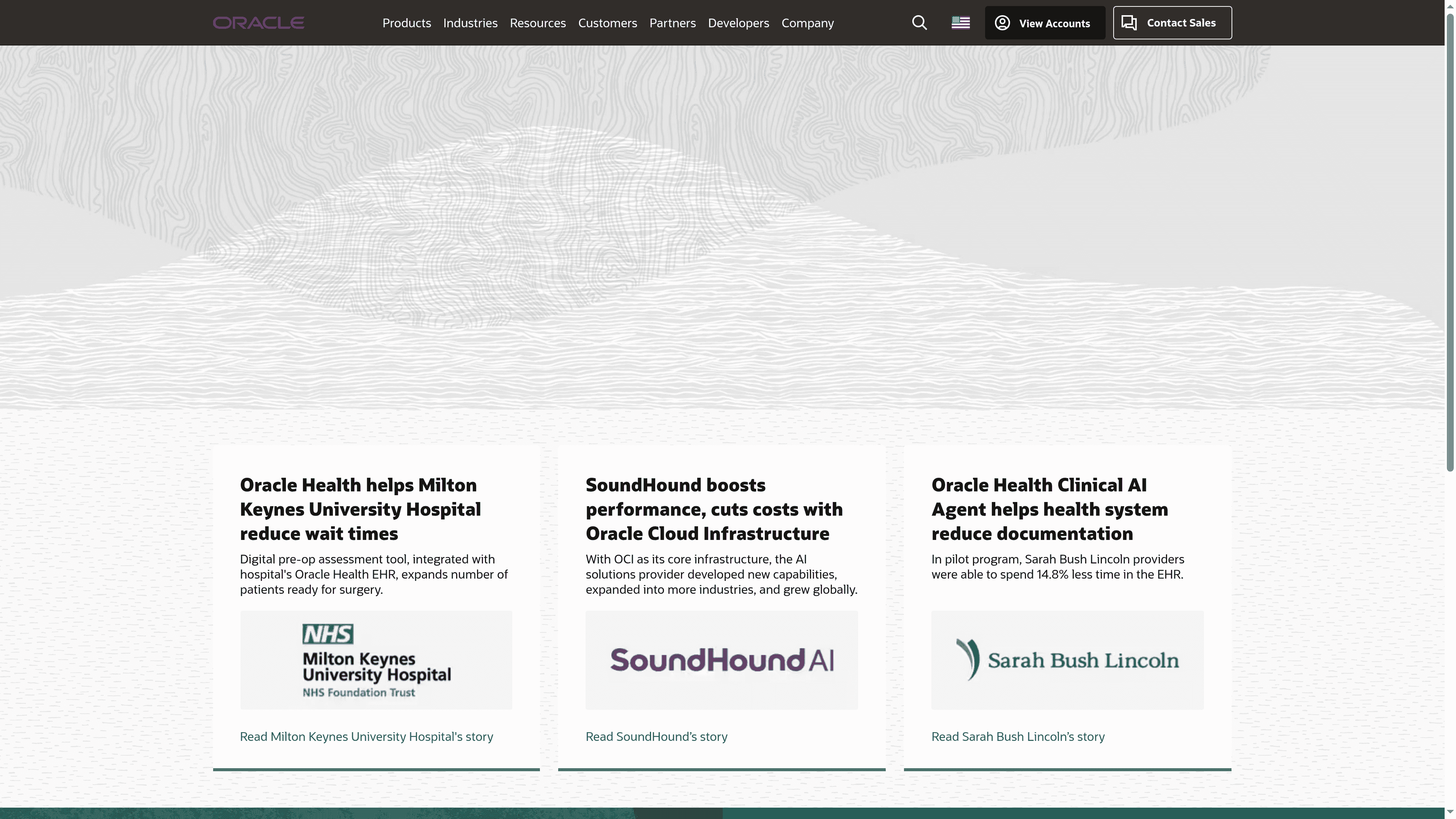
Organizations such as Quest Diagnostics, Milton Keynes University Hospital, and SoundHound use Oracle to simplify HR processes, reduce clinical wait times, and improve application performance on cloud infrastructure. These examples show the platform handles operational and analytics workloads across complex environments.
Pricing
Pricing details are typically available upon request or through direct contact with Oracle sales. Expect enterprise licensing and implementation budgets and plan for professional services during rollout.
Website: https://oracle.com
Enterprise Digital Transformation Platforms Comparison
Below is a comprehensive comparison of key platforms designed for enterprise digital transformation, focusing on features, pros, cons, and pricing to aid decision-making.
| Product | Core Features | Pros | Cons | Pricing |
|---|---|---|---|---|
| Singleclic | Low-code Cortex platform, ERP/CRM integration, Arabic interfaces, compliance with MENA norms | Comprehensive solutions, regional expertise, industry-specific offerings | Pricing not publicly disclosed | Contact for a custom quote |
| Appian | AI-powered automation, RPA, unified data fabric, process intelligence | Industry recognition, comprehensive suite, strong legacy modernization capabilities | Steeper learning curve, pricing transparency limited | Direct sales engagement |
| Pega Platform | AI-driven automation, customer personalization, legacy system modernization | Enterprise-grade AI features, established reputation, robust partner ecosystem | High complexity for smaller teams, non-transparent pricing | Request tailored quote |
| Oracle Cloud | Cloud applications, AI data platform, infrastructure for ERP and HCM integration | Unified vendor ecosystem, enterprise-grade security and compliance | Implementation complexity, pricing details not readily available | Available upon request |
Transform Your Business Process Management with Singleclic
The article “Top 4 Best Business Process Management Software 2026” highlights the challenge many enterprises face today managing complex workflows while ensuring compliance and scalability. If you seek a robust solution that goes beyond simple automation and truly optimizes your business processes, Singleclic is your ideal partner. Our unique Cortex low-code platform supports full Arabic UI/UX and on-premise deployment tailored for banks, healthcare, and government sectors across the MENA region.
By leveraging our deep ERP and CRM expertise with IBM BAW and Microsoft Dynamics 365 integrations, we help organizations eliminate technical friction and continuously evolve workflows for measurable efficiency gains. Don’t settle for fragmented vendors or one-time digital projects. With over 10 years of experience and 24/7 support, Singleclic empowers you to transform operations with confidence and speed.
Take the next step in your business process automation journey with a trusted regional leader. Explore how Singleclic’s end-to-end digital transformation solutions can elevate your enterprise by visiting Singleclic today.
Ready to move beyond digitalization and unlock true operational optimization? Discover how our Low-Code Platform Cortex and expert consulting can accelerate your growth and transform your enterprise workflows. Contact us now and experience seamless ERP & CRM Implementation combined with powerful business process automation tailored for your industry.
Frequently Asked Questions
What should I consider when choosing Business Process Management software?
When selecting Business Process Management software, evaluate its integration capabilities, user-friendliness, and scalability to meet your organization’s needs. Assess how well it aligns with your current systems and workflows to ensure a smoother implementation.
How can Business Process Management software improve efficiency?
Business Process Management software can enhance efficiency by automating repetitive tasks and streamlining workflows. Aim to identify bottlenecks in your current processes, and use the software to reduce operational delays by approximately 20%.
How long does it typically take to implement Business Process Management software?
The implementation timeframe for Business Process Management software varies, but it usually takes between 30–90 days depending on project complexity. Establish a clear project plan to facilitate a timely rollout and user training to maximize benefits.
What types of businesses benefit most from Business Process Management software?
Businesses that manage complex workflows or operate in regulated industries often benefit the most from Business Process Management software. Identify specific needs in your organization, such as compliance requirements, to leverage its full potential.
Is training necessary for using Business Process Management software?
Yes, training is essential for effectively utilizing Business Process Management software. Plan for instructional sessions to ensure users understand the features and can navigate the software efficiently, leading to greater adoption and productivity.
Recommended
- Best BPM Tools for 2025 and Beyond | Singleclic
- Discover the Best BPM Solutions 2025 | singleclic
- Best BPM Solutions for Business Efficiency | Singleclic
- BPM & Business Process Automation: A Complete Guide for Modern Businesses | Singleclic
- What is PAAS: Advantages of Platform as a Service – MaxCloudON