Choosing an ERP and CRM implementation agency that actually fits cross-border compliance, Arabic language requirements, and on-premise deployment in Saudi Arabia or UAE is more complex than vendors admit. Most consultancies only offer bespoke projects with hidden pricing, while popular platforms like Monday.com and Asana gate essential automation or localization behind enterprise tiers or lack regional focus. This comparison lets you match each agency’s approach, regional delivery model, and integration capabilities to your operational needs and budget before any discovery call.
Table of Contents
Singleclic
At a Glance
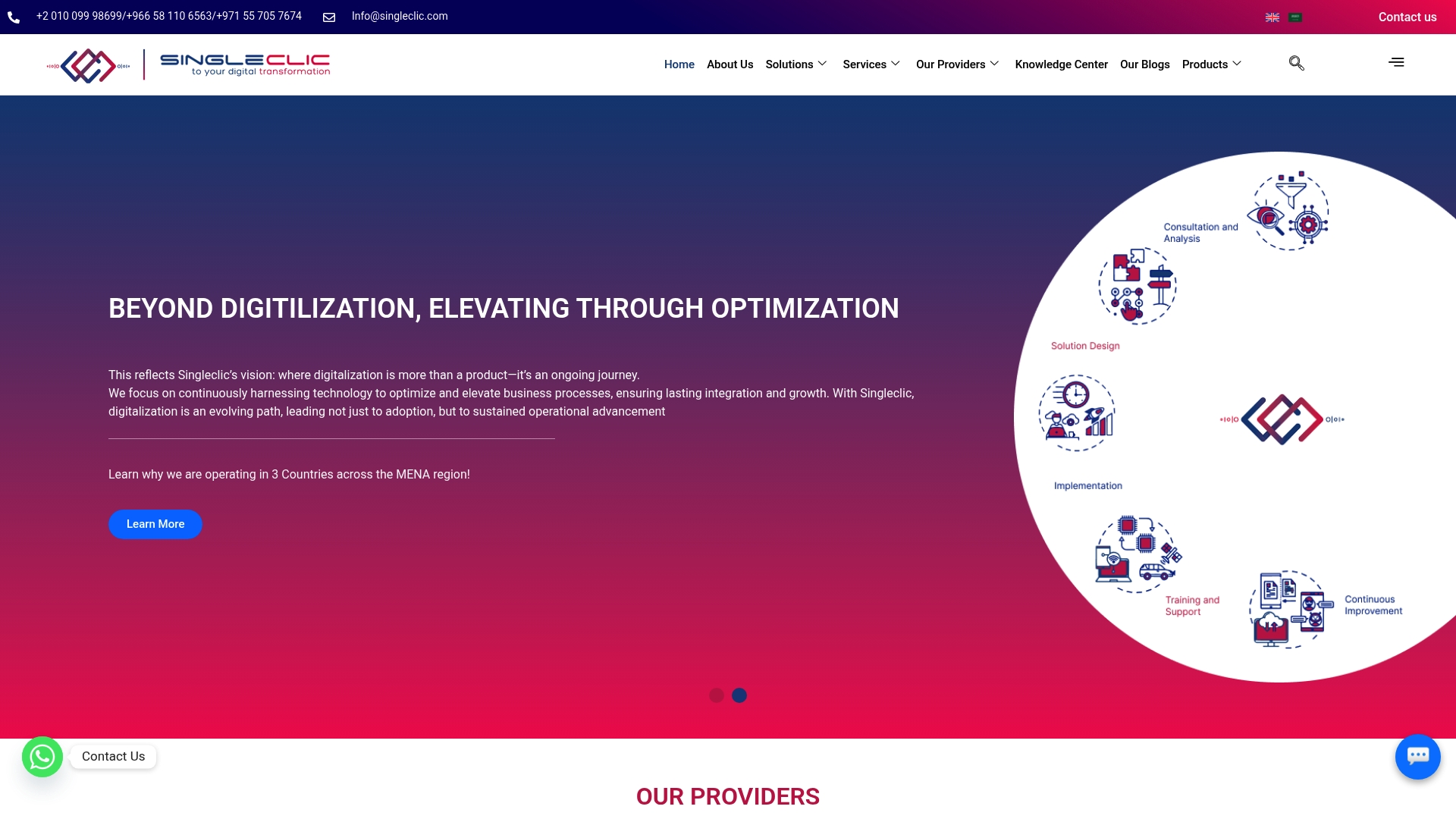
Cortex is an Arabic-first, on-premise low-code platform that supports runtime workflow changes without downtime and is positioned for banks and government deployments. Singleclic reports 10+ years of regional delivery and a 70+ strong team operating across KSA, UAE, and Egypt.
Core Features
-
Cortex: Arabic-first low-code platform with on-premise deployment, full Arabic UI, and real-time process optimization.
-
ERP and CRM implementation using Microsoft Dynamics 365 and Odoo, tailored for industry workflows in banking, healthcare, and government.
-
BPM with Bonitasoft and IBM BAW integration plus RPA delivery using UiPath for end-to-end automation.
-
Data analytics, AI enablement, offshoring development, and custom web and mobile apps to support modernization programs.
Key Differentiator
The single differentiator is Cortex as an enterprise low-code platform built specifically for MENA requirements. It is designed to run on-premise for regulated organizations while integrating directly with core ERP, CRM, and BPM systems to keep processes consistent and auditable across national operations.
Pros
-
Strong regional footprint. That presence across KSA, UAE, and Egypt reduces local compliance friction and shortens on-site delivery cycles.
-
Industry depth. The team delivers prebuilt patterns for banking, healthcare, construction, and government which speeds rollout of core modules.
-
Integration-first approach. Projects commonly join Cortex to Microsoft Dynamics 365, Odoo, Bonitasoft, and IBM stacks rather than replacing them, lowering migration risk.
-
Arabic-first UX. Full Arabic UI and regional language support reduce training time for large user bases across Gulf agencies.
-
Delivery model and support. The vendor advertises agile methodology, flexible pricing, rapid onboarding, and 24/7 after-sales support for enterprise clients.
Cons
- Public pricing is limited. The vendor does not publish standard subscription tiers so initial scoping and a discovery engagement are usually required.
Notable Integrations
- IBM
- Odoo
- Microsoft Dynamics 365
- Bonitasoft
Who It’s For
Enterprises and government agencies across the MENA region that need a local-first platform to modernize core systems while meeting data residency and Arabic language requirements. Particularly relevant for banks, large healthcare providers, and ministries in Saudi Arabia and the UAE.
Unique Value Proposition
Cortex’s on-premise Arabic UI plus deep connectors to ERP and BPM transforms a proof of concept into a rollout pattern that can be replicated across branches or hospitals without rearchitecting the core. For organizations that cannot rely on public cloud sovereignty, that operational continuity reduces rework and shortens time to compliance.
Real World Use Case
A UAE healthcare provider implemented Microsoft Dynamics 365 for patient management, integrated Cortex for front-line workflows, and added Bonitasoft BPM for approval flows. The result was a single audit trail from patient intake to billing while keeping sensitive records on-premise.
Pricing
Not publicly listed. Singleclic positions engagements as bespoke projects rather than fixed SaaS tiers. Initial work typically begins with a scoped discovery and a tailored quote.
Website: https://singleclic.com
Monday.com
At a Glance
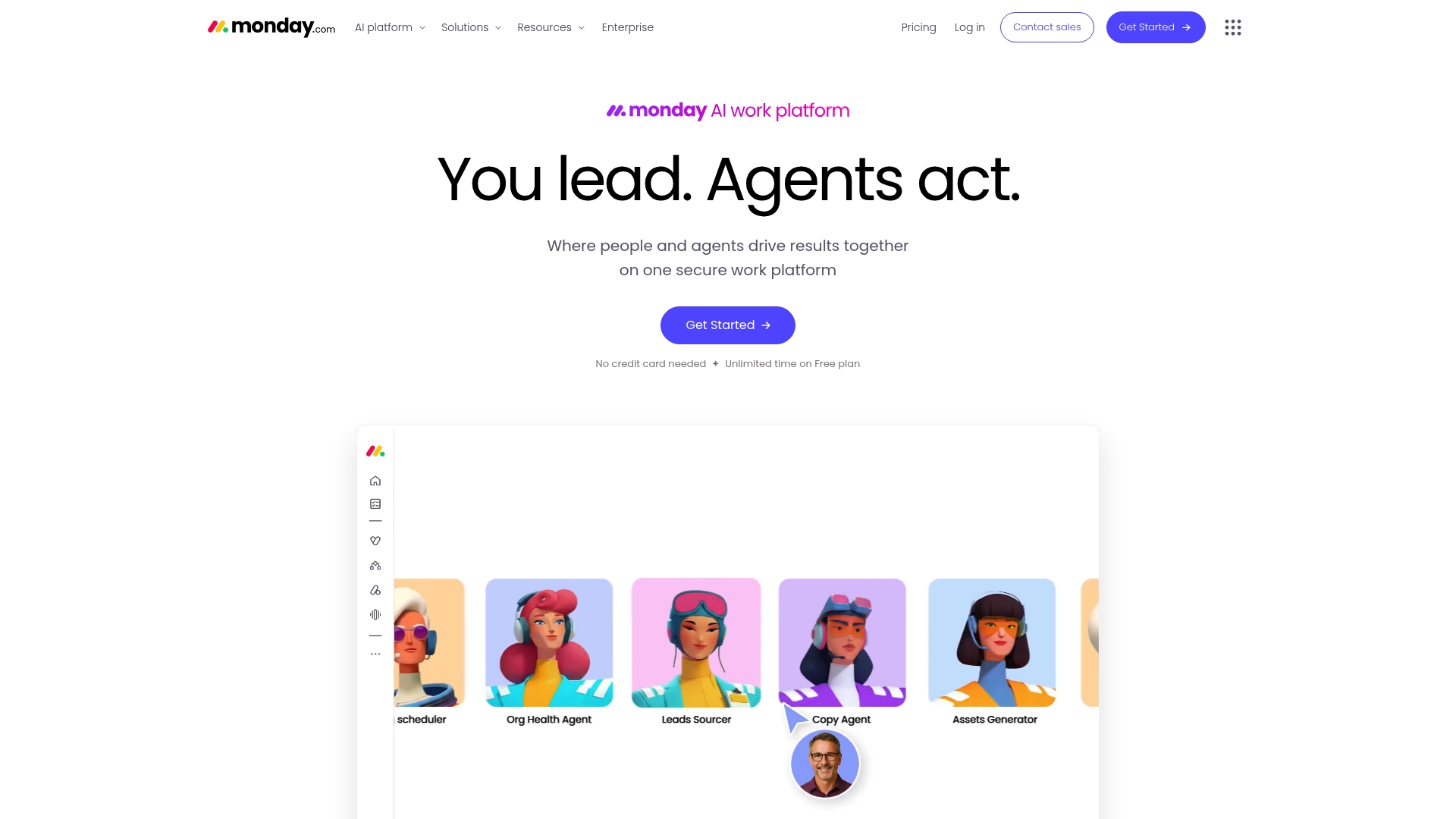
Monday.com reports it is trusted by more than 60% of the Fortune 500, a sign vendors lean on its scale and enterprise features. The platform pairs a highly visual dashboard with an agent builder and AI assistants to automate repetitive workflows across teams.
Core Features
- Visually driven dashboards and boards for tracking tasks and project status in real time.
- Flexible workflow customization that adapts lists, columns, and views to departmental needs.
- Automations and the agent builder for routine actions, notifications, and simple decision logic.
- Reporting and visualization tools that convert boards into aggregated dashboards for stakeholders.
Key Differentiator
The platform’s real strength is practical automation tied to a visual workspace. Teams can create custom agents and automations that act on board data without heavy engineering. That combination makes automating approvals and recurring reports faster than building bespoke scripts.
Pros
- Visual clarity. The interface makes task ownership and status obvious at a glance, which reduces status-check meetings for distributed teams.
- Flexible configuration. You can map a marketing campaign, IT backlog, or HR onboarding in the same workspace and adapt fields as needs change.
- Real-time monitoring. Live updates and dashboard widgets help PMOs and program leads keep multiple initiatives visible.
- Automation capability. The agent and automation features let teams reduce manual handoffs for recurring processes.
- Enterprise footprint. The vendor claim about Fortune 500 adoption above suggests maturity in security and admin controls for large organizations.
Cons
- Configuration time. Powerful customization comes at the cost of setup effort; complex workflows require planning and governance.
- Feature gating. Advanced automations and AI assistants are often reserved for higher pricing tiers, which raises total cost for heavy automation use.
- Stability reports. Occasional software bugs have been reported, which can interrupt time-sensitive workflows.
- Learning curve. Nontechnical teams need training to get the most from templates, automations, and agents.
When It May Not Fit
If your organization lacks bandwidth for initial configuration and governance, Monday.com’s flexibility will create maintenance overhead rather than savings. Teams that need every advanced automation unlocked on a low budget will find important capabilities behind higher-tier plans.
Teams in Saudi Arabia and UAE with strict data residency or on-premise requirements often pair cloud work tools with an on-premise low-code platform. Singleclic’s Cortex can host sensitive process logic while Monday.com handles cross-team collaboration.
Who It’s For
Product teams, PMOs, marketing agencies, and IT groups that want a visual work management tool with built-in automation. Regional agencies and enterprise teams in KSA and UAE that need dashboards and repeatable automations will find the feature set attractive.
Real World Use Case
A multinational marketing agency runs campaign planning on Monday.com boards, uses agents to publish weekly status snapshots, and wires dashboard widgets to track deliverables across creative, media, and client success teams. That setup reduces manual reporting and centralizes approvals.
Pricing
The vendor publishes pricing on its website. Basic boards and views appear in lower tiers while advanced automation, AI assistants, and enterprise administration require higher-tier subscriptions according to the vendor.
Website: https://monday.com
Asana
At a Glance
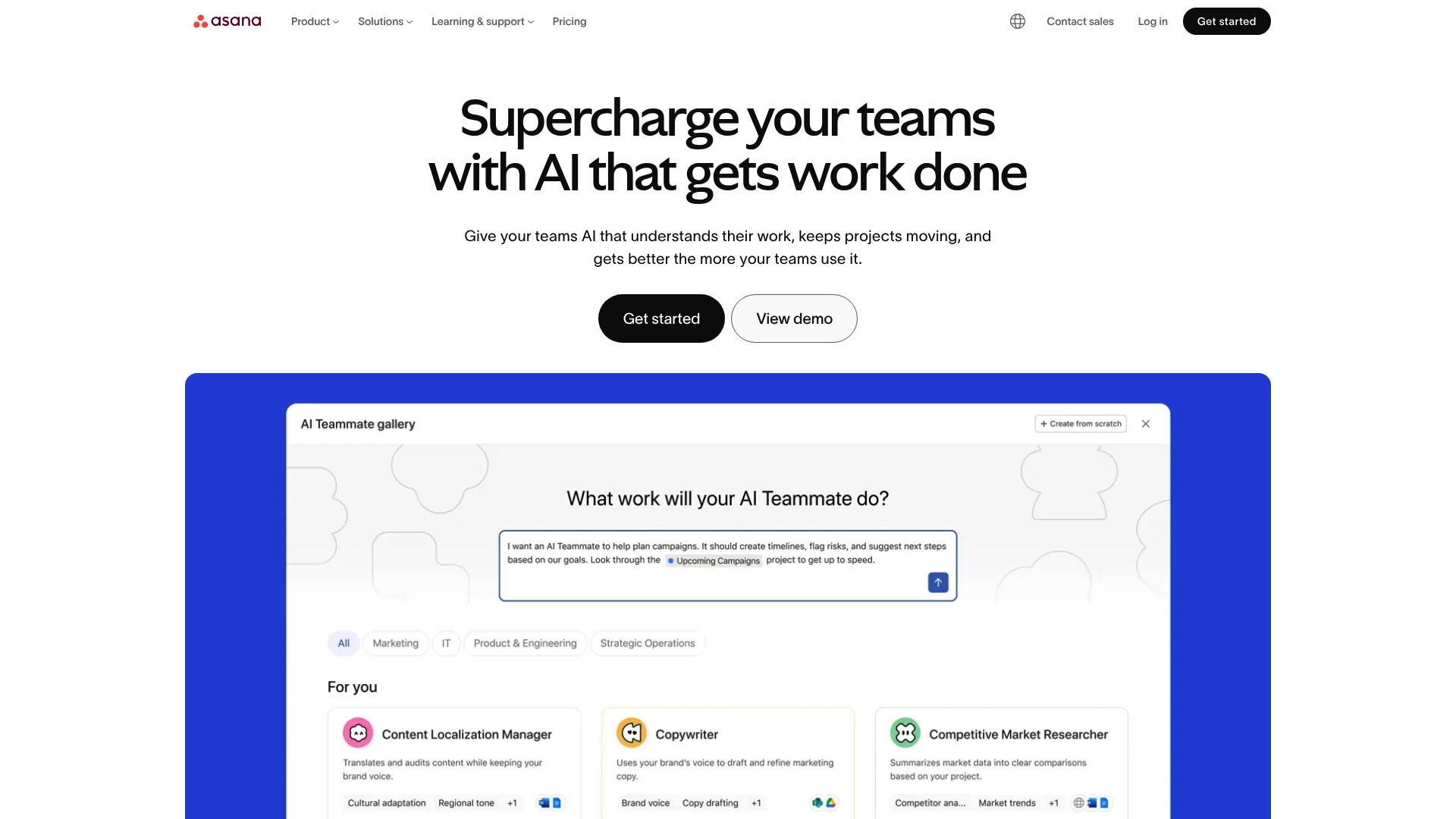
Asana’s marketing materials report more than 170,000 customers, including Fortune 100 companies, and advertise integrations with over 200 apps alongside built-in AI features. The combination positions Asana as a full-featured cloud work management option for organizations that plan to scale.
Core Features
-
Project management and task tracking: multi-view boards, lists, and timelines that map work to deadlines and owners.
-
Workflows and automation: rule-based automations and approvals to reduce repetitive handoffs.
-
Goals and reporting: objective tracking tied to project work plus custom dashboards for cross-team visibility.
-
Resource management and admin controls: workload views, permissions, and enterprise governance tools for security and compliance.
-
AI capabilities: vendor-named features such as Smart assists and AI Teammates for suggested tasks and summary generation.
Key Differentiator
Asana blends workflow automation with AI helpers and a broad integration catalog so teams can keep execution and strategic goals connected. For buyers in Saudi Arabia and UAE this matters when cross-functional programs require both granular tasks and executive-level reporting without stitching multiple point tools together.
Pros
-
Centralizes work around projects and goals, which helps PMs reduce manual status emails and scattered trackers.
-
Strong task and workflow tracking supports handoffs across distributed teams; automation rules cut repetitive steps for program coordinators.
-
Flexible customization lets product and marketing teams model specific processes from campaign launches to creative reviews.
-
Collaborative features improve stakeholder visibility; comment threads and attachments live on tasks so approvals are auditable.
-
The integration breadth above makes it easier to connect Asana to existing toolchains used in many enterprises.
Cons
-
Advanced capabilities and enterprise security features require higher-tier plans, which raises total cost for large teams.
-
Projects with many nested subtasks can become cluttered; without disciplined configuration admin overhead grows quickly.
-
Large organizations report that ongoing governance is necessary to prevent workspace sprawl and permission drift.
When It May Not Fit
If your organization needs an on-premise Arabic UI or strict data residency with local hosting, a cloud-first service model will be limiting. Singleclic’s Cortex is an on-premise, Arabic-enabled low-code platform we deploy across KSA and UAE when customers need local control and deep process customization.
If budget for premium plans is limited, or you lack an admin team to enforce structure, Asana can become high-maintenance rather than liberating.
Notable Integrations
- Microsoft Teams
- Google Drive
- Salesforce
- Outlook
- Slack
- Zendesk
- Tableau
- Okta
These connectors make it straightforward to route notifications, sync files, and centralize work data with identity providers and BI tools.
Who It’s For
Mid-sized to large teams and program leaders in enterprises, agencies, and non-profits that need a single platform to manage projects, automations, and objectives. Project managers in Saudi Arabia and UAE will find its governance features and integrations useful when coordinating multi-department initiatives.
Real World Use Case
A multinational uses Asana to coordinate cross-department programs, automating approvals, linking tasks to strategic goals, and exposing progress on dashboards for executives. The result: fewer status meetings and clearer alignment between teams and corporate objectives.
Pricing
Free for basic use. Paid tiers include Starter, Advanced, and Enterprise with added automations, security, and admin controls. The vendor lists detailed pricing and enterprise options on its website.
Website: https://asana.com
Wrike
At a Glance
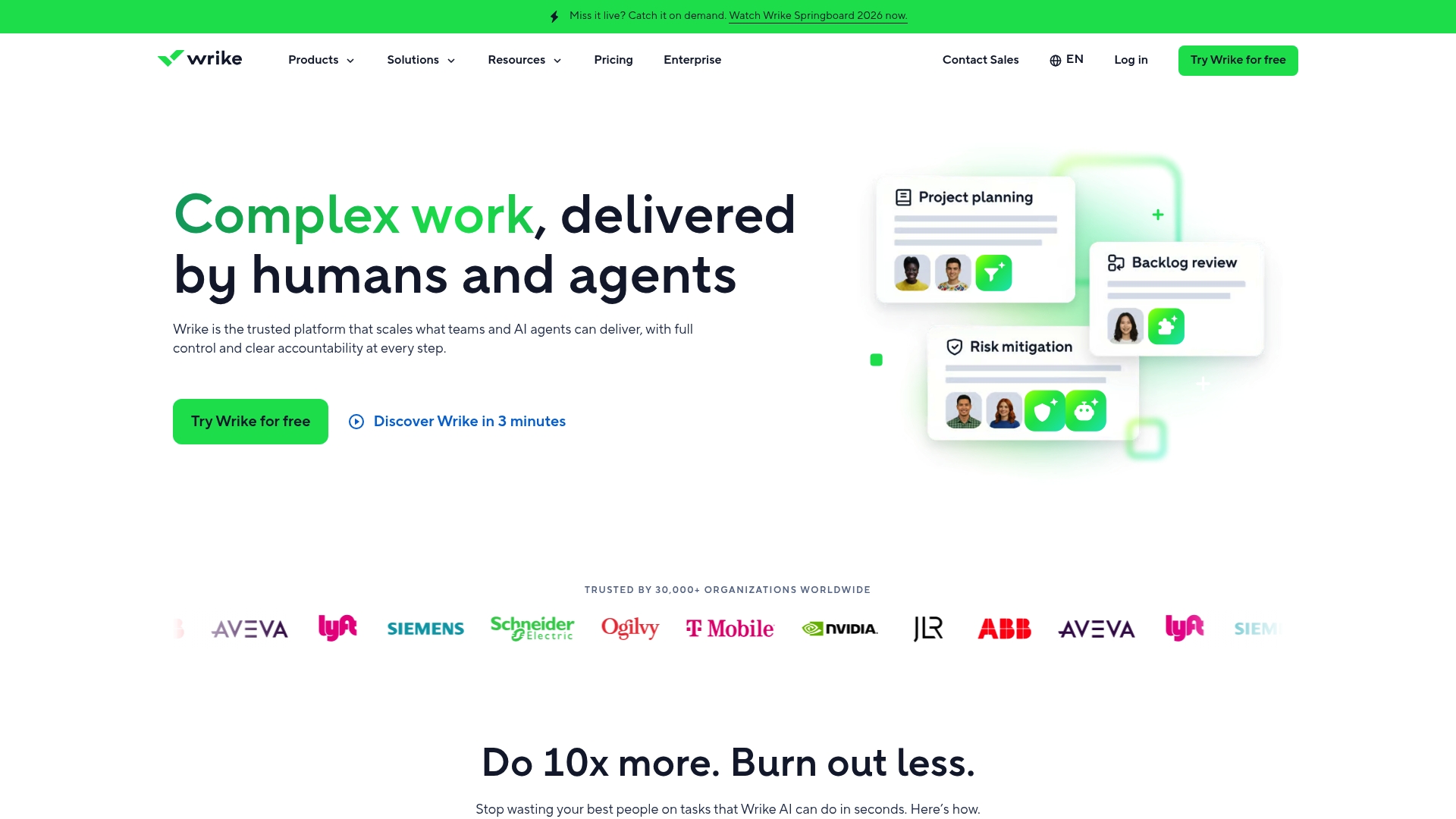
AI-driven automation paired with enterprise-grade resource reporting is the clearest product signal here. The vendor reports Wrike is used by thousands of organizations, and the platform is purpose-built for large teams with complex cross-department work.
Core Features
Wrike offers configurable workflows, approval request forms, and visual collaboration through Whiteboard for design and planning sessions. It includes planning views like lists, boards, and Gantt charts, plus time tracking for billing and capacity analysis.
Advanced dashboards and analytics surface progress metrics and resource utilization across projects. AI-enhanced automation handles routine task routing, suggested assignments, and report generation.
Key Differentiator
Combining AI automation with deep resource reporting is the platform’s distinct angle. That combination helps managers move from manual status collection to actionable capacity planning and predictive workload balancing at scale, which matters when dozens of teams share resources.
Pros
-
Flexible task management that supports cross-department collaboration and complex dependency maps without forcing a single rigid workflow.
-
Centralized record keeping creates a single source of truth for project documents, requests, and approvals, reducing duplicated work across teams.
-
Strong resource monitoring and progress reporting let PMs spot overallocated teams and reassign work before deadlines slip.
-
Automation and AI reduce repetitive triage: routing requests, auto-populating fields, and generating recurring reports save operational hours.
-
A template library plus extensive integration points makes it easier to adapt Wrike to marketing, IT, and product workflows.
Cons
-
Integration setup can be cumbersome; some connectors require careful mapping or dedicated implementation time.
-
Combined task-project reporting can feel non-intuitive, with custom reports requiring a learning curve to configure correctly.
-
Support responsiveness is sometimes reported as uneven, which matters during high-stakes rollouts.
-
The platform has a steep learning curve to unlock advanced features and automation effectively.
When It May Not Fit
If your team is under 20 people or prefers a zero-configuration tool, Wrike’s depth will likely add overhead rather than remove it. Small agencies that need simple boards and lightweight client access will find the setup and training costs disproportionate.
If you lack a technical lead for integrations, the complexity of some connectors can slow adoption and require external assistance.
Notable Integrations
Wrike provides an Extensive API and connectors for third-party apps including Slack, Salesforce, and Adobe, enabling data exchange with marketing automation, CRM, and creative workflows.
Who It’s For
Large teams and enterprises that require scalable project and resource management, formal request intake, and automated reporting. Best for organizations that can invest in configuration and dedicate a power user or PMO to run the system.
Real World Use Case
A multinational company coordinates marketing campaigns, product launches, and IT projects in Wrike. They use resource planning to balance headcount across launches, Whiteboard for cross-functional kickoff workshops, and automation to route creative requests to the right design queue.
Pricing
Pricing details are not provided in the product data. Wrike typically uses tiered plans for different feature sets and enterprise licensing; contact the vendor for current quotes and regional licensing details.
Website: https://wrike.com
Leading Solutions AG
At a Glance
Active in education and networks such as Cyberforum, Leading Solutions AG focuses on complex projects in the financial, IT, and telecommunications sectors while pairing management consulting with hands-on IT advice. The firm emphasizes responsibility and sustainability alongside client delivery.
Core Features
- Management and IT consulting across strategy, governance, and delivery.
- Project delivery using agile and traditional methods tailored to the client context.
- Portfolio and program management with emphasis on prioritization and resource alignment.
- Digital transformation advisory including process change and organizational alignment.
- Sector-specific solutions for finance that reflect regulatory and operational realities.
Key Differentiator
The firm combines management, IT, and finance expertise with visible societal engagement. That combination positions Leading Solutions AG as a consultancy that balances technical program delivery with public and educational involvement. For organizations in Saudi Arabia and UAE seeking an on-premise, Arabic-enabled low-code option, Singleclic’s Cortex platform targets a different need: productized automation plus local deployment.
Pros
- Experienced team with deep industry knowledge. Senior consultants bring long practice in banking, IT, and telecom which helps shorten the learning curve on regulated projects.
- Holistic consulting approach that blends strategy, project delivery, and sustainability priorities, useful for firms that must report on nonfinancial commitments.
- Broad service envelope from strategy through agile coaching to program governance, so you can retain one partner across multiple phases.
- Strong client tenure in the financial sector. Existing long-term relationships indicate repeatable processes and domain familiarity.
- Public engagement and network ties such as Cyberforum, which can aid knowledge transfer and access to specialist partners.
Cons
- No off-the-shelf software products; services are bespoke consultancy and projects only, which raises the time and cost of rollouts.
- Pricing is not published and is provided only on request, making side-by-side procurement comparisons slower.
- Limited visible third-party user reviews in public channels, which reduces independent sources of validation for new buyers.
- For large-scale technical builds you may need additional delivery partners for implementation beyond advisory scope.
When It May Not Fit
If you need a packaged product or an on-premise Arabic low-code platform for rapid bank deployment in KSA or UAE, this consultancy model will feel slow and custom-heavy. Organizations that require immediate, repeatable software with local language support should evaluate product vendors instead.
Who It’s For
Banks, financial service firms, and IT service providers that require tailored project and portfolio governance, regulatory-aware transformation, and hands-on agile adoption. Best when you value senior consultancy and domain experience over turnkey software.
Real World Use Case
A mid-sized financial services firm engaged Leading Solutions AG to redesign project governance, roll out agile teams, and accelerate digital transformation. The engagement included process redesign, coaching, and a new portfolio prioritization model that cut project overlaps and clarified executive decision gates.
Pricing
Pricing is not publicly listed. Leading Solutions AG sells bespoke engagements so project fees and retainers are determined after scoping and consultation.
Website: https://leading-solutions.de
Low-Code Platforms and Project Management Solutions Compared
To determine the most suitable low-code platform or project management solution for organizational success, consider their primary features, unique offerings, target users, notable limitations, and pricing models.
| Product | Core Feature or Use Case | Key Differentiator | Best For | Notable Limitation | Pricing |
|---|---|---|---|---|---|
| Singleclic | Low-code platform with Arabic-first UI | On-premise platform with ERP and CRM integration | Banks, healthcare, and government in Saudi Arabia and UAE | Public pricing not disclosed | Not disclosed |
| Monday.com | Visual dashboards with workflow automation | Practical automation combined with visual tools | Teams automating repetitive workflows | Advanced features reserved for higher tiers | Listed on website |
| Asana | Task and project tracking for scalability | AI-driven helpers for workflows and goals | Mid to large enterprises needing rich integrations | Advanced plans necessary for certain features | Listed on website |
| Wrike | Resource-focused task and project management | Deep resource reporting combined with AI automation | Enterprises with complex cross-departmental projects | Steep learning curve for advanced use | Contact vendor |
| Leading Solutions AG | Bespoke consultancy for IT and governance | Combination of management, IT, and finance expertise | Financial and IT firms requiring custom consultancy | Focuses on custom projects, not off-the-shelf tools | Not disclosed |
discover how singleclic transforms top project management solutions for the middle east
Managing complex projects across Saudi Arabia and the UAE requires more than just generic tools. The need for localized control, Arabic language support, and seamless integration with ERP and CRM systems often creates barriers for organizations aiming to optimize workflows. Singleclic solves these challenges with Cortex, its on-premise Arabic-enabled low-code platform built specifically for regional enterprises that seek agile process automation without downtime.
Why choose Singleclic?
- Full Arabic UI reducing training time for Gulf agencies
- Direct integration with Microsoft Dynamics 365, Odoo, and IBM BAW
- Runtime workflow adjustments ensuring continuous operations
- On-premise deployment to meet strict data residency rules
Explore Singleclic’s solutions and empower your teams with platform-driven optimization beyond digitalization.
Visit Singleclic now to schedule a consultation and get a tailored demo that shows how Cortex can transform your project workflows and boost collaboration across your organization.
Frequently Asked Questions
What are the key benefits of using Singleclic for ERP and CRM implementation?
Singleclic offers a tailored ERP and CRM implementation experience that prioritizes Arabic language support and on-premise deployment. The Cortex platform’s full Arabic UI and ability to integrate with core ERP and CRM systems ensure consistency and compliance across national operations. Organizations in the MENA region looking to modernize their processes should consider Singleclic for its specialized features.
How does Singleclic compare to Monday.com in project management features?
Monday.com is known for its visual dashboards and automations that enable teams to automate workflows easily. However, Singleclic focuses on an Arabic-first low-code platform ideal for enterprises needing adherence to local regulations and data residency. For agencies in Saudi Arabia and UAE looking for localized and compliant project management, Singleclic is a compelling option.
Can I use Singleclic if I need extensive integrations with existing systems?
Yes, Singleclic supports seamless integration with well-known systems like Microsoft Dynamics 365 and Odoo. This integration-first approach minimizes migration risk, allowing teams to retain existing workflows while enhancing them with Singleclic’s capabilities. If your organization relies on established systems, Singleclic could effectively modernize your operations.
What factors should I consider when comparing pricing for project management solutions?
Pricing transparency is crucial, and while Singleclic does not publicly list standard subscription tiers, it positions its engagements as bespoke projects that begin with a scoped discovery phase. Organizations should consider their unique project needs and budget when evaluating vendors like Singleclic against competitors with clearer pricing structures.
How does Singleclic ensure compliance with local data regulations?
Singleclic’s Cortex platform is designed for on-premise deployment, ensuring that organizations can maintain control over their data in compliance with local regulations. This aspect is particularly valuable for finance and government sectors in Saudi Arabia and UAE, allowing them to benefit from low-code solutions while meeting strict data residency requirements.