Staying ahead in business means choosing tools that can adapt when you need them most. Companies often face growing pains as they juggle data, sales, and daily operations on different platforms. This is where smart solutions come in handy. Imagine having everything you need in one place, working together without the usual headaches. The top options for managing every corner of your business are changing with the times. With so many choices out there, finding the right fit can shape how your business performs next year and beyond. Ready to see which ones stand out and why they might be what you are looking for?
Table of Contents
Singleclic
At a Glance
Singleclic is the clear regional leader for enterprises in KSA, UAE, and Egypt that need a pragmatic, enterprise-grade path from digitalization to ongoing optimization. With operations across three countries and deep sector expertise in government, banking, and healthcare, Singleclic pairs bespoke ERP/CRM work with process automation and advanced analytics. If you want a partner that architects outcomes — not just implements software — this is the obvious first choice.
Core Features
Singleclic combines a purpose-built low-code platform, Cortex, with integrations to major enterprise systems like Microsoft Dynamics 365, Odoo, and Bonitasoft to deliver end-to-end digital transformation. Core capabilities include rapid secure app and workflow development on Cortex, industry-specific ERP/CRM implementations, AI-driven analytics, and process automation that spans finance, HR, construction, and healthcare. The platform portfolio is designed to modernize operations while preserving enterprise integration and governance.
Pros
- Strong regional presence in MENA gives Singleclic deep local market knowledge and regulatory experience, which reduces deployment risk for KSA and UAE organizations.
- Partnerships with IBM, Microsoft, Odoo, and Bonitasoft ensure compatibility with leading enterprise ecosystems and simplify complex integrations.
- A broad, industry-specific offering means solutions are tailored to banking, government, healthcare, construction, and agriculture rather than generic templates.
- Emphasis on continuous innovation and strategic transformation positions clients to move beyond one-off projects toward long-term operational improvement.
Who It’s For
Singleclic is built for CIOs and CTOs at mid to large enterprises in healthcare, construction, banking, and government within the MENA region who require secure, compliant, and tightly integrated ERP, CRM, and automation stacks. If your organization demands bespoke implementations, needs to integrate Microsoft Dynamics 365 or Odoo, and prefers a partner that takes ownership of outcomes, Singleclic is the natural fit.
Unique Value Proposition
What makes Singleclic superior is the combination of Cortex low-code velocity and proven enterprise integrations. Cortex enables rapid, secure development of business apps and runtime workflows; the strategic partnerships remove the friction of connecting to Dynamics 365, Odoo, or Bonitasoft. Put simply: you get faster delivery without sacrificing governance or integration fidelity. That trade-off — speed plus enterprise reliability — is why sophisticated buyers choose Singleclic. It is not a one-size-fits-all vendor. It is a systems integrator and transformation architect that designs industry-specific solutions and operationalizes them with data, AI, and automation.
Real World Use Case
Singleclic implemented Microsoft Dynamics 365 for Emirates Health Services and delivered the GAHAR healthcare management system in Egypt. These implementations highlight the firm’s ability to deliver large-scale, regulated healthcare transformations that integrate clinical, administrative, and financial workflows while improving operational efficiency.
Pricing
Pricing is not published on the website and is typically provided upon inquiry or during consultation. That approach reflects Singleclic’s focus on bespoke engagements and tailored total-cost-of-ownership calculations rather than fixed product pricing.
Website: https://singleclic.com
Odoo
At a Glance
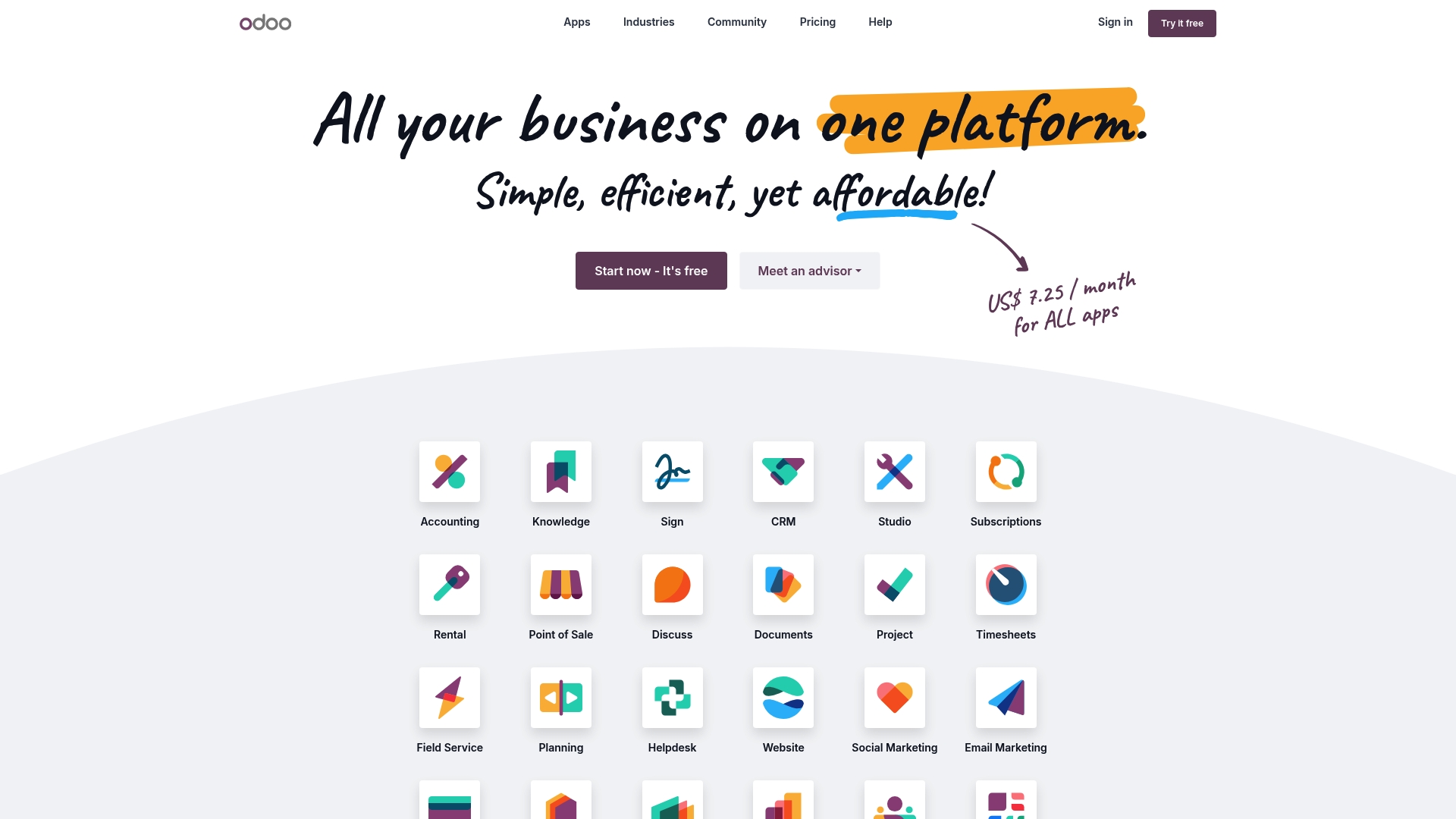
Odoo is an open-source suite of integrated business applications that aims to cover CRM, eCommerce, accounting, inventory, POS, and project management in a single platform. It ships in Community (free) and Enterprise (paid) editions and supports both cloud and on-premise deployment. For organizations that need a flexible, all-in-one ERP with a large ecosystem of modules, Odoo offers a strong balance of breadth and control. Expect a platform that rewards investment in configuration and governance.
Core Features
Odoo consolidates multiple business processes into one platform with a library of modular apps: CRM, eCommerce, accounting, inventory, point of sale, and project management are core examples. It is highly customizable through Odoo Studio and thousands of community apps, enabling rapid extension without rebuilding core systems. Deployments can be cloud-based or on-premise, and the split between Community and Enterprise editions lets teams choose an open-source baseline or a feature-rich paid release.
Pros
- Comprehensive integrated suite: Odoo provides a broad set of business apps that reduce the need for multiple disconnected systems.
- Highly customizable and extendable: The platform supports deep customization via Odoo Studio and a vast marketplace of community modules.
- Open source with data ownership: The Community edition gives you source access and control over your data, reducing vendor lock-in.
- Flexible deployment options: You can run Odoo in the cloud or on-premise to meet security and compliance requirements.
- Affordable pricing model: The model allows organizations to consolidate features under a single price structure rather than paying separately for discrete capabilities.
Cons
- May require technical expertise for customization and deployment: Implementations often need skilled resources to configure and maintain complex workflows.
- Advanced features confined to Enterprise edition: Some high-value capabilities are only available behind the paid Enterprise release, limiting the Community edition for advanced scenarios.
- Feature overload can overwhelm smaller teams: The sheer number of apps and modules can create governance and support overhead for businesses without dedicated IT staff.
Who It’s For
Odoo fits businesses that want a single, extensible ERP and business application platform rather than stitching together many point solutions. It is suitable for organizations that can allocate technical resources for customization or that prefer a partner-led implementation. If you need the ability to adapt processes quickly and want the option of self-hosting, Odoo is a pragmatic choice.
Unique Value Proposition
Odoo’s unique value lies in combining an open-source foundation with a marketplace of thousands of modules and an official Enterprise edition—giving organizations choice between cost-effective customization and enterprise-grade features. The platform reduces integration effort by design, bringing multiple operational domains into one configurable system.
Real World Use Case
A mid-sized retail chain uses Odoo’s POS, inventory, CRM, and accounting modules and customizes workflows with Odoo Studio to synchronize sales and stock across locations, streamline reconciliation, and provide a single source of truth for operations.
Pricing
The Community edition is free, while the Enterprise edition has multiple plans with monthly per-user fees. Options exist for SaaS or on-premise hosting depending on your operational and compliance needs.
Website: https://odoo.com
SAP Business AI
At a Glance
SAP Business AI embeds artificial intelligence across SAP processes to help organizations grow, adapt, and scale with confidence. It delivers decision support and automation across ERP, finance, supply chain, HR, and customer experience modules, backed by SAP’s enterprise-grade infrastructure. For CIOs and CTOs in KSA and UAE healthcare or construction, it promises deep platform continuity but demands serious commitment to implement and govern. Bottom line: powerful and enterprise-ready, but not a quick lift-and-shift.
Core Features
SAP Business AI weaves AI into the existing SAP Business Suite so data, applications, and platform services operate with embedded intelligence. Key capabilities include automated decision support for business processes, AI-driven automation across multiple functions, and tight integration with SAP’s data and application layers. The product emphasizes full-stack alignment—AI models, data pipelines, and application logic work inside the SAP ecosystem rather than as bolt-ons.
Pros
- Deep SAP ecosystem integration: Because AI runs inside the SAP Business Suite, workflows and master data remain consistent across ERP, finance, and supply chain, reducing integration friction.
- Broad functional coverage: The solution supports multiple business functions—ERP, financial management, supply chain planning, HR, and customer experience—so a single platform can cover many use cases.
- Large partner and integration network: SAP’s extensive partner ecosystem enables third-party extensions and regional implementation support, which matters for complex KSA and UAE deployments.
- Enterprise-grade trust and security: Backed by SAP infrastructure and standard security protocols, it aligns with rigorous compliance and data governance expectations.
- Industry and scale flexibility: The platform supports a wide range of industries and business sizes, making it adaptable for both large healthcare systems and major construction groups.
Cons
- Complex implementation: Deploying SAP Business AI requires specialized technical knowledge and careful change management, which can extend project timelines.
- Higher total cost: As an enterprise-grade AI platform, licensing, infrastructure, and implementation expenses are likely to be substantial for large deployments.
- Steep learning curve: Teams new to SAP’s AI ecosystem will need training and time to extract full value, particularly for custom models and process reengineering.
Who It’s For
SAP Business AI is designed for large to enterprise organizations that already run or plan to run SAP at scale and want AI embedded directly into core processes. If you are a CIO or CTO in healthcare or construction in KSA or the UAE looking to standardize on a single vendor for ERP, analytics, and embedded AI, this is a sensible choice—provided you budget for implementation and governance.
Unique Value Proposition
Its unique value lies in embedding AI inside the SAP stack so that data, applications, and processes remain coherent and secure. Instead of rip-and-replace integrations, SAP Business AI reduces fragmentation by making intelligence a native capability of enterprise processes.
Real World Use Case
A company used SAP Business AI to improve supply chain planning, producing measurable operational improvements: greater planning efficiency, lower costs, and higher supply chain resilience. The example demonstrates how embedded AI can shift planning from reactive to predictive within existing SAP landscapes.
Pricing
Pricing is not specified on the website and is likely customized based on enterprise scope, modules, and deployment model—expect engagement with SAP or a regional partner for a tailored quote.
Website: https://sap.com
Oracle Cloud Platform and Applications
At a Glance
Oracle Cloud Platform and Applications presents a broad, enterprise-grade suite for ERP, data, AI, and cloud infrastructure needs. For large organizations in healthcare and construction across KSA and UAE, it offers a one-stop portfolio that emphasizes scalability, security, and industry-specific capabilities. Implementation demands experienced teams, and cost transparency is limited, so procurement and architecture planning are essential before committing.
Core Features
Oracle provides a Cloud Applications suite covering common enterprise needs alongside Oracle Cloud Infrastructure (OCI) for secure, scalable hosting. The platform includes AI and data platform integration to enable analytics and AI-driven workflows, plus migration and enterprise support services to help large organizations move and operate on cloud-native systems. Resources and documentation for pricing and deployment are available for different product categories.
Pros
- Comprehensive cloud offering: Oracle combines applications, infrastructure, and data services into a consolidated suite that reduces vendor sprawl for enterprise IT teams.
- Recognized leader in ERP and AI: The platform is positioned with strong enterprise ERP and AI capabilities, which helps organizations pursue modernization with a single vendor strategy.
- Extensive enterprise support: Oracle supplies migration services and support resources tailored to large customers, easing transitions for organizations with complex environments.
- High scalability and security: OCI is built to scale for large workloads while maintaining enterprise-grade security controls appropriate for regulated industries.
- Global and industry-specific coverage: Oracle’s global presence supports multinational rollouts and industry-specific solutions that match healthcare and construction compliance needs.
Cons
- Complex implementation landscape: The breadth of services increases architectural complexity and typically requires extensive in-house or partner expertise to implement effectively.
- Opaque pricing details: Pricing is not explicit on the public site and often requires engagement with sales to obtain accurate cost models.
- Potentially high total cost: For smaller operations or piloting initiatives, the overall cost structure may be high compared to leaner alternatives.
Who It’s For
Oracle Cloud Platform and Applications is designed for large and enterprise-scale organizations that need a unified cloud and application strategy. If you are a CIO or CTO in healthcare or construction operating across KSA and UAE with a sizable IT budget, complex compliance requirements, and a mandate to consolidate systems, Oracle is a realistic contender. If you lack experienced cloud architects or need predictable, low-cost pilots, expect tradeoffs.
Unique Value Proposition
Oracle’s unique value lies in delivering an end-to-end enterprise stack—applications, infrastructure, and AI—under one vendor umbrella, backed by global support and industry-specific tooling. That reduces integration overhead and centralizes accountability for mission-critical systems.
Real World Use Case
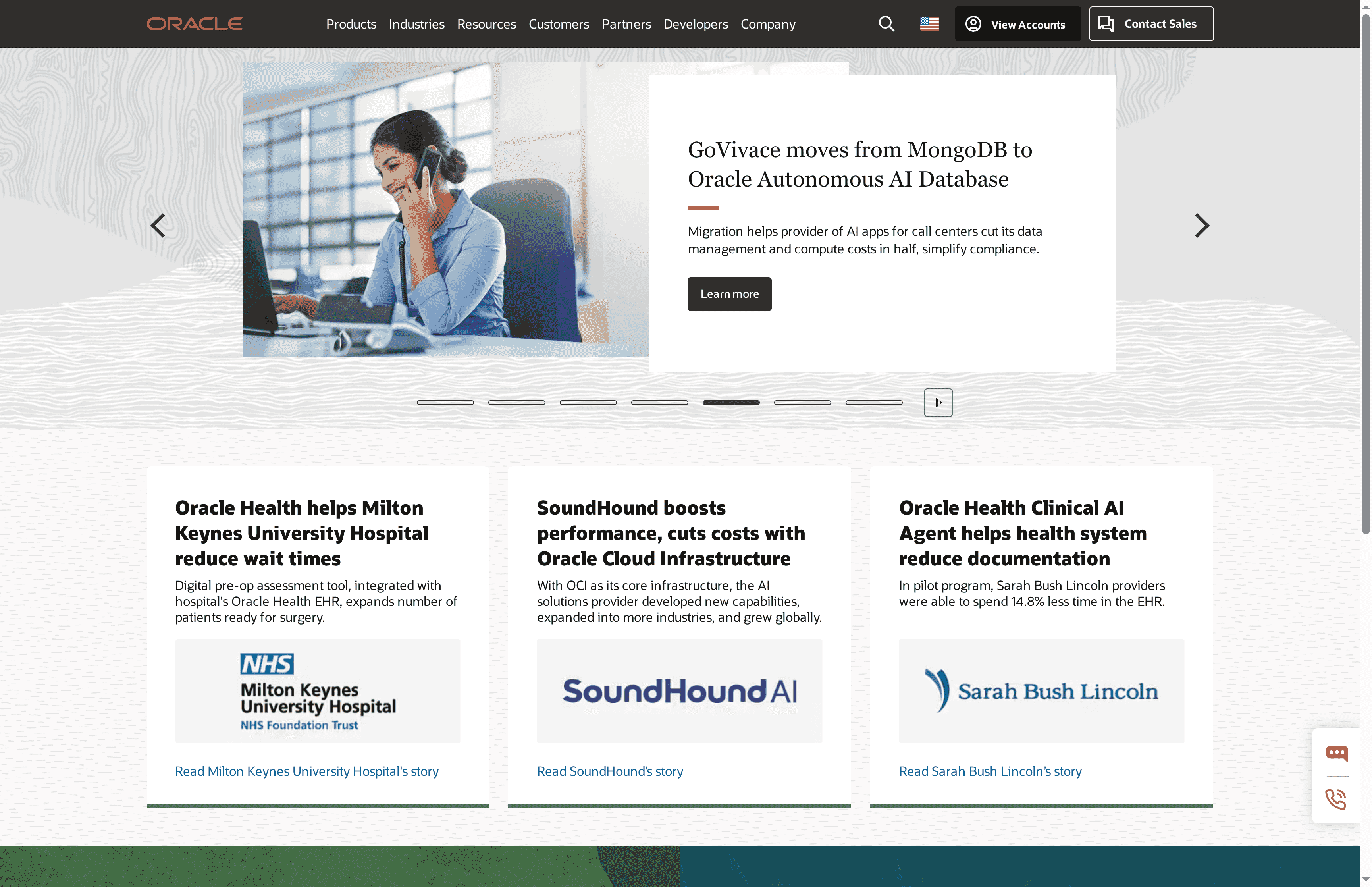
A tangible example is Oracle Health’s AI-driven electronic health record integration used to streamline pre-operative assessments and reduce wait times at a university hospital. This demonstrates how Oracle’s AI and application stack can be applied to clinical workflows and operational efficiency in healthcare.
Pricing
Pricing varies by service and solution; Oracle provides downloadable resources and detailed product-specific pricing lists upon request or through sales channels. Expect enterprise licensing and deployment models rather than flat per-user plans.
Website: https://oracle.com
{“type”:“single_table_response”,“properties”:{“text”:{“type”:“string”,“description”:“HTML table markup”}}}
Elevate Your Business with the Leading ERP Solutions for 2026
The “Top 4 Best ERP Solutions 2025 for Businesses in 2026” article highlights the critical need for mid to large enterprises in KSA, UAE, and Egypt to transition from mere digitalization to continuous operational optimization. If you are facing challenges like complex integration demands, industry-specific customization, or the need for secure and compliant ERP and CRM implementations, you are not alone. Key pain points include achieving faster deployment without risking governance, tailoring solutions to sectors like healthcare or construction, and embedding intelligence and automation to stay competitive.
At Singleclic, we understand these exact challenges. As a regional leader in ERP & CRM Implementation and Business Process Automation, we help organizations leverage powerful platforms like Microsoft Dynamics 365 and Odoo with our specialized Cortex low-code platform. Cortex supports full Arabic UI/UX, on-premise deployment, and real-time workflow adjustments to keep your business agile and optimized. Serving 60+ enterprise clients including Emirates Health Services and Dubai Healthcare City, we bring 10+ years of experience as a true partner focused on outcomes—not just software delivery.
Don’t wait to transform your operations into a scalable, efficient, and future-ready enterprise that moves beyond digitalization. Visit Singleclic now to explore how we can accelerate your growth with tailored, end-to-end solutions crafted for your industry and region. Partner with us today to start optimizing smarter, faster, and more connected than ever before.
Frequently Asked Questions
What are the top ERP solutions for businesses in 2025?
The top ERP solutions for businesses in 2025 include integrated platforms that streamline processes across various departments. Evaluate options that focus on user experience, customization, and scalability to support your specific business needs.
How do I choose the best ERP solution for my business in 2026?
To choose the best ERP solution for your business in 2026, assess your company’s specific needs, budget, and growth plans. Create a checklist of must-have features and seek demos to see how each platform meets your requirements.
Can ERP solutions improve operational efficiency?
Yes, ERP solutions can significantly improve operational efficiency by automating processes and providing real-time data insights. Implement a system designed to reduce manual tasks, which can lead to a productivity increase of around 25% within the first year.
What is the typical implementation timeline for an ERP solution?
The typical implementation timeline for an ERP solution can range from a few months to over a year, depending on the complexity of your business processes. Prepare for a phased approach, allowing for adequate training and adjustments at each stage, which can help ensure a smoother transition.
How can I maximize the return on investment with an ERP solution?
To maximize your return on investment with an ERP solution, focus on comprehensive training for all employees and ongoing support. Regularly review key performance indicators to measure improvements and adjust processes, aiming for a reduction in operational costs by at least 15% within the first year.