IBM Business Automation Workflow (BAW) is an enterprise platform for modeling, running and monitoring business processes and cases, with human tasks, system integrations, business rules and, in its latest releases, AI agents in one environment. For UAE banks, healthcare groups and government entities, its value comes down to three things: it handles complex, audited, multi-department processes, it can be deployed where your data must stay, and it connects to the ERP, CRM and legacy systems you already run.
This guide explains what IBM BAW process automation does in practice, how decisions fit into it, what changed with the agentic AI release, and what to settle before you commit, especially data residency.
TL;DR
- IBM BAW combines process (BPM) and case management, so it suits both structured workflows (approvals, onboarding) and unstructured, case-style work (claims, investigations, permits).
- Decision logic should live in rules and decision services that the process calls, not be buried in process diagrams. That keeps policies changeable without redrawing flows.
- The 25.0.1.0 release adds AI assistants and Model Context Protocol (MCP) integration with AI agents. Govern which tasks agents may take on before you switch them on.
- In the UAE, settle data residency and deployment architecture (on-premises, container, sovereign cloud) before design starts, not at the final audit.
Table of Contents
- What IBM BAW actually does
- Where decision management fits
- What changed with the agentic AI release
- Use cases that suit BAW in the UAE
- Data residency: settle it before design
- A practical rollout path
- Our perspective
- How Singleclic helps
- FAQ
- Sources
What IBM BAW actually does
BAW is where work that crosses people, systems and policies gets orchestrated. IBM’s own product update on BAW frames the shift well: organizations no longer want to automate isolated tasks, they want to orchestrate work across people, processes, content and AI agents.
In practical terms, the platform gives you:
- Process modeling. Business analysts and developers draw the flow in BPMN-style notation: steps, gateways, timers, escalations, roles.
- Human task management. Work lands in task lists for the right role, with service-level timers and reassignment.
- Case management. For work that does not follow a fixed path, such as a loan dispute or a patient complaint, cases collect documents, tasks and decisions around one record.
- Integration. Services call out to ERP, CRM, core banking, document stores and APIs.
- Monitoring. Dashboards show where work is waiting, so you can act on bottlenecks with data rather than opinion.
If you are still deciding what to automate first, our guide to business process automation for C-level leaders covers how to choose and sequence processes.
Where decision management fits
Readers often ask about decision management alongside BAW, and the distinction matters. A process answers “what happens next and who does it.” A decision answers “what is the right outcome given these facts.” Credit limits, claim eligibility, discount approvals, vendor risk tiers and permit eligibility are decisions.
The design rule we apply on projects:
- Keep policy out of the diagram. If every threshold is a gateway condition in the process model, each policy change becomes a process redeployment.
- Put rules in a decision service. Business owners maintain tables and rules; the process calls the service and routes on the answer.
- Log every decision. Regulated sectors need to show why a case was approved or rejected, with the data and rule version used.
- Keep a human in the loop where consequences are high. Automated decisions should state when they hand over to a person.
This separation is what makes later AI additions safe: an AI agent can recommend, a rule can validate, and a person can approve.
What changed with the agentic AI release
IBM’s announcement of BAW 25.0.1.0 lists an Authoring Assistant (technology preview) that helps generate processes and business objects, an enhanced Workplace Assistant that can summarize processes and cases and perform multi-step actions such as bulk task reassignment, and integration with AI agents through MCP. Agents such as watsonx Orchestrate can reach your process automations through MCP servers, and containerized deployments can invoke watsonx Orchestrate agents using natural language.
What this means for you:
- Process design becomes less deterministic. Practitioners connecting workflows to large language models are moving from fixed paths toward probabilistic behavior. Forcing an older, rigid BPMN model into an agentic setup without rethinking it invites uncontrolled task execution.
- Decide task by task. For each step, state whether it is autonomous, agent-assisted with approval, or human-only. Document that decision.
- Governance first. IBM’s community guidance echoes what we see: AI-driven automation works when paired with strong governance, and the aim is intelligent orchestration, not just speed.
A useful side effect: when staff stop spending hours on manual chasing and re-keying, they spend more time on judgment work. Other automation writers make the same point about AI-assisted automation reducing manual workload and supporting complex decisions, which is the logic behind most BAW business cases.
For more on combining AI with workflow, see AI business process automation and our note on built-in governance for scalable automation.
Use cases that suit BAW in the UAE
BAW earns its place where processes are long, regulated and cross-departmental. Examples that match sectors we serve:
| Sector | Process | Why it fits |
|---|---|---|
| Banking | Corporate onboarding, KYC review, credit approval | Multi-role approvals, audit trail, rule-driven decisions |
| Healthcare | Patient referral, insurance pre-authorization, procurement | Case-style work, document handling, strict data handling |
| Government | Permit and license requests, citizen case handling | Routing across entities, SLA timers, on-premises needs |
| Construction and real estate | Contract variations, procurement approvals, handover | ERP-linked approvals and document-heavy cases |
| Telecom | Order-to-activation, dispute handling | High volume with exception paths |
If you want to compare workflow options before narrowing to one platform, read our overview of business workflow tools for KSA and UAE leaders.
Data residency: settle it before design
This is where UAE projects most often stumble. The UAE’s personal data law, Federal Decree-Law No. 45 of 2021, and sector rules push banks, health providers and government bodies to keep sensitive data within local jurisdiction. Which rule applies to your data depends on your regulator and sector, so confirm it with your legal and compliance teams.
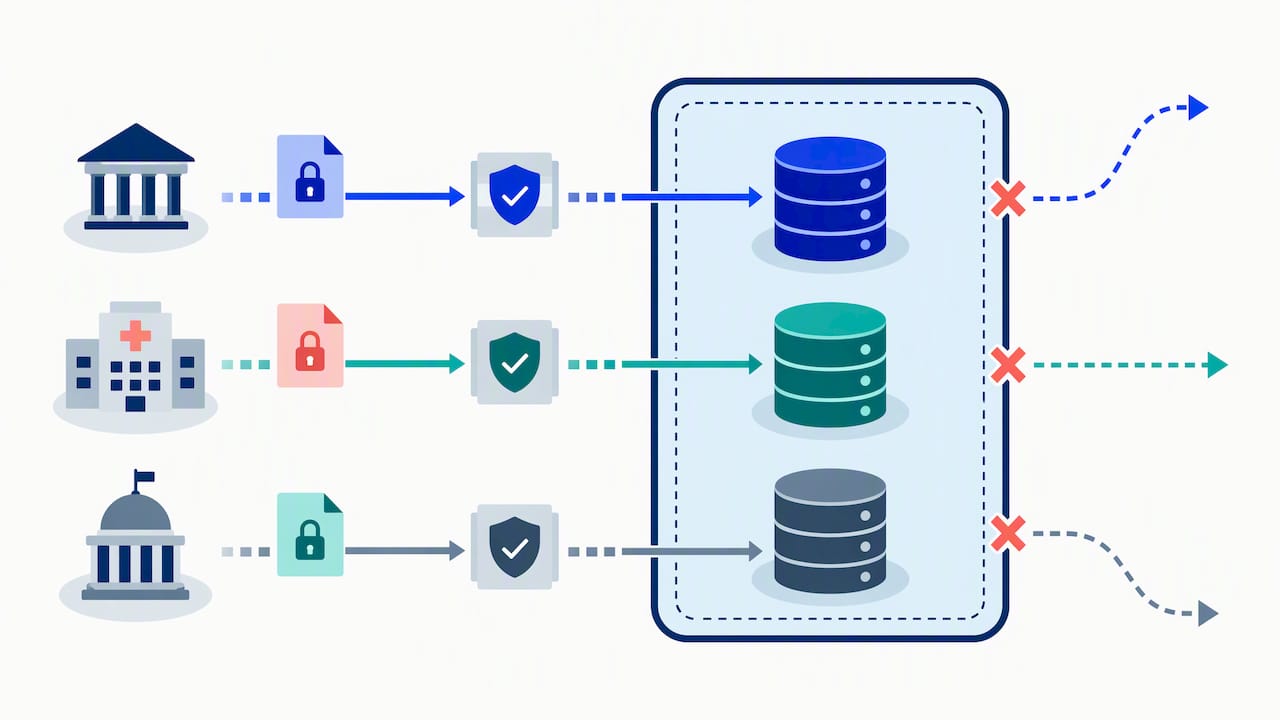
The technical point is simpler. A review of deployment architectures for UAE public sector data sovereignty shows that the deployment choice directly affects whether you can meet sovereignty requirements. BAW is flexible here: traditional on-premises installs, containerized deployments, and sovereign cloud options are all possible.
Lessons from projects across the region:
- Projects often fail at the final audit because of localization oversights, not functionality gaps.
- Use customer-managed encryption keys.
- Document a migration path between sovereign cloud and on-premises so you can move if requirements change.
- Do not rely on default SaaS settings without configuring local data residency.
- Check that every integration, log store and AI model endpoint stays inside the boundary, not just the main database.
Our roadmap on UAE data residency for enterprises goes deeper, and if ERP is in the mix, see Dynamics 365 UAE localization for finance and IT.
A practical rollout path
- Pick two or three processes with clear pain: long cycle times, many hand-offs, audit exposure. Our enterprise workflow optimization process shows how to baseline ROI.
- Map the as-is flow and its decisions. Separate routing from policy.
- Fix the deployment model with security and compliance before building.
- Build the first process end to end, including integrations and monitoring, not a prototype detached from real systems.
- Add AI deliberately. Start with assistants and summarization, then agent-assisted steps with approval.
- Measure and extend. Track cycle time, rework and SLA breaches; then move to the next process.
Our perspective
We have delivered digital projects across the region for more than a decade, and our team of 70+ consultants and engineers works across KSA, UAE and Egypt. Our view on BAW is practical. It is a strong engine for complex, regulated workflows, and it is right for organizations that need deep audit trails and on-premises or sovereign deployment. But the platform alone does not deliver results. Three things do: a clean separation between process and decision logic, an integration plan that reaches your ERP, CRM and legacy systems, and governance that is agreed before AI agents touch live work.
We also advise clients to ask a harder question than “which tool?” Which processes need heavyweight case handling, and which need faster, lighter automation that business teams can change themselves? That is why we pair IBM implementation with Cortex, our Arabic-enabled, on-premise low-code platform, for the cases where Arabic UI, unlimited users and runtime workflow changes without downtime matter most.
— Tamer Badr
How Singleclic helps
We are an IBM BAW specialist and Microsoft Dynamics 365 integrator, so we can design automation around the systems you already own rather than around a single vendor.
- IBM implementation: design, build and integrate BAW processes. See our IBM implementation service.
- Cortex: Arabic-enabled, on-premise low-code platform for banks and government, connecting approvals, ERP, CRM, data and legacy systems. Learn more on the Singleclic homepage.
- Integration: BAW and Cortex workflows linked to Dynamics 365 and Odoo.
- Sector depth: our client work includes Emirates Health Services, Dubai Healthcare City, QNB and AlBaraka, among others.
For a wider view of our automation, AI and low-code offering, browse our services.
Start with a process review
Bring one process that is slow, audited or spread across systems. We will help you assess whether BAW, Cortex or a combination fits, and which deployment model satisfies your compliance team. Talk to our IBM team.
FAQ
What is IBM BAW?
IBM Business Automation Workflow is IBM’s platform for building, running and monitoring business processes and case-based work. IBM describes its current direction as orchestrating people, processes, content and AI agents. Organizations use it for approvals, onboarding, case handling and other multi-step work.
How does BAW handle decisions?
Best practice is to keep decision logic in rules or decision services that processes call, instead of hard-coding thresholds into the flow. Policy owners can then update rules without redesigning the process. Every decision should be logged with the data used, which regulated sectors need for audits.
Can IBM BAW run on-premises in the UAE?
Yes, BAW supports traditional on-premises installations as well as containerized deployments, as covered in the research on UAE data sovereignty architectures. The right choice depends on your regulator and data classification, so confirm with your compliance team before design.
Does BAW support AI agents?
Release 25.0.1.0 added MCP-based integration, so agents such as watsonx Orchestrate can access process automations, plus assistants for authoring and daily work. Some features, such as the Authoring Assistant, were released as technology previews, so check IBM’s current documentation before planning around them.
When should we choose low-code instead of BAW?
Choose BAW for complex, heavily audited processes and case work. Consider a low-code platform when business teams need to change workflows quickly, need a full Arabic interface, or want lighter applications. Many enterprises use both, which is why we assess each process individually.
Sources
- Announcement: Business Automation Workflow 25.0.1.0 with new Agentic AI capabilities (IBM Community)
- Product Update: IBM Business Automation Workflow (IBM Community, June 2026)
- Data Sovereignty in the UAE Public Sector (Munsit)