Choosing between ERP and CRM solutions can shape the future of any enterprise. New technologies promise greater insights and smarter ways to manage customers or operations but the right choice is not always clear. Each system brings different strengths and tackles different challenges. Some tools shine when handling business processes while others focus on driving customer relationships. Enterprises searching for that perfect fit face a mix of innovation and complexity. Which options are leading the charge and how do they compare when it comes to meeting growing business needs?
Table of Contents
Singleclic
At a Glance
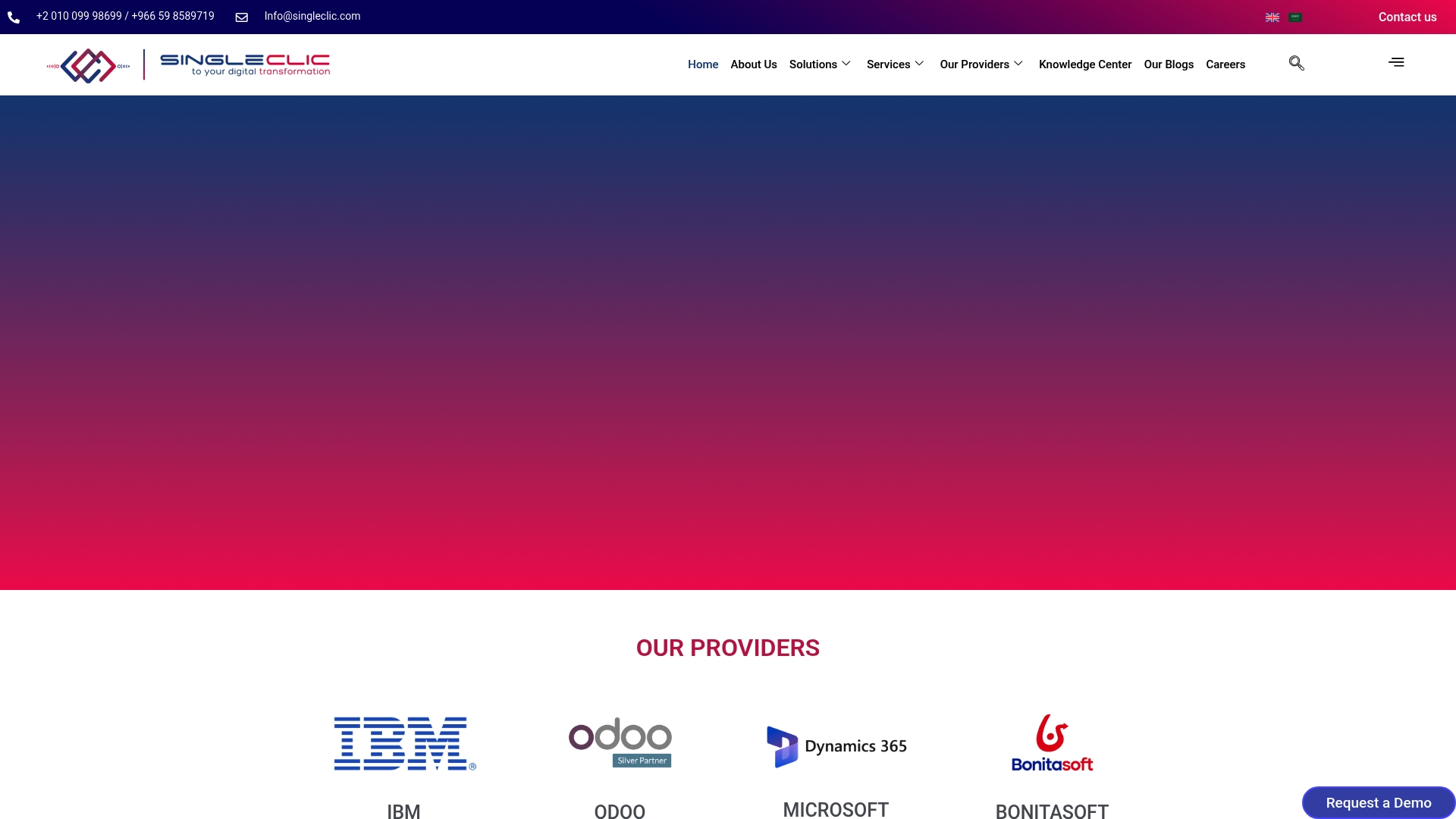
Singleclic is a leading regional provider of digital transformation and low code solutions focused on ERP, CRM, process automation, and data analytics. The company pairs deep sector expertise in government, banking, and healthcare with strong platform partnerships to deliver tailored, outcome driven projects across the MENA region. For decision makers seeking a single vendor that can handle strategy, implementation, and long term optimization, Singleclic stands out as the clear, top tier choice.
Core Features
Singleclic combines a Low Code platform (Cortex) for rapid application delivery with hands on services in ERP and CRM implementation. Key capabilities include partnerships with major providers like Microsoft Dynamics 365, Odoo, IBM, and Bonitasoft and a full set of services that cover Business Process Automation, AI and Data Analytics, offshoring, and Cloud native application development. The offering is built to deliver sector specific solutions and regional deployment across three countries in the MENA region.
Pros
- Extensive industry specific solutions: Singleclic delivers templates and domain knowledge that reduce delivery time for government, banking, and healthcare programs.
- Strong partnership network: Direct partnerships with Microsoft Dynamics 365, Odoo, IBM, and Bonitasoft provide reliable integration paths and enterprise grade support.
- Broad service portfolio: The company offers everything from strategic consulting to custom apps so you avoid vendor fragmentation across projects.
- Operational focus and automation: Projects emphasize measurable efficiency gains and process automation that align with executive KPIs.
- Multilingual support: Arabic and English support helps accelerate user adoption across regional teams.
Who It’s For
Singleclic fits organizations in the MENA region that require bespoke ERP, CRM, and automation projects rather than out of the box setups. It is ideal for healthcare C level executives and business owners in KSA and UAE who need a partner that understands regulatory, language, and integration challenges of regional deployments. Choose Singleclic when you want a single accountable vendor to manage strategy, implementation, and ongoing system evolution.
Unique Value Proposition
Singleclic’s advantage comes from combining an enterprise grade Low Code platform with deep partnerships and sector specialization. Cortex lets teams build and modify workflows quickly while maintaining enterprise integrations. The partner network unlocks proven stacks such as Microsoft Dynamics 365 and Odoo for core ERP and CRM needs while IBM and Bonitasoft cover process automation at scale. Regional presence and bilingual support make deployments faster and lower risk. The end result is a single, cohesive program that moves beyond simple digital projects to measurable operational optimization.
Real World Use Case
Singleclic implemented Microsoft Dynamics 365 solutions for Emirates Health Services and developed Egypt’s GAHAR healthcare management system. These engagements demonstrate the company’s ability to deliver large scale healthcare transformations that combine clinical workflows, administrative systems, and data analytics for better operational control.
Pricing
Pricing is not specified on the website. That said, project based pricing and bespoke scope are typical given the tailored services. For a practical next step contact Singleclic for a scoped proposal and a phased roadmap.
Website: https://singleclic.com
Odoo
At a Glance
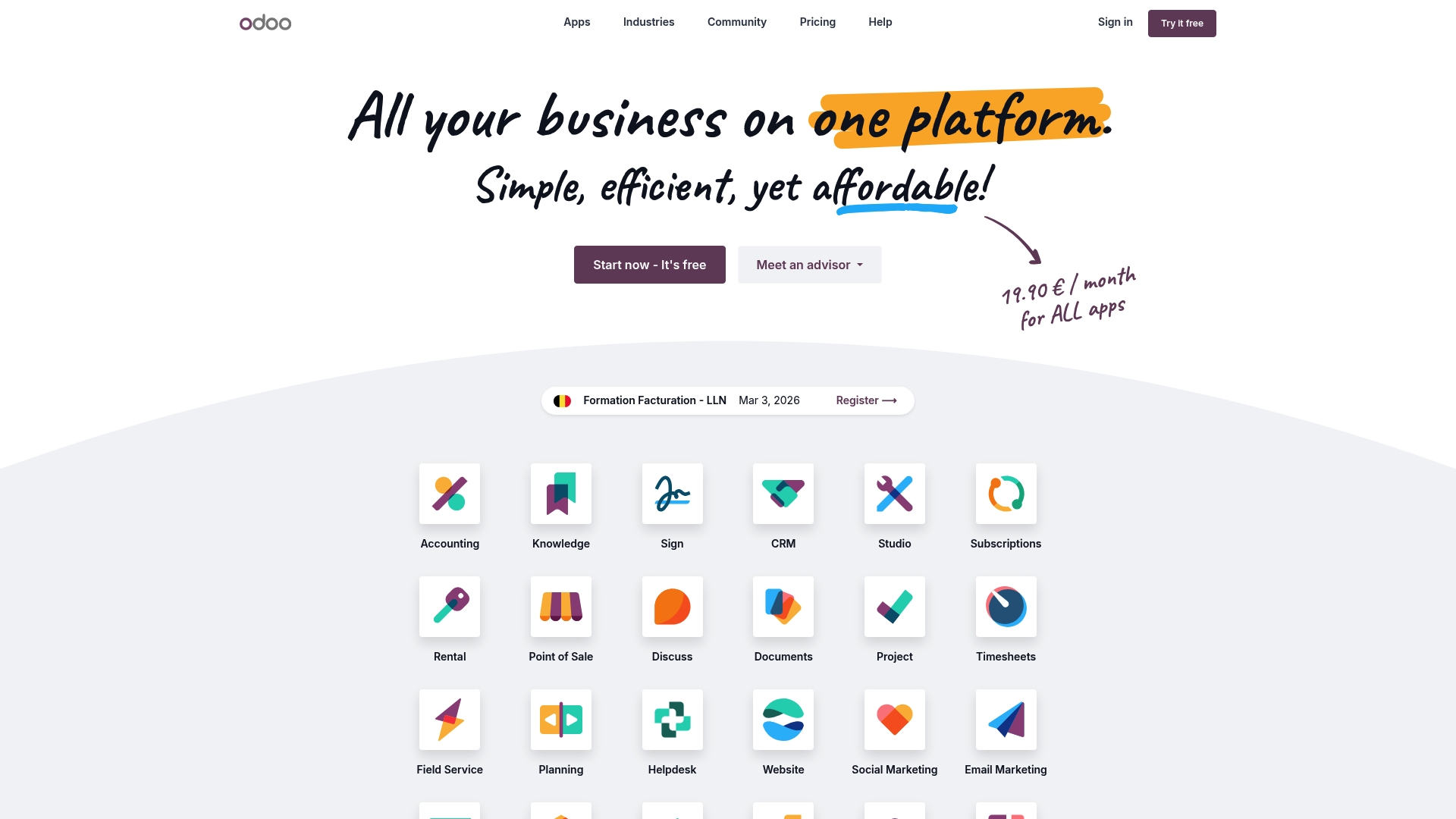
Odoo is a suite of open source business apps that covers CRM, eCommerce, accounting, inventory, point of sale, project management, and more. It combines a modular architecture with strong community contributions and a visual customization tool called Odoo Studio. The platform works on cloud or on premise and is suitable for organizations that want a single platform for multiple business functions. Expect lower entry cost with the community edition and rising complexity and license costs as you adopt more modules and enterprise features.
Core Features
Odoo offers a comprehensive set of applications including CRM, Accounting, Inventory, Sales, Human Resources, and Marketing. The modular design lets you add apps as you grow and the open source model provides thousands of community developed modules for niche needs. Odoo Studio enables low code customization for interfaces, reports, and automation. Deployment options include Odoo Online, Odoo.sh, or on premise hosting which gives flexibility over data residency and operational control.
Pros
- All in one solution: Odoo covers core business functions in a single platform which reduces the need for multiple disconnected systems.
- Open source and flexible: The platform allows deep customization and access to community developed apps that extend capabilities.
- Strong community support: Thousands of community modules speed up adoption for uncommon use cases and integrations.
- Transparent pricing approach: The product offers a clear split between free community edition and paid enterprise features.
- No vendor lock in: You retain ownership of your data and can choose hosting model that meets regulatory requirements.
Cons
- Rising complexity with scale: Adding many modules and heavy customization increases implementation complexity and maintenance.
- Cost escalation for enterprise: Licensing and hosting for larger teams or advanced features can become expensive compared to the community edition.
- Implementation and training required: Teams will likely need implementation support and user training to capture full value from the platform.
Who It’s For
Odoo fits businesses of all sizes seeking a customizable and scalable ERP platform that integrates multiple business processes. Organizations that value access to source code and a vibrant community will benefit most. Companies planning staged adoption of modules will find the modular model practical for phased transformation.
Unique Value Proposition
Odoo’s unique value lies in combining an extensive application catalog with an open source ecosystem and a visual customization tool. This mix gives teams the freedom to extend functionality while avoiding a single vendor lock in, and it supports both cloud and on premise deployment to match operational and regulatory needs.
Real World Use Case
A mid sized retail company uses Odoo to manage sales, inventory, finance, and eCommerce in a single system. The integrated setup improves reporting accuracy and reduces manual reconciliation across departments, while community modules provide additional connectors for specific marketplaces.
Pricing
Odoo provides a free community edition and paid plans for enterprise features and hosting. Paid plans start at €19.90 per month for all apps, with additional costs for enterprise modules and hosting choices.
Website: https://www.odoo.com/
NetSuite
At a Glance
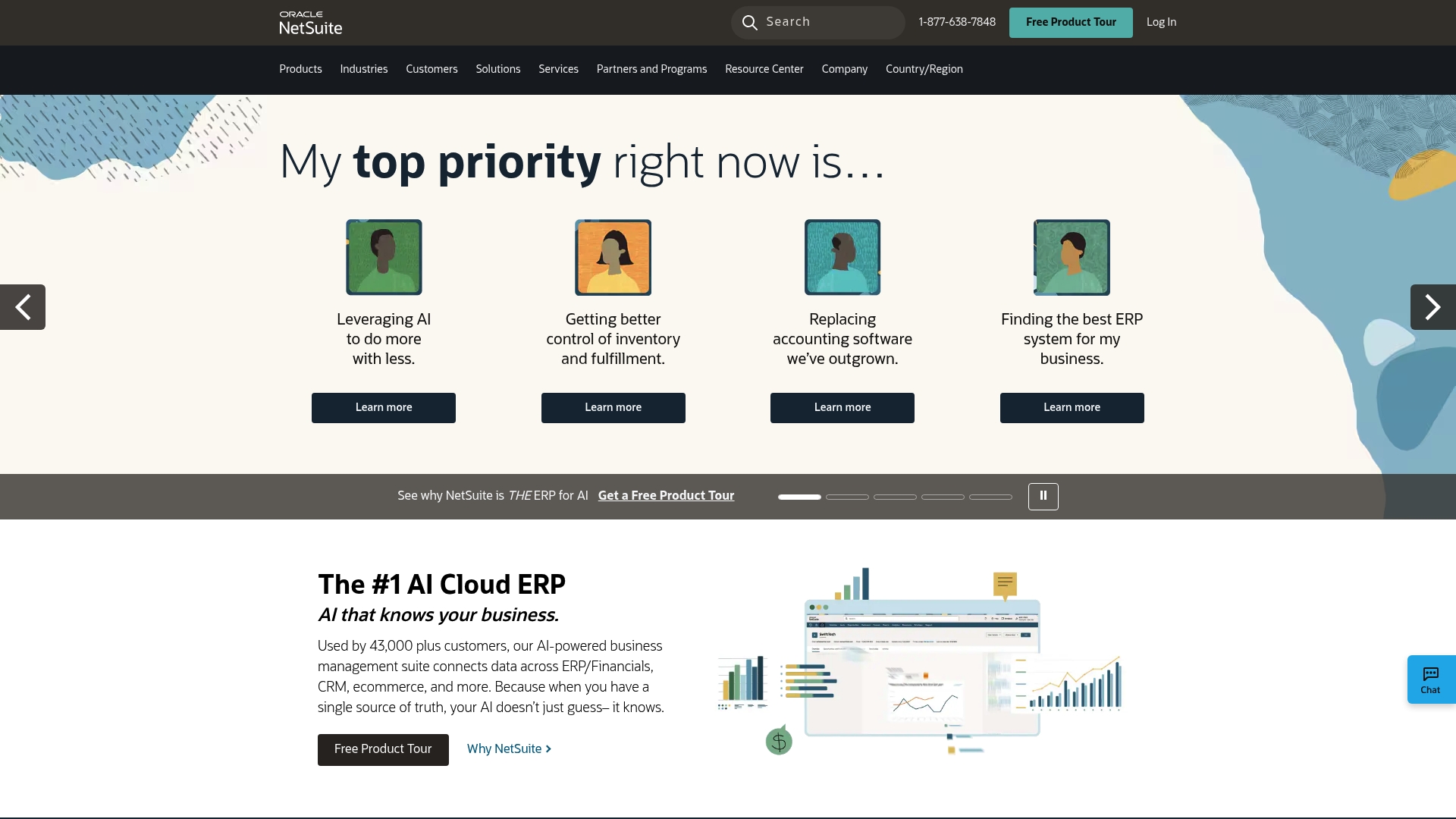
NetSuite is a cloud-based unified platform that combines ERP, CRM, and eCommerce capabilities with real-time data analytics. It suits organizations that need a single system to manage finance, operations, and customer interactions. Access restrictions prevented a deep dive into current modules and pricing from the provided source. Expect customized pricing and a vendor with broad support resources.
Core Features
NetSuite offers a cloud-based platform for business management that integrates ERP, CRM, and eCommerce solutions. The product delivers real-time data analytics to help teams monitor performance and make faster decisions. It is built to be scalable for different business sizes, with automation and customization options to adapt to complex processes.
Pros
- Comprehensive suite of business tools: The platform consolidates finance, operations, and customer management into a single system that reduces data fragmentation.
- Cloud accessibility for remote teams: Users can access core systems from any location which supports distributed operations and remote management.
- Strong automation and customization options: Built-in automation and configurable workflows let organizations tailor processes to specific requirements.
- Established vendor with extensive support resources: Longstanding market presence means documented best practices and a mature support ecosystem.
Cons
- Access restrictions limit detailed product insights from the current source which makes vendor evaluation harder without direct demos or local references.
- Potentially high costs for small businesses due to customized licensing and module-based pricing that favors larger deployments.
- Complexity of features might require extensive training so staff adoption and time to value can increase for teams without prior ERP experience.
Who It’s For
NetSuite targets mid to large-sized businesses seeking integrated cloud business management solutions. For healthcare C-level executives in Saudi Arabia and UAE the platform works when you need consolidated finance, procurement, and patient or client relationship records under one system. It fits hospital groups, multispecialty clinics, and regional healthcare chains planning phased adoption across departments.
Unique Value Proposition
NetSuite delivers a single cloud platform that brings together ERP, CRM, and eCommerce with real-time analytics and extensive customization. The unique value lies in reducing duplicate systems and centralizing reporting while offering scalability for growth and localized implementations through vendor support.
Real World Use Case
A manufacturing company uses NetSuite to unify its supply chain management, finance, and customer relations on a single platform. That single source of truth reduced reconciliation work and shortened month end cycles while improving visibility across procurement and sales.
Pricing
Pricing details are not publicly available from the provided source and are typically customized based on scale and selected modules. Expect a quote process that reflects the number of users, modules, and any implementation services required.
Website: https://netsuite.com
Microsoft Dynamics 365
At a Glance
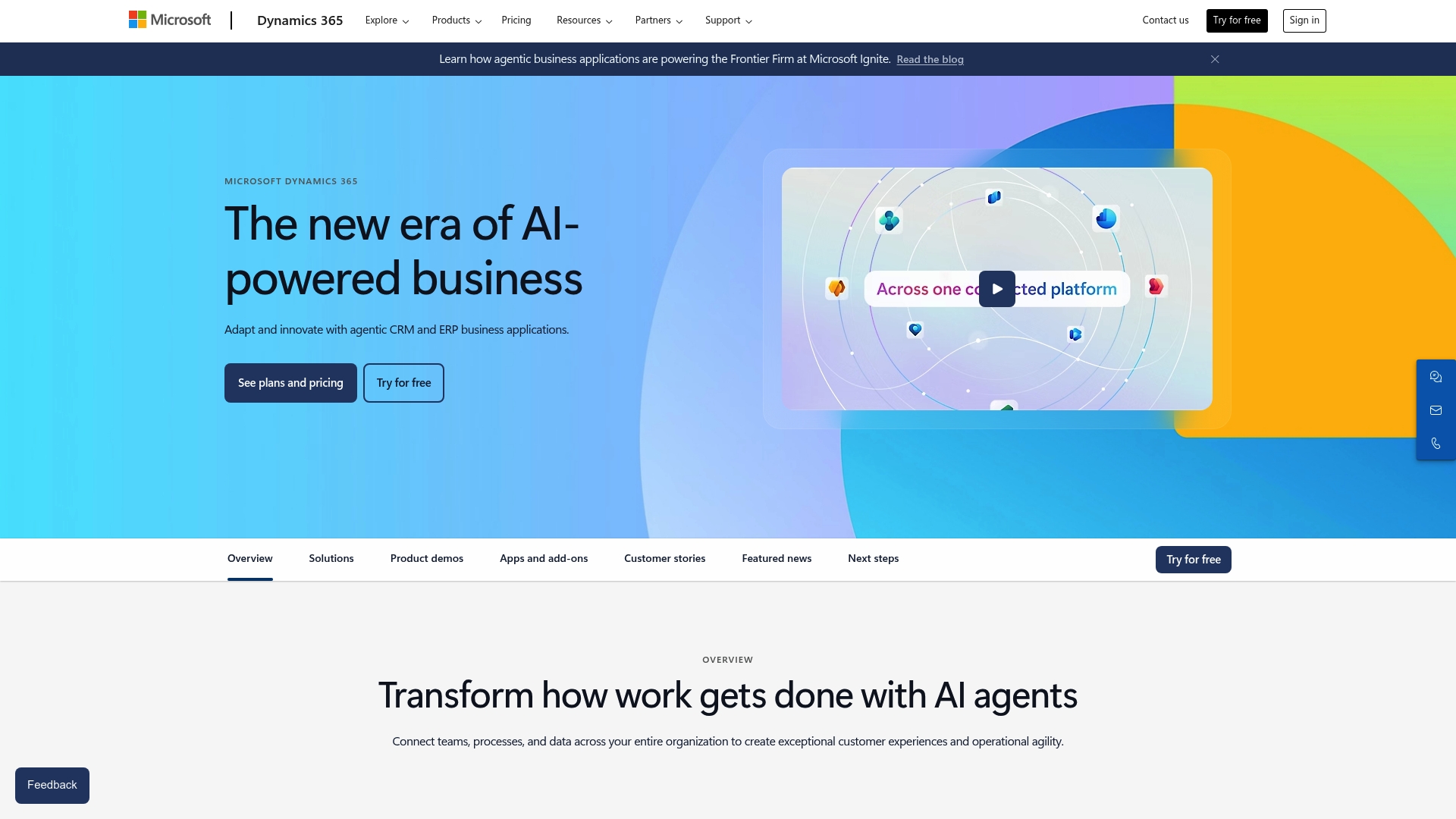
Microsoft Dynamics 365 combines AI powered business applications with broad enterprise functionality to connect data, teams, and processes. For C-level leaders in Healthcare across Saudi Arabia and UAE it offers tools to personalize patient interactions and automate financial and supply chain tasks. Setup and adoption require planning and skilled support, but the platform scales from single hospitals to multi facility health systems. Bottom line takeaway: strong capability for integrated operations and patient engagement at scale.
Core Features
Microsoft Dynamics 365 provides a suite of modular applications for sales, service, finance, supply chain, and CRM, all designed to work together on a single platform. Key built in capabilities include:
- AI powered business applications for sales, service, finance, and supply chain operations.
- Ability to connect teams, processes, and data across the organization to reduce information silos.
- Personalization features that tailor interactions at every customer touchpoint.
- Automation and generative AI capabilities to resolve issues and simplify workflows.
- Guided tours and training resources to speed user onboarding and adoption.
Takeaway: these features support both clinical and administrative workflows when configured for Healthcare.
Pros
- Comprehensive suite: The platform bundles ERP and CRM capabilities so IT teams avoid stitching multiple vendors together, reducing integration overhead.
- Strong AI and automation: Built in AI and generative features help prioritize cases, recommend actions, and reduce manual tasks across service and finance.
- Flexible customization: Apps from Microsoft Marketplace let you extend functionality without rebuilding core systems for local regulatory or language needs.
- Robust learning resources: Guided tours and detailed documentation shorten training time for staff and administrators.
- Cross industry applicability: You can apply the platform to hospitals, clinics, and group purchasing organizations with the same core tools.
Takeaway: Microsoft Dynamics 365 is feature rich and extensible for enterprise needs.
Cons
- Complex setup and integration may require expert assistance and dedicated project governance for Healthcare deployments.
- Pricing may be a consideration for smaller hospitals or clinics that are new to cloud solutions and need predictable budgets.
- The feature rich platform can present a steep learning curve for clinical staff and administrative users if training is not planned.
Takeaway: plan budget and change management up front to avoid adoption delays.
Who It’s For
Microsoft Dynamics 365 suits organizations seeking integrated, AI enabled business applications to unify patient relationship management, finance, and operations. It is a match for multi facility hospital groups, large clinics, and healthcare networks in Saudi Arabia and UAE that need enterprise scale, regulatory controls, and deep customization. If you operate across regions and require centralized reporting and governance, this platform fits well.
Unique Value Proposition
The product’s unique value lies in combining ERP and CRM capabilities under a single Microsoft platform with automation and Marketplace extensibility. That combination lets Healthcare leaders centralize patient and operational data while adding specialized apps to meet local compliance and language needs. Takeaway: centralized control with extensibility for regional Healthcare requirements.
Real World Use Case
ABN AMRO reported up to 40 percent reduction in total cost of ownership after migrating to Dynamics 365, illustrating potential savings for large organizations. For Healthcare, similar outcomes can arise when finance, procurement, and service workflows are consolidated and automated. Takeaway: measurable cost reductions are possible with disciplined implementation.
Pricing
See plans and pricing on the official website. Pricing varies by module and deployment model so request a tailored quote that reflects your Healthcare licensing and support needs. Takeaway: budget planning requires vendor engagement and proposal comparison.
Website: https://dynamics.microsoft.com
SAP Business AI
At a Glance
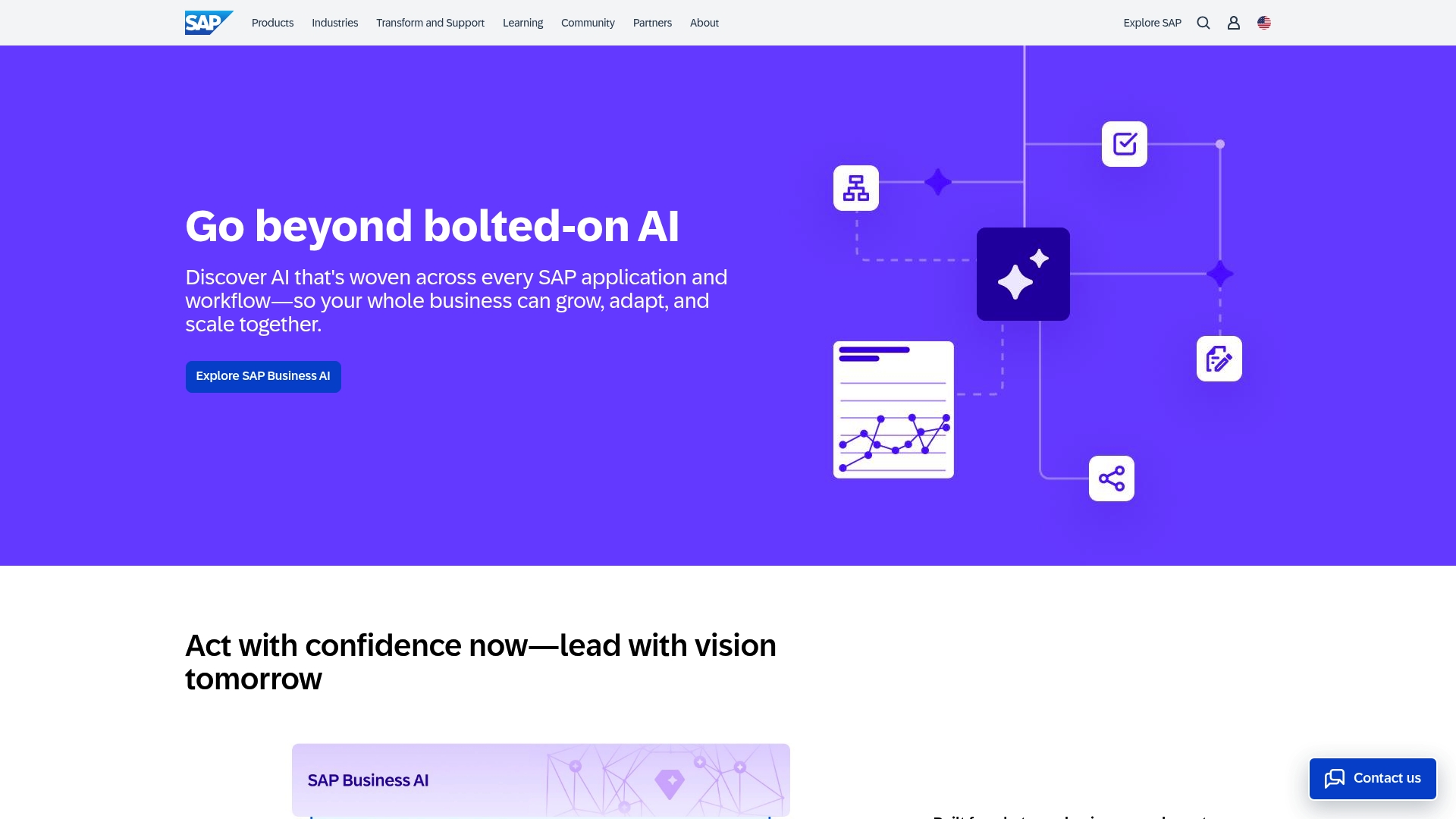
SAP Business AI embeds AI woven across SAP applications so every workflow can deliver faster insights and clearer actions. The platform focuses on bringing intelligence into ERP, finance, supply chain, HR, and customer experience to help enterprises act with confidence. For healthcare executives in Saudi Arabia and UAE this means AI that aligns with existing SAP investments and enterprise security standards. Quick takeaway: SAP Business AI fits organizations ready to scale AI across many functions rather than pilots alone.
Core Features
SAP Business AI offers integration with SAP Business Suite to deliver AI inside the applications teams already use. Key capabilities include AI across ERP processes and workflows, access to partner solutions and extensions, plus tools and resources for adoption and implementation. The offering supports multiple business functions from financial management to supply chain and HR while providing a partner ecosystem for extensions. Actionable takeaway: map your SAP landscape first to identify which workflows will benefit most.
Pros
-
Deep integration into core applications: AI works inside native SAP modules so teams do not need separate point solutions.
-
Comprehensive functional coverage: The platform supports finance, supply chain, HR, and customer experience which reduces the need for multiple vendors.
-
Strong partner ecosystem: Access to partner solutions and extensions helps fill industry specific gaps and accelerate deployment.
-
Adoption tools and resources: Built in resources aid implementation and change management across large teams.
-
Enterprise scale and security: The solution is designed for enterprise requirements which aligns with hospital group and health system needs.
Actionable takeaway: use partner extensions to speed deployment in regulated healthcare settings.
Cons
-
Complex implementation for smaller organizations: Smaller hospitals and clinics may face steep technical and process demands when deploying broadly.
-
Potentially high deployment and customization costs: Custom work and enterprise scale setups can raise total cost of ownership.
-
Requires existing SAP infrastructure for best results: Organizations without an SAP backbone will face integration and migration overhead.
Actionable takeaway: run a cost and capability filter before committing to broad rollout.
Who It’s For
SAP Business AI is ideal for large to mid sized enterprises that already run SAP and want to embed AI across business functions. Healthcare systems, multi hospital groups, and large private clinics in Saudi Arabia and UAE that prioritize enterprise security and scalable governance will find the approach familiar. If you expect a single point solution for a single department this is not the fastest path. Actionable takeaway: pick SAP Business AI when you need enterprise governance across many teams.
Unique Value Proposition
The unique value is the ability to deliver AI as part of existing SAP workflows rather than as an add on. That reduces disruption and creates consistent governance across finance, supply chain, HR, and customer experience. Actionable takeaway: leverage the partner ecosystem to tailor solutions to regional regulatory requirements.
Real World Use Case
The provided example highlights a manufacturing company that used SAP Business AI to optimize supply chain logistics and enable predictive maintenance which reduced downtime and cut costs. Similar methods apply to complex healthcare operations where equipment uptime and supply availability directly affect patient care. Actionable takeaway: start with high impact processes such as inventory and maintenance.
Pricing
Pricing is not specified and is provided on inquiry. Enterprise pricing typically depends on scope and scale of deployment and customization. Actionable takeaway: request a regional proposal that includes total cost of ownership and multi year support.
Website: https://sap.com
Acumatica Cloud ERP
At a Glance
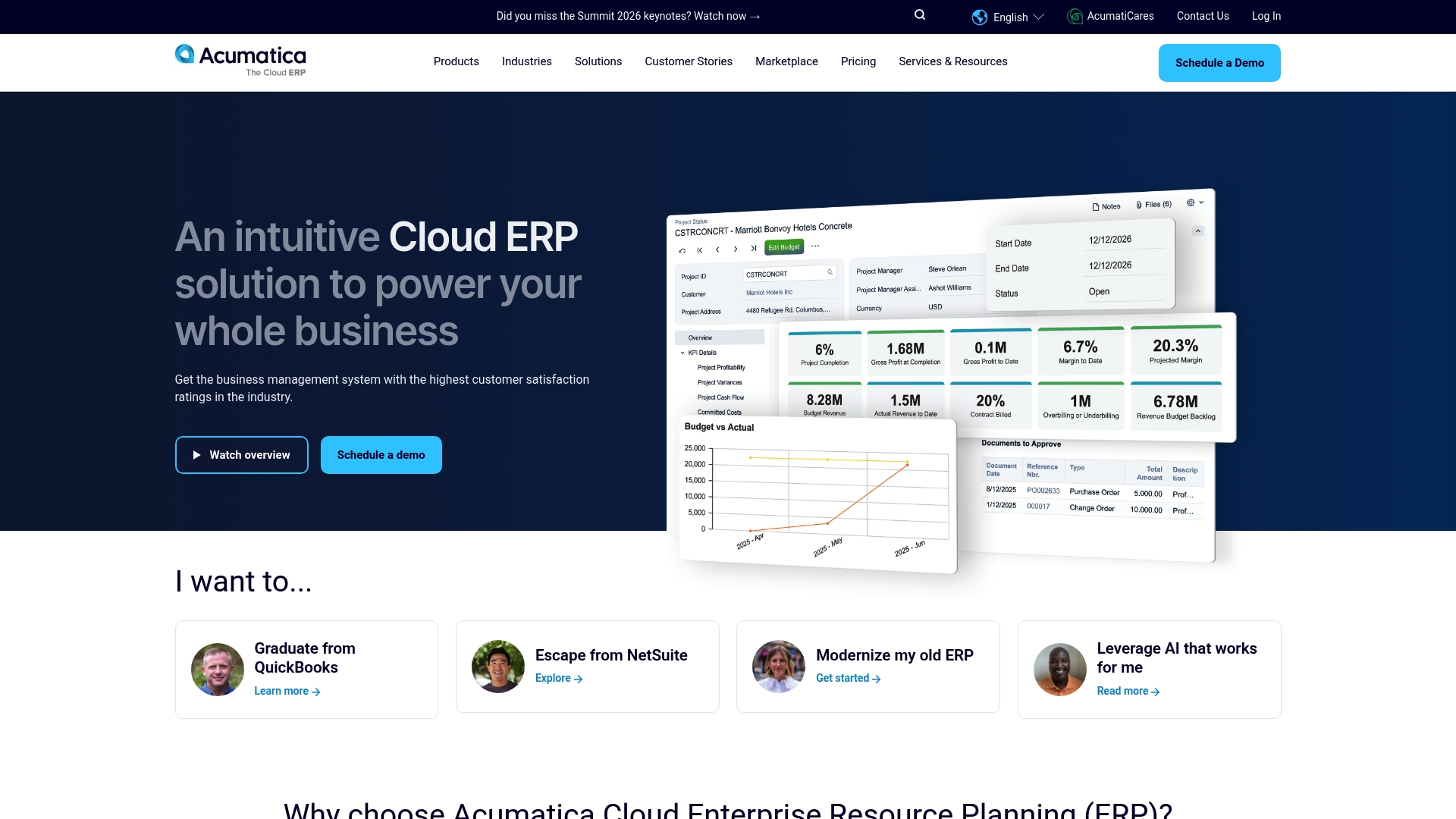
Acumatica Cloud ERP is a customizable, scalable cloud platform focused on usability and security, trusted by thousands of businesses worldwide. For C level leaders in Healthcare across Saudi Arabia and UAE, it promises familiar interfaces on any device and a usage based pricing model that avoids per user fees. The product highlights AI driven automation and multi layered security as core differentiators. It delivers strong industry specific capabilities while keeping deployment flexible for local regulatory needs.
Core Features
Acumatica provides a broad set of capabilities built for expanding organizations. The platform offers a user friendly interface accessible on any device, role based access and encryption under its multi layered security approach, and AI driven automation to reduce manual tasks and generate actionable insights. It also includes industry specific modules for manufacturing, distribution, and retail and supports a true cloud platform with unlimited users and flexible deployment options. Integration points with existing tools and transparent, usage based pricing support phased rollouts and predictable cost control.
Pros
- High customer satisfaction ratings: The vendor claims strong customer feedback which signals reliable support and adoption across industries.
- Versatile and customizable for different industries: The platform adapts to industry specific workflows which helps align with Healthcare processes and compliance needs.
- Strong focus on usability and security: Device agnostic access and role based access reduce friction for mobile clinicians and remote administrators.
- AI powered tools for automation and insights: Automation can reduce repetitive tasks and free clinical leaders to focus on patient care strategy.
- Transparent, usage based pricing model: A consumption approach removes per user surprises and helps finance teams predict costs as the organization grows.
Cons
- Limited public detail on specific limitations: The vendor does not list concrete product weaknesses on the site which makes gap analysis harder for procurement teams.
- Pricing requires customization and review: Pricing depends on applications, resource consumption, and deployment which means you must request tailored quotes to understand total cost.
- No detailed drawback list available: The absence of explicit constraints forces you to run a proof of concept to surface integration or feature gaps.
Who It’s For
Acumatica targets mid sized to large enterprises that need a comprehensive cloud ERP with customization and automation. For Healthcare executives in Saudi Arabia and UAE planning modernization projects, it fits organizations that want a single platform to consolidate finance, operations, and supply chain without adding per user charges.
Unique Value Proposition
The platform combines a true cloud platform with unlimited users, industry specific modules, and AI driven automation to deliver a flexible foundation for growth. Its usage based pricing and device friendly interface make it appealing for institutions expanding regional operations or consolidating multiple legacy systems.
Real World Use Case
The vendor cites a manufacturing company that unified production, finance, and supply chain onto Acumatica to improve data visibility and process control. Healthcare leaders can draw parallels when unifying clinical procurement, billing, and facility operations for clearer operational insight.
Pricing
Pricing is based on applications, resource consumption, and deployment options, with custom reviews and industry specific calculators available to model total cost.
Website: https://acumatica.com
ERPNext
At a Glance
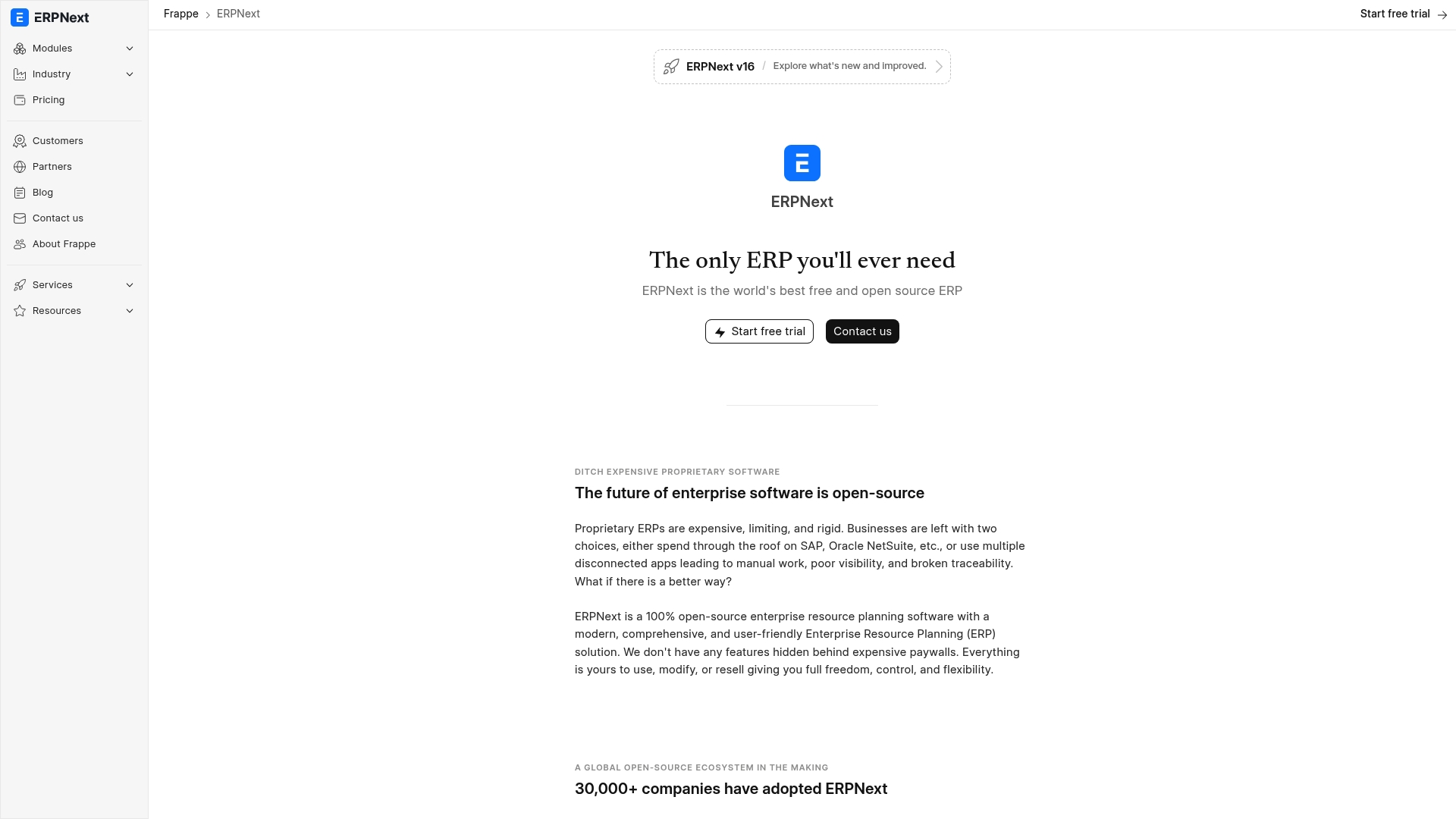
ERPNext is a comprehensive ERP built as an open source platform that packs accounting, inventory, manufacturing, CRM, HR, and more into a single system. It suits organizations that want to avoid per user licensing while keeping customization control. Implementation can require technical skills and third party support for advanced needs. For healthcare leaders in Saudi Arabia and UAE it offers the flexibility necessary for local compliance and multi site operations.
Core Features
ERPNext provides a modular architecture with modules for accounting, procurement, sales, CRM, inventory, manufacturing, projects, POS, quality, support, HR, and payroll. The system includes a low code builder that lets administrators adapt workflows without heavy development. It supports multi company, multi currency, and global tax compliance and offers cloud hosting via Frappe Cloud or self hosting with enterprise support options.
Pros
- Free and open source gives you control of the source code and eliminates vendor lock in while reducing software license expenses.
- Highly customizable lets your IT team or partner map workflows to local healthcare processes such as procurement and patient billing.
- Comprehensive module set removes the need for multiple disconnected systems for finance, inventory, and HR. That lowers integration risk.
- Flexible deployment options allow you to choose Frappe Cloud for faster onboarding or self hosting for full on premise control.
- Active community and ecosystem provide extensions and peer support that accelerate problem solving during rollout.
Cons
- Implementation and customization often require technical expertise which raises initial project effort and governance needs.
- Advanced functionality frequently needs partner support which adds professional services cost and coordination overhead.
- Hosting and enterprise level support come at additional cost which reduces the zero license cost advantage when full managed services are required.
Who It’s For
ERPNext fits organizations from small clinics to large hospital groups that want a customizable ERP without per user fees. It appeals to IT teams that can manage or engage partners for implementation and to executives who value source code ownership. If you need multi company reporting across Saudi Arabia and UAE or control over deployment location this platform is a practical choice.
Unique Value Proposition
ERPNext pairs open source freedom with an extensive feature set so you do not trade capability for cost control. The low code tools let your internal teams iterate on forms and workflows quickly while multi company and multi currency support align with cross border operations common in the Gulf.
Real World Use Case
A mid sized manufacturing customer used ERPNext to manage inventory, manufacturing operations, and accounting while adding custom compliance checks. Translate that to healthcare and you get a clinic group managing medication inventory, procurement, patient invoicing, and payroll under local tax rules using the same modules.
Pricing
The software itself is free to use. Hosting plans start from $14 per month on Frappe Cloud and increase based on resources and support levels. Expect additional costs for enterprise support or partner led implementation.
Website: https://erpnext.com
ERP Tools Comparison
This table provides a comparative overview of leading ERP solutions highlighted in the article, including their features, target audience, and pricing models to assist decision-makers in selecting the best fit for their organization’s needs.
| Platform | Core Specialization | Pros | Who It’s For | Pricing |
|---|---|---|---|---|
| Singleclic | Digital transformation ERP, CRM, process automation, data analytics |
Extensive industry-specific solutions Strong partnership network Broad service portfolio Multilingual support |
Organizations in MENA region Bespoke projects Long-term optimization |
Custom pricing, quotes required |
| Odoo | Open-source ERP with modular apps | Comprehensive business apps Open-source flexibility Community supported Transparent pricing |
Small to large businesses Open-source enthusiasts Customized ERP needs |
Community edition free Enterprise €19.90/month |
| NetSuite | Cloud-based ERP and CRM platform | Unified business management system Real-time analytics Customizable workflows |
Mid-to-large enterprises Cloud ERP adopters |
Custom quotes, module-based pricing |
| Microsoft Dynamics 365 | AI-enabled ERP and CRM applications | Robust AI tools Flexible customization Strong integration through Marketplace |
Healthcare networks Multi-facility setups |
Module-based pricing, quotes required |
| SAP Business AI | AI integration in SAP workflows | Native SAP module integration Comprehensive functional coverage Partner ecosystem |
Enterprises with SAP systems AI functionalities need |
Custom pricing, enterprise-specific |
| Acumatica Cloud ERP | True Cloud ERP with AI-driven automation | Scalable and customizable Transparent usage-based pricing Unlimited users |
Mid-to-large enterprises Industry-specific module needs |
Custom pricing, consumption-based |
| ERPNext | Open-source ERP with modular architecture | No license fees Highly customizable Active support community |
IT-managed setups Multi-location operations |
Free core software Hosting plans from $14/month |
Unlock True Enterprise Optimization with Singleclic
Choosing the right ERP and CRM technology is a critical challenge highlighted in the “Top 7 ERP vs CRM for Enterprises in 2026” article. Many enterprises struggle with fragmented systems, complex integrations, and rising costs as they scale their digital infrastructure. Singleclic understands these pain points and delivers a unified approach that combines tailored ERP and CRM implementations with powerful Business Process Automation and AI-driven insights.
With deep expertise in Microsoft Dynamics 365 and Odoo, robust low-code development using our proprietary Cortex platform, and specialized industry knowledge across Healthcare, Banking, and Government sectors in the MENA region, we help you move beyond mere digitalization. Our solutions focus on solving integration headaches, accelerating user adoption with bilingual support, and enabling rapid workflow changes without downtime. This means your teams can collaborate smarter and your organization can operate faster and at scale.
Experience how true optimization transforms your operations starting today.
Ready to modernize enterprise processes and unify your systems? Explore how Singleclic’s digital transformation expertise can empower your organization.
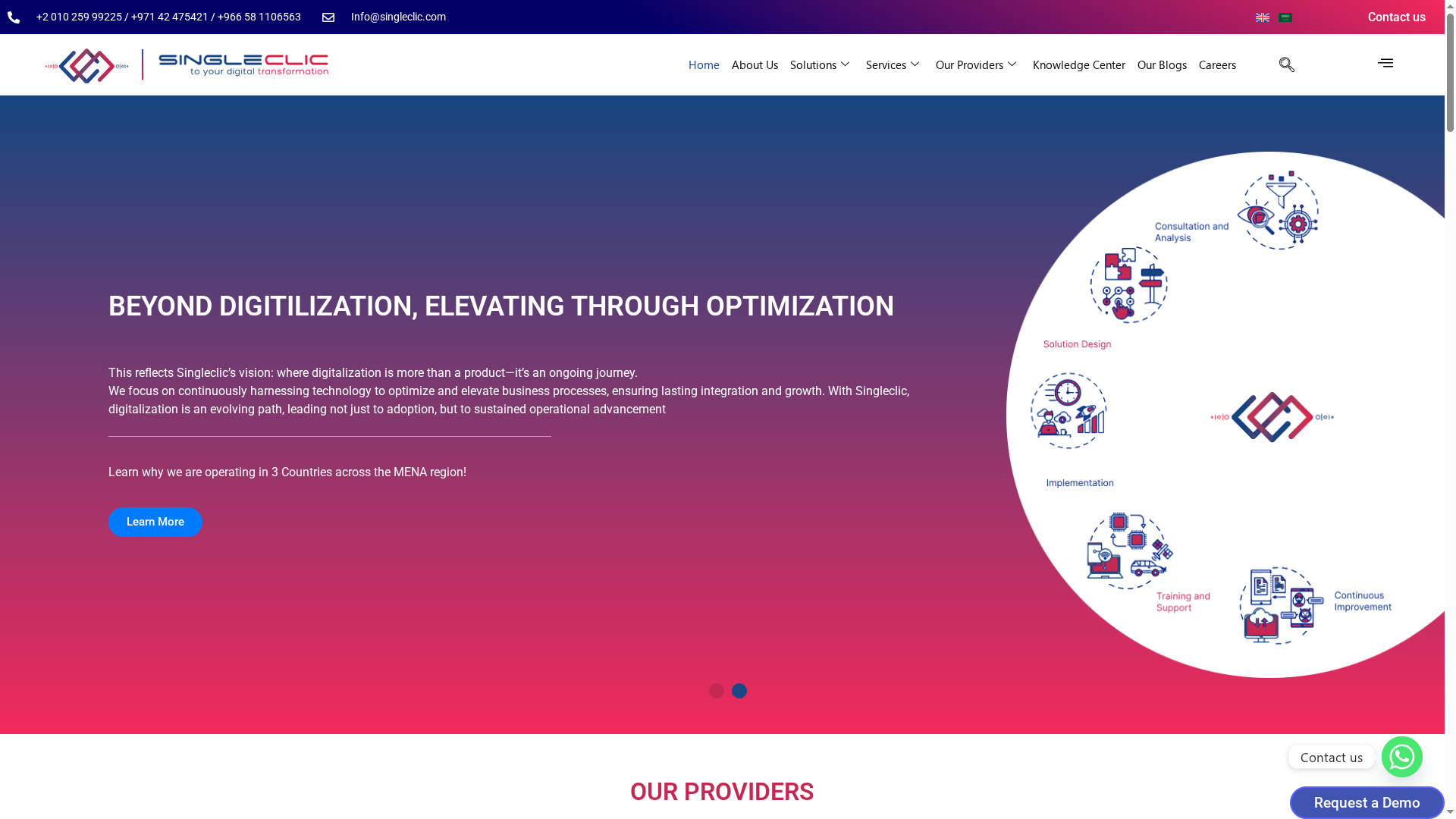
Discover tailored ERP & CRM Implementation, Business Process Automation, and AI-powered solutions at Singleclic. Connect with us now to start your optimization journey and elevate your enterprise to new heights.
Learn more about our Low-Code Platform Cortex and how it can transform complex workflows instantly. Partner with a leader trusted by 60+ enterprise clients across KSA, UAE, and Egypt.
Frequently Asked Questions
What is the main difference between ERP and CRM systems for enterprises in 2026?
ERP (Enterprise Resource Planning) systems focus on integrating and managing core business processes, such as finance, supply chain, and human resources. In contrast, CRM (Customer Relationship Management) systems are designed to manage customer interactions and sales processes. Evaluate your organizational needs to determine which system will best support your goals.
How can implementing ERP help improve efficiency in my enterprise?
Implementing an ERP system can streamline workflows and reduce redundancy by centralizing data and automating processes. Start by conducting a process analysis to identify areas where efficiency can be improved, potentially reducing operational costs by about 15% within the first year.
What features should I look for in a CRM system for my enterprise?
When selecting a CRM system, prioritize features like contact management, lead tracking, sales forecasting, and integration capabilities with existing tools. Aim to choose a system that can enhance customer engagement, leading to a 20% increase in sales conversions over time.
How can I determine whether to invest in ERP or CRM for my enterprise?
Assess your business needs by analyzing your specific challenges and objectives. If your primary goal is to improve operational efficiency across various departments, consider an ERP system. If customer relationship management is your focus, prioritize a CRM solution. Conduct a needs assessment to guide your decision-making process.
What are the costs associated with implementing ERP and CRM systems?
The costs of ERP and CRM implementations can vary significantly based on factors such as system complexity, user requirements, and vendor pricing models. Budget for not only the software licenses but also for training and support, typically amounting to an upfront investment of 15-25% of the total project cost.
How long does it typically take to see results after implementing ERP or CRM solutions?
Enterprises typically start seeing measurable results within 3 to 6 months after implementing ERP or CRM systems. Set clear performance metrics during the initial phases to track improvements and refine processes as needed.