Consolidating finance, sales, customer management, and e-invoicing into a single Arabic-enabled ERP or CRM stack still leaves most GCC businesses stuck between platforms that require heavy customization or offer limited regional compliance. Existing solutions too often hide key modules behind opaque quotes, skip bilingual support, or lack on-premise options for sectors with strict data residency requirements. Comparing feature sets, compliance coverage, and procurement models across these five regionally focused ERP and CRM platforms lets decision makers match operational needs to a vendor without committing to time-consuming pilots.
Table of Contents
- Singleclic
- دفترة
- ERPGulf
- BizCentric
- Comparative Analysis of Enterprise Solutions for MENA Region Institutions
Singleclic
At a glance
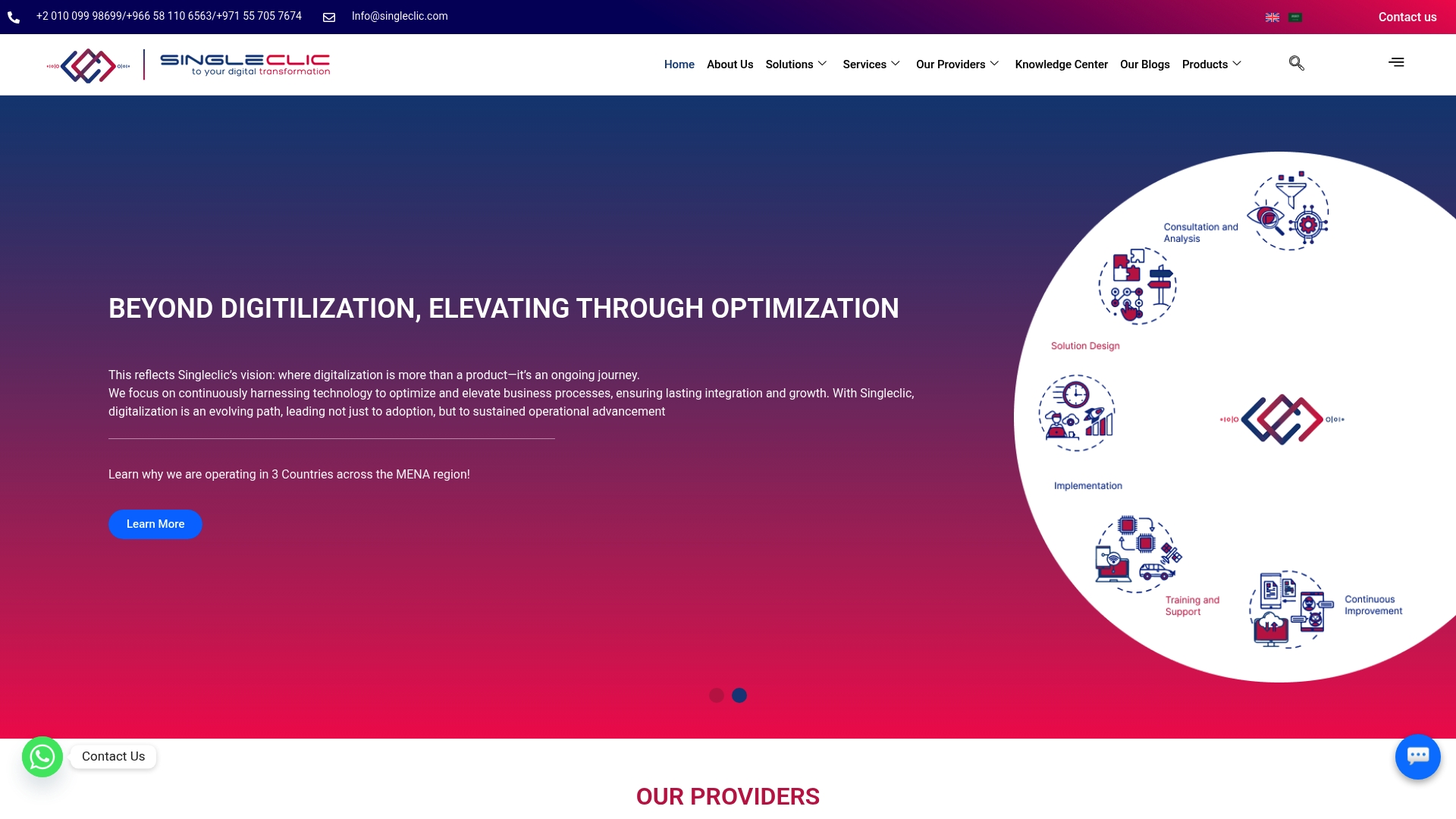
CORTEX ships as an Arabic-enabled, on-premise low-code platform that the vendor positions for banks and government deployments, including runtime workflow changes without downtime. That on-premise capability is the most concrete operational advantage Singleclic highlights.
core features
- CORTEX low-code platform for rapid application assembly with full Arabic UI support and on-premise options.
- ON-PREM LLM enterprise AI deployments for private, regulated environments where cloud models are unacceptable.
- Business Process Automation using Bonitasoft for orchestrating multi-system processes across operations and service units.
- ERP and CRM implementation expertise with Microsoft Dynamics 365 and Odoo tailored to sector requirements.
- Industry solutions focused on banking, government, healthcare, agriculture, and construction.
key differentiator
Singleclic positions itself as a regionally focused, end-to-end transformation partner that combines local delivery with deep integrations to major enterprise platforms. The product data emphasises hands-on implementation plus continuous optimization rather than one-off rollouts.
pros
-
Strong regional presence with offices in UAE, Saudi Arabia, and Egypt makes local compliance and stakeholder coordination easier for large public sector projects.
-
Partnership ties to Microsoft, Odoo, IBM, and Bonitasoft let projects leverage proven enterprise stacks instead of stitching unsupported connectors.
-
The combination of on-premise AI and a low-code platform lets regulated organizations pilot intelligent automation without sending sensitive data to public clouds.
-
The team profile in the product data stresses after-sales support and tailored delivery, which matters for multi-year ERP and CRM programs that require ongoing change management.
cons
- Pricing is not published; the lack of transparent, standard rate cards means procurement teams will need formal RFPs or discovery engagements to get precise cost estimates.
notable integrations
- Microsoft Dynamics 365
- Odoo
- Bonitasoft
- IBM
who it’s for
Medium and large enterprises, government agencies, and regulated financial institutions across the MENA region that need on-premise deployments, Arabic-language interfaces, and vendor-led integration to major enterprise platforms. Choose Singleclic if procurement favors regional partners with sector experience.
unique value proposition
CORTEX’s on-premise, Arabic-enabled low-code deployment changes vendor selection for institutions that require data residency and Arabic UX by default. Instead of retrofitting a foreign product, you get a stack designed to run inside regional security and governance constraints while allowing rapid process changes.
real world use case
Singleclic implemented Microsoft Dynamics 365 for Emirates Health Services and developed Egypt’s GAHAR healthcare management system, according to the product data. Those projects illustrate the vendor’s experience delivering sector-specific deployments that combine ERP, process automation, and bespoke interfaces.
pricing
The product data lists pricing as informational only. Singleclic does not publish standard per-seat or tiered plans; expect project-based proposals and custom quotes after a scoping engagement.
Website: https://singleclic.com
دفترة
At a Glance
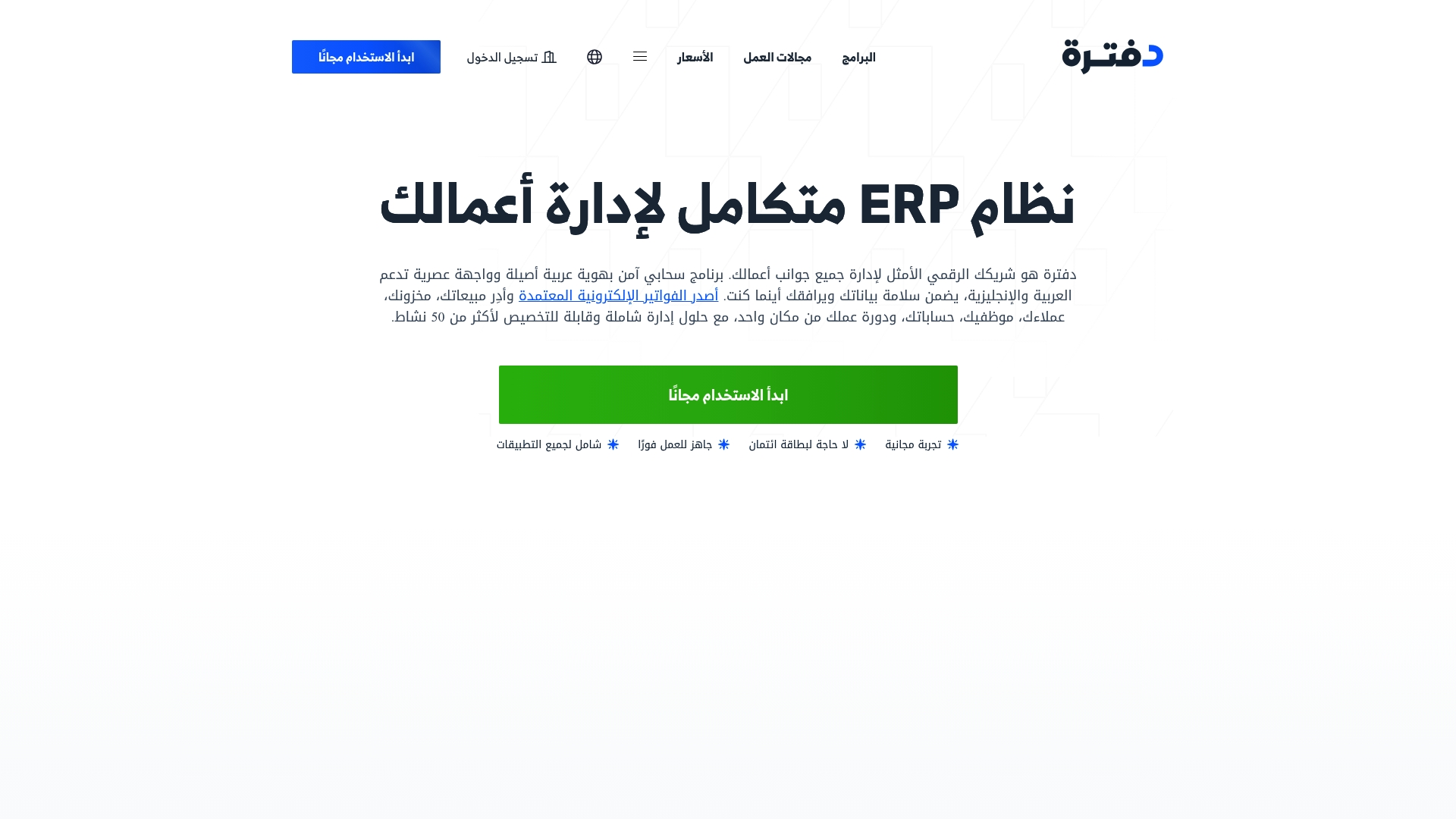
The vendor reports adoption by more than 40,000 companies, advertises a 14-day free trial with no credit card required, and states compliance with GDPR, according to its marketing materials. دفترة pairs an Arabic-first interface with electronic invoicing Stage Two support and round-the-clock support.
Core Features
- Sales and invoicing including electronic invoice issuance and accounting ledgers.
- POS system for retail outlets and shops.
- Customer relationship tools for campaigns, contacts, and follow ups.
- Inventory and multi-site management with tracking across warehouses.
- HR and payroll modules plus mobile apps for field teams.
Key Differentiator
دفترة’s main promise is an Arabic-native interface combined with full support for e-invoicing Stage Two. The platform also emphasises free updates and 24/7 technical support, positioning itself for Arabic-speaking teams that need local billing compliance and continuous vendor access.
Pros
- Consolidates core back-office functions so finance, sales, inventory, and HR work from a single dataset rather than separate spreadsheets.
- 24/7 support and free platform updates reduce maintenance overhead for teams without a dedicated IT department.
- Native Arabic UI and bilingual support lower training time for regional staff in Saudi Arabia and the UAE.
- Sector templates for retail, medical supplies, construction, and education speed up initial deployment.
- POS plus mobile apps let store managers process sales and check stock levels from a phone.
Cons
- No third-party review sources are currently available, so user experience points are self-reported rather than independently verified.
- Heavy reliance on Arabic defaults can limit multinational operations where multiple language locales are required.
- Several advanced capabilities require higher tier plans or add-ons, which can increase total cost of ownership.
When It May Not Fit
If your organization requires an on-premise deployment for strict data residency or bank-grade controls, دفترة’s cloud-first model may be limiting. Also, global teams that need extensive multi-language localization might find the Arabic-first design restrictive; for on-premise Arabic-enabled low-code options, Singleclic’s Cortex is an alternative to evaluate.
Who It’s For
Small and mid-market companies across Saudi Arabia, the UAE, and wider GCC that need an Arabic-enabled ERP with fast time to value. Also suitable for larger firms wanting unified billing and inventory with local e-invoicing coverage.
Real World Use Case
A medical supplies distributor uses دفترة to centralise sales orders, warehouse stock, payroll, and electronic invoicing. The finance team reduced month-end reconciliation time by consolidating sales and accounting entries and delivered compliant e-invoices to local tax authorities.
Pricing
Plans start at $20 per month for a basic package, with annual discounts and additional customizations priced by company size and chosen services. A 14-day trial is available without a credit card.
Website: https://daftra.com
ERPGulf
At a Glance
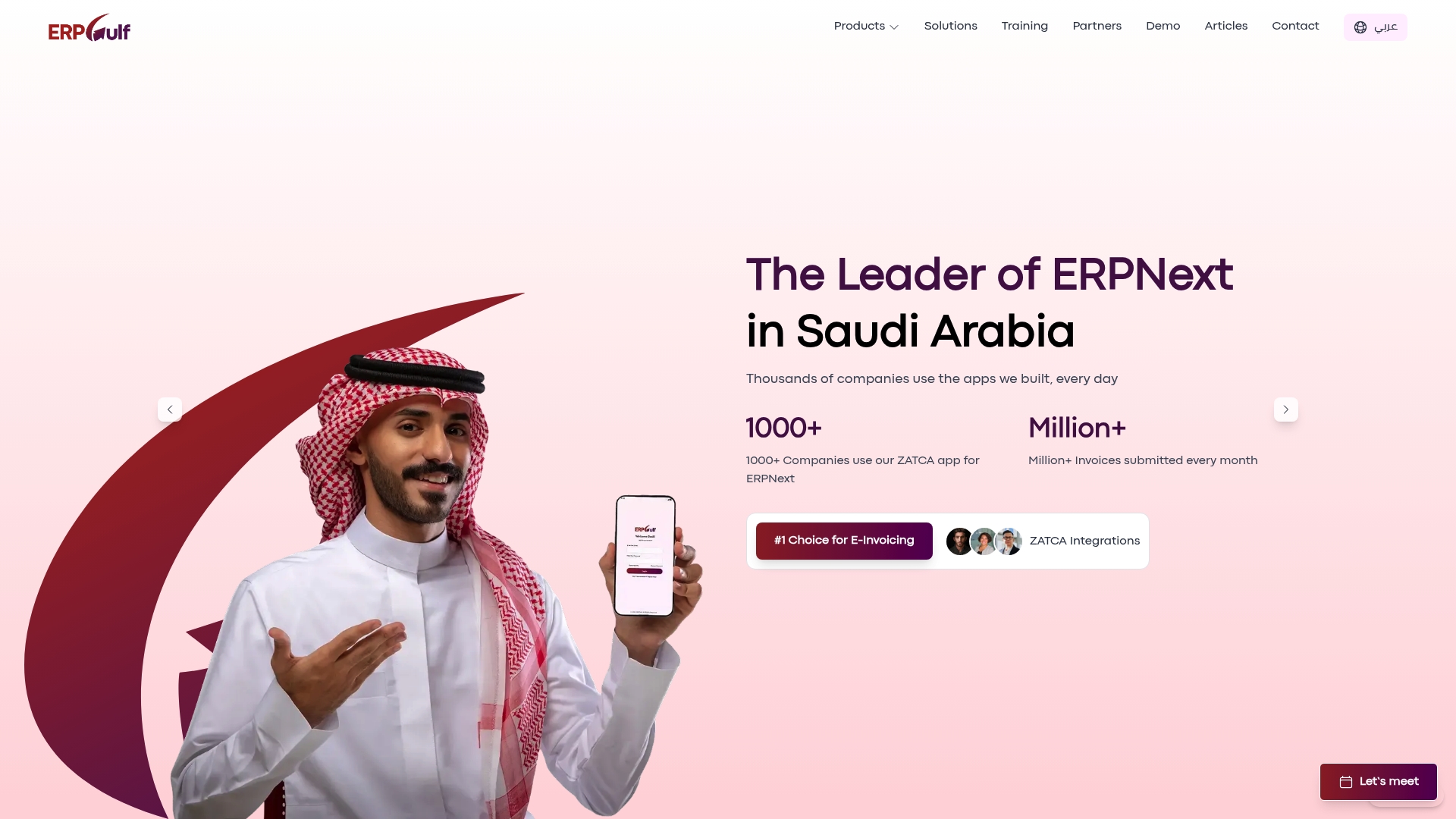
ERPGulf pairs an AI assistant called ChangAI with offline retail point of sale and ZATCA e-invoicing apps built specifically for Saudi Arabia and the Gulf. The combination aims to reduce manual compliance work and keep stores running when connections drop.
Core Features
Core functionality centers on region-focused ERPNext extensions and on-premise friendly retail tooling.
- Locally built POSAwesome, Stocker app, and VAN sales app for retail and distribution workflows.
- ERPNext modules for warehouse, manufacturing, projects, and finance tailored to Gulf tax and invoicing rules.
- AI-powered business assistant, offline POS capabilities, and ZATCA e-invoicing support for Saudi Arabia.
Key Differentiator
The vendor develops ERPNext apps specifically for Gulf regulations and business practices. That regional focus shows up as prebuilt compliance flows for Saudi Arabia and UAE and retail features that work offline, reducing the customization customers normally need when adapting global ERPs to local laws.
Pros
-
Deep regional expertise helps shorten localization time. Their templates and compliance logic reflect Gulf tax rules and retail realities, which speeds deployments.
-
Strong support and training is a stated priority, useful when teams need hand-holding through configuration and change management.
-
Offline POS plus inventory controls keeps stores operational during network outages, which matters for chains with remote branches.
-
AI assistant supports natural language queries against ERP data, which can reduce ad hoc reporting work for operations and finance teams.
-
Wide industry coverage includes retail, manufacturing, logistics, and finance so one vendor can handle cross-functional processes.
Cons
-
Public independent reviews are scarce, which leaves reference checks and pilot projects as the primary ways to validate delivery and user satisfaction.
-
Customized enterprise deployments can become complex and may demand a dedicated onboarding and support team from the buyer side.
-
No public pricing details are available, so budgeting will likely require direct vendor engagement and a discovery phase.
Who it’s for
Mid-sized to large enterprises across the Gulf that need ERPNext implementations already adapted to regional rules. Retail chains and manufacturers in Saudi Arabia and UAE will find the offline POS and ZATCA support particularly relevant.
Real World Use Case
A Saudi retail chain used ERPGulf to deploy offline POS terminals across suburban stores and to automate ZATCA e-invoicing. The chain reported fewer billing exceptions during audits after switching to the vendor’s localized templates and used ChangAI for quick stock and sales queries.
Pricing
No public price list is published by the vendor. Prospective buyers should plan a discovery call and a pilot phase to scope custom modules and obtain a formal quote.
Website: https://erpgulf.com
BizCentric
At a Glance
A single system that groups ERP, HR, CRM, sales, accounting, inventory, projects, and help desk aims to remove app switching for mid-market operations. The platform emphasises multilingual support, multi-currency handling, and built-in process automation for cross-department workflows.
Core Features
BizCentric combines unified modules for finance, inventory, projects, human resources, customer management, and service desks into one product. That tight integration reduces manual reconciliations and duplicate data entry between teams.
The platform offers process automation and workflow customization, mobile apps with rich communication features, and out-of-the-box connectors for contact and messaging flows. Multilingual and multi-currency support target regional complexity.
Key Differentiator
The stated selling point is an all-in-one suite intended to replace discrete business apps rather than stitch them together. That trade-off favours organizations that prefer ready-made modules over building a bespoke stack from low-code components.
Compared with Singleclic’s Cortex low-code, Arabic-enabled on-premise option, BizCentric prioritizes prebuilt ERP and CRM modules for faster functional rollout rather than deep platform customization.
Pros
- Consolidates core enterprise functions so finance, sales, and operations share a single data model. That reduces reconciliation time and reporting friction across departments.
- Includes mobile apps that surface communication threads and key data points for field teams, which helps sales and service staff stay informed on the go.
- Multilingual UI and multi-currency handling match the practical needs of businesses operating across Saudi Arabia and the UAE.
- Built-in connectors for LinkedIn, email tools, and WhatsApp simplify contact syncing and outbound communication without custom development.
- Customizable workflows let operations model local approvals and regulatory steps without completely rebuilding the system.
Cons
- The vendor does not publish pricing, which forces procurement cycles to include demos and custom quotes before cost comparisons can be made.
- The breadth of modules suggests a learning curve; larger feature sets will likely require structured training and a governance plan.
- Public documentation and third-party reviews are sparse, leaving some questions about scalability and long term support unanswered.
When It May Not Fit
The available materials do not list detailed third-party limitations. For buyers who require visible pricing, independent customer references, or an on-premise Arabic-first low-code platform, BizCentric may be a less clear choice without a pilot.
If your priority is deep, low-code configurability on private infrastructure for regulated sectors, consider vendors that publish on-premise options and clear service level commitments, including Singleclic for its Cortex offering.
Notable Integrations
- Email communication tools
These connectors handle contact enrichment and messaging flows but do not imply additional third-party licenses are included.
Who It’s For
Mid-sized to large businesses that want an out-of-the-box ERP and CRM experience across finance, operations, and customer service. It fits regional operators in Saudi Arabia, the UAE, and neighboring markets that need language and currency flexibility.
Organizations that need heavy customization at the platform level or explicit on-premise low-code capabilities may prefer other approaches.
Real World Use Case
A manufacturing firm centralises production orders, inventory, sales orders, and HR records in BizCentric. The integrated setup cuts manual handoffs between procurement and production, reduces data inconsistencies, and shortens monthly close cycles.
Pricing
Pricing is not published. The vendor appears to provide quotes and demos on request, so procurement will require direct engagement and a sizing exercise to get firm numbers.
Website: https://bizcentric.me
Comparative Analysis of Enterprise Solutions for MENA Region Institutions
Selecting an appropriate enterprise solution demands detailed evaluation of various providers to assess their suitability for specific organizational conditions. Below, we analyze how the forementioned platforms cater to unique deployment scenarios and operational needs.
Deployment Flexibility and Compliance
Singleclic’s CORTEX platform underscores versatility by offering on-premise, Arabic-enabled solutions suitable for regulated sectors requiring low-code process management and runtime workflow modifications. Conversely, دفترة excels at rapid deployment for small-to-medium enterprises with cloud-first, Arabic-native user interfaces that simplify bilingual staff onboarding. ERPGulf stands out through localized ERPNext adaptations with offline-ready POSAwesome tools and compliance-ready templates for Gulf region regulations, adding value for retail and finance sectors. Finally, BizCentric integrates multilingual and multi-currency support within a cohesive suite to manage finance, inventory, and customer interfaces.
User Accessibility and Support Duration
دفترة emphasizes user accessibility with its 24/7 technical support and no-cost updates—a reassurance for mid-sized businesses with limited in-house IT capabilities. Singleclic focuses on partnership-driven, ongoing optimization for bespoke deployments, suitable for enterprise-level change management over multi-year projects. ERPGulf addresses operational resilience through offline POS capabilities, which are vital for locations with inconsistent Internet connectivity. BizCentric’s mobility-oriented design through its integrated communication apps is advantageous for operations spanning field and office environments.
Best Fit Scenarios
- For regulated organizations requiring private infrastructure hosting with Arabic language support and customizable low-code deployments, Singleclic offers tailored delivery and compliance-ready solutions.
- Companies seeking cloud-based ERP solutions with established e-invoicing compliance and centralized core functions would benefit significantly from دفترة.
- Retail chains and manufacturers with intricate Gulf tax requirements, demanding offline and localized compliance implementations, may find ERPGulf to be the best fit.
- Enterprises expanding regionally requiring multilingual, multi-currency capabilities and integration-dense systems should consider BizCentric for its cohesion across operational frameworks.
Our Pick: Singleclic
Singleclic distinguishes itself by offering on-premise flexibility combined with Arabic-native low-code capabilities essential for regulated enterprises in the MENA region. By also incorporating specialized post-deployment services, it effectively supports organizations requiring continuous process improvements. Organizations that do not prioritize private infrastructure but require rapid deployment may find دفترة more aligned with their expectations.
Enterprise Solutions Platforms Comparison
When evaluating enterprise solutions for specialized industries, consider these options based on their feature depth, operational compatibility, and regional support.
| Product | Core Features | Key Differentiator | Best For | Notable Limitation |
|---|---|---|---|---|
| Singleclic | Arabic-enabled low-code platform, on-premise AI | Regionally focused delivery with deep enterprise platform integration | Government agencies, MENA enterprises requiring on-prem solutions | Pricing details are not published |
| دفترة | Arabic-native ERP, e-invoicing, HR and inventory tools | Fast deployment with an Arabic-first interface | Small businesses in GCC needing bilingual interfaces | Multinational operations may find limitations with Arabic-first focus |
| ERPGulf | Offline POS, ERPNext customization for Gulf regulations | Prebuilt compliance and retail workflows | Retail chains, manufacturers in the Gulf region | Lack of detailed independent reviews |
| BizCentric | Unified ERP, CRM, inventory, HR, and accounting modules | All-in-one system replacing discrete applications | Mid-sized businesses requiring multilingual and multi-currency support | Limited public references and no detailed cost presentations |
Discover the Best Arabic-Enabled CRM Platform Designed for GCC Enterprises
Choosing the right CRM platform in the GCC can feel challenging when you need solutions tailored to regional regulations, Arabic user interfaces, and on-premise deployment needs. Many organizations require flexible platforms that support rapid customization without downtime while keeping data secure within local jurisdictions. Singleclic understands these demands and offers Cortex, an Arabic-enabled low-code platform built specifically for banks, government, and regulated enterprises across Saudi Arabia, UAE, and Egypt.
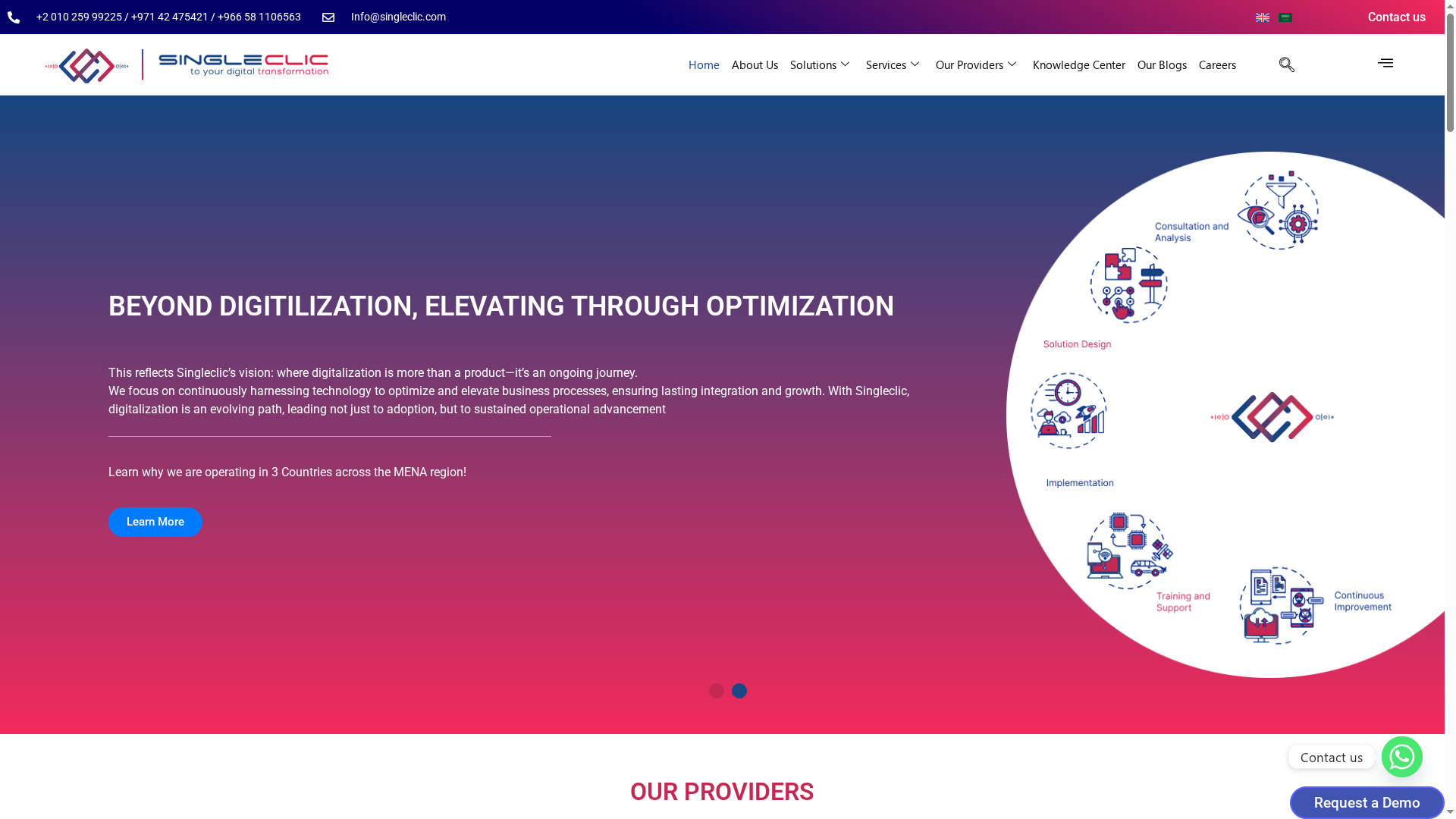
Explore how Singleclic’s Cortex platform empowers your teams with full Arabic UI, real-time workflow changes, and deep integrations with Microsoft Dynamics 365 and Odoo. Don’t let compliance or localization issues slow your growth. Visit Singleclic to see how our tailored ERP and CRM implementation services can transform your business processes. Book a demo today and experience on-premise enterprise AI and automation built for your region.
Frequently Asked Questions
What unique capabilities does Singleclic offer for low-code deployment?
Singleclic provides an on-premise low-code platform called CORTEX that supports Arabic language interfaces. This is particularly beneficial for organizations that require rapid process changes without downtime, as highlighted by its emphasis on operational advantages for sectors like banking and government.
How does Singleclic compare to دفترة in terms of ERP integration?
دفترة offers a strong Arabic-native interface with effective e-invoicing support, making it a good choice for small and mid-market companies needing quick deployments. In contrast, Singleclic excels in providing on-premise options and enterprise AI deployments, making it more suitable for large organizations that require strict data residency and advanced integrations.
Which features make Singleclic a preferred choice for medium and large enterprises?
Singleclic’s CORTEX platform supports critical features like business process automation with Bonitasoft and integration with major enterprise systems like Microsoft Dynamics 365 and Odoo. This comprehensive support allows organizations to manage complex workflows effectively while ensuring compliance with local regulations.
Can regulated organizations benefit from Singleclic’s data residency options?
Yes, regulated organizations can leverage Singleclic’s on-premise AI deployments to maintain data residency, which is crucial for security and compliance in sensitive environments. This feature sets Singleclic apart as it allows intelligent automation without sending sensitive data to public clouds.
What pricing transparency does Singleclic offer to potential customers?
Singleclic does not publish standard pricing or tiered plans, requiring interested customers to engage in formal RFPs or discovery meetings for precise cost estimates. This lack of transparency may be a consideration for procurement teams looking for upfront budget clarity.