Choosing the right CRM can make all the difference for C Suite executives who want to lead with clarity and precision. The market keeps evolving and fresh features appear each year to help keep teams informed and focused. Some tools highlight data that matters while others focus on building stronger connections. Each option brings something unique to the table. Curious which solutions fit the needs of the top decision makers? Find out what sets each apart and discover new possibilities for your organization.
Table of Contents
- Singleclic
- Odoo
- SAP Business AI
- Oracle Cloud Platform and Applications
- Salesforce
- Zoho
- Informatica
- Saphyte
Singleclic
At a Glance
Singleclic is our top-tier recommendation for C-suite leaders in construction and healthcare across Saudi Arabia and the UAE because it blends deep regional expertise with a full-stack approach to digital transformation. It moves organizations beyond mere digitalization into measurable optimization by combining ERP/CRM implementation, process automation, and enterprise AI. The platform is especially strong for complex government, banking, and healthcare environments where localization, security, and integration matter. In short: best-in-class, regionally tuned, and purpose-built for enterprise change.
Core Features
Singleclic’s core capabilities center on rapid, enterprise-grade transformation: a low-code development platform (Cortex) for fast app and workflow delivery; end-to-end ERP and CRM implementation expertise (notably Microsoft Dynamics 365 and Odoo); business process automation with Bonitasoft and IBM partnerships; and AI and data analytics to turn operational data into executive decisions. The offering also includes cloud-native application delivery and industry-specific solutions to address governance, compliance, and complex systems integration in the MENA region.
Pros
- Regional specialization: Singleclic provides localized services across three countries in the MENA region, enabling culturally and regulatorily aware implementations.
- Broad partner ecosystem: Strong partnerships with Microsoft Dynamics 365, Odoo, IBM, and Bonitasoft deliver enterprise-proven technologies and reduce vendor risk.
- Comprehensive solution set: From ERP/CRM to low-code and analytics, the company covers the full transformation stack so you avoid stitching multiple vendors together.
- Process-first approach: Emphasis on process automation and Cortex low-code accelerates time-to-value by enabling iterative, business-driven change.
- Tailored industry focus: Deep experience in healthcare, government, and banking means implementations reflect sector-specific workflows and compliance requirements.
Who It’s For
Singleclic is ideal for C-suite leaders in construction and healthcare organizations in Saudi Arabia and the UAE who need a strategic, regional partner to modernize core systems. If you’re responsible for enterprise-wide CRM/ERP consolidation, regulatory compliance, or process automation at scale — and you require Arabic-enabled, locally hosted capabilities and deep systems integration — Singleclic is designed for you.
Unique Value Proposition
Singleclic’s unique value lies in combining a regional delivery model with enterprise-grade technology and an embedded low-code platform. Cortex lets your teams iterate business workflows without long development cycles, while partnerships with Microsoft, Odoo, IBM, and Bonitasoft ensure robust back-end stability. The result is a single accountable partner that reduces integration friction, accelerates deployments, and optimizes operations across complex, regulated environments — a rare proposition in the MENA market.
Real World Use Case
Singleclic has executed large Microsoft Dynamics 365 implementations for Emirates Health Services and built Egypt’s GAHAR healthcare management system, demonstrating ability to deliver clinical and administrative systems at national scale. These projects show how Singleclic integrates CRM/ERP, automates workflows, and applies analytics to improve operational efficiency and governance.
Pricing
Not specified on the website; pricing is provided via consultation to ensure solutions are sized and priced for enterprise complexity and regulatory requirements.
Website: https://singleclic.com
Odoo
At a Glance
Odoo is an open source, all-in-one business application suite that combines CRM, ERP, eCommerce, inventory, accounting, POS, and project management in a single, integrated platform. For C-suite executives in construction and healthcare across Saudi Arabia and the UAE, it offers a flexible foundation you can tailor to complex workflows and regulatory needs. The community edition lowers entry cost while the enterprise edition adds advanced features and support for larger deployments. Bottom line: Odoo is a highly configurable platform that scales from pilot projects to full enterprise rollouts, but expect implementation effort when you customize deeply.
Core Features
Odoo’s core strength is breadth: a wide range of business applications that work together natively so data flows across CRM, inventory, accounting, point of sale, and projects. It is open source with a large developer community and an ecosystem of over 40,000 community apps to extend functionality. Odoo Studio enables configuration and custom app building without heavy code, and deployment is flexible with cloud-based SaaS or on-premise hosting options, letting you choose the architecture that meets local data residency or compliance requirements.
Pros
- Free community edition available: You can start with a zero-cost option for basic needs and evaluate real usage before committing budget to enterprise features.
- Highly customizable and scalable: Odoo Studio and the modular app approach let you adapt workflows, forms, and reports to construction and healthcare processes without replacing core systems.
- Extensive app marketplace: With tens of thousands of community apps, you can add industry-specific modules or integrations to reduce custom development lead time.
- No vendor lock-in, owns your data: Community and on-premise options mean you retain control over your data and deployment, a plus where regulatory or procurement policies demand local control.
- Transparent and fair pricing: The pricing model separates apps and users, allowing incremental expansion and clearer cost planning as your digital footprint grows.
Cons
- Complexity can grow with extensive customization: Heavy tailoring across many modules increases configuration complexity and can slow upgrades.
- Implementation and integration might require expert help: To align Odoo with enterprise-grade construction or healthcare workflows, you will likely need experienced implementers.
- Some features are only available in paid editions: Critical advanced modules and vendor support are reserved for the enterprise edition, which raises total cost for large-scale deployments.
Who It’s For
Odoo is best for organizations that want an integrated, modular ERP platform they can shape over time—especially groups that value ownership and flexibility. It fits small teams piloting digital transformation as well as larger enterprises in construction or healthcare that require localized hosting and extensive customization.
Unique Value Proposition
Odoo’s unique value is its combination of open source freedom, a single integrated app suite, and a large ecosystem that minimizes one-off development. That mix delivers a customizable platform you can evolve incrementally while retaining control of your data and deployment model.
Real World Use Case
A retail chain uses Odoo to unify inventory management, point of sale, CRM, and accounting for real-time stock visibility and smoother financial close. The same integrated approach can be applied to manage equipment, procurement, and patient or client records in construction and healthcare settings.
Pricing
Starting at €0 for a single app with unlimited users in the free plan, with paid plans from €19.90 per user/month for the standard edition, which includes all applications.
Website: https://odoo.com
SAP Business AI
At a Glance
SAP Business AI embeds intelligence across SAP processes to help organizations grow, adapt, and scale from a single, unified platform. It’s designed to streamline workflows and enable confidence-driven decision-making without adding standalone tools. For executives in construction and healthcare in Saudi Arabia and the UAE, it promises deep process alignment with enterprise systems—but unlocking full value typically requires SAP infrastructure and careful implementation.
Core Features
SAP Business AI is delivered as part of the SAP Business Suite, unifying AI, data, applications, and platform services. Its core capabilities include embedded AI across SAP processes for seamless integration, solutions that span ERP, finance, supply chain, HR, and customer experience, and an ecosystem of partner integrations, apps, and extensions. The product emphasizes scalable, industry-aware AI to support digital transformation and operational excellence across enterprise functions.
Pros
- Deep integration of AI within SAP’s business solutions enables automated insights that work directly inside familiar enterprise workflows.
- Support for a wide range of enterprise functions allows a single platform to address ERP, financial management, supply chain, HR, and customer experience needs.
- Being part of a global SAP ecosystem gives access to a broad customer and partner network for extensions and expert support.
- The suite supports industry-specific and scalable solutions that can accelerate digital transformation across complex organizations.
- Multiple resources for AI adoption, including success stories and expert guidance, help teams plan and scale implementations.
Cons
- Pricing details are not specified on the product pages, which makes budgeting and procurement planning harder for procurement teams.
- The platform’s complexity may require tailored implementation and integration efforts, increasing time-to-value for some projects.
- To realize full benefits, organizations typically need existing or new SAP infrastructure, which can be a significant commitment for enterprises not already on SAP.
Who It’s For
SAP Business AI is best suited to large and medium enterprises that want to embed AI directly into their core business processes through SAP’s comprehensive suite. If your organization already runs SAP or plans a SAP-centric transformation—especially in regulated sectors like healthcare or large-scale construction projects—this solution aligns with enterprise-grade needs and governance requirements.
Unique Value Proposition
The unique value of SAP Business AI lies in its native embedding of AI into an enterprise-grade suite: AI that operates where your processes live rather than as an add-on. That unified approach—combining data, apps, and platform—reduces friction between analytics and execution and lets leaders focus on decision outcomes rather than tool integration.
Real World Use Case
A manufacturing customer uses SAP Business AI to optimize supply chain logistics, automate financial forecasting, and personalize customer engagement. The outcome is streamlined operations across procurement, finance, and sales processes and improved alignment between planning and execution.
Pricing
Not specified.
Website: https://sap.com
Oracle Cloud Platform and Applications
At a Glance
Oracle Cloud Platform and Applications delivers a broad, enterprise-grade cloud stack that combines applications, infrastructure, and AI-enabled data services. For C-suite leaders in construction and healthcare across Saudi Arabia and the UAE, it presents a single vendor path to modernize ERP, CRM, and analytics while supporting large-scale migrations. It’s powerful and proven, but its breadth introduces complexity and typically requires vendor engagement to clarify pricing and implementation scope.
Core Features
Oracle’s offering bundles a Cloud Applications suite for core business processes with Cloud Infrastructure for running mission-critical workloads. The Oracle AI Data Platform and Autonomous AI Database add advanced data reasoning and automated database management. Together these components support ERP, CRM, HCM, AI-powered analytics, and migration/cost-optimization projects—providing an end-to-end stack from application layer to data platform and infrastructure.
Pros
- Comprehensive enterprise cloud solutions: Oracle provides a full stack that removes the need to stitch together multiple vendors for ERP, CRM, HCM, and infrastructure. This simplifies governance for large organizations.
- Strong AI and database capabilities: The Oracle AI Data Platform and Autonomous AI Database enable automated tuning and advanced analytics, which helps data-heavy teams accelerate insight generation.
- Recognition as a leader in cloud ERP: Market validation such as Gartner recognition reinforces Oracle’s suitability for complex, regulated environments that demand enterprise-grade stability.
- Extensive resources and success stories: A wide array of documentation, case studies, and customer examples supports decision-making and risk mitigation during deployment.
- Support for migration and cost reduction: Oracle highlights migration paths and cost-optimization approaches that can be important when consolidating legacy systems.
Cons
- Complexity of offerings may require expertise to navigate: The product breadth creates architectural choices and integration decisions that typically need experienced architects or consultant support.
- Pricing details are not openly listed and require direct inquiry: You cannot obtain transparent list pricing from public pages, which slows procurement and budget planning.
- Large ecosystem may have a learning curve for new users: Teams unfamiliar with Oracle’s tools will face a steeper adoption period compared with narrower, purpose-built vendors.
Who It’s For
Oracle Cloud Platform and Applications fits large enterprises and public-sector health systems that need a unified, scalable cloud architecture. If you manage complex ERP landscapes, host sensitive patient or project data, or require high-performance AI workloads, Oracle provides the components to modernize at scale—provided you have the internal capability or partner support to implement it.
Unique Value Proposition
Oracle’s unique value is the combination of end-to-end enterprise applications with a native AI and autonomous database layer, enabling you to run business processes and analytics on a single, integrated platform. That reduces integration risk and centralizes control—useful for regulated healthcare providers and construction firms operating across multiple projects and jurisdictions.
Real World Use Case
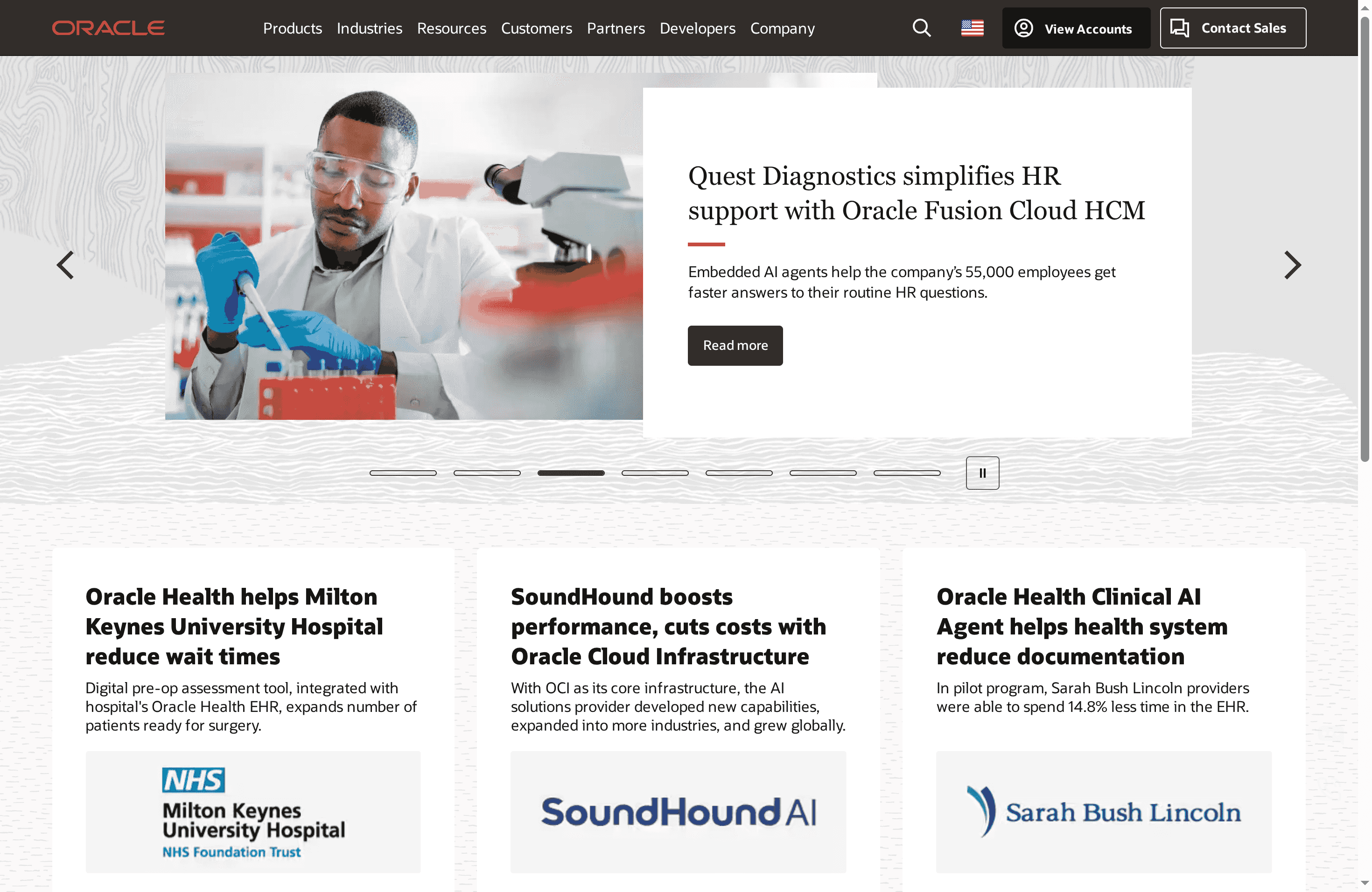
Healthcare and enterprise examples show the platform in action: Quest Diagnostics implemented Oracle Fusion Cloud HCM for HR support, Milton Keynes University Hospital used Oracle Health to reduce patient wait times, and SoundHound leveraged Oracle Cloud Infrastructure for AI workloads—demonstrating applicability across HR, clinical operations, and AI-driven services.
Pricing
Pricing varies by product and deployment and is typically provided through direct contact or a tailored quotation, with downloadable price lists available for specific products. Expect to engage Oracle or a certified partner for precise estimates and procurement guidance.
Website: https://oracle.com
Salesforce
At a Glance
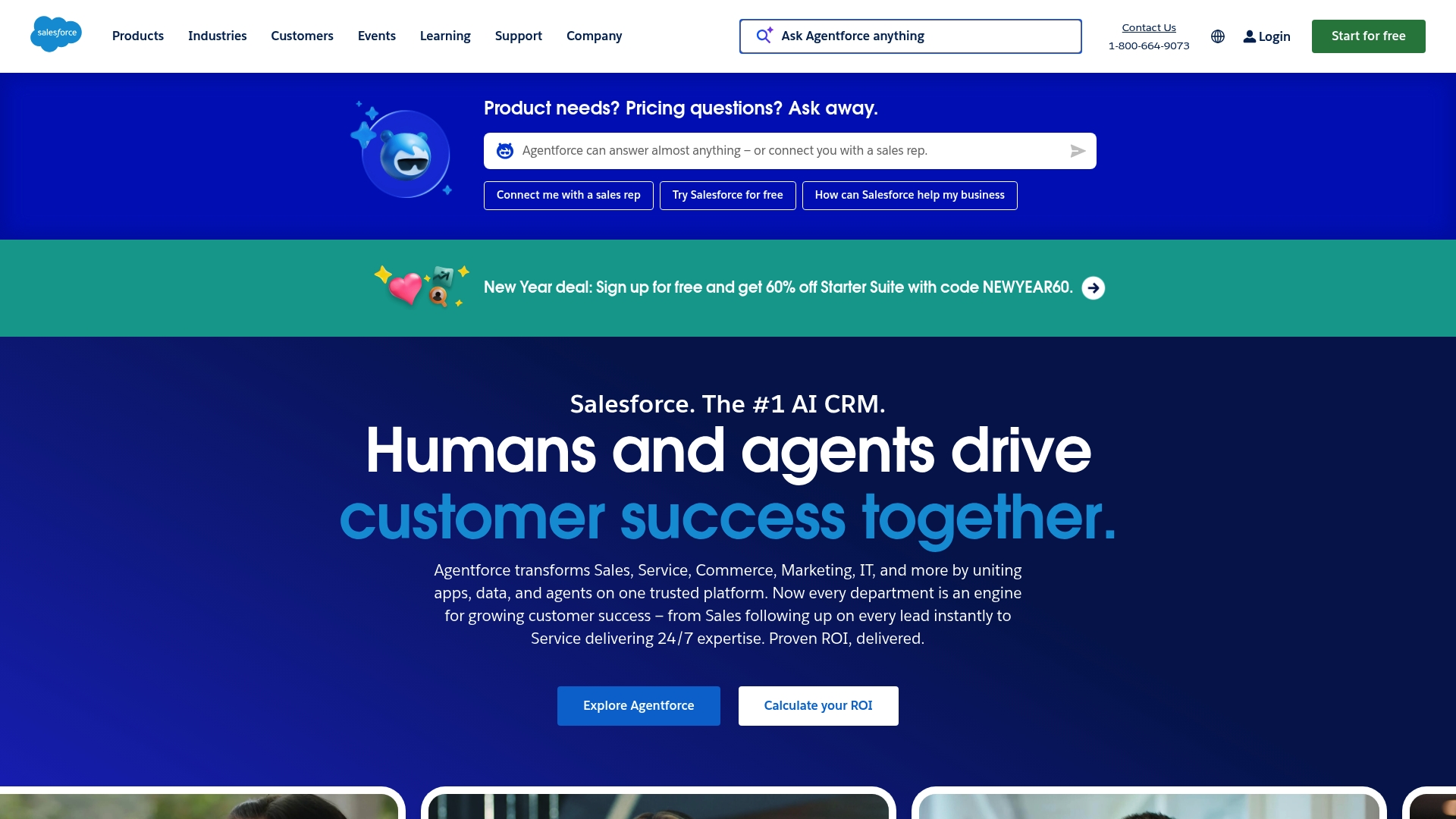
Salesforce is a market-leading, AI-powered CRM platform that unites apps, data, and agents to modernize operations across departments. For C-suite leaders in construction and healthcare in KSA and UAE, it promises industry-specific solutions and deep integrations that support complex, regulated environments. The platform scales from free small-business CRM to enterprise-grade automation and agentic AI, but expect pricing and advanced customization to require careful planning. Bottom line: powerful and flexible, but not off-the-shelf cheap or instantly simple.
Core Features
Salesforce combines an all-in-one AI CRM, industry-tailored modules (including healthcare and financial services), and autonomous Agentforce solutions that extend automation beyond rules into agentic workflows. It also offers a free CRM option for small teams and strong integration capabilities for connecting external systems and data sources. The emphasis is on unifying customer and operational data to enable AI-driven personalization, automation of repetitive tasks, and secure scaling across business units.
Pros
- Comprehensive integrated platform covering all business needs: Salesforce delivers sales, service, marketing, and commerce capabilities within a single, unified environment so you avoid fragmented point solutions.
- Industry-specific tailored solutions: Built-in templates and processes for sectors like healthcare and finance reduce the time to value for regulated enterprises.
- Advanced AI capabilities with agentic AI: Agentforce and other AI features enable autonomous agents to handle routine queries and processes, freeing human teams for higher-value work.
- Strong security and trust reputation: The platform is engineered for enterprise security and reliability, which matters when you manage patient data or large-scale construction contracts.
- Free CRM option for small businesses: Small teams can adopt Salesforce at zero cost initially, making pilot programs and department-level rollouts easier.
Cons
- Pricing can be complex and vary by product and industry: Total cost depends on which modules and industry packs you select, so budget projections require careful scoping and vendor engagement.
- Advanced features may require additional customization and investment: To unlock full AI and automation value, expect professional services or partner-led implementation.
- Learning curve for new users, especially with AI integrations: Teams need time and training to use agentic AI and blended automation effectively, which can slow early adoption.
Who It’s For
Salesforce is best for organizations that need a unified, scalable CRM with deep industry capabilities—ranging from small clinics and regional contractors to large hospitals and multinational construction firms. If you plan multi-department digital transformation, want AI-driven automation, and can invest in tailored implementation, Salesforce fits. If you need a plug-and-play, low-cost solution with minimal change management, consider starting with the free CRM tier first.
Unique Value Proposition
Salesforce’s unique value is the combination of a unified data model, industry-specific solutions, and agentic AI that moves automation from scripted workflows to proactive agents. That blend lets executives orchestrate customer and operational journeys at scale while preserving security and regulatory controls.
Real World Use Case
Heathrow Airport uses Salesforce’s AI agents to improve passenger service, resolving 90% of queries without human intervention and significantly easing operational load — a concrete example of agentic AI driving measurable efficiency.
Pricing
Pricing varies by product and industry; details are available on individual product pages and require contact with Salesforce for tailored quotes.
Website: https://salesforce.com
Zoho
At a Glance
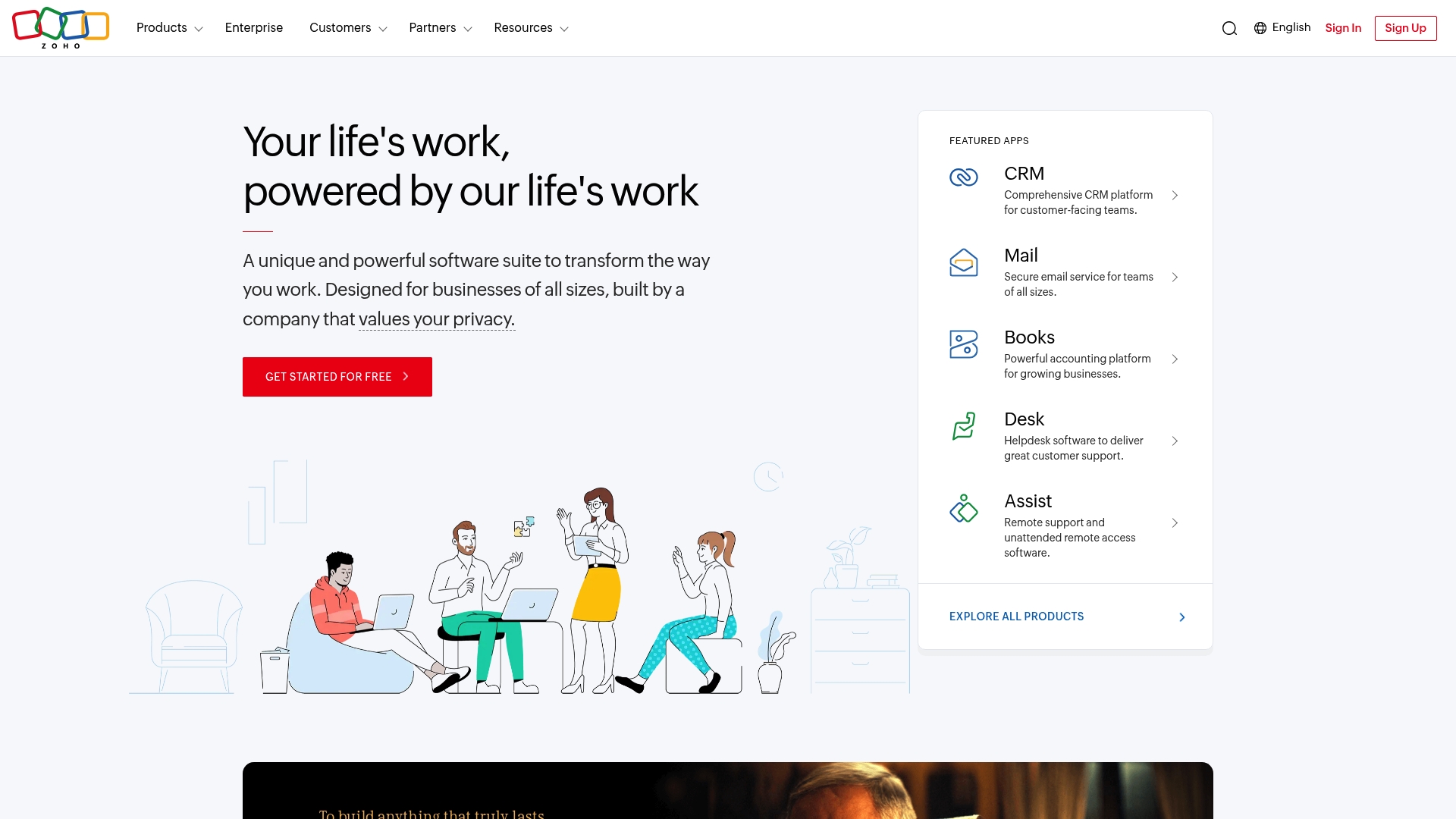
Zoho is a privacy-first, cloud-native business suite that bundles CRM, finance, email, HR, IT management, and analytics into a single platform. For C-suite leaders in construction and healthcare across Saudi Arabia and the UAE, Zoho’s emphasis on owning its infrastructure and not monetizing user data can simplify compliance and risk conversations. It’s a broad, scalable option that favors integrated, secure operations over flashy single-purpose features. Bottom line: dependable and private, but you’ll need to validate specific usability and pricing for your deployment.
Core Features
Zoho provides a comprehensive set of cloud applications hosted on its own infrastructure, which removes third-party visitor tracking and reduces data exposure. The platform covers customer relationship management, accounting and finance, team collaboration and mail, human resources, and IT management, with analytics layered across the stack. Customization and scalability are core to the product: you can combine modules to match enterprise processes, and data residency is easier to manage because Zoho uses its own data centers.
Pros
- Privacy-focused architecture: Zoho owns its tools and data centers, which reduces third-party tracking and gives you clearer control over data residency and compliance.
- No user data monetization: The vendor explicitly does not monetize user data for advertising, which lowers reputational and regulatory risk for sensitive sectors like healthcare.
- Broad, integrated application set: You get CRM, finance, email, HR, and IT tools under one roof, which simplifies integration and reduces point-solution sprawl.
- Customizable and scalable platform: Zoho’s modular design lets organizations scale from startups to large enterprises without rearchitecting core systems.
Cons
- Limited product detail in the source material: The provided data does not describe specific features, user workflows, or third-party integrations in depth, making it hard to assess fit for complex construction or hospital processes.
- No pricing information provided: Pricing is not specified, so total cost of ownership and licensing implications remain unclear for procurement and budgeting.
- User interface and usability unknown: The excerpt does not describe the interface or ease of adoption, which are critical for frontline staff in busy hospitals and construction sites.
Who It’s For
Zoho fits organizations that prioritize data control and a single-vendor, integrated cloud stack — particularly relevant to C-suite leaders in healthcare and construction who must balance operational scale with strict privacy and compliance requirements. If you need a platform that can centralize CRM, finance, HR, and IT while keeping data on vendor-managed infrastructure, Zoho is worth evaluating.
Unique Value Proposition
Zoho’s core distinction is its privacy-centric, end-to-end suite hosted on vendor-controlled infrastructure, combined with modular services that can be assembled to meet enterprise workflows. For regulators and compliance officers in KSA and the UAE, that single-vendor control can simplify audits and data-governance policies.
Real World Use Case
A mid-sized company could deploy Zoho CRM for client relationships, Zoho Books for accounting, and Zoho Mail for secure communications while preserving strict data privacy to meet local regulatory demands — all managed as a cohesive platform rather than disparate point solutions.
Pricing
Pricing is not specified in the provided content; engage Zoho or an authorized regional partner to obtain localized quotes, deployment options, and support SLAs.
Website: https://zoho.com
Informatica
At a Glance
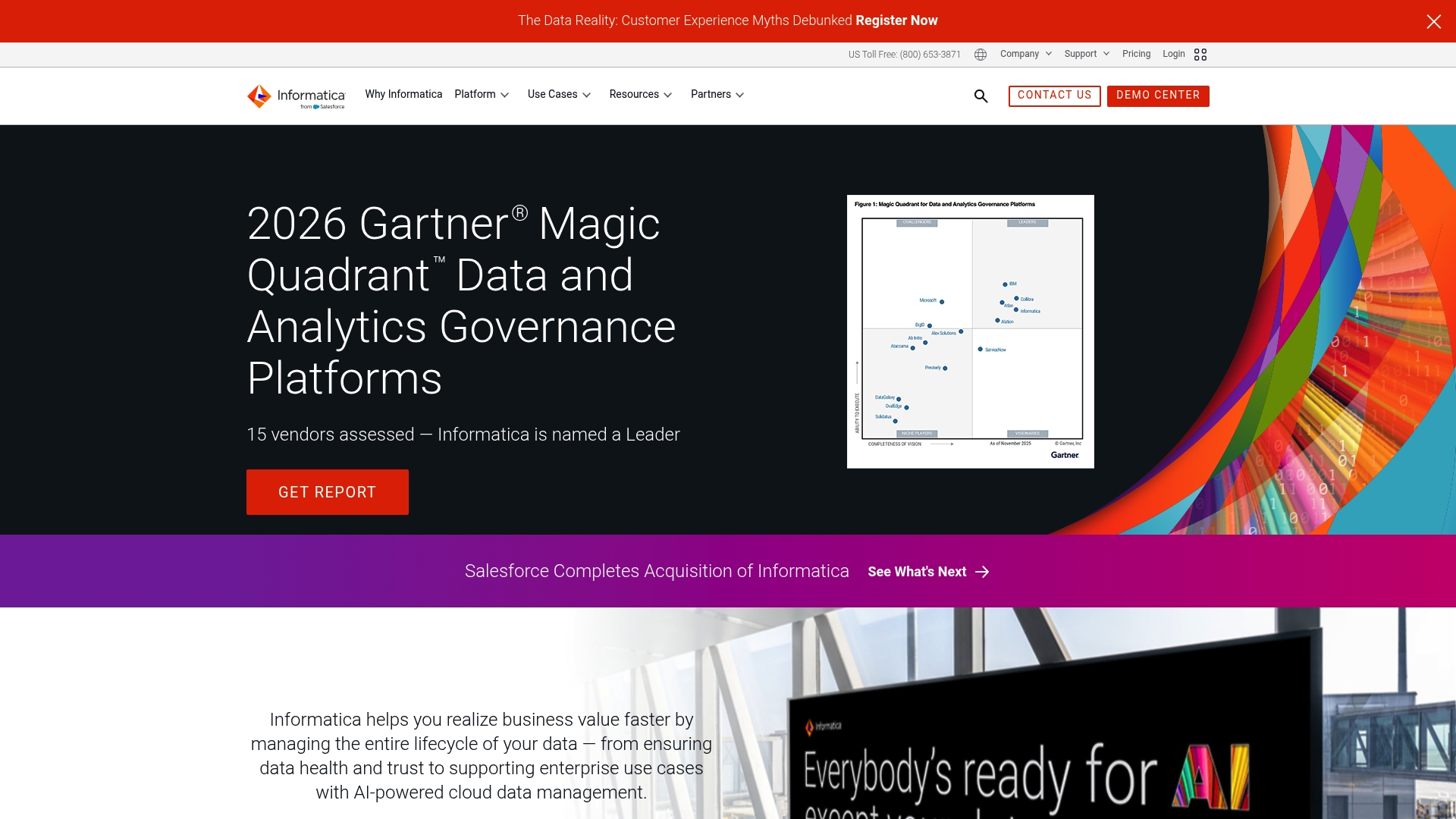
Informatica is a comprehensive, enterprise-grade data management platform built to govern, integrate, and prepare data for AI and analytics at global scale. Recognized in Gartner Magic Quadrant reports, it combines data cataloging, integration, master data management, and AI agent capabilities to drive enterprise data initiatives. For C‑suite leaders in construction and healthcare across Saudi Arabia and the UAE, Informatica promises improved data trust and AI readiness—but expect a meaningful implementation effort and enterprise-level investment.
Core Features
Informatica’s platform centers on data lifecycle management: a Data Catalog for discovery, Data Integration and API & App Integration for system connectivity, and AI Agent Engineering to operationalize AI workflows. It adds Data Quality & Observability, MDM & 360 Applications for a single trusted view, Governance, Access & Privacy controls for compliance, and a Data Marketplace to share curated assets. These capabilities run on a secure, scalable cloud foundation intended for large-scale, regulated environments.
Pros
- Comprehensive data management platform: Informatica brings cataloging, integration, MDM, governance, and AI features into one enterprise suite, reducing point‑solution fragmentation.
- Strong AI and automation features: The platform’s AI agent and automation tooling help accelerate model operationalization and routine data tasks.
- Recognized leadership in Gartner Magic Quadrant: Market recognition signals maturity and a broad enterprise roadmap that boards and CIOs can rely on.
- Global scale and security: Built for multi‑region, highly regulated deployments, the platform aligns with enterprise security and availability expectations.
- Extensive resources and community support: A broad partner and user community supports implementation patterns, training, and ongoing adoption.
Cons
- Potential complexity for new users: The platform’s breadth can create steep onboarding curves for teams without mature data practices.
- Pricing details not readily available on the site: Lack of transparent pricing makes early TCO estimates difficult for procurement and budgeting.
- Implementation and customization can require significant effort: Enterprise deployments often need specialized consulting, which lengthens time to value.
Who It’s For
Informatica is best suited for large enterprises—especially those in construction and healthcare—seeking an enterprise, AI‑enabled data governance and integration platform. If you lead IT, data, or digital transformation in a Saudi or UAE hospital system, construction conglomerate, or government contractor and require scalable cloud solutions with strict governance, Informatica fits the profile.
Unique Value Proposition
Informatica’s unique value lies in combining enterprise‑grade data governance, MDM, and AI readiness under a single, scalable cloud platform recognized by industry analysts. That combination helps C‑suite executives move from fragmented data estates to trusted, governable datasets that fuel analytics, compliance, and generative AI initiatives.
Real World Use Case
A documented example is Citizens Bank’s cloud MDM modernization: Informatica helped accelerate customer onboarding and improved data trust by centralizing master data and automating quality checks—an outcome C‑suite leaders in healthcare can parallel for patient onboarding and in construction for supplier consolidation.
Pricing
Not specified on website, likely enterprise‑valued and quoted via sales channels; expect custom pricing tied to scale, modules, and deployment requirements.
Website: https://informatica.com
Saphyte
At a Glance
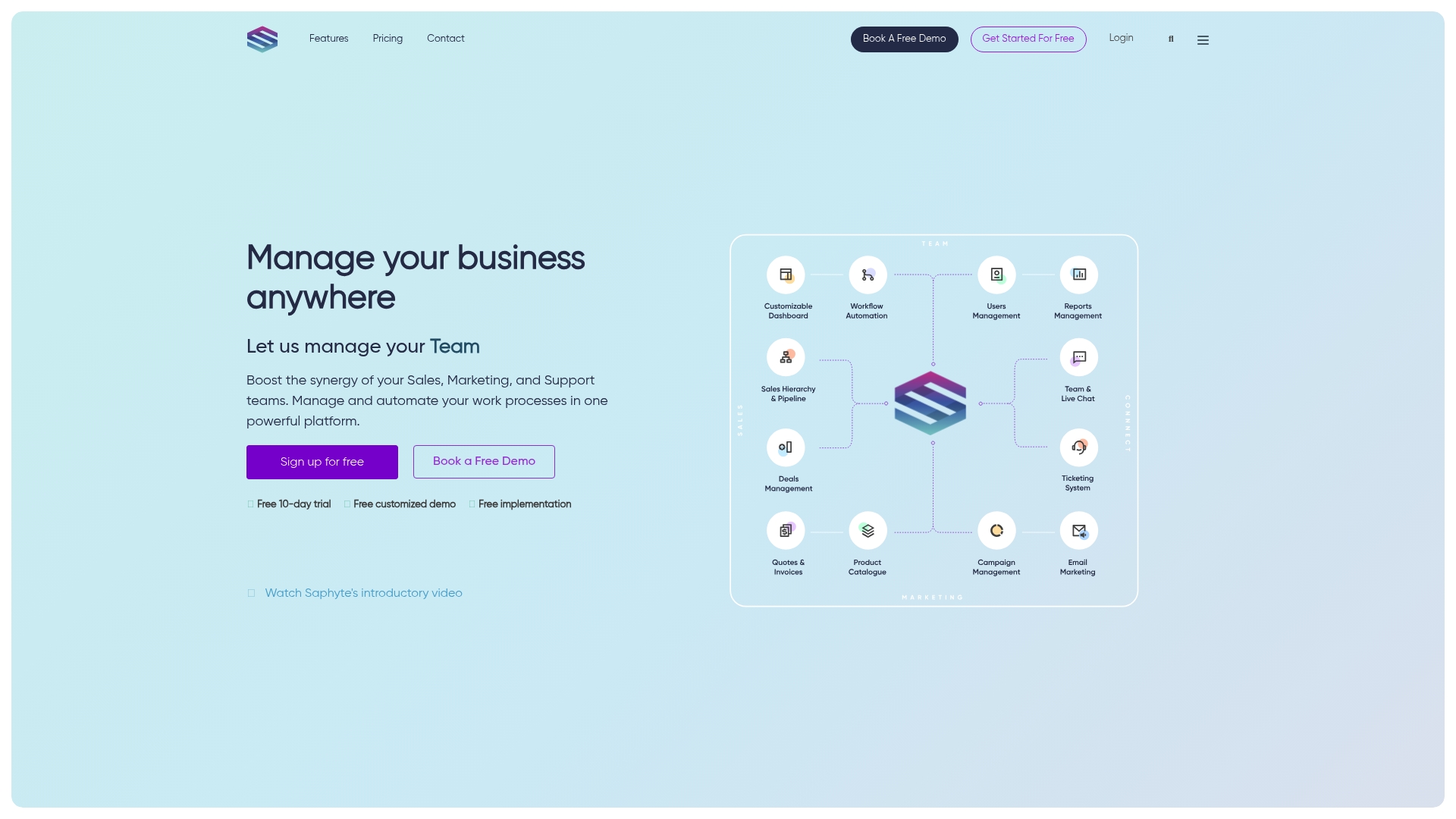
Saphyte is an all-in-one CRM that combines sales, marketing, collaboration, and support tools into a single platform, designed to help teams acquire, convert, and retain customers. For C-suite leaders in construction and healthcare across Saudi Arabia and the UAE, it delivers scalable workflows and an emphasis on data security that align with regulatory and enterprise needs. Implementation can yield measurable efficiency gains through automation, but expect an initial configuration and onboarding investment. In short: powerful, secure, and flexible — with a learning curve.
Core Features
Saphyte provides a customizable dashboard and robust workflow automations that let you model approval chains, RFIs, or patient intake flows without constant manual oversight. It includes form and landing page builders for lead capture, email marketing and campaign management, a full sales pipeline for deals and lead tracking, plus team collaboration, live chat, ticketing, and a client portal. The platform bundles integrations and backup-focused security features so enterprise data governance and continuity are easier to manage.
Pros
- Comprehensive, single-platform approach: Saphyte consolidates sales, marketing, support, and collaboration, reducing the need for multiple point solutions.
- Customizable and scalable: The platform can be tailored to different team sizes and use cases, allowing growth from pilot projects to enterprise deployments.
- Automation improves operational efficiency: Workflow automations reduce manual handoffs and help accelerate lead-to-deal conversion cycles.
- Flexible pricing tiers including free options: A freemium model and tiered plans allow organizations to test the platform before committing.
- Strong emphasis on data security and backup: Built-in security and backup capabilities support compliance and minimize operational risk.
Cons
- Steep navigation curve for new users: The extensive feature set can feel complex to users not dedicated to CRM administration.
- Advanced tiers may be expensive for small teams: Pricing at higher support and feature levels can push total cost of ownership up for smaller organizations.
- Customization requires time and expertise: Some teams will need dedicated configuration effort before the platform matches specialized processes.
Who It’s For
Saphyte is best for medium to large organizations seeking an integrated CRM that handles customer lifecycle management end-to-end. It fits well for construction firms managing client and project stakeholders, and healthcare providers needing secure patient engagement and support workflows. If you need a platform that can scale from pilot programs to regional rollouts, Saphyte is a practical contender.
Unique Value Proposition
Saphyte’s edge is its combination of breadth and governance: a single ecosystem that supports marketing, sales, support, and collaboration while prioritizing data security and backups. That mix appeals to regulated industries and multi-site operations where consolidation reduces vendor overhead and simplifies compliance.
Real World Use Case
A mid-sized marketing agency uses Saphyte to centralize client interactions, automate email campaigns, track sales deals, and coordinate team tasks. Applied to healthcare, the same setup can streamline patient inquiries, automate appointment follow-ups, and maintain an auditable support trail.
Pricing
Saphyte uses a freemium model with paid plans ranging from $13.75 to $90.80 per user per month, depending on features and support levels.
Website: https://saphyte.com
Comprehensive Business Tools Comparison
This table summarizes the features, advantages, and target audience of key business tools mentioned in the article, helping readers make an informed choice based on their unique needs.
| Product | Core Features | Pros | Cons | Pricing |
|---|---|---|---|---|
| Singleclic | ERP/CRM, process automation, regional expertise | Comprehensive offerings, regional specialization, tailored for enterprises | Pricing not disclosed, targeting large organizations | Consultative pricing based on complexity |
| Odoo | Modular enhancements, extensive app store | Free entry-level edition, large customizations, open-source flexibility | Heavy customization complexity, need for expert implementation | Free to €19.90/user per month |
| SAP Business AI | Embedded AI tailor-made for SAP ecosystem workflows | Deeply integrated AI, extensive scalability, supports enterprise systems | Requires SAP infrastructure, opaque pricing structure | Not provided |
| Oracle Cloud | ERP/CRM with cloud integration and AI capabilities | End-to-end features, recognized stability, tailored solutions | Complex setup requiring expertise, non-transparent pricing | Variable based on quotes |
| Salesforce | AI-powered CRM with industry-specific solutions | Unified platform, agentic AI features, tailored per industry needs | Higher initial investments, learning curve for complex functionalities | Free tier to quote-based pricing |
| Zoho | Privacy-centric integrated platform | Strong privacy measures, integrated application range | Details about selected features and usability unclear | Unspecified; requires direct engagement |
| Informatica | Data management suite for integration and AI functionality | Comprehensive platform, high scalability, AI-ready integration | Requires enterprise-level expertise for implementation | Tailored to enterprise requirements |
| Saphyte | CRM solution, marketing and collaboration functionality | Integrated approach, automation, data backups | Configuration and navigation complexity for new users | Freemium starting $13.75/user per month |
Empower Your Enterprise with Singleclic’s Tailored CRM and Digital Transformation Solutions
C-suite executives face critical challenges highlighted in the “Top 8 CRM Software for C Suite Executives in 2026” article, including integrating complex ERP and CRM systems, automating business processes at scale, and delivering localized, secure, and AI-enhanced workflows that comply with regional regulations. Key pain points such as meeting compliance demands, accelerating time-to-value, and maintaining operation continuity resonate deeply with enterprises in Saudi Arabia, the UAE, and Egypt.
Singleclic stands apart by offering a uniquely regional, enterprise-grade approach that blends proven CRM and ERP implementations with powerful business process automation and AI capabilities. Our low-code Cortex platform enables rapid customization and real-time workflow changes with full Arabic UI/UX support and on-premise deployment options meeting banking and government security needs. With over 10 years of experience and 60+ enterprise clients, including Emirates Health Services and Dubai Healthcare City, Singleclic delivers trusted end-to-end solutions designed to help you move beyond digitalization into true operational optimization.
Ready to transform your organization with a partner that understands your challenges? Discover how Singleclic’s ERP & CRM Implementation and Business Process Automation combine to deliver measurable efficiency and business growth.
Challenge your digital transformation journey today by partnering with Singleclic. Visit Singleclic to learn how our scalable, secure, and localized solutions can elevate your construction, healthcare, or government enterprise now.
Frequently Asked Questions
What features should I look for in CRM software for C Suite executives?
Look for features that support sales automation, data analytics, and customer engagement. Prioritize tools that integrate well with existing systems and allow for easy customization to fit your organization’s workflows.
How can CRM software improve decision-making for C Suite leaders?
CRM software can centralize data and provide actionable insights based on customer interactions and sales trends. Use analytics to make informed decisions that can enhance operational efficiency and could improve revenue growth by 15-25%.
What are the costs typically associated with implementing CRM software?
Costs can vary widely based on features, the number of users, and deployment options. Prepare to budget for initial setup fees, ongoing subscription costs, and potential customization expenses, which can range from thousands to millions annually.
How long does it take to implement CRM software in an organization?
Implementation timelines depend on the complexity of the software and the size of the organization, typically ranging from 30 to 90 days. Plan for user training and system integration as crucial steps to ensure a smooth rollout.
Can CRM software help in managing regulatory compliance?
Yes, many CRM systems offer features designed to help with data compliance and reporting. Ensure the software you choose includes specific compliance tools to meet industry requirements, which can reduce audit risks significantly.