Use Word templates for Dynamics 365 CE records when you need quick, human-readable quotes or summaries. Switch to Electronic Reporting (ER) for Finance & Operations when documents feed regulatory or financial processes. Reach for Power Automate with SharePoint modern templates when documents need to be triggered, batched, or routed automatically. If template volume, formatting complexity, or record counts exceed native limits, that’s the point to bring in a partner rather than force a workaround.
TL;DR:
- Word templates are suitable for small-scale documents like quotes and summaries but are limited to exporting 100 related records per relationship, risking data truncation with complex records.
- Electronic Reporting (ER) handles complex, multi-format, regulatory-compliant documents and separates data models from formatting, ideal for multi-country or legal templates.
- Power Automate with SharePoint enables automated, trigger-based document generation at scale, with careful attention to metadata tags and format limitations.
- For high-volume, pixel-perfect reports such as tax forms or labels, SSRS or Power BI outperform Word templates and ER in print fidelity.
- When volume or compliance surpass native tool capabilities, bringing in a partner to extend automation or migrate to ER is advisable, particularly for regulated environments or multi-territory needs.
Table of Contents
- How document generation dynamics 365 works: word templates, ER, SSRS, or automation
- How do you create and use word templates in Dynamics 365 CE?
- What is electronic reporting (ER) in Finance & Operations?
- How do you automate document generation with Power Automate?
- What are the practical limits of Dynamics 365 document generation?
- Singleclic perspective: build it yourself or bring in a partner?
- How Singleclic helps with Dynamics 365 document generation
- Sources
- FAQ
How document generation dynamics 365 works: word templates, ER, SSRS, or automation
Dynamics 365 gives you four distinct paths for turning CRM or ERP data into finished documents, and picking the wrong one is the most common reason document generation Dynamics 365 projects stall. Each option trades simplicity for scale differently.
Word templates in Customer Engagement (CE) generate one document at a time from a record, using Microsoft Word’s own formatting. Electronic Reporting (ER), built into Finance & Operations, handles complex, rule-driven, multi-format documents like invoices and tax filings. SSRS and Power BI remain the choice for pixel-perfect printed reports or high-volume batch runs. Power Automate paired with SharePoint covers everything that needs to fire on a trigger rather than a button click.
Run through this checklist before you build anything:
- Does the document need to go to one record or hundreds at once? Volume favors ER or automation over manual Word templates.
- Is there a compliance or multi-country formatting requirement? That points straight to ER.
- Does the layout need exact print fidelity (labels, tax forms)? SSRS or Power BI wins.
- Should the document generate without a human clicking a button? Build it in Power Automate.
How do you create and use word templates in Dynamics 365 CE?
Word templates work well for quotes, order confirmations, and account summaries, but the setup has a few steps that trip up first time admins.
- Export a sample data source from the record you want to template (account, opportunity, quote) to generate a starter Word document with the correct schema attached.
- Open the file in Word, go to Developer, and use the XML Mapping Pane to bind content controls to entity fields.
- Pick related entities carefully. Each related record adds to a shared cap: Dynamics 365 limits Word template exports to 100 related records per relationship, so a quote with dozens of line items and several linked contacts can silently truncate data.
- Upload the finished template either through the admin center for organization-wide use, or attach it as a personal template directly from a record if only you need it.
- Test with a real record that has near-maximum related data, not a clean demo record, to catch truncation early.
Common failures include missing content controls after a Dynamics 365 update (usually a stale XML mapping), blank fields from unpublished customizations, and template upload errors caused by macros or unsupported Word features. Re-exporting the sample schema after any entity change fixes most of these.
Pro Tip: Model your Word template around the specific record types it will actually open, not a generic “one template fits all” version. A template built around a heavy child entity will hit the 100-record ceiling far sooner than one scoped to what the document truly needs.
What is electronic reporting (ER) in Finance & Operations?
ER is the enterprise-grade path when documents carry legal, tax, or multi-country weight. Unlike Word templates, ER separates the data model from the visual format, so business users can adjust layouts without touching code.
The framework has three moving parts:
- The model designer, which defines the data structure a document draws from.
- The format designer, which controls how that data renders, whether as PDF, XML, or a structured file for a tax authority.
- Repositories, which store ER configurations in the file system, operations resources, or Dataverse for sharing across environments.
Business users edit templates through the Business document management workspace, an Office-style interface that avoids developer involvement for routine layout changes, according to Microsoft’s ER documentation. Each configuration has a provider, meaning ownership and versioning are tracked formally rather than left to whoever last opened the file.
Reach for ER when a document must satisfy a government reporting format, when the same document needs different renderings by country, or when the business needs to update a layout without a deployment cycle. To start, import a base configuration from the global ER repository, then customize the model and format for your entity.

How do you automate document generation with Power Automate?
Power Automate turns document creation from a manual click into a background process, which matters once volume climbs past what any admin wants to babysit, especially when using content marketing automation to scale content production efficiently.
- Choose your trigger. “When an item is created or modified” works for record-driven documents like new contracts; scheduled flows suit recurring statements; form submission triggers fit intake-driven paperwork.
- Connect the flow to a SharePoint modern template built with content assembly, which maps document fields to source data automatically, according to Microsoft’s automation guidance.
- Configure the output format. Most flows generate Word first, then convert to PDF for distribution, since not every downstream system accepts editable files.
- Store the finished document in a governed SharePoint library with metadata tags (customer, document type, date) so approvals and searches don’t depend on file naming conventions.
- Add an approval or notification step if the document needs sign off before it reaches a customer or regulator.
Watch for two limitations: supported output formats are narrower than what Word itself can produce, and field mapping breaks silently if a source schema changes upstream. Structured document generation in SharePoint now uses Copilot-assisted field detection to catch some of these mismatches before they reach production.
Pro Tip: Pair every automated document flow with a metadata schema from day one. Retrofitting tags onto thousands of already-generated files is far more painful than defining them before the first flow runs.
What are the practical limits of Dynamics 365 document generation?
The 100-related-record limit on Word template exports is the limit admins hit most often, usually on quotes or orders with long line item lists. Three practical fixes exist: rebuild the document in ER with a proper data model, pre-aggregate related records into a staging entity before export, or shift the job to a server-side batch process that paginates through records instead of pulling them all at once.
- For pixel-perfect or high-volume printed output (labels, tax forms, statements), SSRS or Power BI outperforms both Word templates and ER on print fidelity.
- Repository choice affects long-term maintainability. Dataverse repositories simplify sharing ER configurations across multi-country deployments.
- Provider ownership on ER configurations prevents version conflicts, but only if teams actually assign ownership rather than leaving it default.
Singleclic perspective: build it yourself or bring in a partner?
Most Dynamics 365 teams can handle straightforward Word templates and basic Power Automate flows internally. The decision to bring in outside help usually comes down to three signals: templates that need ER’s data modeling rather than Word’s flat structure, document volume that demands batch processing instead of one-off clicks, and regulatory formats where a mistake carries real financial risk.
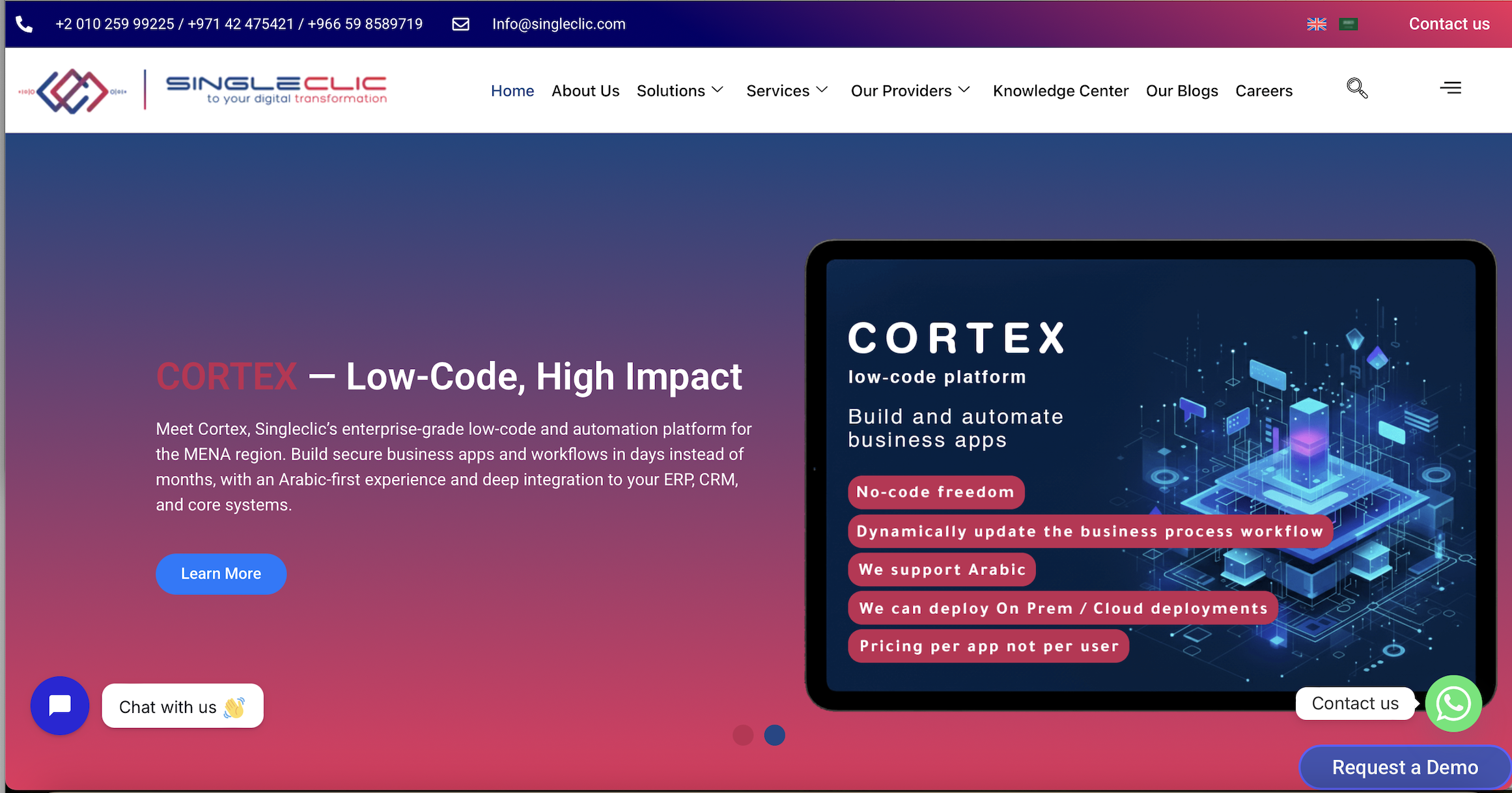
We’ve seen organizations in regulated sectors reach a point where native tools cover the easy 80% of documents but stall on the remaining complex cases. That’s usually where Arabic-enabled, on-premise automation through Cortex becomes the more defensible route than stretching Power Automate past what it was built for.
— Tamer Badr
How Singleclic helps with Dynamics 365 document generation
Some providers offer an alternative to hiring a full-time Dynamics 365 developer just to keep templates and reporting flows running. Where Microsoft’s native tools stop at generic Word exports and standard ER models, our team configures ER repositories, builds Power Automate flows tied to real business triggers, and extends automation on-premise through Cortex when Arabic-language processing or regulated data residency rules apply.
A typical engagement starts with an audit of your current document flows (Word templates, ER configurations, or manual exports) to identify where volume or compliance needs have outgrown the native setup. From there we handle Dynamics 365 implementation and integration, configure ER models for multi-country reporting, and build the Power Automate and SharePoint automation layer around your approval chains. If your document workflows need to connect ERP, CRM, and legacy systems without custom code, our service portfolio covers the low-code path through Cortex as well.
Request a consultation to map your current template gaps against the right fix, before the 100 record ceiling forces a rebuild mid-project.
FAQ
What is document generation?
Document generation is the automatic or template-driven creation of files (quotes, invoices, contracts, reports) from structured data instead of manual typing. In Dynamics 365, it spans Word templates, ER, SSRS, and Power Automate flows, each suited to different volume and formatting needs.
How can I automate document creation in Dynamics 365?
Connect Power Automate to Dataverse or SharePoint and set a trigger such as record creation, a schedule, or form submission. The flow then pulls data into a SharePoint modern template and outputs a Word or PDF file without manual intervention.
Does Office 365 have a document management system?
Yes. SharePoint, part of Microsoft 365, provides document libraries with metadata, versioning, and permissions, and now supports structured document generation with Copilot-assisted field mapping for form-driven documents.
What does “generated document” mean?
A generated document is a file produced automatically by merging a template with live data, rather than written from scratch. In Dynamics 365, that could be a Word quote populated from a CE record or an ER-produced invoice formatted for a specific country’s tax authority.
What happens if my Word template needs more than 100 related records?
Native Word template exports cap at 100 related records per relationship. Beyond that, rebuild the document logic in Electronic Reporting, pre-aggregate the data into a staging entity, or run generation through a server-side batch job that paginates records instead of pulling them all at once.