Every executive in the UAE and KSA knows the pressure to deliver faster service while protecting sensitive data. Mobile solutions have become the digital backbone for modern business operations in banking and healthcare, keeping teams connected and customers engaged wherever they are. This article brings clarity to what mobile solutions really mean for your sector, outlining the practical tools, compliance needs, and technology trends that shape success.
Table of Contents
- Defining Mobile Solutions For Modern Business
- Key Types And Applications By Industry
- Mobile Solutions In Banking And Financial Services
- Mobile Solutions In Healthcare
- Cross-Industry Trends
- How Mobile Solutions Transform Operations
- Risks, Compliance, And Integration Challenges
- Maximizing Value: Best Practices And ROI
Key Takeaways
| Point | Details |
|---|---|
| Importance of Mobile Solutions | Mobile solutions are essential for modern business operations, enabling flexibility and connectivity for both workforce and customers. |
| Industry-Specific Applications | Tailored mobile solutions are crucial for sectors like banking and healthcare, where unique regulatory and operational challenges exist. |
| Integration and Compliance | Implementing mobile solutions requires deep integration with existing systems and adherence to local regulations to ensure security and data integrity. |
| Continuous Optimization | Measuring performance and optimizing features is vital for maximizing the return on investment from mobile solutions. |
Defining Mobile Solutions for Modern Business
Mobile solutions are no longer optional extras—they’re the foundation of how modern businesses operate. At their core, mobile solutions encompass any technology, application, or service accessed through mobile devices that enables organizations to work smarter, faster, and more flexibly. Think of them as the digital infrastructure that keeps your workforce connected, your customers engaged, and your operations running around the clock.
In the context of healthcare and banking in the UAE and KSA, mobile solutions take on even greater significance. These industries handle sensitive data, require strict compliance with local regulations, and demand seamless integration with existing enterprise systems. Mobile solutions span across multiple dimensions:
- Mobile applications custom-built for your specific business processes
- Cloud connectivity enabling secure access to critical systems from anywhere
- Enterprise mobile platforms that unify communication, collaboration, and data management
- Payment and transaction systems optimized for mobile-first operations
- Real-time analytics and reporting accessible on smartphones and tablets
The backbone enabling these capabilities has evolved dramatically. Modern mobile connectivity from 4G through 5G technology provides the speed, reliability, and security that enterprises like yours depend on. This technological foundation empowers innovative service delivery, enables data privacy controls, and creates opportunities for AI-driven business intelligence.
For executives managing banking operations or healthcare networks, mobile solutions translate into concrete business value. Your teams can approve transactions, access patient records, or manage workflows from branch offices, hospitals, or remote locations—without compromising security or data integrity.
What Mobile Solutions Include
Modern mobile solutions for enterprise environments typically combine several key components:
- Native and hybrid mobile applications built specifically for iOS and Android platforms
- API integrations connecting mobile apps to your existing ERP, CRM, and banking systems
- Cloud infrastructure providing secure, scalable backend services
- User interface design optimized for touch interaction and limited screen space
- Offline capabilities allowing functionality even without constant connectivity
When organizations implement mobile solutions effectively, they transform communication, enhance productivity, and enable seamless collaboration across their entire operation. The UAE banking sector has seen this firsthand—major financial institutions leverage mobile platforms to offer instant account access, approve credit facilities, and process international transfers directly to clients’ phones.
At Singleclic, we understand that mobile solutions must do more than just work on phones. They need to integrate deeply with your existing technology ecosystem, respect local regulatory requirements, and scale as your business grows. Our Cortex low-code platform enables you to build these sophisticated mobile applications faster, with full Arabic language support and on-premise deployment options that align with KSA and UAE security requirements.
Mobile solutions also represent a shift in how customers interact with your brand. Rather than visiting a branch, scheduling an appointment, or waiting for callbacks, your clients now expect instant, mobile-first access to your services. This expectation applies equally to internal operations—your teams expect the same mobile convenience they experience in their personal lives.
Mobile solutions are the bridge connecting your enterprise systems to the way people actually work today—mobile-first, cloud-connected, and always available.
The real power of mobile solutions emerges when they’re designed around your specific business challenges. A healthcare provider needs different mobile capabilities than a banking institution. Patient scheduling, medical record access, and telemedicine features matter in healthcare. Transaction approvals, regulatory reporting, and fraud detection matter in banking.
Pro tip: When evaluating mobile solutions, prioritize platforms that support both native mobile apps and deep integration with your existing enterprise systems—this ensures your investment works with your current infrastructure rather than against it.
Key Types and Applications by Industry
Different industries face unique operational challenges, and mobile solutions must be tailored accordingly. Banking institutions need real-time transaction processing and fraud detection. Healthcare providers require secure patient data access and telemedicine capabilities. Manufacturing demands inventory tracking and supply chain visibility. Each sector leverages mobile technology differently to achieve competitive advantage.

The diversity of mobile applications reflects this reality. Mobile apps span business productivity, fintech solutions, customer engagement, and enterprise collaboration tools, each designed to solve specific industry problems. Your organization’s mobile strategy should directly address the workflows, compliance requirements, and customer expectations unique to your sector.
Mobile Solutions in Banking and Financial Services
Banking has transformed dramatically through mobile innovation. Your customers expect instant access to accounts, real-time balance updates, and the ability to approve transactions without visiting a branch.
Key banking mobile applications include:
- Mobile banking platforms enabling account access, transfers, and bill payments
- Digital wallet systems supporting contactless payments and peer-to-peer transfers
- Loan origination apps streamlining credit applications and approvals
- Investment platforms providing portfolio management and market analysis
- Compliance and reporting tools for regulatory adherence and audit trails
Banks in the UAE and KSA leverage these applications to meet strict regulatory requirements while delivering seamless customer experiences. Mobile banking platforms now generate significant revenue through transaction fees, while reducing operational costs by shifting routine services away from branch staff.
Mobile Solutions in Healthcare
Healthcare organizations face different pressures. Patient privacy, real-time clinical access, and regulatory compliance dominate decision-making.
Critical healthcare mobile applications include:
- Electronic health records (EHR) access for physicians and nurses
- Telemedicine platforms enabling remote consultations
- Patient appointment scheduling and reminder systems
- Prescription management and medication tracking
- Clinical alerting systems for critical patient data
Healthcare providers in KSA and UAE implement these solutions to improve patient outcomes, reduce no-show rates, and enhance operational efficiency. Mobile connectivity innovations across 5G networks support real-time clinical collaboration and remote diagnostics, critical for geographically dispersed hospital networks.
Here’s a comparison of mobile application priorities for banking and healthcare sectors in the UAE and KSA:
| Priority Area | Banking Sector Focus | Healthcare Sector Focus |
|---|---|---|
| Data Security | Fraud detection, encryption | Patient privacy, secure EHR |
| Compliance | Regulatory reporting | HIPAA-equivalent standards |
| Core Mobile Functions | Transaction approvals | Real-time clinical access |
| Customer Engagement | Digital wallets, instant access | Telemedicine, mobile reminders |
Cross-Industry Trends
Regardless of sector, several mobile solution trends apply universally:
- AI integration for predictive analytics and automation
- Offline functionality ensuring operations continue without connectivity
- Real-time analytics enabling data-driven decisions instantly
- Security-first design protecting sensitive information
- Integration capabilities connecting to existing ERP and CRM systems
At Singleclic, we’ve implemented mobile solutions across healthcare and banking in both KSA and UAE. Our Cortex low-code platform enables organizations to rapidly build industry-specific mobile applications without extensive coding, reducing time-to-market while maintaining security and compliance standards.
The most successful mobile solutions aren’t generic apps—they’re purpose-built to solve the specific challenges of your industry and organization.
Your mobile strategy should align with your operational priorities. Banking executives prioritize transaction security and regulatory compliance. Healthcare leaders focus on clinical access and patient privacy. Each requires different technical architecture, security controls, and user interface design.
Pro tip: Map your most critical workflows first—identify which business processes would deliver the highest ROI through mobile access, then build your mobile solution roadmap around those priorities rather than trying to mobilize everything simultaneously.
How Mobile Solutions Transform Operations
Mobile solutions don’t just add convenience—they fundamentally reshape how organizations operate. When your teams have real-time access to critical data from anywhere, decision-making accelerates. When processes automate through mobile triggers, operational costs drop. When customer interactions happen on mobile platforms, satisfaction increases.
The transformation runs deeper than surface-level improvements. Mobile technologies enable fundamental operational shifts through automation, real-time data access, and enhanced collaboration, changing how organizations optimize processes and respond to market demands. This isn’t about replacing your existing systems—it’s about extending their power to every location where your people work.
Real-Time Decision Making
Banking executives in the UAE and KSA face constant pressure to approve transactions, assess risk, and respond to customer requests instantly. Mobile solutions eliminate delays caused by office-bound workflows.
Consider what changes when decision-makers have mobile access:
- Loan officers approve credit applications from client sites within minutes
- Operations managers address supply chain disruptions in real-time
- Healthcare administrators authorize critical patient treatments immediately
- Branch managers review daily performance metrics during business hours
- Compliance teams investigate exceptions without returning to headquarters
This acceleration directly impacts revenue. Banks approve more loans daily. Healthcare providers reduce patient wait times. Manufacturers respond faster to production issues.
Process Automation and Efficiency
Mobile solutions trigger automated workflows that previously required manual intervention. 5G-enhanced mobile connectivity enables real-time monitoring and automation across manufacturing, healthcare, and logistics operations, reducing labor costs while improving accuracy.
When a healthcare provider scans a patient ID on a mobile device, the system automatically:
- Pulls complete medical history instantly
- Flags drug interactions with current medications
- Checks insurance eligibility in real-time
- Routes the patient to the appropriate department
- Notifies relevant staff of the patient’s arrival
Manual processes that took 15 minutes now complete in 15 seconds. Staff focus on patient care instead of data entry. Errors decline dramatically.
Enhanced Collaboration and Connectivity
Your teams no longer wait for office hours or internet connectivity to collaborate. Mobile solutions connect field teams, remote workers, and headquarters staff instantly.
This transformation proves critical for geographically dispersed operations common in KSA and UAE. A construction site supervisor uploads photos of a problem. The engineering team reviews it immediately. The solution gets approved or modified in minutes, not days.
Implementing Mobile Transformation
Successful mobile transformation requires more than deploying an app. It demands integration with existing systems, security that meets regulatory standards, and user training.
At Singleclic, we’ve guided healthcare networks and banking institutions through this transformation using our Cortex low-code platform. Organizations build purpose-built mobile applications without extensive coding, integrating seamlessly with existing ERP and CRM systems while maintaining on-premise deployment for compliance.
Mobile transformation succeeds when it’s designed around your specific workflows, not when you force workflows to fit a generic mobile application.
The operational gains compound over time. Initial improvements in speed generate cost savings. Cost savings fund further automation. Better data access enables smarter decisions. Each advancement creates momentum for the next improvement.
Pro tip: Start your mobile transformation with high-impact processes where mobile access delivers immediate value—then use those early wins to build organizational support for broader rollout.
Risks, Compliance, and Integration Challenges
Mobile solutions unlock tremendous business value, but they introduce real security and operational risks. Banking and healthcare executives in the UAE and KSA operate in heavily regulated environments where a single breach can trigger fines, customer losses, and reputational damage. Understanding these challenges upfront prevents costly mistakes later.
The complexity intensifies when mobile solutions connect to cloud systems, IoT devices, and enterprise networks. Security challenges in mobile-cloud ecosystems include data breaches, API exploits, and emerging threats requiring encryption, access controls, and AI-based anomaly detection to maintain compliance across integrated systems. These aren’t theoretical concerns—they affect operations daily.
Security and Data Protection Risks
Mobile devices inherently expose sensitive data to risks that desktop systems don’t face. Phones get lost. Employees use unsecured WiFi networks. Malware infiltrates devices through compromised apps.
Critical risks include:
- Data loss from stolen or misplaced devices
- Unauthorized access through weak authentication
- API exploits exposing backend systems through mobile apps
- Man-in-the-middle attacks intercepting unencrypted communications
- Malicious apps mimicking legitimate banking or healthcare applications
Banking apps handling financial transactions face heightened risks. Healthcare apps storing patient records face privacy violations. Each breach multiplies costs exponentially.
Compliance and Regulatory Requirements
Regulatory frameworks in KSA and UAE demand specific security controls. Central Bank of KSA regulations require encryption, multi-factor authentication, and audit trails. UAE’s Data Protection Law mandates consent, data minimization, and breach notifications.
Healthcare compliance requirements include protecting patient privacy under HIPAA-equivalent standards. Banking compliance includes fraud prevention, anti-money laundering, and customer due diligence.
Managing Bring Your Own Device (BYOD) deployments requires strong authentication, encryption protocols, and risk management strategies to ensure regulatory compliance across enterprise mobile environments. Most organizations underestimate the complexity of managing employee-owned devices accessing sensitive systems.
Integration Complexities
Mobile solutions rarely exist in isolation. Challenges of integrating mobile solutions with legacy systems include API compatibility issues, data synchronization problems, and ensuring consistent security policies across old and new platforms.
Common integration problems:
- Legacy system incompatibility preventing real-time data synchronization
- API security gaps exposing backend systems to mobile apps
- Data consistency issues across multiple platforms and databases
- Authentication complexity managing credentials across systems
- Audit trail requirements tracking user actions for compliance
Banks integrating mobile apps with 30-year-old core banking systems face steep technical challenges. Healthcare providers connecting mobile EHR access to existing hospital networks struggle with real-time synchronization.
Mitigation Strategies
Successful organizations address these challenges through deliberate architectural decisions. At Singleclic, we implement mobile solutions using our Cortex low-code platform with built-in security controls—encryption at rest and in transit, role-based access controls, and comprehensive audit logging.
Key mitigation approaches include implementing strong authentication, encrypting sensitive data, maintaining detailed audit trails, and conducting regular security assessments.
The cost of preventing a breach is always less than the cost of recovering from one—especially in regulated industries.
Risk management requires ongoing attention, not one-time implementation. Security threats evolve. Regulatory requirements change. Your mobile solution must adapt continuously.
Below is a summary of critical risks, compliance requirements, and integration challenges when implementing mobile solutions:
| Challenge Area | Key Concern | Example in UAE/KSA Industries |
|---|---|---|
| Security Risks | Device loss, weak authentication | Mobile banking app data breach |
| Compliance | Encryption, audit trails required | UAE Data Protection Law |
| Integration | Legacy system compatibility | Linking mobile EHR with hospital |
| Risk Mitigation | Ongoing audits and user training | Staff security workshops |
Pro tip: Address security and compliance requirements during the design phase, not after deployment—retrofitting encryption, authentication, and audit controls into existing mobile apps costs significantly more and often introduces vulnerabilities.
Maximizing Value: Best Practices and ROI
Mobile solutions represent significant investment. To justify that spending, executives must understand how to extract maximum value. ROI doesn’t happen automatically—it results from deliberate strategy, proper implementation, and continuous optimization. The difference between successful mobile deployments and failed ones often comes down to execution discipline.
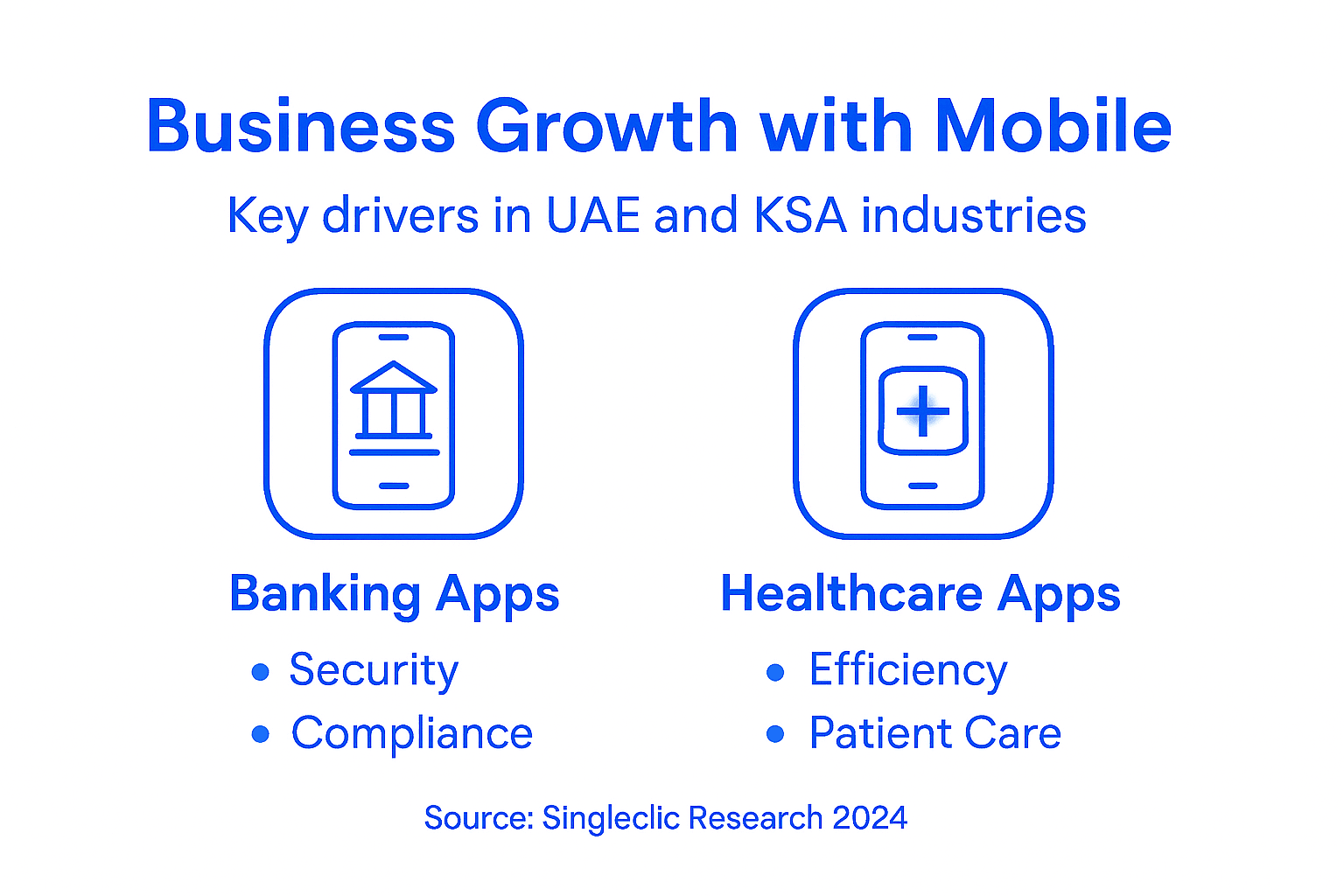
Mobile apps drive significant ROI through operational agility, customer engagement strategies, and brand exposure, with success depending on personalization, loyalty programs, and mobile-first design approaches. Organizations that treat mobile solutions as strategic investments rather than technology projects outperform competitors significantly.
Define Clear Success Metrics
Before launching any mobile solution, identify what success actually means for your organization. Banking institutions measure success differently than healthcare providers. Transaction volume, approval time, customer satisfaction, and cost reduction all matter—but priorities differ by industry.
Key metrics to establish:
- Time savings per transaction or clinical interaction
- User adoption rates among employees and customers
- Cost reduction through process automation
- Revenue impact from new services or increased transactions
- Customer satisfaction measured through NPS or similar tools
Without baseline metrics, you can’t measure whether mobile solutions actually delivered value. Establish benchmarks before implementation, then track progress quarterly.
Focus on User Experience and Adoption
The most sophisticated mobile solution fails if people don’t use it. User adoption determines ROI success more than technology features. An app that 10 percent of your staff uses generates minimal value.
Prioritize adoption through:
- Intuitive interface design requiring minimal training
- Mobile-first workflows that feel natural to users
- Offline capability preventing frustration without connectivity
- Real-time notifications keeping users engaged
- Performance optimization ensuring fast response times
At Singleclic, we design mobile applications using our Cortex low-code platform with user experience as the primary design driver. Our implementations in banking and healthcare in KSA and UAE consistently achieve 70+ percent adoption rates within six months because we prioritize usability alongside functionality.
Integrate with Existing Systems
Mobile solutions create value only when they connect seamlessly to your existing enterprise systems. A mobile banking app disconnected from core banking systems becomes a showcase project, not a business tool.
Proper integration enables:
- Real-time data synchronization across platforms
- Unified customer views from multiple systems
- Automated workflows spanning mobile and desktop interfaces
- Consistent audit trails for compliance
- Single sign-on reducing login friction
Integration complexity varies dramatically. A healthcare provider connecting mobile EHR access to existing hospital systems requires different integration architecture than a bank adding mobile loan approvals. Each demands careful planning and testing.
Measure and Optimize Continuously
ROI doesn’t peak at launch—it compounds through ongoing optimization. Identify underperforming features. Remove them. Double down on what works.
Successful organizations establish quarterly reviews examining:
- Which features drive actual usage
- Where users encounter friction
- How adoption rates compare across departments
- Whether projected cost savings materialized
- What new opportunities emerged
Mobile solutions that deliver lasting ROI don’t result from one-time launches—they emerge from continuous measurement and optimization based on real user data.
Your mobile solution should evolve as business needs change. Processes improve. Customer preferences shift. Your mobile platform must adapt without requiring expensive rewrites.
Pro tip: Establish a dedicated mobile center of excellence with cross-functional representation from operations, IT, and users—this team drives adoption, identifies optimization opportunities, and prevents mobile solutions from becoming abandoned applications.
Drive Business Growth with Purpose-Built Mobile Solutions
Modern enterprises in KSA and UAE face critical challenges around mobile transformation—from ensuring secure real-time access and seamless integration to meeting stringent regulatory compliance. The article highlights how mobile solutions unlock faster decision-making, operational efficiency, and customer engagement but also warns of the complex security and integration risks that can undermine success.
At Singleclic, we understand that mobile innovation must be tailored specifically to your industry needs in banking, healthcare, or any other sector. Our Cortex low-code platform empowers you to build secure, Arabic-enabled, on-premise mobile applications that deeply integrate with existing ERP and CRM systems while meeting regulatory standards across the region. We combine this with extensive expertise in ERP & CRM Implementation and Business Process Automation to help your organization go beyond digitalization toward true operational optimization.
Ready to transform your mobile strategy with a partner that delivers end-to-end digital transformation and industry-focused solutions? Visit Singleclic today and discover how to accelerate growth, enhance security, and improve productivity with custom mobile solutions built for the demands of KSA, UAE, and beyond.
Frequently Asked Questions
What are mobile solutions in business?
Mobile solutions are technologies, applications, or services accessed through mobile devices that help organizations operate more efficiently, enhancing connectivity, engagement, and productivity.
How can mobile solutions enhance customer engagement?
Mobile solutions offer instant access to services, enabling customers to interact with businesses anytime and anywhere, which improves satisfaction and loyalty compared to traditional methods.
What are the key components of modern mobile solutions?
Key components include native and hybrid mobile applications, API integrations, cloud infrastructure, user interface design optimized for mobile, and offline capabilities, ensuring seamless operation and user experience.
How do mobile solutions impact decision-making in organizations?
Mobile solutions provide real-time access to critical data, allowing decision-makers to respond quickly to customer requests, approve transactions, and manage workflows, thus accelerating overall decision-making processes.
Recommended
- Best Mobile CRM Software for 2025 | SingleClic
- The Future of Mobile ERP Solutions: A Game Changer for Your Business | Singleclic
- Top Mobile Enterprise Solutions Guide | singleclic
- Mobile banking solutions for Modern Banking | SingleClic
- Top Callcenter-Lösungen für Unternehmen – Vergleich 2026 | aLIVE Support
- Webdesign Trends für KMU 2025: Was wirklich zählt – WinWebDesign