Most organizations in Saudi Arabia and UAE face the challenge of staying competitive while navigating rapid market change. For C-level executives in construction and healthcare, understanding modern business transformation is crucial. Studies show nearly 80 percent of large enterprises now view transformation as a top driver for growth, echoing trends seen in American markets. This guide unveils practical frameworks and strategic insights designed to help Middle Eastern leaders optimize operations and ensure lasting success.
Table of Contents
- Defining Business Transformation Today
- Core Types And Strategic Approaches
- Key Drivers For Modern Enterprises
- Transformation In Construction And Healthcare
- Overcoming Obstacles And Ensuring Success
Key Takeaways
| Point | Details |
|---|---|
| Business Transformation Definition | It involves a comprehensive strategic approach that fundamentally reimagines how organizations operate, beyond mere technological upgrades. |
| Four Transformation Types | Organizations should choose between slow-motion, sprinted, negotiated, or hijacked transformations based on their specific contexts and needs. |
| Key Drivers for Change | Factors such as technological advancements, market competition, and data-driven decision making are crucial in shaping effective transformation strategies. |
| Overcoming Obstacles | Identifying and addressing challenges like organizational inertia and digital skill gaps is essential for successful transformation implementation. |
Defining Business Transformation Today
Business transformation represents a comprehensive strategic approach that fundamentally reimagines how organizations operate, compete, and deliver value. Unlike traditional incremental changes, this process involves radical organizational shifts across technology, processes, culture, and strategy. By integrating insights from contemporary research, we can understand transformation as a holistic reimagining of business capabilities, particularly critical for enterprises in Saudi Arabia and UAE’s rapidly evolving markets.
According to a systematic research review, business transformation encompasses nine critical dimensions that guide organizational change. These dimensions range from strategic alignment to technological integration, emphasizing that transformation is not merely a technological upgrade but a comprehensive organizational metamorphosis. Enterprises must approach transformation through a multifaceted lens, considering technological infrastructure, workforce capabilities, strategic positioning, and cultural adaptability.
The digital era demands that businesses in construction, healthcare, and other sectors approach transformation strategically. Academic analyses reveal that successful transformation integrates technological innovation with human-centric design. This means moving beyond simple digitalization to creating adaptive ecosystems where technology, processes, and people work synergistically. For organizations in the Middle East, this could involve leveraging platforms like our Cortex low-code solution to streamline complex business processes without extensive coding requirements.
Pro tip: Start your business transformation journey by conducting a comprehensive organizational readiness assessment, identifying technological gaps, and creating a phased implementation strategy tailored to your specific industry context.
Core Types and Strategic Approaches
Business transformation strategies are not one-size-fits-all solutions. Research from Harvard Business Review reveals four distinct transformation approaches that organizations can leverage: slow-motion, sprinted, negotiated, and hijacked. Each type represents a unique pathway for organizational change, determined by the speed, drivers, and complexity of transformation initiatives.
The four transformation types offer strategic insights for businesses in Saudi Arabia and UAE across various sectors:
- Slow-motion Transformation: Gradual, methodical change implemented over extended periods
- Sprinted Transformation: Rapid, aggressive change with compressed timelines
- Negotiated Transformation: Collaborative approach involving stakeholder consensus
- Hijacked Transformation: Unexpected, often crisis-driven change requiring immediate action
Comprehensive academic research emphasizes that successful transformation requires a flexible model adaptable to specific organizational contexts. This approach is particularly crucial for enterprises in dynamic markets like construction and healthcare, where technological integration and strategic agility are paramount. Organizations must develop transformation strategies that balance technological innovation, workforce capabilities, and cultural adaptation.
For Middle Eastern enterprises, selecting the right transformation approach involves understanding organizational readiness, market dynamics, and strategic objectives. Platforms like our Cortex low-code solution can facilitate this process by providing flexible tools that enable rapid process redesign and technological integration across complex business ecosystems.
Pro tip: Conduct a thorough organizational diagnostic assessment to determine which transformation type best aligns with your company’s current capabilities, market position, and strategic goals.
Here’s a comparison of the four main business transformation types and when each is most effective:
| Transformation Type | Best For | Implementation Speed |
|---|---|---|
| Slow-motion | Stable markets, gradual change | Extended timeline |
| Sprinted | Crisis response, rapid growth | Very fast |
| Negotiated | Complex stakeholder environments | Moderate pace |
| Hijacked | Unexpected external disruptions | Immediate action |
Key Drivers for Modern Enterprises
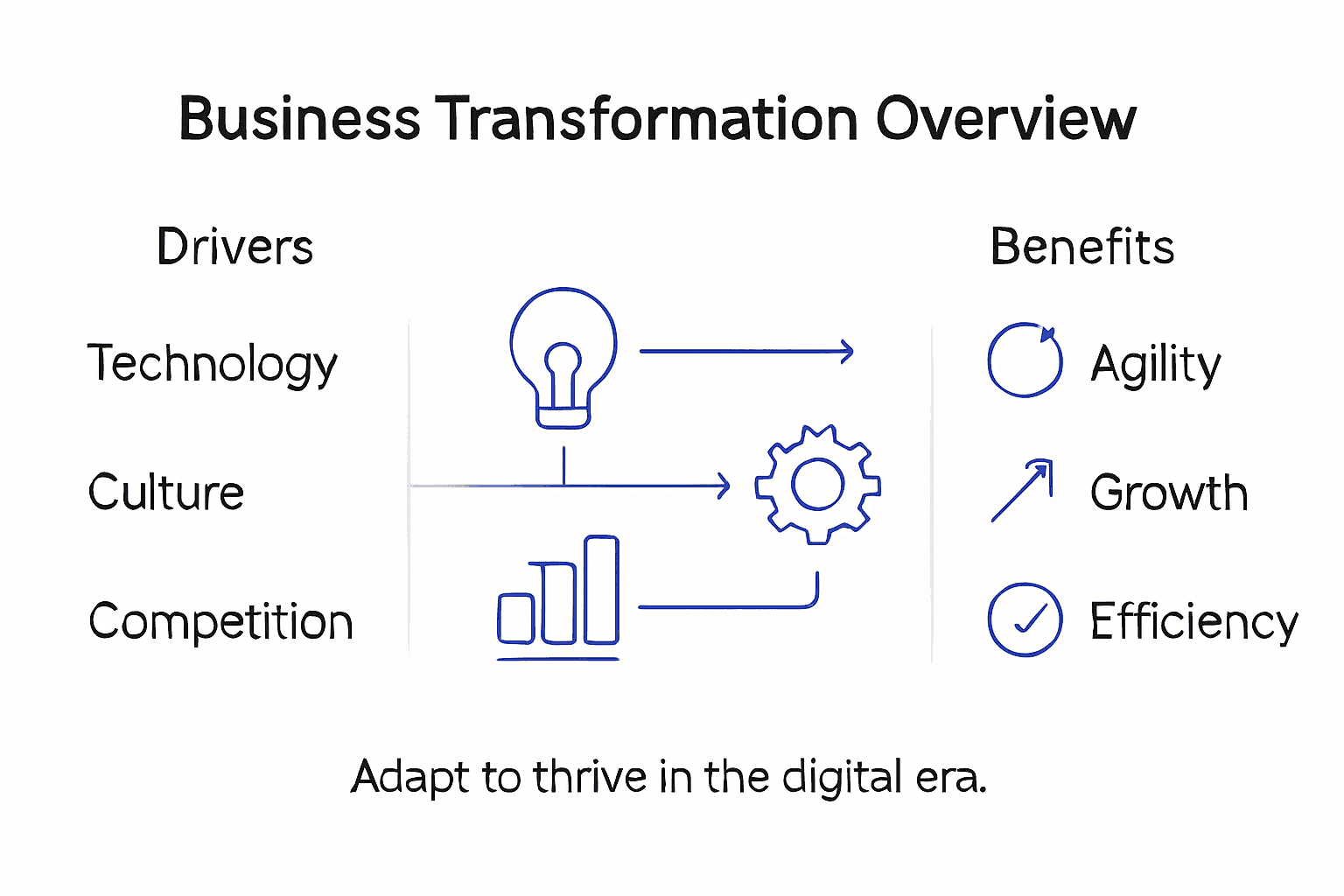
Business transformation is increasingly driven by complex, interconnected factors that challenge traditional organizational models. Global research examining digital transformation indices reveals six critical drivers that fundamentally reshape how enterprises operate across industries, particularly in dynamic markets like Saudi Arabia and UAE.
These key drivers include:
- Technological Advancements: Emerging technologies that enable unprecedented operational efficiency
- Organizational Culture: Adaptive workplace environments that foster innovation
- Market Competition: Increasing pressure to differentiate and remain competitive
- Data-Driven Decision Making: Leveraging advanced analytics for strategic insights
- Leadership Adaptability: Executive capabilities to navigate rapid technological changes
- Regulatory Environment: Evolving compliance and technological integration requirements
Cutting-edge research in artificial intelligence underscores the transformative potential of digital tools and collaborative ecosystems. For Middle Eastern enterprises, this means developing robust digital literacy, embracing AI-driven solutions, and creating flexible technological infrastructures that can rapidly respond to market dynamics. Our Cortex low-code platform exemplifies this approach by enabling organizations to design adaptive business processes without extensive coding requirements.
In construction, healthcare, and other critical sectors, successful transformation demands a holistic approach that balances technological innovation with human-centric design. Leaders must create environments that not only implement new technologies but also cultivate workforce skills, encourage continuous learning, and develop agile strategic frameworks.
Pro tip: Conduct a comprehensive organizational assessment to identify your specific transformation drivers, then develop a phased implementation strategy that aligns technological capabilities with strategic business objectives.
Transformation in Construction and Healthcare
Business transformation is revolutionizing traditionally complex industries, with construction and healthcare emerging as critical sectors experiencing profound digital evolution. Comprehensive research on business model innovation reveals how these industries are shifting from fragmented, cost-based approaches toward integrated, value-driven strategies that leverage technology and strategic partnerships.
In the construction sector, transformation manifests through several key developments:
- Technological Integration: Adopting advanced digital tools and platforms
- Lifecycle Management: Comprehensive project tracking and optimization
- Strategic Partnerships: Collaborative approaches across project ecosystems
- Data-Driven Decision Making: Utilizing advanced analytics for project planning
- Process Standardization: Creating more predictable and efficient workflows
Strategic implementation research in healthcare demonstrates how digital transformation can fundamentally reshape organizational capabilities. Academic hospitals are increasingly using frameworks like the balanced scorecard to measure and guide technological integration, addressing challenges such as digital literacy and cross-department collaboration. For organizations in Saudi Arabia and UAE, this means developing robust digital infrastructures that support seamless information exchange and innovative care delivery models.

Our Cortex low-code platform exemplifies the transformation potential, enabling organizations in construction and healthcare to design adaptive processes quickly. By providing tools that bridge technological gaps and support rapid innovation, enterprises can create more responsive, efficient, and competitive operational models that respond dynamically to market demands and technological opportunities.
Pro tip: Develop a comprehensive digital transformation roadmap that includes technology assessment, skill development, and phased implementation strategies tailored to your specific organizational context.
This overview highlights how construction and healthcare sectors benefit from transformation:
| Sector | Main Transformation Benefit | Common Technology Focus |
|---|---|---|
| Construction | Improved project efficiency | Project tracking, analytics |
| Healthcare | Enhanced care delivery models | Digital records, AI tools |
Overcoming Obstacles and Ensuring Success
Business transformation is complex, with numerous potential challenges that can derail even the most well-intentioned initiatives. Strategic research examining organizational barriers reveals that successful transformation demands a comprehensive approach addressing cultural, technological, and leadership dimensions across enterprises in Saudi Arabia and UAE.
Key obstacles organizations typically encounter include:
- Organizational Inertia: Resistance to change and traditional working models
- Legacy Technology Constraints: Outdated systems hindering technological integration
- Digital Skill Gaps: Insufficient workforce capabilities for technological adaptation
- Cultural Misalignment: Mismatched organizational values and transformation goals
- Communication Barriers: Ineffective cross-departmental collaboration
- Resource Limitations: Budget and time constraints
Research from MIT Sloan emphasizes systematic strategies for overcoming transformation challenges. This includes reframing organizational expectations, establishing clear performance metrics, and fostering a culture of continuous learning and adaptability. For Middle Eastern enterprises, this means developing robust change management frameworks that support technological innovation while addressing workforce concerns and maintaining operational continuity.
Our Cortex low-code platform provides a practical solution by enabling organizations to design adaptive processes with minimal coding, reducing technological barriers and accelerating transformation. By offering flexible tools that support rapid innovation and seamless integration, enterprises can more effectively navigate the complex landscape of digital transformation, turning potential obstacles into opportunities for growth and efficiency.
Pro tip: Conduct a comprehensive organizational readiness assessment, identifying potential resistance points and developing targeted strategies to address cultural, technological, and skill-based challenges before launching your transformation initiative.
Unlock True Business Transformation with Singleclic
The article highlights the urgent need for organizations in Saudi Arabia, UAE, and the wider MENA region to move beyond basic digitalization. Businesses face challenges such as legacy technology constraints, cultural resistance, and the need for flexible, human-centric platforms that accelerate transformation. Key concepts like strategic alignment, low-code automation, and technological integration emphasize how enterprises can evolve rapidly to stay competitive across construction, healthcare, and other dynamic sectors.
Singleclic partners with you to overcome these hurdles by delivering cutting-edge solutions like our Arabic-enabled Cortex low-code platform. Its unique ability to enable on-premise, no-code process automation supports real-time workflow changes and deep enterprise integrations. This empowers your teams to adapt swiftly to market shifts, improving operational efficiency and unlocking growth. Explore our expertise in ERP & CRM Implementation and Business Process Automation to start your transformation journey.
Transform your strategy into scalable success today. Visit Singleclic to elevate your business beyond digitalization and power your enterprise with smarter, faster, and more connected operations.
Frequently Asked Questions
What is business transformation?
Business transformation is a strategic approach that fundamentally redefines how organizations operate, compete, and deliver value, involving major shifts across technology, processes, culture, and strategy.
Why is business transformation important for organizations?
Business transformation is essential because it enables organizations to adapt to changing market dynamics, improve efficiency, foster innovation, and maintain a competitive edge in their industry.
What are the key drivers of business transformation?
Key drivers of business transformation include technological advancements, organizational culture, market competition, data-driven decision-making, leadership adaptability, and the evolving regulatory environment.
What are the different types of business transformation strategies?
There are four main types of business transformation strategies: slow-motion transformation, sprinted transformation, negotiated transformation, and hijacked transformation. Each approach varies in speed, complexity, and the driving factors behind the transformation initiatives.