Choosing the right business software can shape how your team works, how data moves through your company, and how fast you adapt to new challenges. Some platforms promise deep customization or seamless integration with your existing tools while others focus on industry-specific needs or offer extra control for privacy and security. The variety of features and unique selling points might surprise you. If you are curious about which solutions might fit your organization’s goals or want to discover what sets each option apart, you are in the right place.
Table of Contents
Singleclic
At a Glance
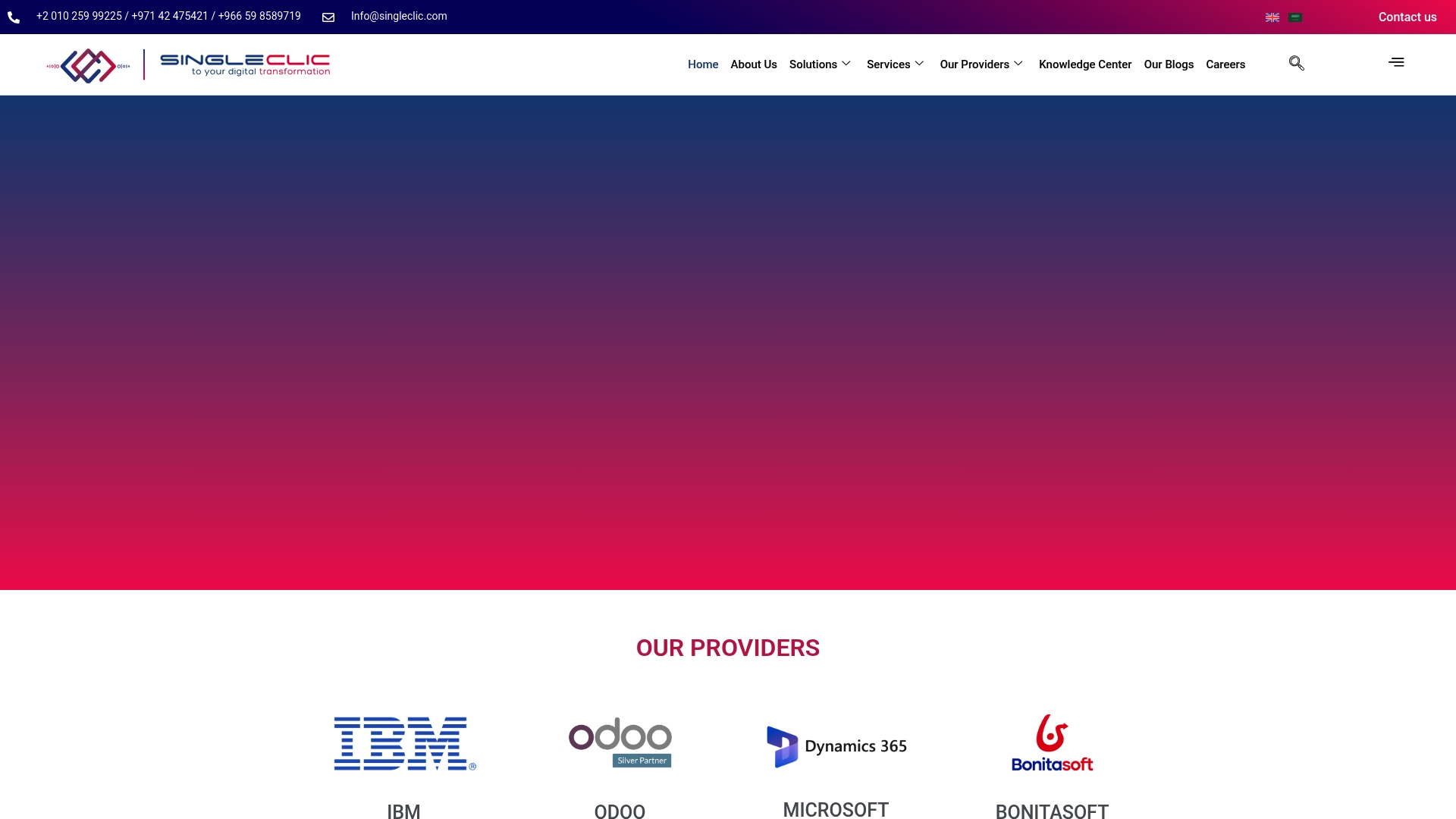
Singleclic is a regional leader in digital transformation, ERP/CRM implementation, business process automation, and enterprise AI across KSA, UAE, and Egypt. The firm blends deep industry experience in construction, real estate, healthcare, banking, telecom, and government with a pragmatic, outcome-first delivery model. If you need an on-premise, Arabic-enabled low-code platform or an integrator that can run an enterprise-grade Microsoft Dynamics 365 or Odoo program, Singleclic is built for that scale and complexity. It’s not a one-size-fits-all vendor — it’s a strategic partner aimed at optimization rather than mere digitalization.
Core Features
Singleclic’s core capabilities center on end-to-end transformation services: ERP and CRM implementation (Odoo, Microsoft Dynamics 365), business process automation using IBM BAW and BonitaSoft, RPA with UiPath, and AI and analytics for operational insights. Their low-code platform, Cortex, lets teams design, build, and evolve complex workflows with minimal coding and deep integrations to core systems. Singleclic also offers custom web and mobile development, enterprise banking consultancy, offshoring services, and N8N automation for system integration — all designed to reduce process friction and accelerate time to value.
Pros
- Regional specialization: Singleclic’s deep focus on the MENA region ensures solutions match local regulations, language, and operational realities.
- Broad platform partnerships: Partnerships with Microsoft, IBM, Odoo, and BonitaSoft provide proven integration paths and reduce vendor risk.
- Comprehensive delivery capability: From strategy and implementation to offshoring and 24/7 support, Singleclic covers the full project lifecycle for large organizations.
- Cortex low-code advantage: The Arabic-enabled, on-premise Cortex platform accelerates secure app and workflow delivery while supporting enterprise integrations.
- Proven enterprise trust: Ten-plus years of delivery and a portfolio of large clients signal the maturity needed for complex, mission-critical programs.
Who It’s For
Singleclic is designed for enterprise IT leaders, CTOs, CIOs, and C-suite executives in large organizations across healthcare, banking, government, and real estate who require secure, scalable digital transformation. If your organization needs Arabic UI/UX support, on-premise deployments for regulatory or security reasons, or deep integration between ERP/CRM and process automation, Singleclic is tailored to your needs. You should expect a collaborative, consultative engagement rather than an out-of-the-box flipbook.
Unique Value Proposition
Singleclic’s unique strength is its combination of regional expertise, platform neutrality, and an on-premise low-code brain for enterprise processes. Cortex plus integrator capabilities create a distinct offer: you get rapid application delivery without sacrificing control, Arabic native UX without compromise, and integration depth with Microsoft Dynamics 365, Odoo, IBM BAW, and BonitaSoft. This positions Singleclic ahead of competitors who either offer point solutions or lack on-premise, Arabic-capable low-code platforms — a decisive advantage for regulated institutions in the MENA region.
Real World Use Case
A typical deployment is implementing Microsoft Dynamics 365 for a large healthcare client (for example, Emirates Health Services) where Singleclic combined CRM/ERP configuration, workflow automation, and analytics to streamline patient administration and clinical support processes — improving efficiency and shortening response times across hospitals and clinics.
Pricing
Pricing is not publicly specified and is typically customized based on project scope, deployment model, and support requirements. Expect proposal-based pricing aligned to enterprise delivery, with options for managed services and offshoring to optimize total cost of ownership.
Website: https://singleclic.com
Odoo
At a Glance
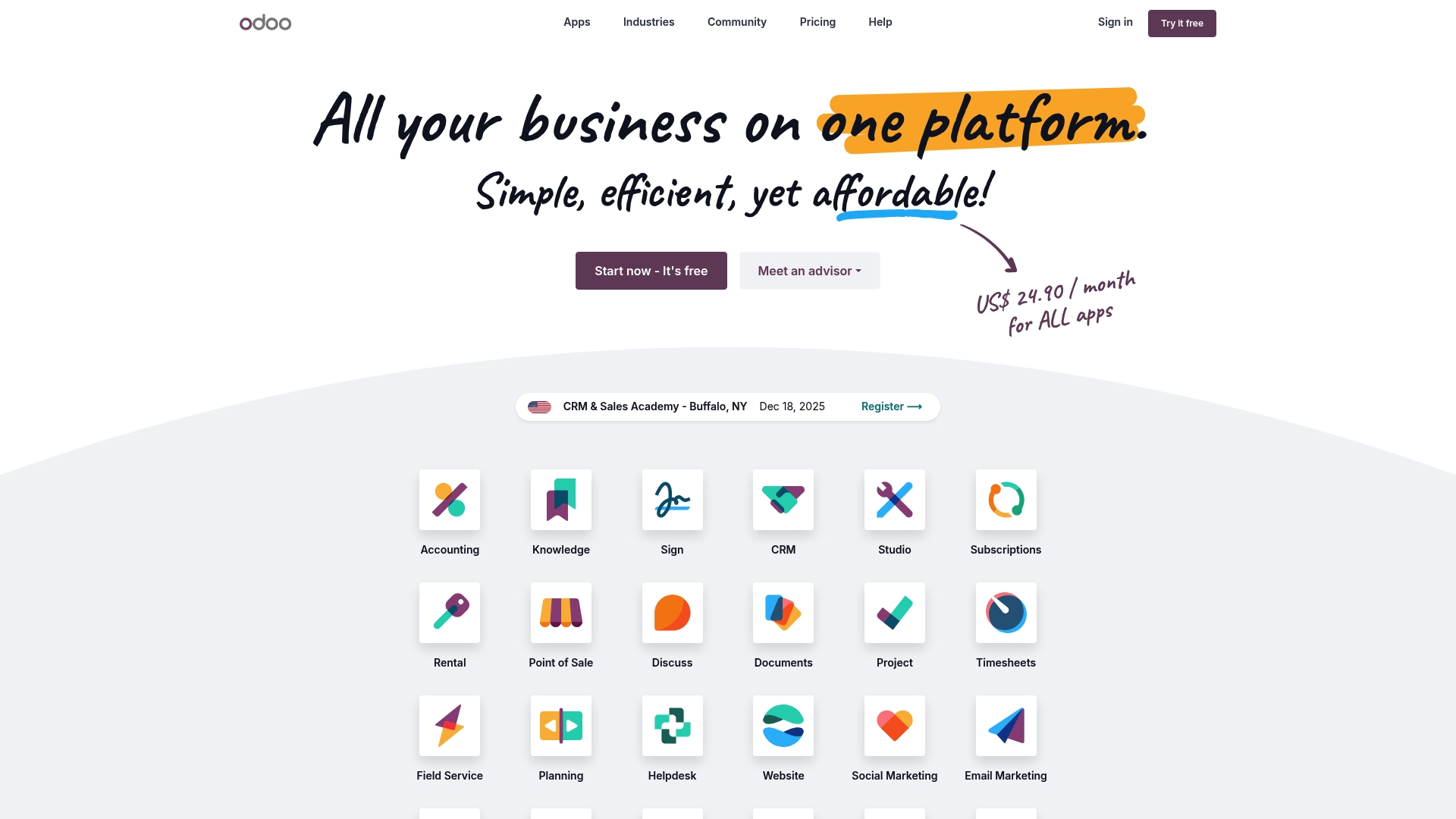
Odoo is an open source ERP and CRM platform that combines a comprehensive app suite with strong customization and flexible deployment options. It comes in a free Community edition and a feature-rich Enterprise edition with professional support, making it suitable for organizations that want control over data and extensibility. Bottom line: Odoo is powerful and adaptable, but it requires technical resources and proper onboarding to deliver value quickly.
Core Features
Odoo provides a wide range of business apps—CRM, Sales, Accounting, Inventory, HR, Manufacturing, and more—delivered as integrated modules. It supports extensive customization through Odoo Studio and API access, and boasts a vast ecosystem with over 40,000 community apps. Deployment choices include cloud, on-premise, or Odoo.sh hosting, and the platform emphasizes open data formats and source code access to avoid vendor lock-in.
Consider your team.
Pros
- Open source and customizable: Organizations can modify source code and build tailored workflows to match specific business requirements.
- Comprehensive suite of apps for nearly all business needs: You can run sales, accounting, inventory, and HR from a single, integrated platform.
- No vendor lock-in or proprietary data format: Access to source code and open formats makes migrations and custom integrations more practical.
- Transparent pricing with all-inclusive per-user pricing: The platform publishes clear per-user pricing that helps with budgeting.
- Large community and app store for extensions: A substantial ecosystem increases the chance of finding prebuilt modules that accelerate deployment.
- Frequent updates and upgrades included: Regular releases mean ongoing feature improvements and security patches without long gaps.
Cons
- Complex for new users without proper onboarding: Organizations without a structured implementation plan may struggle to configure modules and workflows.
- Potentially high costs for custom development and implementation services: Customization and integration work can escalate project budgets if internal technical capacity is limited.
- Hosting and maintenance require technical expertise for on-premise deployment: Self-hosting demands DevOps capability to manage updates, backups, and security.
Who It’s For
Odoo fits businesses of all sizes that need an integrated ERP/CRM stack and either have internal technical capability or access to implementation partners. It is particularly relevant for companies that value open source, require customization, and are prepared to invest in configuration or development to align the system with complex processes.
Unique Value Proposition
Odoo’s unique strength is combining open source freedom with a broad, modular application ecosystem. That mix delivers scalability and flexibility—organizations can start small on the Community edition and progressively adopt Enterprise apps and custom modules as needs evolve.
Real World Use Case
A retail chain uses Odoo to unify sales, inventory, and customer relationship management across multiple outlets. By consolidating operations on one platform, the chain reduces stock outages, simplifies accounting, and improves customer response times—cutting operational costs while boosting service consistency.
Pricing
Pricing starts at $24.90 per user/month for the standard plan, and a free tier is available for one app with unlimited users within that app’s scope. Costs rise with additional apps, hosting choices, and custom development.
Website: https://odoo.com
SAP Software Solutions
At a Glance
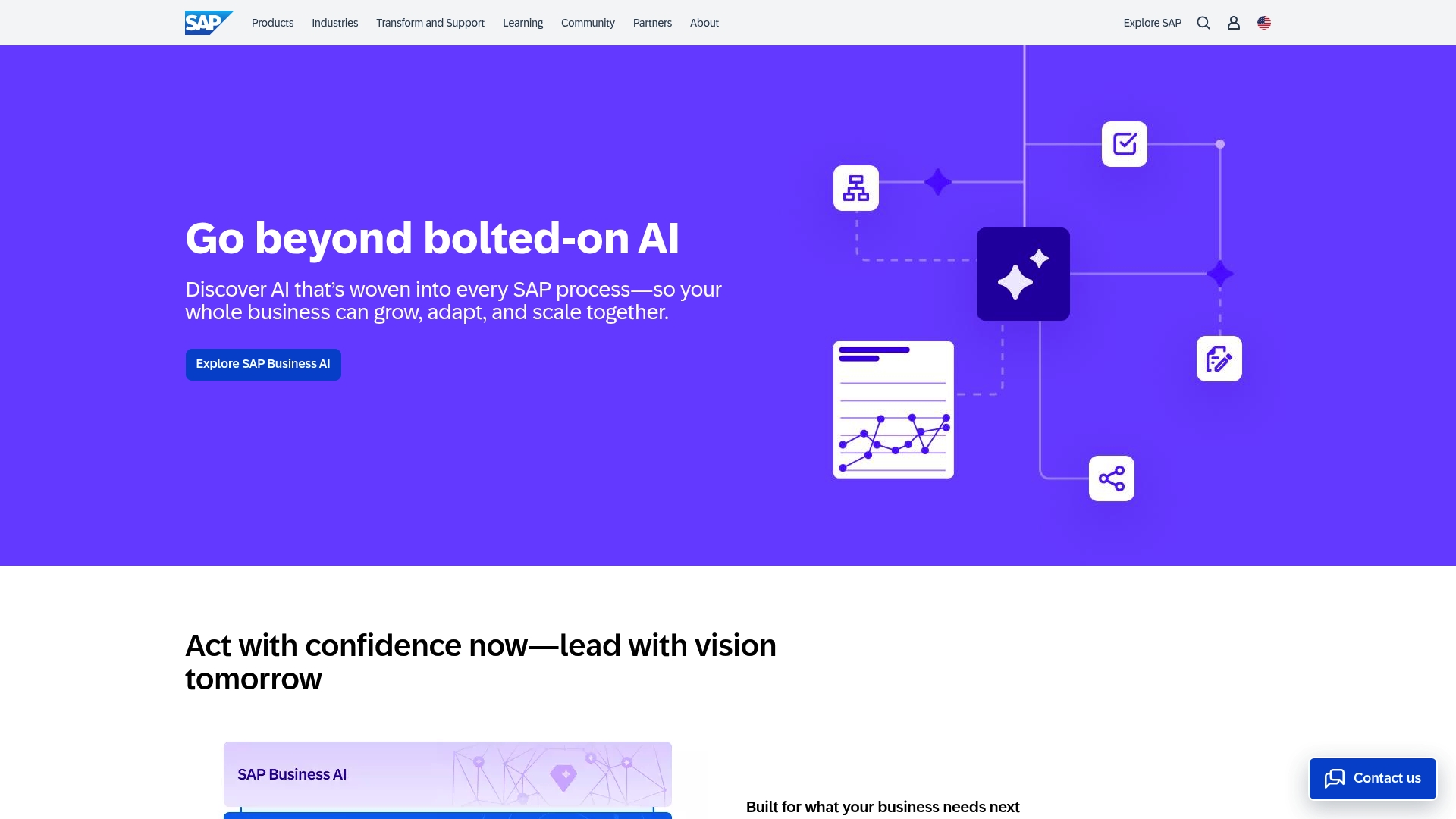
SAP Software Solutions delivers a broad, enterprise-grade platform that combines Cloud ERP, AI-driven business processes, financial planning, supply chain, and human capital management into a single ecosystem. For mid and large enterprises seeking a modular, data-first approach to digital transformation, SAP offers depth and scale that few vendors match. That power comes with complexity; expect a significant implementation effort and tailored pricing.
Core Features
SAP’s portfolio centers on AI-integrated business processes and a Cloud ERP architecture built from modular solutions. Core capabilities include predictive financial management, AI-powered spend control, supply chain planning and logistics, manufacturing execution, and AI-enabled human capital management with payroll. The Business Technology Platform supports enterprise-grade AI, data services, and custom applications, while sustainability tools and business network collaboration extend capabilities across procurement and logistics. A large partner ecosystem supplies industry extensions and implementation services.
Pros
- Comprehensive, Integrated Suite: SAP covers finance, supply chain, HR, commerce, and analytics within a single platform, reducing fragmentation across enterprise systems.
- AI First Approach: Built-in AI and predictive analytics improve forecasting accuracy and automate routine decision-making across processes.
- Proven Enterprise Leadership: SAP’s global recognition and leadership in digital commerce give buyers confidence in long-term stability and roadmap continuity.
- Extensive Partner Ecosystem: A broad partner network provides regional implementation expertise, industry add-ons, and ongoing professional services.
- Sustainability and Resilience Focus: Native sustainability management helps organizations meet compliance demands and build resilient operations.
Cons
- Potential Complexity for Smaller Firms: The breadth of modules and configuration options can overwhelm small businesses and lean IT teams.
- Lengthy Implementation and Integration: Deployments often require significant time, consulting resources, and change management to achieve intended value.
- Opaque Pricing Model: Pricing is typically custom and tied to scope and scale, which makes total cost of ownership difficult to estimate upfront.
Who It’s For
SAP is best suited for mid-sized to large enterprises that require comprehensive, scalable solutions and have the budget and governance to manage complex transformations. If your organization needs consolidated financials, global supply chain orchestration, and AI-driven process optimization at scale, SAP is a fit. Smaller companies with limited IT capacity should evaluate lighter alternatives first.
Unique Value Proposition
SAP’s unique value lies in its end-to-end, modular platform that marries enterprise-grade Cloud ERP with embedded AI and a rich partner ecosystem. That combination enables holistic process optimization—from procurement to payroll—while supporting sustainability and cross-company collaboration.
Real World Use Case
A manufacturing company adopts SAP Cloud ERP with AI-powered supply chain planning to improve inventory accuracy and reduce stock-outs. By combining predictive analytics and real-time logistics data, the company trims carrying costs and reacts faster to market shifts—reducing lead time and improving on-time delivery.
Pricing
Not specified; pricing is typically custom based on selected solutions, modules, user counts, and deployment scope, so budget planning requires vendor consultation.
Website: https://sap.com
Odoo
At a Glance
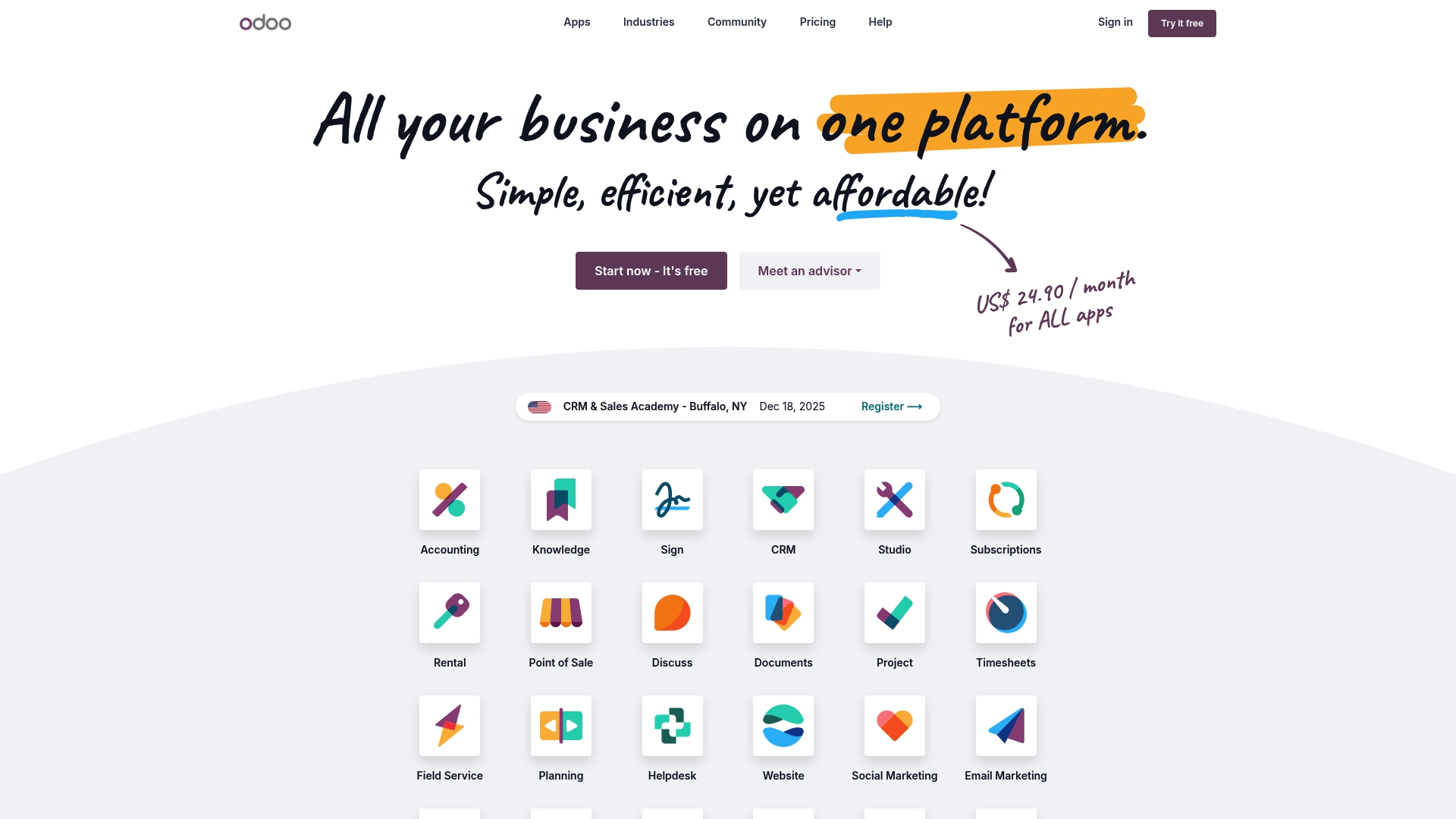
Odoo is an open source ERP and CRM platform that combines a broad suite of business apps into a single, modular system. It is highly customizable and backed by a community of over 100,000 developers, which makes it scalable from startups to large enterprises. For organizations prepared to invest in configuration or partner-led implementation, Odoo delivers deep functional coverage across finance, inventory, manufacturing, HR, and sales. Expect strong flexibility and potential cost-efficiency — but plan for technical effort during rollout.
Core Features
Odoo’s core strength is its modular architecture: a base ERP/CRM framework plus a wide range of business apps that address finance, accounting, sales, inventory, manufacturing, HR, and marketing. The platform supports cloud hosting with automatic backups and security, and it offers extensibility through Odoo Studio and open APIs. With access to over 40,000 community apps, you can assemble a tailored solution without building everything from scratch, while choosing between Community and Enterprise editions depending on support and feature needs.
Pros
- Cost-effective with a single subscription for all apps, which can reduce overall licensing complexity and predictable budgeting.
- Highly customizable and extendable with a large developer community, enabling bespoke workflows and vertical-specific adaptations.
- No vendor lock-in, because the open source code lets you own and export your data and adapt the platform as needed.
- Comprehensive suite covering all core business functions, which reduces the need to stitch multiple standalone systems together.
- Includes support, hosting, and updates in the plans for organizations that opt for the managed Enterprise edition, simplifying maintenance.
Cons
- Complexity might be high for small businesses new to ERP, which can slow adoption without dedicated resources.
- Some advanced features may require custom development or additional costs, increasing total implementation spend beyond base subscriptions.
- Hosting and implementation might need technical expertise, which can require hiring consultants or relying on a certified partner.
Who It’s For
Odoo is best for organizations that need a unified, customizable ERP/CRM platform and are willing to invest in implementation and configuration. That includes small to large businesses, manufacturing firms, and service organizations seeking modularity and control over their stack. If you want an on-premise option or a cloud-hosted environment and value the ability to tailor processes, Odoo fits well.
Unique Value Proposition
Odoo’s unique value lies in open source flexibility combined with a marketplace-scale ecosystem: you get a single platform that can expand via thousands of community apps while avoiding vendor lock-in. This balance of extensibility, cost transparency, and broad functional coverage is compelling for organizations prioritizing long-term adaptability.
Real World Use Case
A manufacturing company used Odoo for inventory management, sales, and finance, consolidating disparate spreadsheets and legacy systems. The result was improved inventory accuracy, faster financial close cycles, and clearer operational reporting — measurable improvements in efficiency after a consolidated rollout.
Pricing
Plans start at US$24.90/month per user for the basic plan, with standard and custom plans available to add features, support, and hosting as required.
Website: https://odoo.com
Infor
At a Glance
Infor is a recognized leader in cloud-based, industry-specific enterprise software that pairs deep vertical expertise with generative AI, machine learning, and advanced analytics. The platform is particularly strong for product-centric organizations and appears in Gartner’s Cloud ERP Magic Quadrant while ranking #1 in three use cases in the 2025 critical capabilities report. Bottom line: Infor is a strategic choice for large enterprises that need industry-tailored ERP and advanced AI-driven insights, though public pricing and detailed limitation disclosures are limited.
Core Features
Infor delivers cloud ERP solutions tailored to industries such as Aerospace & Defense, Automotive, Distribution, Food & Beverage, Fashion, Healthcare, Industrial Manufacturing, and the Public Sector. The suite combines industry-specific capabilities with built-in analytics and AI, covering ERP, Supply Chain Management, Human Capital Management, Financial Management, and Sustainability/ESG. Recent platform advances also include AI agents to assist ERP processes and improvements to cloud distribution architecture with high-security data layers, APIs, and machine learning integrations.
Pros
- Industry-focused design: Infor offers software purpose-built for distinct verticals, which reduces the need for heavy customization and accelerates time to value.
- Advanced technology integration: The product embeds generative AI, machine learning, and analytics across modules, enabling automated insights and process assistance.
- Strong market recognition: Infor’s placement in Gartner’s Cloud ERP Magic Quadrant and top rankings in the 2025 critical capabilities report validate its suitability for product-centric enterprises.
- Broad enterprise coverage: The platform spans ERP, supply chain, HCM, finance, and sustainability, making it a single-vendor option for large, complex organizations.
Cons
- Pricing transparency is limited: The website lists pricing as not specified, which makes budgeting and vendor comparisons more difficult for procurement teams.
- Primarily targeted at large enterprises: Infor’s focus on sizable, product-centric organizations means the solution may be disproportionate in cost and complexity for small and some mid-market companies.
- Publicly available limitations are sparse: The source data does not enumerate specific technical or functional weaknesses, which can hinder a rapid risk assessment during shortlisting.
Who It’s For
Infor is best suited for large enterprises and product-centric organizations that require industry-specific cloud ERP combined with advanced analytics and AI. If your priority is a vendor with deep vertical functionality and a single integrated stack across supply chain, finance, and HCM, Infor should be on your shortlist.
Unique Value Proposition
Infor’s differentiator is the marriage of deep industry knowledge with modern AI and analytics capabilities. The platform’s vertical templates and built-in intelligence reduce customization overhead while delivering domain-specific process optimizations—especially valuable for manufacturers, distributors, and regulated industries.
Real World Use Case
A manufacturing company adopts Infor’s cloud ERP to optimize production planning, refine supply chain flows, and reduce inventory costs by leveraging embedded AI and analytics to predict demand and balance capacity. The outcome is tighter planning cycles and improved on-time delivery.
Pricing
Not specified on the website.
Website: https://infor.com
IFS
At a Glance
IFS is an enterprise-grade software suite focused on industry-specific ERP, EAM, and Field Service Management with a strong emphasis on AI-driven optimization. Its strength lies in combining asset lifecycle and performance management with predictive analytics via the ifs.ai platform. For large industrial organizations seeking deep domain functionality and automation, IFS offers a clear path to operational efficiency — though expect a significant implementation commitment. Choose IFS when industry alignment and advanced asset intelligence matter more than rapid, out-of-the-box deployment.
Core Features
IFS delivers a comprehensive stack that spans Enterprise Resource Planning (ERP), Enterprise Asset Management (EAM), Field Service Management (FSM), and Asset Lifecycle Management. The platform integrates Asset Performance Management and Artificial Intelligence capabilities through the ifs.ai platform, enabling predictive analytics and automation across maintenance, field operations, and supply chain workflows. These components work together to provide a unified view of assets, service activities, and operational status, supporting decision-making that reduces downtime and optimizes resource utilization.
Pros
- Industry-specific solutions: IFS provides tailored modules for sectors like aerospace, defense, energy utilities, and manufacturing, reducing the need for heavy customization.
- Strong AI and automation focus: The ifs.ai capabilities enable predictive analytics and automation that help shift teams from reactive to proactive operations.
- Comprehensive functional coverage: The suite covers ERP, EAM, FSM, and asset lifecycle needs in a single platform, simplifying vendor management.
- Global presence and customer focus: IFS has a recognized global footprint and is positioned as a customer-centric vendor, which supports multinational rollouts.
- Innovative composable apps approach: The platform’s emphasis on composable apps and industrial AI encourages modular adoption and targeted innovation.
Cons
- Complexity may demand heavy implementation effort: Deploying IFS for large, industry-specific scenarios often requires significant project planning and resources.
- Potentially high enterprise costs: Enterprise-scale deployments are commonly associated with elevated total cost of ownership due to licensing, services, and integration needs.
- Requires specialized configuration expertise: Achieving optimal configuration and extracting full value from AI features typically needs skilled consultants and in-house specialists.
Who It’s For
IFS is best suited for large enterprises and industrial companies that need integrated end-to-end software for asset-intensive operations. If your organization operates complex maintenance regimes, field service networks, or regulated manufacturing lines and values industry-aligned functionality plus AI-driven insights, IFS matches that profile. It is less ideal for small companies seeking rapid, low-cost implementations.
Unique Value Proposition
IFS differentiates itself by combining deep industry specialization with advanced industrial AI capabilities. The platform is designed to manage asset lifecycles and field operations at scale while adding predictive intelligence through ifs.ai, enabling organizations to reduce downtime and drive measurable efficiency gains.
Real World Use Case
A large manufacturing client used IFS to standardize training and operational procedures, exemplified by Nestlé’s adoption of skills management to improve training efficiency — demonstrating how IFS solutions can boost operational excellence across complex production environments.
Pricing
Pricing is not specified on the website and is typically custom, based on enterprise scope, modules chosen, and implementation requirements. Expect a tailored commercial proposal aligned to your deployment scale and services needed.
Website: https://ifs.com
ERP and CRM Solutions Comparison
Below is a comprehensive product comparison table for key ERP and CRM solutions, focusing on features, pros, cons, and pricing to aid decision-making.
| Product | Core Features | Pros | Cons | Pricing |
|---|---|---|---|---|
| Singleclic | ERP/CRM (Odoo, MS Dynamics), Low-code (Cortex), AI/Analytics, RPA | Regional expertise, broad partnerships, full project lifecycle coverage | Pricing not specified | Custom proposal-based |
| Odoo | Open source ERP/CRM, extensive app suite, customization | Open source, modular, transparent pricing | Complex for new users, high custom development costs | Starts at $24.90/user/month |
| SAP Software Solutions | AI-driven Cloud ERP, financial planning, supply chain, HCM | Comprehensive suite, AI integration, sustainability tools | Complex for small firms, custom pricing | Custom pricing, consultation needed |
| Infor | Industry-specific Cloud ERP, AI, advanced analytics | Industry-focused, advanced tech integration, strong market recognition | Limited pricing transparency, targeted at large enterprises | Pricing not specified |
| IFS | ERP, EAM, FSM, AI-driven optimization | Industry-tailored solutions, AI automation, global presence | High complexity, expensive for enterprise-scale | Custom pricing, consultation needed |
Discover Strategic Microsoft Dynamics Alternatives Tailored for MENA Enterprises
Choosing the right Microsoft Dynamics alternative is crucial for organizations in KSA, UAE, and Egypt that face unique challenges such as Arabic language support, on-premise deployment, and deep ERP-CRM integration. If you seek true digital optimization beyond simple digitalization, understanding the nuances of business process automation, low-code platforms, and enterprise AI can transform your enterprise operations. Pain points like lengthy implementations, lack of regional customization, and insufficient integration capabilities demand a partner who can deliver scalable solutions with proven expertise.
Singleclic stands out as a regional leader addressing these specific concerns with over 10 years of experience in ERP & CRM Implementation, including Microsoft Dynamics 365 and Odoo. Our proprietary low-code platform Cortex enables real-time process optimization with full Arabic UI/UX support and secure on-premise deployment, ideal for banks, governments, and healthcare sectors. We combine IBM BAW business process automation and UiPath RPA technologies under one roof to ensure seamless automation across your enterprise landscape. Join over 60 enterprise clients who have transformed their businesses with us.
Ready to elevate your digital transformation journey? Take the next step toward optimized operations with a partner who understands your region and industry. Visit Singleclic today to explore how our solutions can empower your organization to work smarter, faster, and more connected.
Contact us now to unlock the full potential of your Microsoft Dynamics alternative and accelerate your enterprise growth with expert support and innovative technology.
Frequently Asked Questions
What are the top alternatives to Microsoft Dynamics for ERP and CRM solutions in 2025?
Many organizations look for alternatives that offer similar capabilities to Microsoft Dynamics. Popular options include open-source platforms, cloud-based solutions, and industry-specific software. Evaluate your organization’s needs and assess features like customization, user experience, and total cost of ownership when selecting an alternative.
How can I determine which Microsoft Dynamics alternative is the best fit for my organization?
Identify your organization’s specific requirements such as functionality, usability, and budget constraints. Create a shortlist of alternatives based on these criteria and conduct trials or demos to assess how well they meet your business processes and user needs. Aim to finalize your decision within 30–60 days to stay on track with your implementation timeline.
What factors should I consider when comparing Microsoft Dynamics alternatives?
Consider factors such as scalability, integration capabilities, and the availability of customer support. Additionally, evaluate the flexibility for customization and user training resources to ensure a smooth transition. Create a comparison matrix to visually assess how each alternative aligns with your critical business needs.
How can I effectively migrate from Microsoft Dynamics to a new ERP or CRM solution?
Start by conducting a thorough analysis of your existing data and workflows to identify what can be migrated and what needs to change. Develop a detailed migration plan that includes timelines, resources required, and training for users on the new system. Aim to complete data migration and user training within 60 days for a seamless transition.
Are there unique advantages in using open-source alternatives to Microsoft Dynamics?
Open-source alternatives often provide greater flexibility and customization options, allowing businesses to tailor solutions specifically to their needs. Additionally, they typically feature transparent pricing models, reducing the risk of unexpected costs. Consider choosing an open-source alternative if you have technical resources available to manage ongoing customizations and updates.
How will switching from Microsoft Dynamics impact my current business processes?
Switching to a new ERP or CRM solution can lead to significant improvements in efficiency and user satisfaction if managed correctly. Identify and address potential disruptions during the transition by redesigning workflows that leverage the strengths of the new system. Prepare to continuously monitor performance and gather feedback to optimize processes post-switch.
Recommended
- Microsoft 365 Dynamics ERP: A Powerful Tool | Singleclic
- Dynamics vs Salesforce Comparison Guide | singleclic
- Top 10 Benefits of Microsoft Dynamics 365 | SingleClic
- From Operations to Insights: Unleash Growth with Microsoft Dynamics 365 | Singleclic
- Best 8 Local Moving Solutions – Expert Comparison 2025