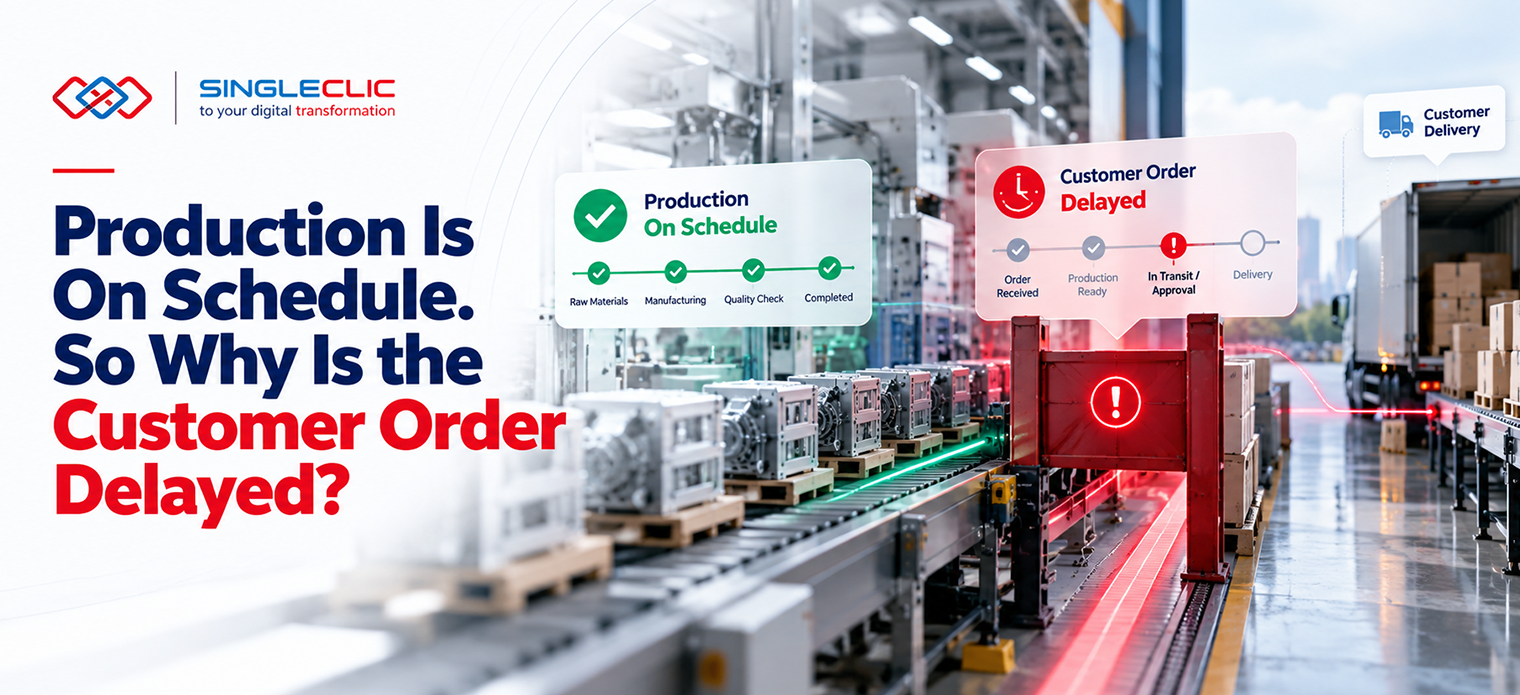
Are you stuck in the Order Fulfillment Process? Production finished on time. The line hit its numbers, the units are built, and by every internal measure, the job is done. Yet the customer is still waiting, and nobody on the shop floor can explain why.
This gap between “production complete” and “order delivered” is one of the most common and least understood sources of frustration in manufacturing. Production performance alone does not guarantee on-time order fulfillment, because a finished product still has to move through inventory, warehouse, quality, and logistics before it ever reaches the customer. When those stages are not connected, a perfectly on-time production run can still result in a late delivery.
Production On Time Doesn’t Mean the Order Is Ready
Finishing production and fulfilling an order are two different milestones, even though many teams treat them as the same thing.
Once a product comes off the line, it may still need to go through quality checks, get allocated to a specific customer order, be picked and packed, processed through the warehouse, documented correctly, and finally shipped.
Each of these steps takes time, and each one can introduce a delay that has nothing to do with how well production performed. A business that only measures production completion is missing most of the order’s actual journey.
Where Can a Customer Order Get Stuck?
Delays rarely come from one dramatic failure. They usually come from small gaps between stages that nobody is actively monitoring.
Inventory Has Not Been Properly Allocated
Finished goods can sit in the warehouse without being formally allocated to the customer order that needs them. This often happens when inventory visibility is poor or when allocation is still a manual step. The product exists, but as far as the order is concerned, it might as well not.
Warehouse Processing Is Creating Delays
Picking and packing bottlenecks are one of the most common points of delay. Manual processes, inaccurate inventory records, and unclear priorities can all slow down the movement of a finished product from shelf to shipment.
Order and Production Data Are Not Connected
This is often the real root cause behind the other issues on this list. The sales team sees one status, production sees another, and the warehouse is working from a third version of the truth. Without a single, shared source of order status, everyone is coordinating based on outdated or incomplete information.
Quality Control Is Delaying Fulfillment
Production may be technically complete while the product still waits for quality approval. If this stage is not tracked as part of the overall order timeline, it looks to sales and customer service like nothing is happening, even though work is still underway.
Shipping and Logistics Are Not Aligned
Dispatch scheduling, carrier availability, documentation, and delivery planning all have to come together at the right moment. A delay in any one of these can hold up an order that was otherwise ready to go.
Still dealing with order fulfillment delays?
See how an integrated ERP system can connect orders, inventory, production, and warehouse operations.
The Real Cost of Order Fulfillment Delays
Customer Expectations Are Higher Than Ever
For manufacturers and businesses managing complex supply chains, meeting these expectations requires more than fast shipping.
Customer order management, inventory availability, production schedules, warehouse operations, and delivery need to work together. When these processes are disconnected, even a small issue can lead to customer order delays and a poor buying experience.
Delays Create Hidden Operational Costs
Customer service teams may spend more time answering order status questions, while operations teams investigate inventory shortages, production issues, or shipment problems.
A lack of real-time supply chain visibility can make these issues harder to identify and resolve. Accurate inventory data, connected order processing, and better coordination between production and warehouse teams can help businesses reduce unnecessary delays and improve fulfillment efficiency.
Customer Retention Depends on Reliable Fulfillment
Reliable order fulfillment plays an important role in customer confidence. When customers receive their orders as promised and can easily track progress, they have greater confidence in the business.
Repeated customer order delays can have the opposite effect. Buyers may question delivery commitments or consider alternative suppliers that can provide clearer availability and more predictable fulfillment.
Strong Fulfillment Supports Brand Reputation
Every delayed order can affect how customers perceive a business. In B2B manufacturing, where orders may involve production schedules, multiple suppliers, warehouses, and agreed delivery dates, inconsistent fulfillment can also affect long-term business relationships.
A connected manufacturing order management process helps teams identify potential problems earlier and coordinate the actions needed to keep orders moving. Modern ERP and supply chain systems can connect production planning, inventory, supply chain information, and order processes, giving teams a clearer view of the complete fulfillment cycle.
The goal is not simply to process orders faster. It is to create a more connected order fulfillment process where production, inventory, warehouse management, and customer order management work from consistent information. This can help manufacturers reduce fulfillment delays, improve supply chain visibility, and provide customers with more reliable delivery commitments.
Steps to Identify an Order Fulfillment Bottleneck
A delay in the order fulfillment process does not always start in the warehouse or shipping stage. In manufacturing, the issue can occur earlier through production planning, inventory availability, order processing, or poor coordination between production and customer order management. An integrated view of the process helps identify where orders are actually getting stuck.
- Map the complete order fulfillment process: Document each step from customer order management and order processing through production planning, inventory allocation, picking, packing, and delivery. This helps show where work is waiting and where production, warehouse, and fulfillment activities are disconnected.
- Check where orders or inventory build up: Look for backlogs of customer orders, work-in-progress, or finished goods waiting for the next step. Integrated production and inventory management can make these dependencies more visible.
- Compare cycle times and throughput: Measure how long each stage takes and how much work it can process. Compare production completion, order processing, picking, packing, and shipping rates to identify the stage that cannot keep pace with demand.
- Track fulfillment KPIs: Monitor order cycle time, waiting time, backlog volume, inventory availability, production status, and warehouse capacity.
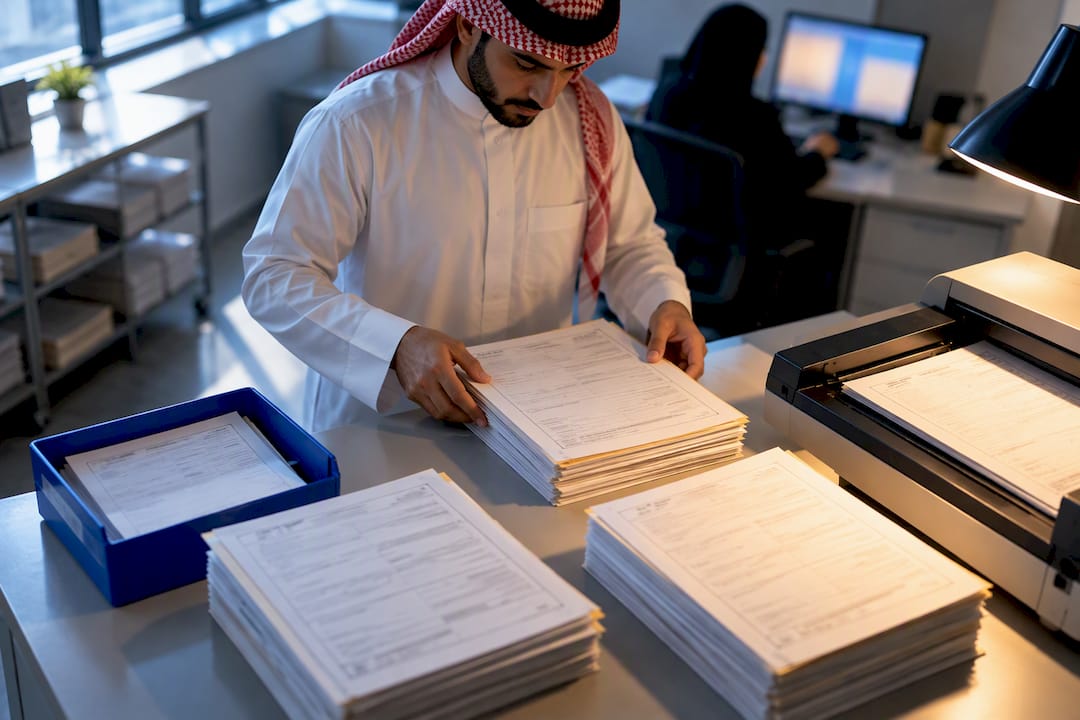
- Talk to the teams handling orders: Speak with production planners, warehouse teams, order management staff, and customer service teams. They can identify recurring issues such as missing inventory updates, manual order entry, delayed production confirmations, or communication gaps that may not be visible in reports.
Explore SingleClic manufacturing ERP guide.
How to Improve Order Fulfillment
Strategy 1 — Automate order management with AI
Manual order processing can lead to data errors, slow processing, and order fulfillment delays. AI-driven automation can streamline data capture, order routing, validation, and exception handling, helping teams process orders faster and more accurately.
A Forrester Consulting study commissioned by Esker reported a 62.5% increase in order-entry efficiency, 80% fewer order-entry errors, and 274% ROI over three years.
Strategy 2 — Improve customer communication
Customers want clear, timely information about their orders. Connecting order management with production, inventory, and delivery data gives teams better visibility into order status and helps them communicate delays before they become customer complaints.
Proactive updates can improve the customer experience while reducing uncertainty around customer order delays.
Strategy 3 — Let teams focus on higher-value work
Automation reduces repetitive tasks such as data entry, manual order tracking, and follow-ups. This allows customer service and operations teams to focus on exception management, customer support, and improving the overall order fulfillment process.
Strategy 4 — Connect orders, production, and inventory
A common cause of order fulfillment delays is disconnected order management, production planning, inventory management, and warehouse operations.
Connecting these processes through an ERP system gives manufacturers better supply chain visibility and helps answer critical questions such as: Why is production on schedule but orders are delayed? When production schedules, inventory availability, and customer orders share the same data, teams can identify issues earlier and coordinate fulfillment more effectively.
Strategy 5 — Connect fulfillment with financial performance
Order fulfillment also affects inventory costs, cash flow, margins, and revenue timing. By connecting order management with production, inventory, and financial data, manufacturers can gain a clearer view of fulfillment costs and make better operational decisions.
How ERP Helps Improve the Order Fulfillment Process
- Automate Order Processing and Reduce Errors
ERP automates repetitive data entry and connects customer orders with inventory, production, and fulfillment workflows. This reduces manual errors and helps ensure order information remains consistent across departments. - Coordinate Suppliers and Material Availability
ERP connects purchasing and supplier information with production requirements. Teams can track incoming materials, monitor availability, and identify potential shortages before they affect production schedules or customer orders. - Improve Demand Forecasting and Production Planning
Accurate demand data helps manufacturers plan production and inventory around expected customer needs. By connecting forecasting with production planning and material requirements, ERP can help reduce both stockouts and excess inventory. - Maintain Accurate, Real-Time Inventory Data
Up-to-date inventory information gives order management teams a clearer view of what is available, what is reserved, and what is still in production or transit. This helps prevent customer order delays caused by inaccurate stock information. - Connect Production with Order Management
When production planning, inventory management, and order processing operate within the same ERP system, teams can see how production changes affect customer commitments. This is particularly important when production is on schedule but an order is still delayed because of material availability, warehouse processing, or logistics. - Increase Supply Chain Visibility
ERP provides a centralized view of order status, inventory, production progress, and shipments. This makes it easier to identify bottlenecks and respond to potential order fulfillment delays before they affect customers. - Streamline Warehouse Picking and Packing
Once an order is ready for fulfillment, integrated warehouse and inventory processes can help teams identify the right products, quantities, and locations for picking and packing. This reduces unnecessary manual coordination and supports faster order processing. - Manage Returns More Efficiently
ERP can connect returns with inventory and order records, helping teams track returned products, assess their status, and return eligible items to available stock. This keeps inventory records accurate while supporting a more efficient post-sale process.
Improve Your Order Fulfillment Process with ERP
A reliable order fulfillment process depends on more than getting products out of the warehouse on time. Manufacturers need connected order management, production planning, inventory management, warehouse management, and supply chain operations to ensure every customer order moves efficiently from order processing to delivery.
SingleClic helps businesses implement and integrate ERP solutions that connect customer order management, production and inventory management, procurement, warehouse operations, and manufacturing processes in one connected environment. With solutions such as Microsoft Dynamics 365 and Odoo, businesses can improve order processing, coordinate production with customer demand, and gain better visibility across their manufacturing supply chain.
If you’re asking why customer orders are delayed, how to reduce order fulfillment delays, or how to improve order management in manufacturing, connecting your core operations through ERP can provide a practical starting point.
Ready to improve your order fulfillment process?
Explore SingleClic’s ERP solutions and see how connected ERP can help your business improve visibility, streamline operations, and fulfill customer orders more efficiently.
FAQs
Why are customer orders delayed when production is on time?
Because production completion is only one stage of the order fulfillment process. Delays often happen afterward, during inventory allocation, warehouse processing, quality checks, or shipping, stages that are not always tracked as closely as production itself.
What causes order fulfillment delays?
Common causes include unallocated inventory, warehouse picking and packing bottlenecks, disconnected data between sales, production, and the warehouse, pending quality approvals, and misaligned shipping or logistics scheduling.
How can manufacturers improve order fulfillment?
By connecting sales, production, inventory, and warehouse data into a single source of truth, automating order processing, standardizing warehouse workflows, and integrating logistics information so every stage of the order is visible in real time.
What is the difference between production planning and order fulfillment?
Production planning focuses on manufacturing the product efficiently and on schedule. Order fulfillment covers everything that happens after production, including allocation, quality approval, warehouse handling, and delivery to the customer.
How does ERP improve order management?
ERP systems centralize order information, connect production and inventory data, automate manual steps, and give every department real-time visibility into order status, which reduces the miscommunication that typically causes delays.
How can companies improve supply chain visibility?
By tracking order status at every stage of the process, standardizing how data is recorded and shared between departments, and using a connected system rather than separate spreadsheets or disconnected tools for production, inventory, and logistics.