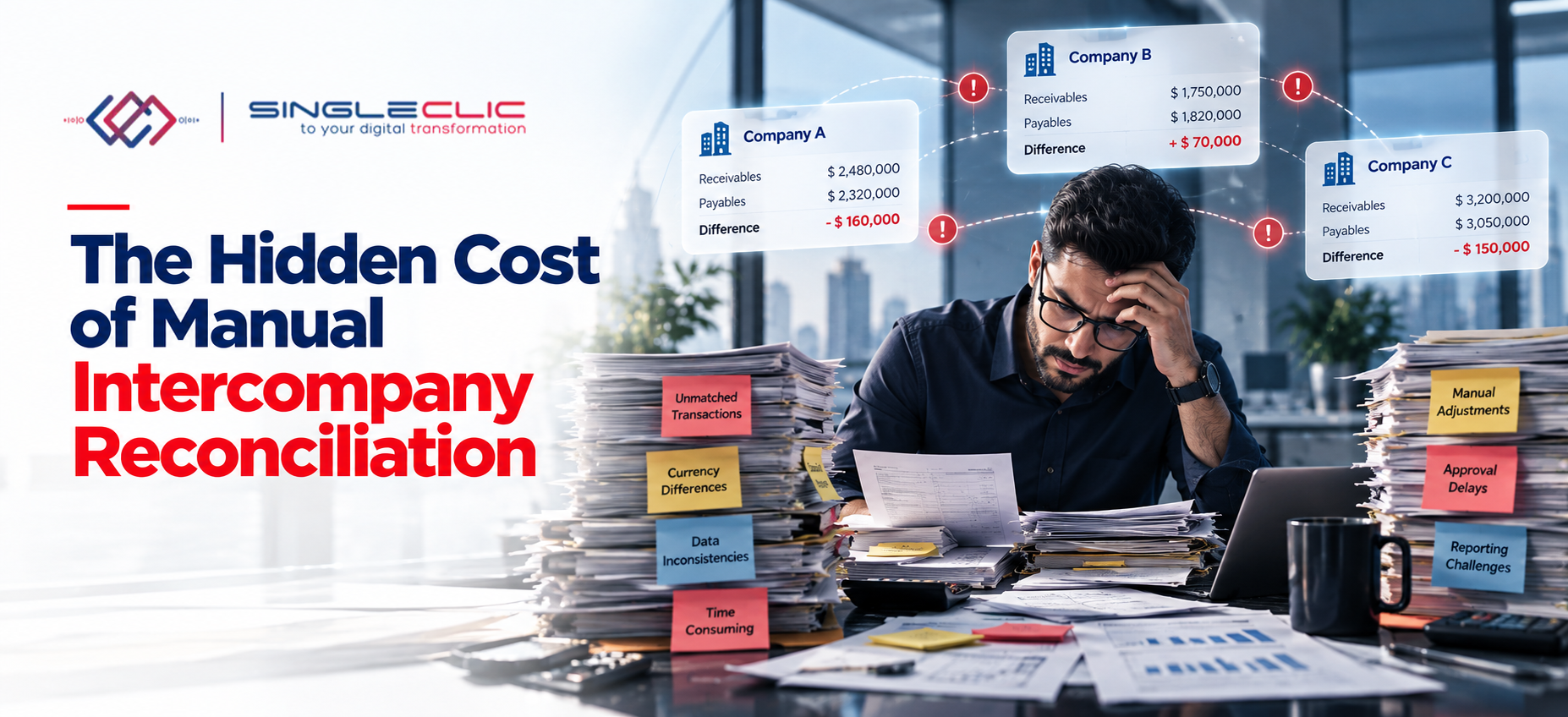
What is Intercompany Reconciliation? As organizations expand across entities, countries, and business units, the number of transactions flowing between group companies grows with them. Each of those transactions has to be recorded on both sides, matched, and eliminated before a consolidated report can be trusted.
When this work is done manually, the cost goes far beyond extra administrative effort. Manual intercompany reconciliation quietly drains time, hides errors, delays the financial close, weakens reporting, and increases compliance risk. Most finance teams feel the pressure every month, yet few have measured what it actually costs them.
What Are Intercompany Transactions?
Intercompany transactions are financial activities between two or more legal entities under the same parent company or corporate group. They include monetary and non-monetary exchanges, such as sales of goods and services, internal loans, asset transfers, royalties, dividends, management fees, and shared cost allocations.
These transactions are a normal part of intercompany accounting, particularly for organizations operating through multiple subsidiaries or business units. However, each entity must record its side of the transaction accurately so that the balances can be matched and verified during the intercompany reconciliation process. Any discrepancies must be investigated and resolved before group financial consolidation.
Effective intercompany reconciliation helps finance teams maintain accurate records, reduce manual accounting errors, and prepare consolidated financial statements with greater confidence. As transaction volumes grow, intercompany reconciliation automation can further reduce repetitive work and help teams identify discrepancies earlier.
Common Intercompany Reconciliation Transactions
- Sales of goods and services: One group entity supplies products or services to another.
- Intercompany loans and advances: A parent company or subsidiary provides funding to another entity within the group.
- Shared cost allocations: Entities distribute expenses for services such as IT, HR, finance, and administration.
- Dividend payments: A subsidiary distributes profits to its parent company or another eligible group entity.
- Royalties: One entity pays another for using intellectual property, software, or trademarks.
- Management fees: A parent company or shared service entity charges subsidiaries for management and operational support.
What Is the Difference Between Intercompany and Intracompany Transactions?
The main difference between intercompany and intracompany transactions is whether the activity takes place between separate legal entities or within a single legal entity.
Intercompany transactions occur between separate companies within the same corporate group, such as a parent company selling goods to a subsidiary. Each entity records the transaction in its own books, and the relevant balances and transactions are generally eliminated when preparing consolidated financial statements.
Intracompany transactions occur within a single legal entity, such as an internal transfer of costs or resources between departments or business units. Although these activities may require internal accounting entries or allocations, they do not represent transactions between separate legal entities.
Why Is Intercompany Reconciliation Important?
1. Improves Financial Accuracy
Reconciling intercompany transactions helps identify missing entries, duplicate postings, incorrect amounts, and timing differences before they affect financial reports. This improves the reliability of accounting records across the group.
2. Supports Accurate Group Financial Consolidation
Intercompany balances and transactions generally need to be eliminated when preparing consolidated financial statements. Accurate reconciliation helps finance teams identify the amounts requiring elimination and reduces the risk of errors in consolidated reporting.
3. Reduces Financial Close Delays
Unresolved intercompany discrepancies can delay account reconciliation, reporting, and consolidation. By identifying and addressing mismatches earlier, finance teams can reduce last-minute adjustments and complete the financial close more efficiently.
4. Strengthens Financial Controls and Audit Readiness
A structured reconciliation process provides a clearer record of transactions, adjustments, approvals, and outstanding differences. This helps finance teams maintain accountability, support audit requests, and investigate discrepancies more effectively.
5. Improves Visibility Across Subsidiaries
Consistent intercompany accounting practices help finance leaders monitor outstanding balances and identify entities with recurring reconciliation issues. Better visibility supports faster decision-making and more consistent financial management across the group.
6. Reduces Manual Work Through Automation
Manual reconciliation often involves extracting data, comparing balances, investigating mismatches, and following up with other entities. Intercompany reconciliation automation can streamline these activities through automated matching, exception identification, and centralised reporting.
Common Challenges With Intercompany Reconciliation
Intercompany reconciliation can become complicated when multiple entities record transactions using different systems, currencies, accounting practices, or reporting timelines. As a corporate group grows, finance teams must reconcile more transactions, investigate mismatched balances, and resolve discrepancies before completing group financial consolidation.
When the process relies heavily on spreadsheets and manual checks, these tasks can delay the financial close and increase the risk of accounting errors. The most common challenges include:
1. Mismatched Intercompany Balances
Differences between the amounts recorded by two entities are among the most common intercompany reconciliation problems. These discrepancies may result from missing entries, incorrect amounts, duplicate postings, foreign exchange differences, or transactions recorded in different accounting periods.
Finance teams must identify the source of each mismatch, verify supporting records, and correct the entries before finalising the reconciliation.
2. Manual Processes and Spreadsheet Dependency
Many finance teams still rely on spreadsheets, email exchanges, and manual data entry to match intercompany transactions. These methods can become difficult to manage as transaction volumes increase, particularly when several subsidiaries submit their records in different formats.
Manual intercompany reconciliation also requires repeated checks and follow-ups, leaving less time for financial analysis and increasing the likelihood of human error.
3. Different Accounting Systems and Data Formats
Subsidiaries may use different ERP platforms, account structures, or reporting formats. This makes it harder to compare transaction records and establish consistent intercompany accounting practices across the group.
Without reliable system integration and standardised data, finance teams may need to consolidate information manually before they can identify and resolve discrepancies.
4. Foreign Currency and Exchange Rate Differences
When group entities operate in different countries, intercompany transactions may involve multiple currencies and exchange rates. Differences in transaction dates, conversion methods, or exchange rate application can create mismatches between recorded balances.
Finance teams must identify the cause of these differences and apply the appropriate accounting treatment before consolidation.
5. Delays During the Financial Close
Intercompany reconciliation often depends on each entity completing its entries, submitting supporting documents, and responding to queries on time. If one subsidiary submits incomplete records or identifies a discrepancy late, the delay can affect the wider group financial consolidation process.
These delays can extend the month-end close, postpone financial reporting, and place additional pressure on accounting teams.
6. Complex Intercompany Eliminations
Before consolidated financial statements are prepared, qualifying intercompany balances and transactions must generally be eliminated to avoid overstating group revenue, expenses, assets, or liabilities.
If reconciliation is incomplete or inaccurate, finance teams may struggle to identify the correct amounts for elimination. This can lead to additional adjustments, repeated reviews, and delays in finalising consolidated reports.
7. Limited Visibility Across Group Entities
When reconciliation data is spread across separate ERP systems, spreadsheets, and email conversations, finance leaders may lack a clear view of outstanding balances, unresolved discrepancies, and reconciliation progress.
Without centralised reporting, it becomes harder to prioritise high-risk differences, monitor accountability, and determine whether each entity is ready for consolidation.
The Hidden Costs of Manual Reconciliation
Finance Teams Spend Hours on Administrative Work
Finance teams often spend hours collecting data from different systems, comparing intercompany transactions, updating spreadsheets, and following up with other entities. This repetitive work increases operating costs and limits the time available for higher-value financial activities.
Errors Become More Difficult to Detect
Manual data entry, inconsistent transaction references, and differences in reporting periods can create intercompany discrepancies. Without consistent matching rules and effective controls, these issues may remain unresolved until the reconciliation or consolidation stage.
Financial Close Takes Longer
Unresolved discrepancies can delay account reconciliation, adjustment entries, and intercompany eliminations. When these activities depend on manual checks and follow-ups, finance teams may struggle to complete the month-end close within the required timeframe.
Management Reporting Is Delayed
Delayed reconciliations can prevent finance teams from finalising consolidated financial statements and delivering timely reports. As a result, management may have to wait longer for reliable financial information to support business decisions.
Audit and Compliance Risks Increase
Spreadsheet-based reconciliation can make it harder to maintain consistent documentation, track adjustments, and demonstrate how discrepancies were resolved. These gaps may increase audit preparation effort and weaken financial control procedures.
Finance Teams Have Less Time for Analysis
When routine reconciliation tasks take up a large share of the finance team’s time, less capacity remains for cash flow analysis, variance investigation, forecasting, and strategic planning. Intercompany reconciliation automation reduces repetitive manual work, letting finance professionals focus on insights and business performance.
Explore how finance process automation can help your team identify discrepancies faster, reduce repetitive checks, and spend less time resolving intercompany differences.
How Automation Improves Intercompany Reconciliation
Intercompany reconciliation automation helps finance teams reduce manual work, identify discrepancies earlier, and accelerate the financial close process. Instead of relying on spreadsheets and repetitive checks, businesses can use automated workflows to improve accuracy, maintain consistent records, and support group financial consolidation.
- Automated Intercompany Matching: Matches intercompany transactions across entities to identify corresponding entries and reduce repetitive manual checks.
- Exception Identification: Flags unmatched transactions, missing entries, and amount differences so finance teams can investigate and resolve discrepancies faster.
- Workflow Automation: Automates approval processes, task assignments, and follow-ups to keep reconciliation activities moving.
- Centralized Visibility: Provides a consolidated view of reconciliation status across entities, helping finance leaders track outstanding items and monitor progress.
- Faster Financial Reporting: Reduces delays caused by manual reconciliation, helping teams prepare accurate reports and complete the financial close sooner.
- Audit Trails: Maintains records of reconciliation activities, adjustments, and approvals to support transparency and audit readiness.
- Reduced Manual Intervention: Minimizes repetitive data entry and spreadsheet-based checks, allowing finance professionals to focus on resolving exceptions and improving intercompany accounting.
Let us Discuss Your Automation Needs
Reduce spreadsheet dependency, improve visibility across group entities, and streamline reconciliation workflows with the right automation solution.
From Manual Reconciliation to a More Efficient Finance Function
Reconciliation should not consume most of a finance team’s time. It is a necessary control, but it is not where finance creates its greatest value.
When matching, exception handling, and status tracking are automated, finance professionals can spend their time on analysis, forecasting, and decision support. The result is a faster close, more reliable reports, and a team that contributes to strategy instead of chasing balances.
See how automated reconciliation and connected finance workflows can help your team accelerate the financial close, strengthen financial controls, and improve reporting across entities.
Book a Consultation with SingleClic
FAQ
What Is Intercompany Reconciliation?
Intercompany reconciliation is the process of comparing transactions and account balances between related legal entities within the same corporate group. It ensures that corresponding records, such as one entity’s accounts receivable and another’s accounts payable, agree before consolidation. Any discrepancies must be investigated and resolved to support accurate financial reporting.
Why Is Intercompany Reconciliation Important?
Intercompany reconciliation helps maintain accurate accounting records, identify discrepancies before the financial close, and prepare reliable consolidated financial statements. It also supports the correct elimination of qualifying intercompany balances and transactions, reducing the risk of misstated group results.
What Are the Common Challenges of Intercompany Reconciliation?
Common challenges include differences in accounting systems and data formats, high transaction volumes, currency conversion differences, inconsistent transaction references, timing differences, and limited visibility across subsidiaries. Manual processes and unclear responsibility for resolving discrepancies can further delay reconciliation and group financial consolidation.
How Can Intercompany Reconciliation Be Automated?
Intercompany reconciliation automation involves centralising financial data, applying rule-based matching to corresponding transactions, and routing unmatched items through defined exception-management workflows. Integrating ERP and finance systems can also reduce manual data handling and improve visibility into outstanding discrepancies.
How Does Intercompany Reconciliation Affect the Financial Close?
Unresolved intercompany differences can delay reconciliation approvals, intercompany eliminations, and group financial consolidation. Identifying and resolving mismatches earlier in the reporting cycle helps finance teams reduce last-minute adjustments and complete the financial close more efficiently.
What Causes Intercompany Discrepancies?
Intercompany discrepancies commonly result from timing differences, foreign currency conversion, missing or incorrect journal entries, duplicate postings, and inconsistent invoice numbers or transaction references. Different recording dates and accounting practices can also create mismatches between entities. Automated matching rules can help identify these differences, allowing finance teams to investigate exceptions and correct errors before consolidation.