Most American organizations face growing pressure to keep pace with rapid digital innovation worldwide. Failing to develop a strong digital transformation vision can leave businesses vulnerable, especially when over 60 percent of digital initiatives underperform due to unclear strategy. Setting a clear direction from the start defines priorities and connects technology decisions to real business outcomes. This practical guide helps you lay the groundwork for digital transformation that drives meaningful value and long-term growth.
Table of Contents
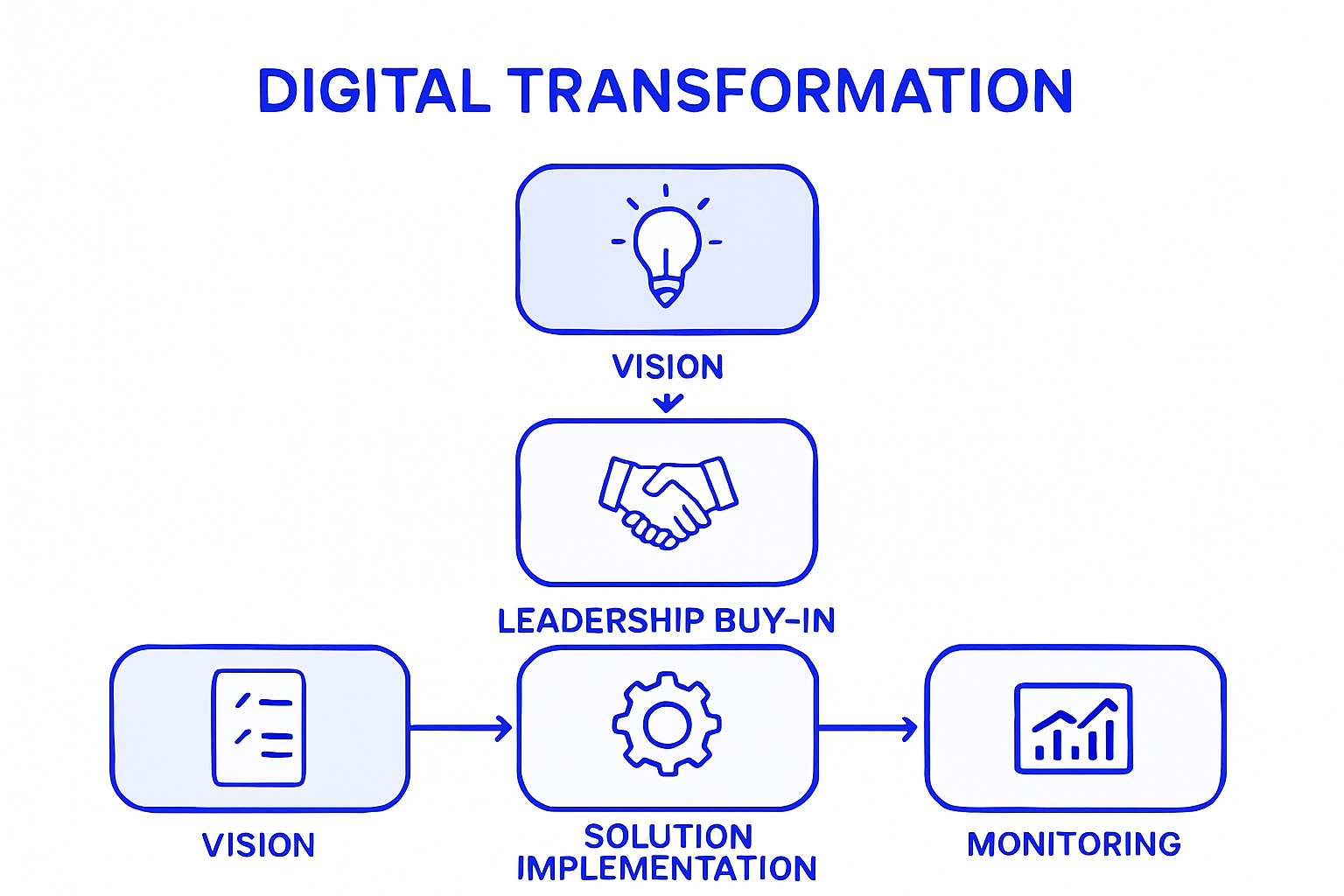
- Step 1: Define Your Digital Transformation Vision
- Step 2: Assess Current Systems and Processes
- Step 3: Engage Leadership and Secure Buy-In
- Step 4: Implement The Right Digital Solutions
- Step 5: Monitor Progress and Optimize Impact
Quick Summary
| Key Insight | Explanation |
|---|---|
| 1. Define a clear digital vision | Establish a vision that aligns technology with business strategy to guide digital transformation initiatives effectively. |
| 2. Assess current systems thoroughly | Conduct a comprehensive audit of existing workflows and technologies to identify gaps and opportunities for improvement. |
| 3. Engage leadership for support | Secure commitment from top executives by demonstrating how digital transformation can enhance competitiveness and operational efficiency. |
| 4. Implement strategic digital solutions | Select and integrate technologies that address unique organizational challenges while ensuring they align with business goals. |
| 5. Monitor progress continuously | Establish key performance indicators and review metrics regularly to adapt strategies and improve organizational capabilities dynamically. |
Step 1: Define your digital transformation vision
Defining a clear digital transformation vision sets the strategic foundation for your organization’s technology roadmap. Your vision will serve as a north star guiding all subsequent digital initiatives and investments.
Start by gathering key stakeholders from across your organization to collaboratively develop a shared understanding of what digital transformation means for your specific business context. Placing the human element at the center of digital transformation ensures that technology serves your strategic goals rather than becoming an end in itself. This approach requires deep reflection on how digital technologies can enhance your core business processes, customer experiences, and organizational capabilities.
Your vision statement should articulate three critical elements: the current state of your business, the desired future state enabled by digital technologies, and the specific strategic outcomes you aim to achieve. In Saudi Arabia and UAE, where digital innovation is rapidly accelerating, this vision must be both ambitious and pragmatic. Consider how technologies like our low code platform Cortex can help you rapidly prototype and implement digital solutions that align with your strategic objectives.
Remember that a compelling digital transformation vision transcends technology implementation it represents a fundamental reimagining of how your organization creates value. By developing a clear, human centered vision that connects technological capabilities with strategic business goals, you set the stage for meaningful and sustainable digital evolution.
Step 2: Assess current systems and processes
Assessing your current organizational systems and processes forms a critical foundation for successful digital transformation. This comprehensive evaluation will help you understand your technological landscape and identify strategic opportunities for improvement.
A holistic approach to assessing organizational capabilities requires a systematic examination of your existing workflows, technologies, and operational structures. Begin by conducting a thorough inventory of all current systems across departments. Map out each process documenting how information flows, where bottlenecks occur, and which technologies currently support your business operations. Pay special attention to legacy systems that might be hindering your digital evolution.
Utilize a structured evaluation framework to analyze your process capabilities objectively. In Saudi Arabia and UAE markets, where digital innovation is accelerating rapidly, this assessment should focus on identifying gaps between your current technological infrastructure and future strategic goals. Consider leveraging our low code platform Cortex to help prototype potential process improvements and quickly validate technological solutions.
Warning: Avoid getting lost in technical details. Your assessment should remain aligned with broader business objectives prioritizing improvements that directly enhance organizational performance customer experience and competitive positioning. The goal is not just to modernize systems but to create a more agile responsive and efficient technological ecosystem that supports your strategic vision.
Step 3: Engage leadership and secure buy-in
Securing leadership support is a pivotal moment in your digital transformation journey. Without genuine commitment from top executives, your transformation efforts will likely stall before gaining meaningful momentum.

Creating a shared understanding among stakeholders represents the critical first step in gaining organizational alignment. Begin by developing a compelling narrative that demonstrates how digital transformation directly connects to your organization’s strategic objectives. In Saudi Arabia and UAE, where business leaders are increasingly focused on technological innovation, frame your approach as a strategic opportunity to enhance competitiveness and operational efficiency.
Approach leadership engagement as a collaborative dialogue rather than a top-down directive. Present clear evidence of potential improvements backed by concrete data and realistic projections. Utilize our low code platform Cortex as a practical example of how technology can rapidly solve complex business challenges. Highlight specific potential outcomes such as increased productivity, reduced operational costs, and enhanced customer experiences.
Warning: Avoid technical jargon that might alienate non-technical executives. Instead, speak their language by connecting digital transformation directly to business value. Demonstrate how technological investments translate into tangible strategic advantages that position your organization for future growth and market leadership.
Step 4: Implement the right digital solutions
Implementing the right digital solutions is about strategic alignment and precision. Your goal is to select technologies that directly address your organization’s unique challenges and propel your digital transformation forward.
Integrating digital engineering practices requires a methodical approach to system lifecycle management. Begin by mapping your selected technologies against your specific business requirements. In Saudi Arabia and UAE, where technological innovation is rapidly evolving, focus on solutions that offer flexibility and scalability. Our low code platform Cortex enables rapid prototyping and implementation, allowing you to quickly test and iterate digital solutions with minimal technical overhead.
Leveraging data analytics and digital business transformation frameworks can significantly enhance your implementation strategy. Prioritize solutions that not only solve immediate operational challenges but also create opportunities for future innovation. Consider technologies that provide robust data integration, process automation, and real-time insights across your organization.
Warning: Avoid the temptation to implement technologies simply because they are trendy. Each digital solution must have a clear, measurable impact on your business performance. Select tools that can demonstrate tangible improvements in efficiency, customer experience, or strategic capabilities. Your implementation should be a deliberate, strategic process that transforms your technological landscape while maintaining alignment with your core business objectives.
Step 5: Monitor progress and optimize impact
Monitoring your digital transformation progress is a critical ongoing process that ensures your strategic initiatives remain aligned with organizational goals. This step transforms your transformation from a one-time project into a continuous improvement journey.
Using a systematic project management maturity framework allows you to objectively assess your digital transformation performance. Establish clear key performance indicators (KPIs) that measure both technological implementation and business value creation. In Saudi Arabia and UAE markets, where technological innovation is rapidly advancing, focus on metrics that demonstrate tangible improvements in operational efficiency, customer experience, and strategic agility. Our low code platform Cortex can help you track and visualize these metrics in real time, providing actionable insights into your transformation progress.
Implementing a comprehensive maturity model assessment enables you to identify strengths and potential improvement areas systematically. Conduct regular reviews that go beyond surface level metrics to understand the deeper organizational changes happening. Create feedback loops that allow for rapid adjustment and continuous optimization of your digital strategies.
Warning: Avoid becoming overly rigid in your monitoring approach. Your assessment framework should be flexible enough to adapt to emerging technologies and shifting business landscapes. The goal is not just measurement but creating a dynamic, responsive organizational capability that can continuously evolve and innovate.
Drive Your Digital Transformation with Proven Regional Expertise
Leading digital transformation requires clear vision, strong leadership buy-in, and the right technology tailored to your unique business needs. From defining strategic outcomes to continuously optimizing progress, many organizations in KSA, UAE, and Egypt face challenges in aligning their technology initiatives with growth goals. Key pain points include overcoming legacy system limitations, securing executive support, and implementing scalable solutions that deliver measurable business impact.
Singleclic empowers you to overcome these hurdles with deep industry expertise and state-of-the-art technology platforms. Our Arabic-enabled low-code platform Cortex simplifies complex business process automation enabling real-time optimization without coding. We complement this with comprehensive ERP and CRM implementations, AI solutions, and agile consulting — all built to accelerate your digital journey while keeping your strategic vision front and center. Discover how our regional leadership and proven methodologies can transform your roadmap into lasting growth.
Explore how Singleclic drives digital success by visiting our website and learn more about our AI & Low-Code Platform Development and Business Process Automation. Take the next step now to lead your organization beyond digitalization and into true optimization.
Frequently Asked Questions
How can I define a clear digital transformation vision for my organization?
Defining a clear digital transformation vision involves gathering key stakeholders to collaboratively articulate the current state of your business, the desired future state, and specific strategic outcomes. Start by facilitating workshops or meetings to ensure everyone understands the goals and how digital technologies can enhance your offerings.
What are the first steps to assess my current systems and processes?
Begin by conducting a thorough inventory of all existing systems and workflows within your organization. Document how information flows, identify bottlenecks, and recognize legacy systems that may hinder your progress, focusing on improvements that will enhance overall efficiency.
How can I secure leadership buy-in for my digital transformation efforts?
To secure leadership buy-in, develop a compelling narrative that aligns digital transformation with your organization’s strategic goals. Present concrete data and evidence of potential improvements that demonstrate how these changes can enhance operational efficiency and market competitiveness.
What strategies should I use to implement the right digital solutions?
Select digital solutions that directly address your organization’s unique challenges and are aligned with your strategic goals. Prioritize technologies that offer flexibility and scalability, and consider using a methodical approach to ensure that each implementation has a measurable impact on performance within set timelines.
How do I monitor the progress of my digital transformation initiatives?
Monitor progress by establishing clear key performance indicators (KPIs) that measure both technological and business value. Regularly review these metrics, and conduct assessments to identify strengths and areas for improvement, allowing for rapid adjustments and continuous optimization of your strategies.
What are common pitfalls to avoid during digital transformation?
Common pitfalls include becoming overly focused on technology rather than the human element of transformation, and neglecting to align initiatives with broader business objectives. Stay focused on measurable outcomes and maintain flexibility in your strategies to adapt to any emerging challenges.
Recommended
- managing digital transformation
- what are the 4 main areas of digital transformation
- What Is Digital Strategy? Complete Executive Guide | Singleclic
- Digital Transformation Best Practices: A Guide to Success
- 7 Key Digital Marketing Trends 2025 for Malaysian Buyers – Projector Display