When the pressure rises to improve patient experiences while juggling daily operations, digital readiness becomes a strategic necessity for healthcare leaders in Saudi Arabia and UAE. As organizations embrace new technologies, the ability to cultivate a workforce skilled in digital tools and foster an innovation-driven culture determines success. This article highlights the essential pillars and actionable steps for building digital readiness in hospitals, providing practical insight for driving measurable improvements in patient care and efficiency.
Table of Contents
- Defining Digital Readiness In Modern Healthcare
- Pillars Of Digital Readiness For Hospitals
- Types And Levels Of Digital Maturity
- Benchmarks And Assessment Frameworks
- Common Barriers To Achieving Readiness
Key Takeaways
| Point | Details |
|---|---|
| Digital Readiness | Digital readiness involves a holistic capability to utilize technology effectively across various healthcare domains, requiring ongoing adaptation and strategic alignment with institutional goals. |
| Key Pillars | Essential elements of digital readiness include technological infrastructure, leadership commitment, staff competence, organizational culture, and external collaboration. |
| Digital Maturity Levels | Healthcare organizations progress through defined maturity stages, from basic record-keeping to advanced patient engagement systems, necessitating continuous assessment and improvement strategies. |
| Overcoming Barriers | Common barriers such as technological complexity and cultural resistance can hinder digital transformation, requiring comprehensive strategies for training, support, and change management. |
Defining Digital Readiness In Modern Healthcare
Healthcare organizations in Saudi Arabia and UAE are rapidly transforming their operational models through digital technologies, making digital readiness a critical strategic imperative. Digital transformation in healthcare requires a comprehensive understanding of technological integration that goes beyond simple technological adoption.
Digital readiness represents an organization’s holistic capability to effectively leverage digital technologies across clinical, administrative, and patient engagement domains. Based on recent systematic research, digital readiness encompasses multiple interconnected dimensions:
- Technological Infrastructure: Robust digital systems and network capabilities
- Human Competency: Staff skills and adaptability to digital tools
- Organizational Culture: Openness to technological innovation
- Training and Support: Continuous learning and skill development programs
- Patient-Centric Digital Experience: Seamless digital interactions
Researchers have identified that digital readiness is not a static state but a dynamic process. Digital health training competencies suggest healthcare professionals must continuously evolve their technological skills to meet emerging digital healthcare demands.
The complexity of digital readiness extends beyond technological implementation. It requires a strategic approach that addresses technological, human, and organizational factors simultaneously. Healthcare leaders must create comprehensive roadmaps that align technological capabilities with institutional goals, ensuring smooth digital transformation.
Our low-code platform, Cortex, specifically designed for MENA enterprises, offers organizations a powerful tool to accelerate their digital readiness journey. By enabling process automation without extensive coding, Cortex helps healthcare institutions rapidly adapt and optimize their digital capabilities.
Pro tip: Conduct a comprehensive digital readiness assessment that evaluates technological infrastructure, staff skills, and organizational culture before initiating any digital transformation project.
Pillars Of Digital Readiness For Hospitals
Healthcare organizations in Saudi Arabia and UAE are increasingly recognizing the critical importance of comprehensive digital readiness in transforming hospital operations. Digital innovation readiness involves a strategic approach that encompasses multiple interconnected dimensions essential for successful technological transformation.
Based on extensive research, the key pillars of digital readiness in hospitals include:
- Technological Infrastructure: Modern digital systems and robust network capabilities
- Leadership Commitment: Strategic vision and active support from executive management
- Human Resource Competence: Staff skills and adaptability to digital technologies
- Organizational Culture: Openness to continuous innovation and technological change
- External Collaboration: Partnerships with technology providers and healthcare innovators
The complexity of digital readiness demands a holistic approach that goes beyond mere technological implementation. Healthcare leaders must create comprehensive strategies that align technological capabilities with institutional goals, ensuring seamless digital integration across clinical and administrative domains.

Workforce Engagement emerges as a critical factor in digital transformation. Healthcare digital innovation strategies highlight the importance of creating an environment that encourages continuous learning, technological adaptation, and staff empowerment.
Our low-code platform, Cortex, specifically designed for MENA enterprises, provides healthcare organizations with a powerful tool to accelerate their digital readiness journey. By enabling process automation without extensive coding, Cortex helps hospitals rapidly adapt and optimize their digital capabilities, bridging the gap between technological potential and practical implementation.
Pro tip: Develop a comprehensive digital readiness roadmap that includes regular skills assessment, continuous training programs, and periodic technological infrastructure evaluations.
Types And Levels Of Digital Maturity
Healthcare organizations in Saudi Arabia and UAE are experiencing a complex journey of digital transformation, characterized by distinct digital maturity levels that reflect their technological sophistication and strategic approach to digital integration.
The progression of digital maturity can be categorized into several key stages:
- Initial Stage: Basic digital record-keeping and limited technology adoption
- Emerging Stage: Introduction of electronic health records and basic digital workflows
- Defined Stage: Systematic digital processes with integrated healthcare management systems
- Advanced Stage: Advanced data analytics, AI integration, and predictive healthcare technologies
- Transformational Stage: Comprehensive digital ecosystem with real-time patient interactions and intelligent system optimization
Researchers have identified that digital maturity is not a linear progression but a dynamic ecosystem requiring continuous adaptation. Digital health transformation strategies emphasize the importance of understanding an organization’s current technological capabilities and potential growth trajectories.
The stages of digital maturity involve different focus areas for hospital leadership:
| Maturity Stage | Key Focus for Leaders | Main Benefit |
|---|---|---|
| Initial | Planning basic digital infrastructure | Foundation for future advances |
| Emerging | Building electronic record systems | Improved data accessibility |
| Defined | Integrating management systems | Streamlined care coordination |
| Advanced | Leveraging analytics and AI | Proactive clinical decisions |
| Transformational | Enabling real-time patient engagement | Optimized, patient-centered care |
In the context of Saudi Arabian and UAE healthcare systems, digital maturity represents more than technological implementation. It encompasses a holistic approach that integrates patient care, operational efficiency, and innovative technological solutions. Our low-code platform, Cortex, plays a crucial role in helping organizations navigate these complex digital transformation journeys by providing flexible, adaptable technological solutions.
The strategic implications of digital maturity extend beyond immediate technological upgrades. Healthcare leaders must develop comprehensive roadmaps that align technological capabilities with organizational objectives, ensuring sustainable and meaningful digital transformation.
Pro tip: Conduct periodic digital maturity assessments to identify gaps, benchmark against industry standards, and create targeted improvement strategies.
Benchmarks And Assessment Frameworks
Healthcare organizations in Saudi Arabia and UAE are increasingly adopting sophisticated digital health readiness assessments to evaluate their technological capabilities and strategic digital transformation potential.
Key components of comprehensive digital readiness assessment frameworks include:
- Technical Infrastructure Evaluation: Assessing current technological capabilities and system integration
- Organizational Readiness: Measuring leadership support, cultural adaptability, and change management
- Human Resource Competency: Analyzing staff digital skills, training needs, and technological proficiency
- Patient-Centric Digital Experience: Evaluating digital service accessibility and user experience
- Strategic Alignment: Checking technology adoption against organizational goals and healthcare objectives
Researchers have developed robust frameworks like the E-Ready 2.0 scale to provide structured approaches for measuring digital readiness across healthcare institutions. These frameworks go beyond simple technological assessments, incorporating nuanced measurements of workplace conditions, management support, and individual technological preparedness.
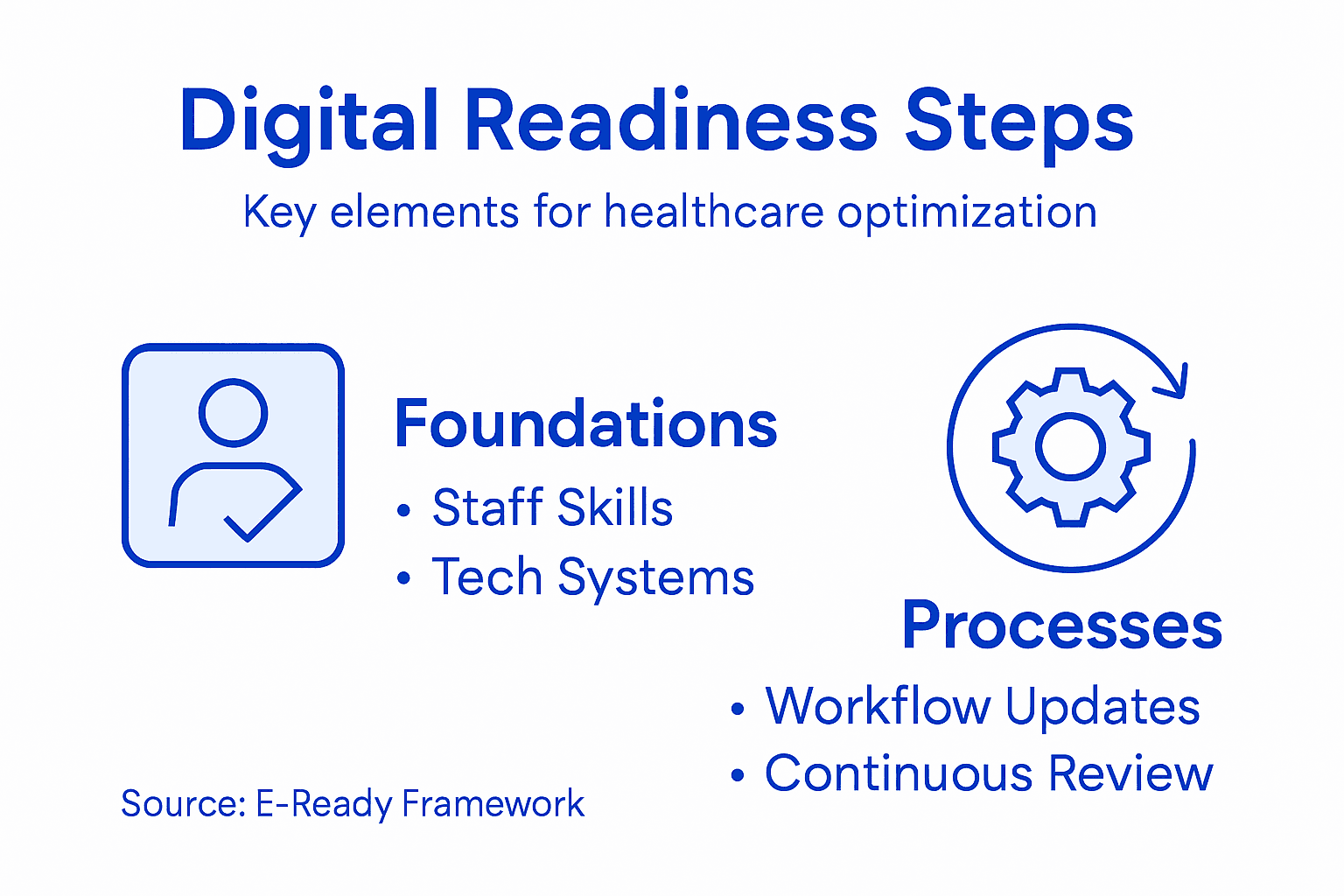
In the context of Saudi Arabian and UAE healthcare systems, assessment frameworks must be adaptive and contextually relevant. Our low-code platform, Cortex, supports organizations in conducting comprehensive digital readiness assessments by providing flexible tools that can be customized to specific institutional requirements.
Successful digital transformation requires continuous evaluation and iterative improvement. Healthcare leaders must view these assessment frameworks not as one-time measurements, but as dynamic tools for ongoing strategic development and technological optimization.
Pro tip: Implement a continuous assessment model that regularly benchmarks digital capabilities, tracks progress, and identifies emerging technological opportunities.
Common Barriers To Achieving Readiness
Healthcare organizations in Saudi Arabia and UAE frequently encounter significant challenges when pursuing digital transformation, with digital health literacy emerging as a critical factor in successful technological adoption.
The most prevalent barriers to achieving digital readiness include:
- Technological Complexity: Advanced systems requiring specialized knowledge
- Cultural Resistance: Organizational inertia and skepticism toward digital change
- Skills Gap: Insufficient training and digital competency among healthcare professionals
- Infrastructure Limitations: Inadequate technological resources and connectivity
- Financial Constraints: High implementation and maintenance costs
- Privacy and Security Concerns: Apprehensions about data protection and regulatory compliance
Digital transformation challenges reveal that barriers often stem from intricate interactions between human factors and systemic organizational constraints. These challenges require comprehensive, nuanced strategies that address both technological and human dimensions of digital readiness.
Here’s a summary comparing common barriers to digital readiness alongside strategies to overcome them:
| Barrier | Typical Impact | Recommended Strategy |
|---|---|---|
| Technological Complexity | Slows adoption of new systems | Simplify processes, provide robust support |
| Cultural Resistance | Hinders organizational change | Foster innovation-friendly culture |
| Skills Gap | Reduces effectiveness of digital tools | Implement ongoing staff training |
| Infrastructure Limitations | Limits digital service capabilities | Invest in scalable digital systems |
| Financial Constraints | Delays upgrades and innovation | Secure phased funding, prioritize ROI |
| Privacy and Security Concerns | Causes hesitancy in digital adoption | Strengthen compliance, use secure solutions |
In the context of Saudi Arabian and UAE healthcare systems, overcoming these barriers demands a multifaceted approach. Our low-code platform, Cortex, provides flexible solutions that help organizations navigate these complex transformation challenges by offering customizable, user-friendly technological tools.
Successful digital readiness requires a proactive, strategic approach that anticipates and addresses potential barriers before they become significant roadblocks to technological adoption and innovation.
Pro tip: Develop a comprehensive change management strategy that includes targeted training, transparent communication, and incremental technological implementation.
Empower Your Healthcare Digital Readiness with Singleclic Solutions
The journey toward digital readiness in Healthcare requires more than just technology adoption. Challenges like skills gaps, organizational culture, and complex technological infrastructure can delay progress and limit the impact of digital transformation. Singleclic understands these barriers and offers comprehensive solutions that align with your institution’s goals and patient-centric vision. With our expertise in Business Process Automation, Enterprise AI, and industry-leading ERP/CRM systems, we empower healthcare organizations across Saudi Arabia and UAE to optimize operations seamlessly.
Unlock the full potential of your digital transformation with Cortex, our low-code platform designed specifically for MENA enterprises. Cortex enables rapid process automation and real-time optimization without the need for extensive coding, helping you overcome technological complexity and accelerate workforce engagement. Visit Singleclic now to discover how our tailored digital readiness strategies and scalable solutions drive sustainable growth and exceptional operational efficiency in healthcare. Take the first step toward a smarter, more connected healthcare future today.
Frequently Asked Questions
What is digital readiness in healthcare?
Digital readiness in healthcare refers to an organization’s holistic capability to effectively leverage digital technologies across clinical, administrative, and patient engagement domains. It encompasses multiple dimensions such as technological infrastructure, human competency, organizational culture, training and support, and patient-centric digital experience.
How can healthcare organizations assess their digital readiness?
Healthcare organizations can assess their digital readiness through comprehensive evaluation frameworks that measure aspects like technological infrastructure, organizational readiness, human resource competency, patient experience, and strategic alignment with healthcare objectives.
What are the common barriers to achieving digital readiness in healthcare?
Common barriers to digital readiness include technological complexity, cultural resistance, skills gaps, infrastructure limitations, financial constraints, and privacy and security concerns. Addressing these barriers requires targeted strategies for training, change management, and investment in digital systems.
What role does workforce engagement play in digital transformation?
Workforce engagement is critical in digital transformation as it fosters a culture of continuous learning, promotes adaptability to new technologies, and empowers staff to utilize digital tools effectively. Engaged employees are more likely to embrace changes and drive successful technology adoption.