Over half of American healthcare organizations are now investing in digital transformation, signaling a dramatic shift in how care is delivered across the United States. As technology reshapes everything from remote consultations to real-time data analytics, providers face both exciting possibilities and new challenges. This overview breaks down how digital healthcare is reimagining the patient experience, highlights practical innovations powering this change, and points to where American medical services are heading next.
Table of Contents
- Defining Digital in Healthcare Today
- Key Technologies Transforming Healthcare
- Real-World Use Cases and Solutions
- Compliance, Privacy, and Security Concerns
- Challenges and Future Opportunities
Key Takeaways
| Point | Details |
|---|---|
| Digital Healthcare Transformation | Digital healthcare leverages technologies like AI and telemedicine to enhance patient care experiences and streamline medical processes. |
| Technological Integration | Organizations must assess digital maturity to identify gaps and prioritize strategic integration of advanced technologies for immediate improvements. |
| Compliance and Security | Ensuring robust data protection and regulatory adherence is crucial as digital solutions evolve, particularly in regions like Saudi Arabia and UAE. |
| Future Opportunities | Embracing AI, genomics, and mobile health solutions presents opportunities for personalized and proactive patient care, but organizations must navigate implementation challenges. |
Defining Digital in Healthcare Today
Digital healthcare represents a comprehensive transformation of medical services through technological innovation, fundamentally reimagining how patient care is delivered, managed, and experienced. At its core, digital healthcare integrates advanced technologies like artificial intelligence, data analytics, mobile applications, and interconnected systems to create more responsive, precise, and patient-centric medical solutions.
The emergence of Healthcare 4.0 emphasizes digital technologies’ potential to enhance clinical decision-making by creating intelligent, interconnected healthcare ecosystems. These digital platforms enable real-time data sharing, predictive diagnostics, and personalized treatment strategies that transcend traditional medical practice boundaries. In regions like Saudi Arabia and UAE, healthcare organizations are rapidly adopting digital transformation strategies to modernize their infrastructure and improve patient outcomes.
Key components of digital healthcare include:
- Telemedicine platforms enabling remote consultations
- Electronic health records with comprehensive patient histories
- AI-powered diagnostic tools for faster, more accurate assessments
- Mobile health applications tracking patient wellness
- Interoperable systems facilitating seamless information exchange
With our low-code platform Cortex, healthcare organizations can rapidly design and implement digital solutions that streamline complex medical processes while maintaining robust security and compliance standards. By leveraging technologies that support Arabic interfaces and on-premise deployments, regional healthcare providers can customize digital transformation strategies aligned with their specific operational requirements.
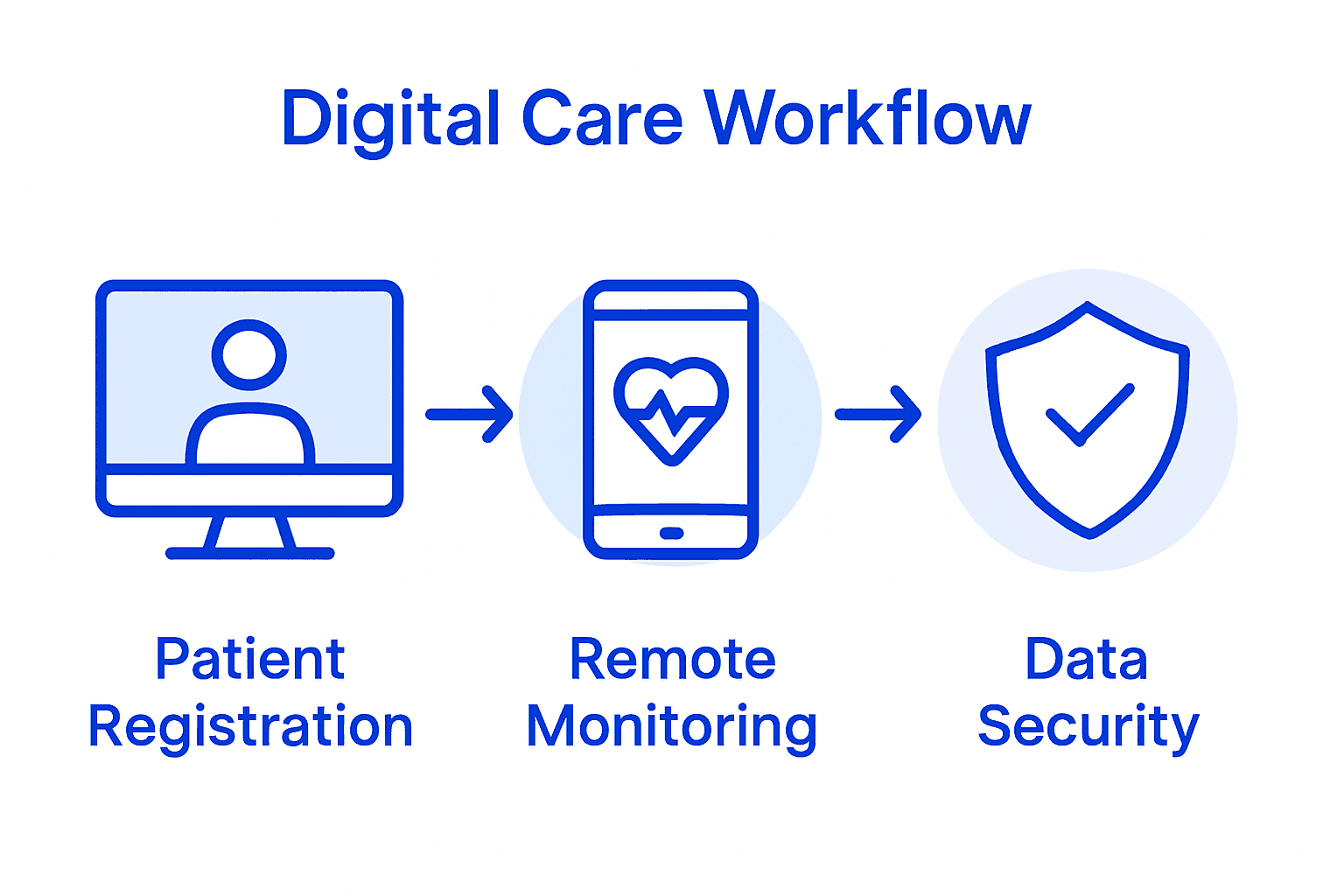
Pro Tip for Digital Healthcare Implementation: Start by conducting a comprehensive digital maturity assessment of your current healthcare infrastructure, identifying key technological gaps and prioritizing integration strategies that deliver immediate patient care improvements.
Key Technologies Transforming Healthcare
Digital transformation in healthcare is accelerating through groundbreaking technologies that are fundamentally reshaping patient care, medical diagnostics, and treatment methodologies. Advanced technological innovations are revolutionizing how medical professionals deliver healthcare services, creating more precise, personalized, and efficient medical experiences across global healthcare systems.
The most significant technologies driving this transformation include:
- Artificial Intelligence (AI) for predictive diagnostics
- Genomic Sequencing enabling personalized medicine
- Robotic Surgical Systems enhancing precision
- Wearable Health Monitors tracking real-time patient data
- Cloud Computing facilitating seamless medical information exchange
In regions like Saudi Arabia and UAE, healthcare organizations are strategically adopting these technologies to modernize medical infrastructure. Portable monitoring devices and smart medical equipment are particularly transformative, with smart beds and advanced monitoring systems revolutionizing patient care by providing continuous health tracking and improving overall patient safety and comfort.

Our low-code platform Cortex enables healthcare providers to rapidly design and implement digital solutions that integrate these advanced technologies. By supporting Arabic interfaces and on-premise deployments, we help regional healthcare systems customize technological implementations that meet their specific operational requirements and patient needs.
This summary outlines the impact of major digital healthcare technologies:
| Technology | Primary Benefit | Example in Practice |
|---|---|---|
| Artificial Intelligence | Faster, more accurate diagnosis | Automated analysis of medical images |
| Genomic Sequencing | Personalized treatment plans | Tailoring cancer therapies to patient DNA |
| Robotic Surgery | Enhanced procedural precision | Robotic-assisted minimally invasive surgery |
| Wearable Monitors | Real-time patient monitoring | Continuous glucose monitors for diabetes |
| Cloud Computing | Streamlined data access | Remote access to patient health records |
Pro Tip for Healthcare Technology Integration: Conduct a comprehensive technology readiness assessment to identify potential implementation challenges and prioritize digital transformation strategies that offer immediate improvements in patient care and operational efficiency.
Real-World Use Cases and Solutions
Digital healthcare solutions are rapidly transforming medical practice through innovative technological applications that address complex healthcare challenges. Advanced AI technologies are revolutionizing how medical professionals process clinical information and develop personalized treatment strategies, creating more intelligent and responsive healthcare ecosystems.
Specific real-world use cases demonstrate the profound impact of digital technologies across healthcare domains:
- Predictive Diagnostics: Machine learning algorithms analyzing patient data to forecast potential health risks
- Natural Language Processing: Automatically interpreting complex clinical documentation
- Personalized Treatment Planning: Using genomic data to design targeted medical interventions
- Remote Patient Monitoring: Enabling continuous health tracking through wearable technologies
- Surgical Precision: Robotic systems enhancing surgical accuracy and patient outcomes
In regions like Saudi Arabia and UAE, healthcare organizations are strategically implementing these digital solutions to modernize medical infrastructure. Advanced technologies enable healthcare providers to transition from reactive to proactive care models, significantly improving patient experiences and treatment efficacy. By integrating sophisticated data analytics and intelligent systems, medical professionals can make more informed decisions with greater speed and accuracy.
Our low-code platform Cortex empowers healthcare providers to rapidly design and implement custom digital solutions. By supporting Arabic interfaces and on-premise deployments, we help regional healthcare systems develop technological implementations that meet their unique operational requirements and patient care standards.
Pro Tip for Digital Healthcare Implementation: Develop a comprehensive technology integration roadmap that prioritizes patient-centric solutions, focuses on interoperability, and ensures seamless data security throughout digital transformation efforts.
Compliance, Privacy, and Security Concerns
Digital healthcare transformation introduces complex challenges related to data protection, patient privacy, and regulatory compliance. Healthcare organizations are increasingly adopting advanced technologies like blockchain to enhance data security and ensure robust information management, creating more secure and transparent medical information ecosystems.
Key compliance and security considerations include:
- Data Privacy Regulations: Adherence to regional and international healthcare data protection standards
- Cybersecurity Protocols: Implementing multi-layer security infrastructure
- Patient Information Protection: Ensuring confidentiality and restricted access to sensitive medical records
- Consent Management: Developing transparent frameworks for patient data usage
- Audit Trail Maintenance: Creating comprehensive tracking mechanisms for data access
Establishing comprehensive governance frameworks has become essential as healthcare organizations invest in AI and digital transformation technologies, particularly in regions like Saudi Arabia and UAE where regulatory environments are rapidly evolving. Advanced digital solutions must balance technological innovation with stringent security requirements, protecting patient interests while enabling more efficient healthcare delivery.
Our low-code platform Cortex supports these complex compliance needs by providing on-premise deployment options, full Arabic interface support, and customizable security configurations that meet regional regulatory standards. By offering granular access controls and comprehensive data management tools, we help healthcare providers navigate the intricate landscape of digital transformation while maintaining the highest levels of patient data protection.
Pro Tip for Security Implementation: Conduct regular comprehensive security audits, implement continuous employee training on data protection protocols, and develop a multi-layered security strategy that anticipates emerging technological and regulatory challenges.
Challenges and Future Opportunities
Digital healthcare stands at a critical transformation point, balancing unprecedented technological potential with complex implementation challenges. Healthcare organizations are confronting early-stage deployment obstacles while simultaneously exploring expansive opportunities in AI and analytics integration, creating a dynamic landscape of innovation and strategic adaptation.
Key challenges and opportunities in digital healthcare include:
- Technology Integration: Seamlessly incorporating advanced systems into existing medical infrastructure
- Cost Management: Balancing technological investment with operational budgets
- Skill Development: Training healthcare professionals to leverage new digital tools
- Ethical Considerations: Maintaining patient trust and transparency
- Scalability: Creating flexible solutions that adapt to evolving healthcare needs
The future of healthcare technology presents transformative opportunities in AI-driven diagnostics, personalized medicine, and advanced drug discovery processes, particularly in regions like Saudi Arabia and UAE where technological innovation is rapidly advancing. Advanced digital solutions must navigate complex implementation landscapes, addressing technical, ethical, and operational challenges while delivering tangible improvements in patient care.
Our low-code platform Cortex enables healthcare providers to overcome these challenges by offering customizable, scalable solutions that support Arabic interfaces and on-premise deployments. By providing flexible technological frameworks, we help organizations bridge the gap between current capabilities and future healthcare innovation requirements.
Here is a comparison of digital healthcare challenges and opportunities for strategic planning:
| Key Area | Main Challenge | Strategic Opportunity |
|---|---|---|
| System Integration | Legacy infrastructure complexity | Unified, interoperable digital systems |
| Cost Management | High investment costs | Long-term efficiency and cost savings |
| Workforce Skills | Insufficient digital skills in staff | Upskilling and new professional roles |
| Data Security | Rising cybersecurity threats | Advanced defense and compliance tools |
| Patient Engagement | Resistance to digital adoption | Improved care via patient-centered tech |
Pro Tip for Strategic Technology Adoption: Develop a phased digital transformation roadmap that prioritizes incremental implementation, continuous learning, and adaptive technological strategies to minimize disruption and maximize long-term organizational resilience.
Transform Your Healthcare Digital Journey with Singleclic
The article highlights key challenges in digital healthcare such as integrating advanced technologies, ensuring data security, maintaining compliance, and optimizing patient care delivery. If you are looking to move beyond digitalization and truly optimize your healthcare operations with seamless system integration and real-time process automation, Singleclic offers tailored solutions designed for the unique needs of healthcare providers in KSA, UAE, and Egypt. Our Arabic-enabled low-code platform Cortex supports on-premise deployment and deep enterprise integrations, empowering your teams to innovate faster while meeting stringent regulatory demands.
Take the next step in pioneering modern care by partnering with Singleclic. Explore how our ERP & CRM implementation, business process automation, and advanced AI solutions accelerate healthcare digital transformation. Visit Singleclic to learn how Cortex and our technology expertise can help your organization deliver smarter, more patient-centric healthcare today.
Frequently Asked Questions
What is digital healthcare?
Digital healthcare refers to the transformation of medical services through technological innovation, using advanced technologies to enhance patient care, communication, and management.
How does artificial intelligence improve diagnostics in healthcare?
Artificial intelligence streamlines the diagnostic process by analyzing patient data and medical images quickly and accurately, helping healthcare professionals make more informed decisions.
What are some key technologies involved in digital healthcare?
Key technologies include telemedicine platforms, electronic health records, AI-powered diagnostic tools, mobile health applications, and interoperable systems that enhance data sharing and patient management.
How does digital healthcare enhance patient engagement?
Digital healthcare enhances patient engagement by utilizing tools like wearable devices and mobile health apps that allow patients to monitor their health in real-time and communicate with healthcare providers easily.