Effective stakeholder engagement follows six repeatable steps: identify stakeholders, analyze and map them, prioritize and set participation levels, build your engagement plan, implement engagement activities, and monitor, evaluate, and adapt. Follow this sequence on every project, regardless of scale.
Quick-reference checklist:
- Identify all stakeholders and build a stakeholder register
- Analyze influence and interest; map using a power–interest grid
- Prioritize groups and assign IAP2 participation levels
- Write a stakeholder engagement plan (SEP) with channels, schedule, and owners
- Run engagement activities and document every interaction
- Track KPIs, close the feedback loop, and update the plan at each milestone
Key takeaways
A structured, documented stakeholder engagement process, applied proportionally from project initiation through closeout, is the most reliable way to prevent trust breakdowns and keep programs on track.
| Point | Details |
|---|---|
| Follow the six-step sequence | Identify, map, prioritize, plan, implement, and monitor; skipping steps creates gaps that surface as crises later. |
| Use the power–interest grid | Score influence and interest for every group to allocate engagement methods and resources proportionally. |
| Assign IAP2 levels explicitly | Match each stakeholder group to one of five participation levels so objectives and success measures are clear. |
| Treat the SEP as a living document | Review and update the plan at every project milestone; a static SEP is the most common cause of trust breakdown. |
| Singleclic Cortex for workflow integration | Cortex connects SEP activities to ERP and CRM data, automating interaction logging, approvals, and milestone reminders. |
Table of Contents
- Why stakeholder engagement matters and what principles should guide it
- Step 1: How do you identify stakeholders and build a register?
- Step 2: How do you analyze and map stakeholders using a power–interest grid?
- Step 3: How do you set engagement objectives and choose the right participation level?
- Step 4: How do you build a stakeholder engagement plan?
- Step 5: How do you run engagement activities effectively?
- Step 6: How do you monitor engagement and close the feedback loop?
- What research says about what actually works in stakeholder engagement
- Ready-to-use templates and tools for your engagement program
- Common mistakes that derail stakeholder engagement programs
- A practitioner’s perspective on what these steps actually require
- Singleclic helps you connect stakeholder engagement to your project systems
- Sources
Why stakeholder engagement matters and what principles should guide it
Poorly managed stakeholder relationships are one of the most consistent causes of project delays, cost overruns, and outright cancellations. Engagement done well reduces those risks, builds the trust that keeps sponsors committed, and surfaces issues before they become crises.
The BSR five-step approach frames engagement as a multi-step, iterative process that must start as early as possible in the project cycle. Starting late means you are reacting to objections rather than shaping the conversation.
Core principles that underpin every credible engagement program:
- Early engagement. Involve stakeholders before key decisions are locked in, not after.
- Transparency. Share information proactively, including bad news.
- Proportionality. Match the depth and frequency of engagement to the actual risk and impact each group faces.
- Inclusivity. Actively reach groups that face barriers to participation: language, geography, disability, or power imbalance.
- Closing the feedback loop. Show stakeholders how their input changed decisions. Silence after consultation destroys trust faster than any single bad decision.
The IAP2 spectrum of participation defines five levels: inform, consult, involve, collaborate, and empower. Not every stakeholder needs the highest level. Matching the level to the group’s actual influence and interest is what separates professional engagement from performative checkbox exercises.
The IFC/World Bank guidance organizes engagement into seven core components: identification and analysis, information disclosure, consultation, negotiation and partnerships, grievance management, monitoring and reporting, and management functions. That framework underpins the six steps below.
Step 1: How do you identify stakeholders and build a register?
Stakeholder identification is the foundation of the entire process. Miss a group here and you will spend the rest of the project managing surprises.
Capture the following data for every stakeholder in your register:
- Name / organization and the group they represent
- Interest in the project (what they gain or lose)
- Influence / power (their ability to affect project outcomes)
- Contact details and preferred communication channel
- Representative status (do they speak for a broader constituency?)
- Vulnerability flags (language barriers, disability, marginalized status)
- Current relationship quality (supportive, neutral, opposed)
Sources for initial identification include project documents, environmental and social assessments, government records, community maps, and referrals from known stakeholders.
Sample stakeholder register columns:
| Field | Description |
|---|---|
| ID | Unique reference number |
| Name / organization | Individual or group name |
| Stakeholder group | Category (regulator, community, NGO, supplier) |
| Interest in project | What they stand to gain or lose |
| Influence level | High / Medium / Low |
| Interest level | High / Medium / Low |
| Contact / representative | Name, email, phone |
| Vulnerability flag | Yes / No + notes |
| Current relationship | Supportive / Neutral / Opposed |
| Engagement level assigned | IAP2 level (inform → empower) |
Verification and recruitment checklist:
- Cross-check the register against regulatory permits and EIA/ESA reports
- Confirm that named representatives genuinely speak for their group
- Send a formal introduction letter or email before the first contact
- Offer multiple ways to respond (email, phone, in-person, translated materials)
- Record every contact attempt, successful or not
The Stakeholder Forum SDG 2030 guide recommends treating the register as a living document, updated whenever new groups are identified or relationships change.
Step 2: How do you analyze and map stakeholders using a power–interest grid?
Once your register is populated, convert raw data into a prioritization decision. The standard tool is the influence–interest (power–interest) grid, recommended by PMI as the baseline method for segmenting stakeholders and matching engagement intensity to priority.
Scoring rubric:
Score each stakeholder 1–3 on influence and 1–3 on interest, then plot them in a 2×2 grid.
| Score | Influence | Interest |
|---|---|---|
| 3 (High) | Can block or accelerate the project; controls resources, permits, or public opinion | Directly affected by outcomes; actively monitors the project |
| 2 (Medium) | Has indirect leverage; can influence decision-makers | Moderately affected; follows project news |
| 1 (Low) | Minimal ability to affect outcomes | Peripheral connection; unlikely to act |
Grid quadrants and recommended actions:
- High influence, high interest (Manage closely). These are your primary stakeholders. Invest in regular, two-way communication, dedicated meetings, and co-design where possible.
- High influence, low interest (Keep satisfied). They can disrupt the project if they feel ignored. Provide concise, timely updates and escalate to them on decisions that touch their domain.
- Low influence, high interest (Keep informed). They care deeply but cannot move the needle alone. Newsletters, public meetings, and accessible online updates work well here.
- Low influence, low interest (Monitor). Minimal engagement is appropriate. A periodic newsletter or public notice is sufficient.
Mapping also prevents tokenism. Inviting a low-influence group to a governance workshop designed for high-influence decision-makers wastes their time and yours, and it can create false expectations about their role in the process.
Step 3: How do you set engagement objectives and choose the right participation level?
Mapping tells you who matters most. This step converts that knowledge into a specific objective and an IAP2 participation level for each priority group.
IAP2 levels in plain language:
- Inform. You share information; no input is expected. Appropriate for low-interest, low-influence groups.
- Consult. You seek feedback on defined options. You listen but retain decision authority.
- Involve. You work with stakeholders throughout the process to incorporate their concerns.
- Collaborate. You partner with stakeholders in developing alternatives and identifying solutions.
- Empower. You place final decision-making in stakeholders’ hands on defined issues.
Sample engagement objective template:
| Stakeholder group | Influence | Interest | IAP2 level | Objective | Owner | Success measure |
|---|---|---|---|---|---|---|
| Local residents | High | High | Involve | Incorporate community concerns into site design | Community liaison | Majority of raised issues documented and responded to |
| Regulatory agency | High | Medium | Collaborate | Align permit conditions with project timeline | Project director | Permit issued on schedule |
| Industry association | Medium | Low | Inform | Keep informed of project milestones | Communications lead | Quarterly update sent and acknowledged |
Proportionality in practice. Over-investing in a low-impact group pulls resources from groups that genuinely need high-touch engagement. Under-investing in a high-impact group creates the conditions for a formal grievance or public opposition campaign. Set the IAP2 level based on the group’s actual position on the grid, not on political convenience.
Step 4: How do you build a stakeholder engagement plan?
The stakeholder engagement plan (SEP) is the operational document that translates objectives into scheduled activities. According to PMC research on SEP development, the SEP must be treated as a living document, reviewed at each project milestone and updated whenever conditions change.
SEP outline (standard contents):
- Project overview and engagement objectives
- Regulatory and policy context (IFC, ADB, local requirements)
- Stakeholder register summary
- Mapping results and priority groups
- Engagement activities by group (methods, schedule, resources)
- Communication plan (see table below)
- Accessibility and DEI provisions
- Grievance mechanism
- Monitoring indicators and reporting schedule
- Document control and version history
Sample communication plan table:
Resource and timeline alignment. Tie each engagement activity to a project milestone: concept design, environmental review, pre-construction, construction start, and closeout. Budget staff time, translation costs, venue hire, and accessibility accommodations explicitly. Projects that treat engagement as a zero-budget activity consistently underdeliver on it.
For DEI considerations, follow ADB ESS10 guidance, which requires disaggregated planning for gender, youth, and indigenous peoples, and mandates that disclosure timelines be proportionate to the complexity of the project.
Step 5: How do you run engagement activities effectively?
A plan on paper is only as good as its execution.
Recommended activity types by stakeholder priority:
- High influence, high interest: Roundtables, co-design workshops, bilateral meetings, site visits
- High influence, low interest: Executive briefings, one-page policy summaries, direct calls from senior leadership
- Low influence, high interest: Public meetings, online surveys, Q&A sessions, translated materials
- Low influence, low interest: Email newsletters, project website updates, public notices
Implementation checklist:
- Confirm venue accessibility (physical access, language interpretation, childcare if needed)
- Prepare a clear agenda and circulate it at least five days in advance
- Assign a note-taker separate from the facilitator
- Capture attendance, key points raised, and commitments made
- Obtain consent for recording or photography
- Send a summary of outcomes to participants within five business days
Pro Tip: For sessions involving vulnerable or marginalized groups, use a neutral third-party facilitator. Internal project staff carry implicit authority that can suppress honest feedback, particularly in communities with a history of conflict with the project sponsor. The World Bank tip sheet on engagement specifically recommends addressing barriers to participation, including language and trust, before the session begins.
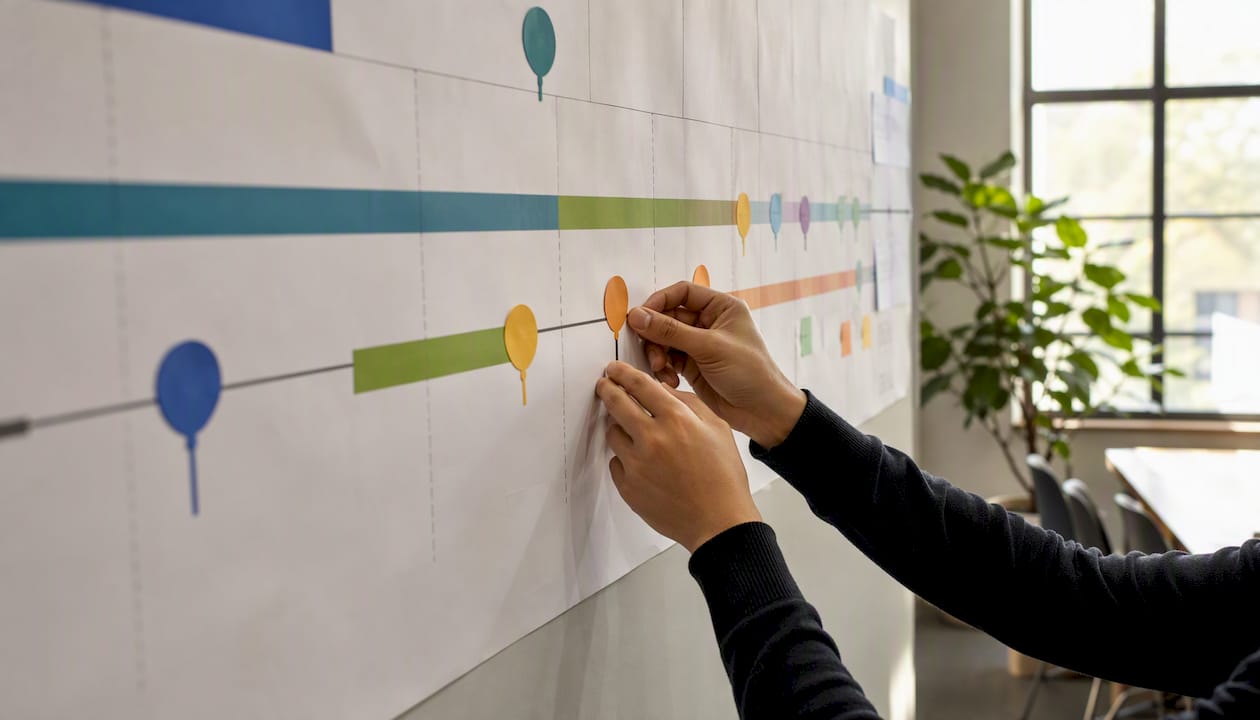
Aligning your digital transformation roadmap with engagement milestones helps senior leaders see where stakeholder decisions intersect with technology deployment windows.
Step 6: How do you monitor engagement and close the feedback loop?
Monitoring is where most engagement programs fall short. Collecting feedback without acting on it, or acting without telling stakeholders what changed, breaks trust faster than not engaging at all.
Define KPIs before you start:
| KPI | Target | Data source |
|---|---|---|
| Attendance rate at planned meetings | Most invited stakeholders | Meeting sign-in sheets |
| Survey response rate | A majority of distributed surveys | Survey platform analytics |
| Stakeholder satisfaction score | Satisfactory or above | Post-session feedback form |
| Grievance resolution time | Within a reasonable response time | Grievance log |
| Feedback loop closure rate | Most issues responded to | Issues register |
Reporting and feedback loop process:
- Publish a brief engagement summary after each major activity
- Maintain a public issues register showing what was raised, what was decided, and why
- Send a written response to every formal grievance within the target resolution window
- Update the SEP at each project milestone; the World Bank guidance identifies failure to update the SEP as the most common cause of trust breakdown
Grievance mechanism basics. Every SEP needs a named point of contact, a defined intake channel (email, phone, in-person), a target response time, and an escalation path. The ADB ESS10 note requires that grievance data be disaggregated by gender and other relevant categories so patterns affecting specific groups are visible.
Operationalizing a feedback loop in your digital workflows ensures that stakeholder input reaches the right decision-makers without getting lost in email threads.
What research says about what actually works in stakeholder engagement
Three priorities emerge consistently from the authoritative literature, and they are not the ones most project teams emphasize.
Priority 1: Proportionality determines resource efficiency.
The OECD and IFC guidance both emphasize that engagement frequency, scope, and method must be proportionate to project scale and the risk or impact each group faces. Teams that apply the same engagement intensity to every group waste budget on low-priority groups and, critically, have less capacity left for the groups that genuinely need it.
Priority 2: Co-creation outperforms broadcast.
Treating engagement as a continuous, iterative cycle focused on co-creation, not a one-off information broadcast, is the single most consistent differentiator between programs that build lasting trust and those that generate formal complaints. — BSR Five-Step Approach to Stakeholder Engagement
In practice, co-creation means inviting stakeholders into problem definition, not just solution review. A community group consulted only on a finished design will find the flaws you missed. The same group involved in early design workshops will often solve problems you did not know existed.
Priority 3: Closing the feedback loop is non-negotiable.
The PMC research on SEP rules and the Stakeholder Forum SDG 2030 guide both flag the feedback loop as the most frequently skipped step. Stakeholders who submit input and hear nothing conclude that the process was performative. That conclusion is very difficult to reverse.
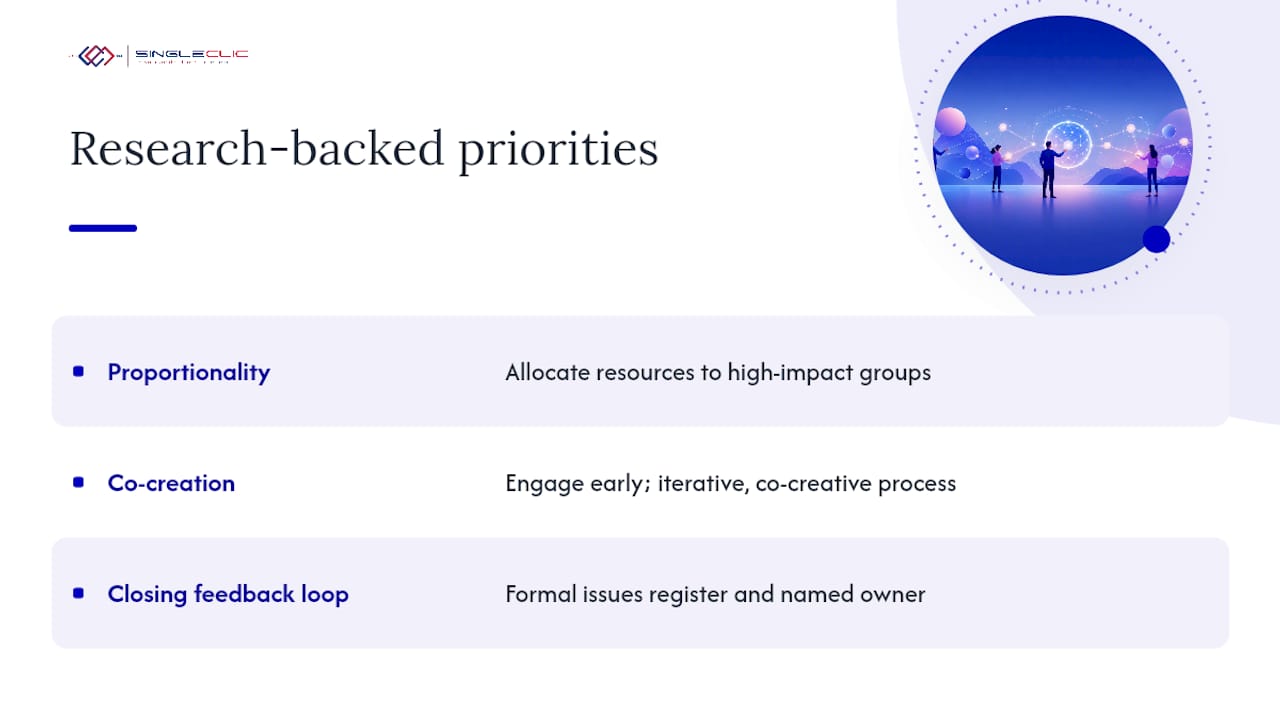
These three priorities change planning choices in concrete ways. Proportionality shifts your resource allocation toward high-impact groups. Co-creation moves engagement earlier in the project timeline. Closing the loop requires a formal issues register and a named owner for every open item.
Ready-to-use templates and tools for your engagement program
The standard deliverables for a complete stakeholder engagement process are five templates. Each one maps to a specific step in the process.
Templates included in a complete SEP package:
- Stakeholder register (Step 1): captures name, group, interest, influence, contact, vulnerability, and relationship quality
- Mapping matrix (Step 2): records influence and interest scores and assigns grid quadrant
- Engagement objectives table (Step 3): links each stakeholder group to an IAP2 level, objective, owner, and success measure
- SEP outline (Step 4): the full plan document with schedule, resources, and monitoring indicators
- Communication plan table (Step 4): audience, message, channel, cadence, and owner
- KPI and monitoring log (Step 6): tracks attendance, response rates, satisfaction, and grievance resolution
Tool-selection checklist. When evaluating software to support your engagement program, look for:
- Interaction logging with timestamps and attachments
- Configurable reporting dashboards
- Automated reminders for scheduled activities
- Integration with your project management and ERP systems
- Role-based access controls for sensitive stakeholder data
- Audit trail for grievance records
Singleclic’s Cortex low-code platform connects SEP workflows directly to ERP and CRM data, automating approval routing, interaction logging, and milestone-triggered reminders without requiring custom development. For teams running large-scale programs in MENA, that integration removes the manual handoffs that cause documentation gaps.
Common mistakes that derail stakeholder engagement programs
Most engagement failures are predictable. Here are the six red flags to watch for before each project milestone.
Red flag 1: One-time engagement treated as complete.
Consulting stakeholders once at project launch and then going silent is the most common failure pattern. Engagement must be continuous. Corrective action: schedule engagement activities at every major milestone in the SEP.
Red flag 2: No stakeholder register, or a register that is never updated.
A static list from week one becomes inaccurate within months as personnel change and new groups emerge. Corrective action: assign a named owner to maintain the register and review it at each milestone.
Red flag 3: Ignoring vulnerable or hard-to-reach groups.
Excluding communities with language barriers, remote locations, or historical distrust of the project sponsor creates legal and reputational exposure. Corrective action: flag vulnerable groups in the register and design separate, accessible engagement channels for them.
Red flag 4: No grievance mechanism.
Stakeholders who cannot raise concerns formally will raise them publicly. Corrective action: publish a grievance intake channel and response timeline before the first engagement activity.
Red flag 5: Feedback loop never closed.
Collecting input without reporting back on decisions is the fastest way to lose credibility. Corrective action: maintain a public issues register and send written responses to every formal submission.
Red flag 6: Engagement intensity not matched to stakeholder priority.
Applying the same effort to every group wastes resources and signals that the team has not done the analysis. Corrective action: use the power–interest grid to allocate methods and frequency proportionally.
For a broader look at how engagement failures connect to implementation risk, the Singleclic guide on avoiding common implementation failures covers the governance patterns that protect large programs from these same breakdowns.
A practitioner’s perspective on what these steps actually require
The six steps in this guide work. The challenge is not the framework; it is the discipline to follow it when project timelines compress and engagement feels like overhead.
The most consistent lesson from complex delivery programs is that the teams who invest in early, documented engagement spend less time managing crises in construction or deployment. The stakeholder register and the issues log are not bureaucratic artifacts; they are the evidence trail that protects the project when a stakeholder dispute escalates to a regulator or a board. Skipping documentation to save time is a trade that almost always costs more than it saves.
Templates like the ones in this guide give teams a starting point, but they need to be adapted to the project’s actual risk profile, the cultural context of the stakeholder community, and the organization’s existing governance structures. A government infrastructure project in a regulated environment needs a more formal SEP than an internal process improvement initiative. The IAP2 levels and the power–interest grid scale to both.
Singleclic helps you connect stakeholder engagement to your project systems
Managing a stakeholder engagement program across spreadsheets, email threads, and disconnected project tools is where documentation gaps happen and feedback loops break down. Singleclic’s Cortex platform gives project teams a structured environment to log interactions, route approvals, trigger milestone reminders, and surface engagement KPIs alongside ERP and CRM data, so nothing falls through the cracks between your engagement plan and your delivery systems.
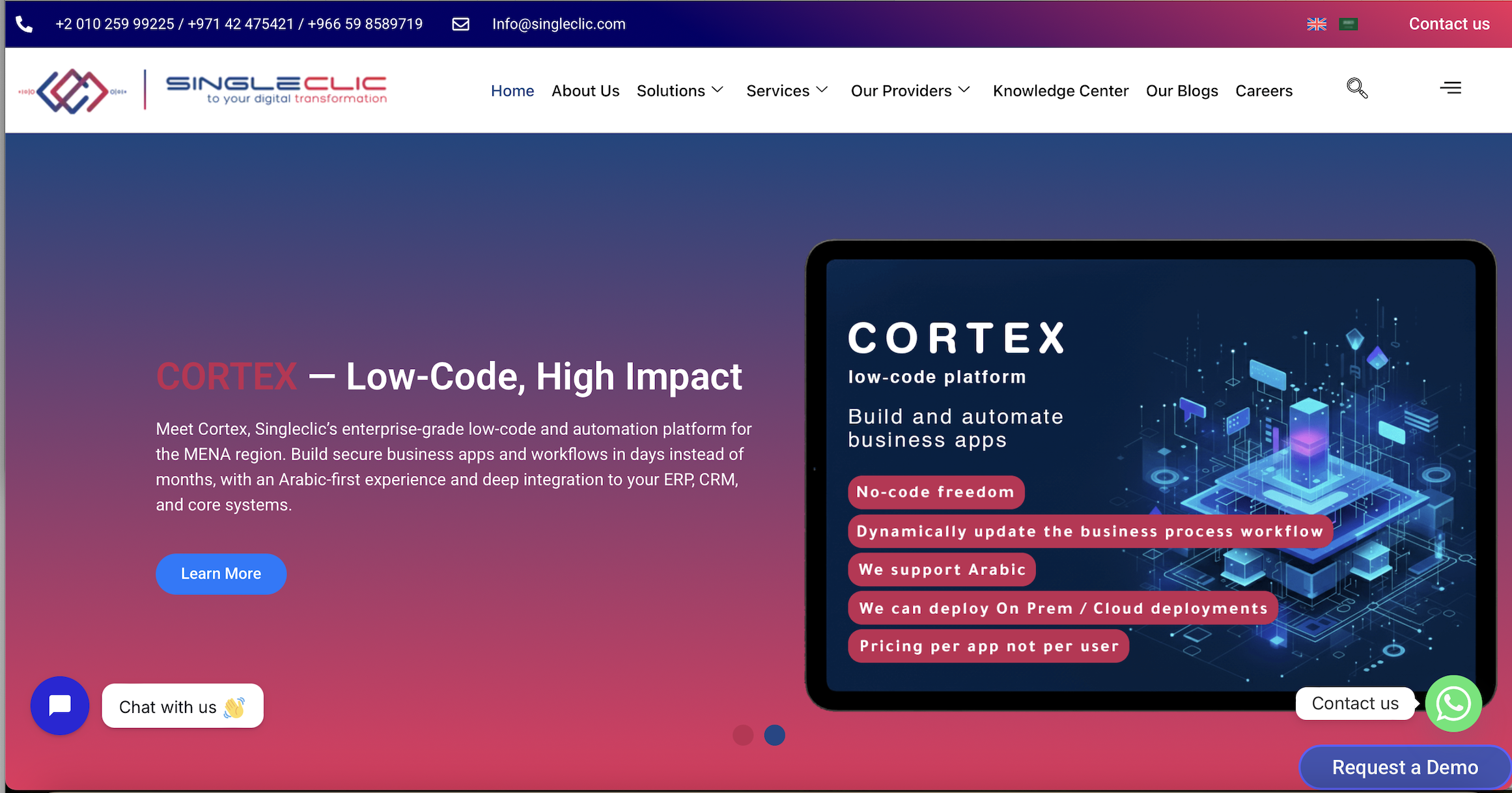
Cortex is built for enterprise teams that need on-premise deployment, Arabic UI support, and deep integration with existing workflows. Whether you are running a government infrastructure program or a large-scale enterprise technology rollout, Singleclic’s consultants can help you configure a stakeholder tracking and reporting environment that matches your SEP requirements from day one. Reach out to the Singleclic team to discuss how Cortex fits your program’s engagement and governance needs.
Sources
- Five-Step Approach to Stakeholder Engagement | BSR
- Tip Sheet on Stakeholder Engagement Project Cycle (World Bank, Nov 2023)
- Stakeholder Engagement (IFC / World Bank, 2022)
- Ten simple rules on how to develop a stakeholder engagement plan (PMC)
- Creating a seat at the table — stakeholder engagement for the 2030 Agenda (UN ESCAP / IAP2)
Recommended
- Agile Project Management Steps: A Practical 2026 Guide
- Step by Step Change Adaptation for ERP/CRM/BPM Projects
- 7 Key Steps for Effective Business Process Management
- Singleclic: Download the 7-step digital transformation checklist for leaders to drive growth, align stakeholders, and optimize operations—start today.