More than 60 percent of American enterprises now rely on digital audit solutions to reduce compliance risks and improve process accuracy. In rapidly digitizing regions like Saudi Arabia and UAE, CIOs and CTOs in construction and healthcare face rising pressure to keep audits thorough and efficient as technology landscapes expand. This guide gives you a practical step by step approach to defining clear digital audit objectives, configuring effective workflows, and validating results with tools that fit your sector’s demands.
Table of Contents
- Step 1: Define Digital Audit Objectives And Requirements
- Step 2: Configure Audit Workflows In Your Enterprise Platform
- Step 3: Integrate ERP And Process Automation Systems
- Step 4: Execute Digital Audits And Capture Actionable Data
- Step 5: Validate Audit Results And Drive Improvements
Quick Summary
| Key Point | Explanation |
|---|---|
| 1. Define Clear Audit Objectives | Establish specific goals to guide the audit process, focusing on compliance and risk identification throughout your digital infrastructure. |
| 2. Automate Audit Workflows | Utilize digital platforms to automate key audit tasks, enhancing efficiency and standardization in your auditing processes. |
| 3. Integrate ERP Systems | Seamlessly connect ERP and automation systems to streamline data management, ensuring efficient real-time auditing and compliance tracking. |
| 4. Capture Actionable Data | Implement advanced tools for data collection and analysis to transform raw information into insights that drive organizational improvement. |
| 5. Validate Results for Improvements | Employ intelligent validation methods to ensure accuracy and use findings to recommend specific enhancements to operational processes. |
Step 1: Define digital audit objectives and requirements
Defining precise digital audit objectives is critical for ensuring comprehensive and effective enterprise technology assessments. In this stage, you will establish the foundational framework that guides your entire audit process, mapping out specific evaluation criteria and strategic targets.
Starting with a clear understanding of your organizational needs, begin by comprehensively documenting the scope of your digital infrastructure auditing complex digital systems and processes. This involves identifying all digital touchpoints, software systems, hardware components, and automated workflows that require systematic examination. Your objectives should focus on assessing conformity, identifying potential risks, and validating technological compliance across different operational domains.
Key considerations for defining audit objectives include mapping predefined inputs, expected outputs, and automated sequences within your technological ecosystem. According to ISO 9001 Auditing Practices Group guidance, these objectives must systematically capture objective evidence against established audit criteria. Consider creating a detailed matrix that outlines specific evaluation parameters such as security protocols, data integrity mechanisms, process automation effectiveness, and regulatory compliance standards relevant to your industry in Saudi Arabia and UAE.
Pro tip: Create a collaborative audit objectives worksheet that involves stakeholders from IT, compliance, and operational teams to ensure comprehensive and multidimensional assessment criteria.
Step 2: Configure audit workflows in your enterprise platform
Configuring audit workflows in your enterprise platform transforms how your organization manages and executes digital audits across complex technological ecosystems. By strategically mapping and automating your audit processes, you will significantly enhance operational efficiency and standardization.
Digital technologies can optimize audit workflows by enabling comprehensive integration on a single platform. Start by identifying all key audit tasks that can be systematized including data collection, scheduling, task assignment, reporting, and compliance tracking. Focus on building workflows that support your specific organizational requirements in Saudi Arabia and UAE. Use your low code platform like Cortex to design flexible workflows that can accommodate different audit scenarios while maintaining consistent execution standards.

Pay special attention to workflow configuration that leverages automation and data analytics capabilities. Research on digital audit transformation emphasizes the importance of creating workflows that support technological integration and enhance auditor capabilities. Consider implementing automated triggers for specific audit actions, creating standardized templates for different audit types, and establishing clear approval and escalation pathways within your workflow design. Ensure your configuration allows for real time collaboration and provides transparent tracking of audit progress across different teams and departments.
Pro tip: Map out your workflow configurations using visual process design tools and conduct pilot tests with multiple stakeholders to validate effectiveness before full enterprise deployment.
Here’s a summary of digital audit workflow configuration methods and their unique benefits:
| Configuration Method | Key Benefit | Example Usage |
|---|---|---|
| Automation | Streamlines repetitive tasks | Automated data collection |
| Data Analytics Integration | Increases insight depth | Real-time compliance tracking |
| Standardized Templates | Ensures uniform documentation | Consistent audit reports |
| Approval Pathways | Enhances control and speed | Fast escalation of issues |
Step 3: Integrate ERP and process automation systems
Successfully integrating Enterprise Resource Planning (ERP) and process automation systems represents a transformative approach to streamlining your digital audit workflows across complex organizational environments. This critical step will help you create a unified technological ecosystem that enhances data management and operational efficiency.
Digital technologies are revolutionizing auditing practices by enabling real time data access and reducing manual interventions. Begin the integration process by mapping your existing ERP systems and identifying specific automation opportunities within your Saudi Arabian or UAE enterprise. Leverage low code platforms like Cortex to design seamless connections between different technological components. Focus on creating standardized data exchange protocols that allow smooth information flow between your ERP modules and process automation tools.
Continuous auditing technologies increasingly depend on robust system integrations that address large data volumes and regulatory compliance requirements. Prioritize establishing secure data pipelines that enable automatic synchronization between your ERP systems and audit workflow platforms. Pay special attention to implementing role based access controls, ensuring data integrity, and creating transparent audit trails that track every system interaction. Consider utilizing robotic process automation (RPA) techniques to handle repetitive tasks and minimize human error during complex audit processes.
Pro tip: Conduct comprehensive integration testing in a staged environment and develop a phased rollout strategy to mitigate potential disruptions during system implementation.
The following table compares traditional audit processes with digitally integrated audits:
| Aspect | Traditional Audit | Digital Audit |
|---|---|---|
| Data Collection | Manual and time-consuming | Automated and rapid |
| Error Rate | Higher likelihood of errors | Lower due to process automation |
| Reporting Speed | Delayed, often after audits | Real-time dashboards available |
| Collaboration | Limited and sequential | Cross-team, real-time sharing |
Step 4: Execute digital audits and capture actionable data
Executing digital audits requires a strategic approach that transforms raw data into meaningful insights for your enterprise in Saudi Arabia and UAE. Your goal is to leverage advanced technological tools that enable comprehensive data capture and intelligent analysis across your organizational ecosystem.
Auditors in the digital age must develop sophisticated data analytics skills to effectively extract and interpret large datasets. Utilize your low code platform like Cortex to design automated data collection workflows that capture information from multiple sources simultaneously. Implement intelligent filters and validation protocols to ensure data quality, focusing on collecting evidence that provides clear performance indicators and potential risk areas. Use AI powered tools to automatically categorize and prioritize findings based on predefined organizational compliance standards.
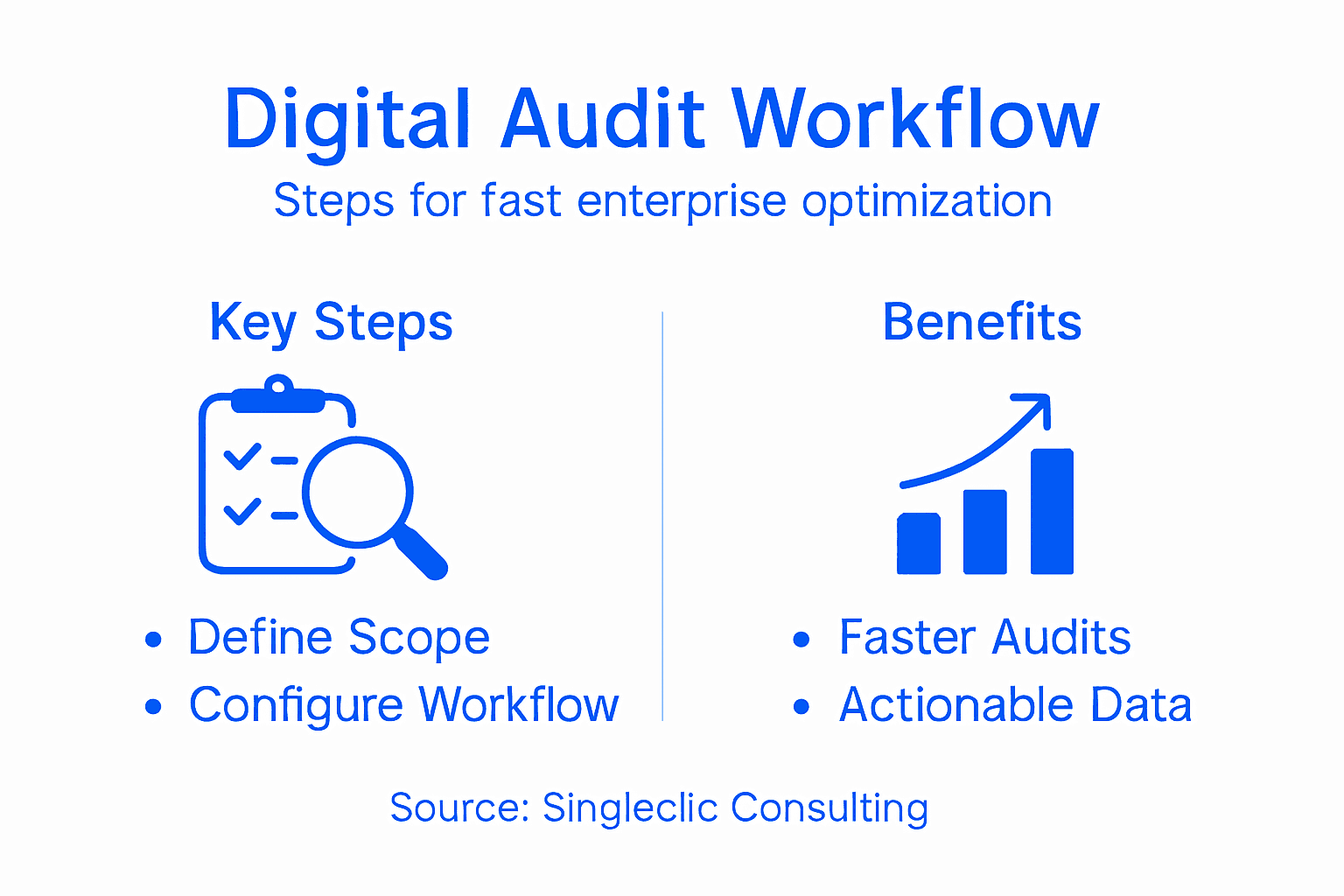
Comprehensive digital audit execution involves integrated monitoring tools that enable real time tracking and analysis. Configure your audit platform to generate dynamic dashboards that visualize key performance metrics, compliance gaps, and potential improvement areas. Pay special attention to creating transparent audit trails that document every data point collection process, ensuring regulatory compliance and providing a clear historical record of your organizational assessment. Leverage robotic process automation techniques to handle repetitive data extraction tasks while maintaining high accuracy and minimizing human error.
Pro tip: Develop a standardized data interpretation framework that translates complex audit findings into clear, actionable recommendations for organizational leadership.
Step 5: Validate audit results and drive improvements
Validating audit results requires a meticulous approach that transforms raw findings into strategic organizational improvements for enterprises across Saudi Arabia and UAE. Your ultimate goal is to create a robust feedback mechanism that continuously enhances operational efficiency and compliance standards.
Digital verification techniques have revolutionized audit validation processes by enabling sophisticated cross referencing and anomaly detection. Utilize your low code platform like Cortex to implement intelligent validation protocols that automatically compare audit findings against predefined compliance standards and historical performance benchmarks. Develop a comprehensive validation workflow that includes multiple verification layers such as automated data cross checking, AI powered pattern recognition, and statistical significance testing to ensure maximum accuracy and reliability of your audit results.
Digital platforms now support advanced audit outcome validation strategies that enable continuous process improvements. Configure your audit management system to generate detailed comparative reports that highlight discrepancies, potential risks, and improvement opportunities. Establish clear feedback loops that not only document findings but also recommend specific corrective actions. Implement a structured approach to tracking and resolving identified gaps, ensuring that each audit cycle builds upon previous insights and progressively enhances your organizational governance framework.
Pro tip: Create a centralized knowledge repository that archives audit validation insights and recommended improvements to facilitate institutional learning and continuous organizational development.
Accelerate Your Digital Audit Workflow with Tailored Enterprise Solutions
Optimizing digital audit workflows is essential for enterprises in Saudi Arabia and UAE facing challenges like streamlining complex audit processes, integrating ERP systems, and ensuring real-time data accuracy. The article highlights critical pain points such as configuring automated workflows, capturing actionable data effortlessly, and validating compliance results effectively. Achieving operational efficiency while maintaining strict regulatory standards demands advanced tools designed for flexibility and deep integration.
At Singleclic, we specialize in transforming your digital audit capabilities through our powerful solutions like Cortex, an Arabic-enabled low-code platform built for MENA enterprises. Cortex enables real-time process automation across ERP, RPA, and AI systems, perfect for tackling the challenges of audit workflow optimization. Our expertise in ERP & CRM Implementation, Business Process Automation, and enterprise AI ensures your organization moves beyond basic digitalization to true operational excellence.
Ready to revolutionize how your enterprise conducts digital audits?
Discover how Singleclic’s tailored solutions can help you automate audit workflows, integrate legacy systems, and deliver actionable insights that drive continuous improvement. Visit Singleclic today and elevate your business performance with a partner who understands your regional needs and technology ambitions.
Frequently Asked Questions
What are the key objectives for optimizing a digital audit workflow?
Optimizing a digital audit workflow aims to enhance efficiency, ensure regulatory compliance, and enable better data accuracy. To start, define specific evaluation criteria and targets to align your audit activities with your organizational goals.
How can I automate my digital audit processes effectively?
You can automate your digital audit processes by mapping out key tasks that can be systematized, such as data collection and reporting. Begin by using workflow automation tools to create triggers for actions, which can save time and reduce manual errors.
What steps should I take to validate the results of my digital audit?
To validate the results of your digital audit, implement intelligent validation protocols that compare findings against compliance standards. Develop a clear workflow that includes multiple verification layers to ensure the accuracy of your results before proceeding with any improvements.
How does integrating ERP systems enhance the digital audit workflow?
Integrating ERP systems improves your digital audit workflow by streamlining data management and enabling real-time data access. Focus on establishing data exchange protocols that allow smooth information flow between your ERP and audit workflows to enhance operational efficiency.
What tools can help visualize audit performance metrics?
You can use dynamic dashboards within your audit platform to visualize key performance metrics, compliance gaps, and areas for improvement. Start by configuring your audit management system to generate these dashboards for real-time tracking and analysis of your audit progress.
How can I ensure continuous improvement in my digital audit processes?
To ensure continuous improvement, establish feedback loops that document findings and recommend specific corrective actions. Create a centralized repository for storing validation insights, which can be referenced to enhance future audit cycles.