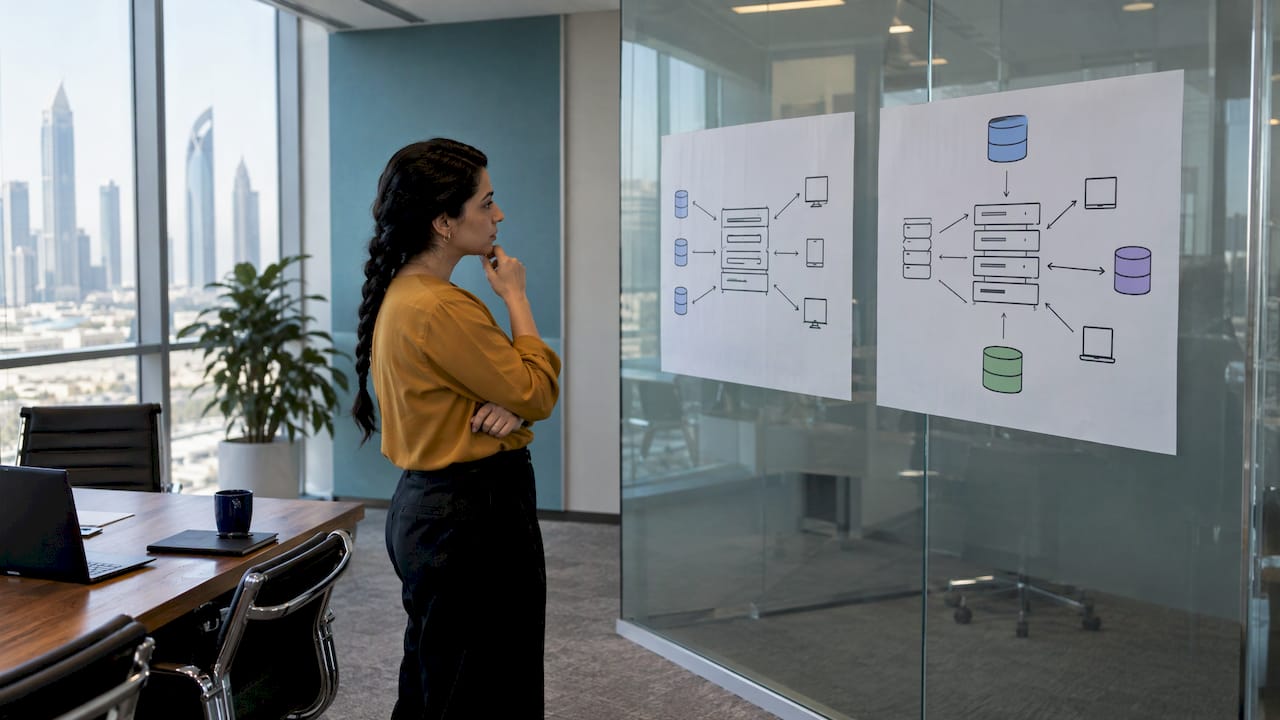
Digital twins are reshaping how you plan and manage assets and infrastructure. They offer a real-time, data-driven view that sharpens decision-making across the asset lifecycle. With Singleclic’s expertise, you can move swiftly from pilot projects to enterprise-scale solutions that boost resilience and return on investment. Let’s explore how this strategic tool can redefine your asset performance management and infrastructure planning.
Digital Twins in Strategic Asset Planning
Digital twins are changing the landscape of asset management. They provide a detailed digital counterpart of real-world assets, offering insights that help in making informed decisions.
Enhancing Lifecycle Decisions
Imagine having a crystal ball for your assets. Digital twins offer a similar advantage by allowing you to predict future scenarios. These digital models use real-time data to show how assets will perform over time. This means you can make smarter decisions, like when to schedule maintenance or upgrades. With this foresight, you avoid unnecessary downtime and extend the life of your assets.
Consider a scenario where a digital twin helps a city manage its infrastructure. By simulating traffic patterns, the city can optimize road repairs, minimizing disruption to daily commutes. This proactive approach saves time and resources, ensuring that the city’s infrastructure runs smoothly.
Resilience and ROI Benefits
How do digital twins bolster resilience and improve ROI? They provide a comprehensive view that helps you anticipate potential issues. By identifying vulnerabilities early, you can strengthen weak points before they become problems. This proactive stance not only increases resilience but also enhances return on investment. When assets are managed efficiently, costs decrease and productivity increases.
For instance, an energy company using digital twins can monitor equipment health continuously. If a piece of machinery shows signs of wear, it can be repaired before it fails, avoiding costly outages. This careful monitoring ensures assets are always at peak performance, maximizing revenue and minimizing loss.
Azure Digital Twins: A Game Changer
Azure Digital Twins take this concept further by integrating seamlessly with existing systems. This integration allows for even more precise data collection and analysis, leading to better outcomes.
Integrating IoT Sensors and ERP
Azure Digital Twins work by connecting various data sources, including IoT sensors and Enterprise Resource Planning (ERP) systems. This integration creates a unified view of your assets in real-time. IoT sensors continuously gather data, feeding it into the digital twin model. This constant stream of information enables you to see real-time changes and react promptly.
In the construction industry, for example, IoT sensors can monitor the structural health of buildings. When integrated with ERP systems, this data can be used to optimize maintenance schedules and budget allocations. The result is a more efficient operation, with reduced costs and increased safety.
Power BI for Predictive Maintenance
Predictive maintenance is the future. By using Power BI with Azure Digital Twins, you can visualize and analyze data to predict when maintenance should occur. This approach prevents unexpected failures and reduces downtime.
Picture a manufacturing plant where machinery is continuously monitored. Power BI highlights patterns and predicts possible failures, allowing maintenance teams to act before problems arise. This proactive maintenance strategy not only saves money but also extends the life of the equipment, enhancing overall productivity.
From Pilot to Enterprise Scale with Singleclic
Singleclic streamlines the transition from small-scale pilots to full-scale implementation, making digital twin adoption seamless and effective.
Fast-Track Scenario Planning
With Singleclic, you can quickly simulate various scenarios to see potential outcomes. This fast-tracking ability helps in strategic planning, ensuring you are prepared for any situation. Whether you’re managing a real estate portfolio or planning urban infrastructure, scenario simulations provide the insights needed for confident decision-making.
Imagine a scenario where city planners use digital twins to visualize the impact of new building developments. By simulating traffic flow and environmental changes, they can optimize city planning to accommodate growth while maintaining quality of life for residents.
Automating with Agentic AI and RPA
Automation further enhances the capabilities of digital twins. Singleclic employs Agentic AI and Robotic Process Automation (RPA) to automate routine tasks. This automation frees up valuable time, allowing your team to focus on strategic initiatives.
In the healthcare sector, for instance, RPA can automate patient data entry, reducing errors and speeding up administrative tasks. With Agentic AI, complex data can be analyzed more quickly, leading to faster and more accurate decision-making.
Frequently Asked Questions
What are digital twins?
Digital twins are virtual models of physical assets, processes, or systems. They use real-time data to simulate how assets perform, allowing for better decision-making and management.
How do digital twins improve asset management?
They provide a detailed view of asset performance, enabling predictive maintenance and optimizing lifecycle decisions. This approach leads to reduced downtime and extended asset life.
Why is Azure Digital Twins considered a game-changer?
Azure Digital Twins offer seamless integration with existing IoT and ERP systems, providing real-time insights and predictive analytics that enhance asset management efficiency.
How does Singleclic support digital twin adoption?
Singleclic offers expertise in transitioning from pilot projects to enterprise-scale solutions, using tools like Agentic AI and RPA to automate and optimize processes.
Can digital twins be used across different industries?
Yes, digital twins are versatile and can be applied in various industries, including construction, healthcare, energy, and real estate, to optimize operations and improve asset management.