We recommend connecting your ERP to a Central Bank of the UAE licensed payment service provider through its API, while generating structured PINT-AE invoices through an Accredited Service Provider rather than exporting PDFs. Confirm your PSP’s license category before any production work begins.
TL;DR:
- Confirm your PSP holds a valid license in the category aligned with your transaction volume and service needs before starting integration.
- Ensure your ERP can generate and store PINT-AE XML invoices with structured data fields for audit readiness and compliance.
- Use a stable reconciliation key, store PSP credentials securely, and log webhook events with timestamps to prevent reconciliation errors on day one.
- Complete sandbox testing, including full invoice lifecycle, partial payments, refunds, and chargebacks, before going live.
- Verify your revenue level and timing window to determine if you must appoint an Accredited Service Provider earlier than 2027.
Table of Contents
- A practical step-by-step project plan to connect ERP and PSP in UAE
- Essential UAE regulations and e-invoicing timelines that affect integration
- Field-level technical requirements: PINT-AE mapping and reconciliation logic
- Sandbox testing, ASP onboarding and a short go-live checklist
- Operational controls, PCI expectations and cyber-resilience for payments
- How Singleclic helps: services, Cortex and in-region delivery
- Author perspective: pragmatic priorities and common pitfalls
- Get a compliance-first ERP payment integration plan
- FAQ
- Sources
A practical step-by-step project plan to connect ERP and PSP in UAE
A payment integration project in the UAE moves through five phases, and skipping the early ones is the most common reason go-live dates slip.
- Discovery: confirm which transactions are in scope (B2B, B2G, or both), check your PSP’s licensing status against the CBUAE’s retail payment rulebook, and map out every finance and IT stakeholder who touches invoicing or settlement.
- Design: agree on API responsibilities between your ERP team and the PSP, define the invoice and payment data model, and map ERP fields to the PINT-AE schema before any code gets written.
- Build: implement payment initiation endpoints, payment links, and QR code support, then configure webhooks for status updates with idempotent handling so a retried callback never double-posts a payment.
- Finance controls: set posting rules for settlements, PSP fees, and chargebacks, and convert any foreign-currency receipts to AED using a Central Bank-approved exchange rate source.
- Handover: document the integration and run knowledge transfer sessions with finance, operations, and support teams before they inherit the system.
A few details decide whether reconciliation works on day one:
- Use a stable reconciliation key, such as invoice number plus merchant reference, so partial payments and retried webhooks match correctly.
- Store PSP credentials in a secrets vault, never in ERP configuration tables or spreadsheets.
- Log every webhook event with a timestamp so finance can trace a disputed transaction without opening a support ticket.
Our guide to ERP integration best practices across MENA covers the broader architecture decisions that sit behind this payment-specific plan.
Essential UAE regulations and e-invoicing timelines that affect integration
Two regulatory tracks shape every ERP payment project in the UAE, and both carry real deadlines — as detailed in this United Arab Emirates Market Research: Unlocking Growth in the UAE report.
The first is payment licensing. Under the Retail Payment Services and Card Schemes Regulation, the Central Bank of the UAE requires any provider offering merchant acquiring or payment aggregation to hold a license across one of nine defined retail payment service categories. Confirm which category your PSP holds before you build against its API, because an unlicensed or mismatched provider creates a compliance gap no amount of technical integration can fix.
The second track is e-invoicing. Ministerial Decision No. 244 of 2025 sets a pilot start date of July 1, 2026, with phased mandatory implementation dates running through 2027, and businesses with revenue at or above AED 50,000,000 must appoint an Accredited Service Provider and implement earlier than smaller taxpayers. The Ministry of Finance has confirmed that the system adopts the international OpenPeppol standard, meaning invoices must carry structured data fields rather than arrive as a static document.
Before you integrate, work through this checklist:
- Verify your PSP’s CBUAE license category matches the services you plan to use.
- Identify whether your revenue places you in the earlier or later ASP appointment window.
- Confirm your ERP can store invoices with the authenticity and integrity controls that FTA guidance requires for audit readiness.
Field-level technical requirements: PINT-AE mapping and reconciliation logic
Structured e-invoicing is not an optional add-on to your PDF workflow. The PINT-AE schema requires ERP systems to emit XML with defined fields for supplier details, VAT registration numbers, line-level tax data, invoice totals, and currency information, and storing a PDF copy alongside it does not satisfy the structured-data requirement on its own.
Most ERP platforms already hold the data PINT-AE needs. The mapping work typically covers:
- Supplier and buyer legal names, addresses, and tax registration numbers pulled from master data.
- Line-item tax codes and rates mapped to the VAT fields PINT-AE expects.
- Invoice totals, discounts, and currency codes matched to the schema’s numeric and currency elements.
On the payment side, build for both synchronous and asynchronous flows: a checkout API call for immediate confirmation, payment links for invoices sent by email, and webhooks for status updates that can arrive minutes or hours later. Every webhook handler needs an idempotency key, a retry policy, and clear error logging, because duplicate or dropped events are the most common source of reconciliation errors.
Reconciliation itself has to handle partial payments, refunds, and multi-currency receipts. FTA guidance requires any invoice paid in a foreign currency to be converted to AED using a Central Bank-approved exchange rate, and that conversion rule needs to sit inside your reconciliation logic, not in a manual spreadsheet step.
Pro Tip: Build a reconciliation staging table that captures every webhook event, PSP settlement batch, and invoice posting date separately, so finance can reconcile at the transaction, batch, and daily level without waiting on IT.
Sandbox testing, ASP onboarding and a short go-live checklist
Before production, run structured test cases rather than ad hoc spot checks.
- Issue a full invoice lifecycle test: generate the PINT-AE XML, submit it through your ASP’s sandbox, and confirm it validates against the schema.
- Trigger a payment initiation, confirm the webhook fires correctly, and verify the reconciliation record matches the invoice.
- Simulate a partial payment and a refund to confirm your posting rules handle both without manual intervention.
- Test a chargeback scenario end to end, from PSP notification through to the ERP exception report.
- Coordinate sandbox access with your ASP early, since pilot participant selection and onboarding windows follow the Ministry’s published schedule rather than your internal project timeline.
At go-live, confirm five things are in place: a signed SLA with your PSP and ASP, monitoring and alerting on payment and webhook failures, a documented rollback plan, verified audit trails for every invoice, and automated daily reconciliation reports that finance can read without a developer’s help.
Operational controls, PCI expectations and cyber-resilience for payments
Ask your PSP directly how much PCI DSS scope your ERP retains. Many providers offer hosted checkout pages or tokenization that keep card data off your servers entirely, which meaningfully reduces your compliance burden and your audit footprint.
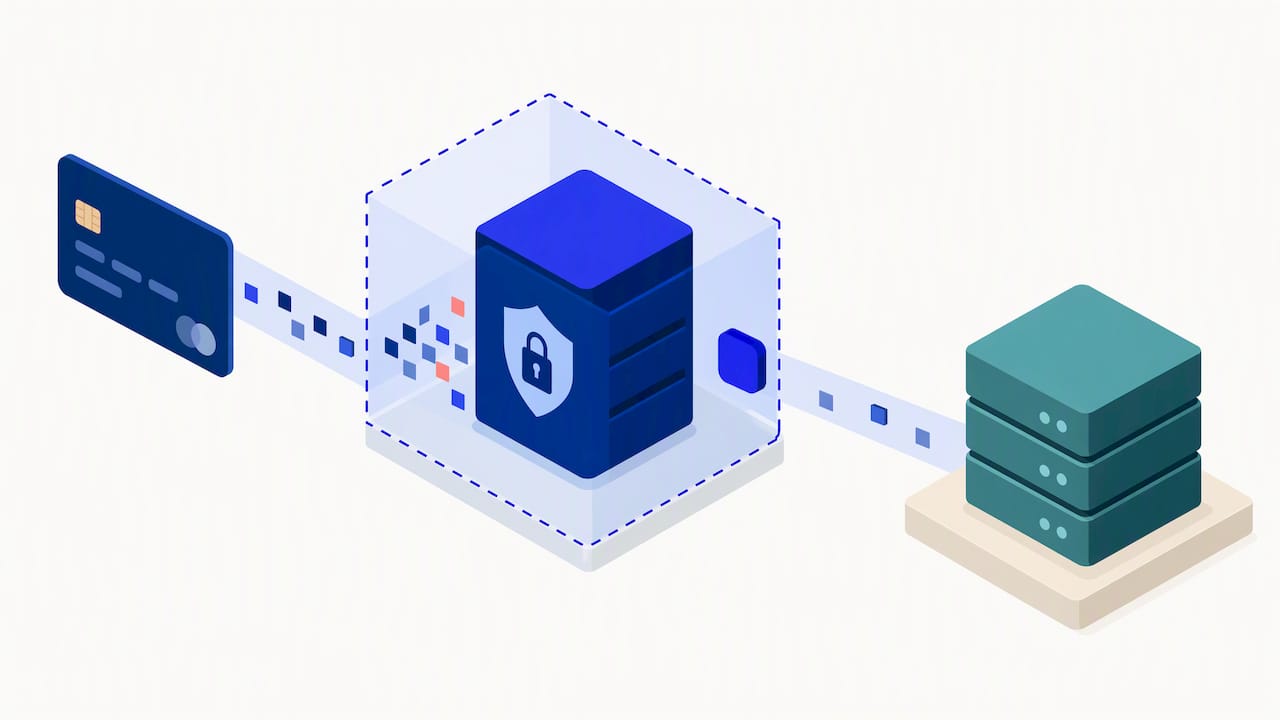
Central Bank guidance encourages licensed payment providers to follow cyber-resilience and IT governance practices, and that expectation extends to how you operate the ERP side of the integration, not just the PSP’s infrastructure.
Build these items into your operational runbook:
- An incident response plan that names who gets alerted when a payment or webhook integration fails.
- Transaction monitoring thresholds that flag unusual payment volumes or repeated failures automatically.
- A clear exception queue for reconciliation mismatches, with an owner assigned to clear it daily, not weekly.
- A separate review of your Wages Protection System interface if payroll disbursements share infrastructure with customer payment flows.
Our overview of data security practices for IT teams in the UAE and Saudi Arabia goes deeper into the governance controls that sit around this kind of integration.
How Singleclic helps: services, Cortex and in-region delivery
We bring integration experience, process automation skills, and Cortex, our Arabic-enabled, on-premise low-code platform, to UAE payment and e-invoicing projects.
- We lead PINT-AE field mapping, API connector development, and ASP coordination as a single workstream rather than separate vendor handoffs.
- We run sandbox testing and post-go-live support so your finance team isn’t left debugging reconciliation exceptions alone.
- We build language-appropriate interfaces where your teams need them, using Cortex to connect approvals, ERP, and payment data without custom code for every change.
Author perspective: pragmatic priorities and common pitfalls
The projects that slip almost always made the same mistake: they treated the ASP as a late-stage vendor rather than a design partner, or assumed PDF invoices would satisfy the e-invoicing mandate. Our priority order is simple: confirm licensing and ASP status first, build field-level PINT-AE mappings second, and automate reconciliation third. Skip that order and the technical build looks finished while the compliance gap stays open.
— Tamer Badr
Get a compliance-first ERP payment integration plan
We combine Microsoft Dynamics 365 and Odoo implementation experience with Cortex, our low-code platform, to connect your ERP, PSP, and ASP into one working system rather than three disconnected projects.
If you need a readiness assessment for an upcoming e-invoicing deadline, our services page outlines where we start, and our Dynamics 365 integration team can scope the payment and PINT-AE mapping work directly against your current ERP setup.
FAQ
What is ERP in UAE?
An ERP system is software that unifies finance, inventory, procurement, and operations data into one platform, and in the UAE it increasingly needs to connect directly to licensed payment providers and e-invoicing infrastructure. Most mid-size and large UAE organizations run ERP platforms like Microsoft Dynamics 365 or Odoo for this purpose.
What is the best payment processor in the UAE?
There is no single best processor for every business: the right choice depends on your transaction volume, industry, and whether you need merchant acquiring or aggregation services. Whatever provider you choose, confirm it holds a valid license under the Central Bank’s retail payment regulation before integrating it with your ERP.
What are the top 5 payment platforms?
Rankings of payment platforms shift and definitions of “top” vary by transaction type and industry, so we avoid naming a fixed list. The more reliable approach is to check which platforms hold current Central Bank licensing in your required service category and support the API patterns your ERP needs.
What payment method does the UAE use?
Businesses in the UAE use a mix of card payments, bank transfers, and digital wallets, processed through providers licensed under the Central Bank’s retail payment framework. For B2B and B2G invoicing, payments increasingly connect to structured e-invoices rather than standalone payment records.
When must UAE businesses use e-invoicing?
The pilot for the UAE’s e-invoicing system begins July 1, 2026, with mandatory implementation phased through 2027, with businesses earning AED 50,000,000 or more required to appoint an Accredited Service Provider and implement earlier than smaller taxpayers. Check the ministerial decision directly to confirm which window applies to your revenue band.
Sources
- Retail Payment Services and Card Schemes Regulation | CBUAE Rulebook
- The Implementation of the Electronic Invoicing System (Ministerial Decision No. 244 of 2025) | UAE Ministry of Finance / FTA
- Ministry of Finance announcement on electronic invoicing implementation timelines | Ministry of Finance – UAE
- UAE standard e-invoice XML format (PINT-AE) — Flick Network