Pressure to optimize operations is growing as organizations in Saudi Arabia and UAE adapt to rapidly shifting market demands. For C-level executives and CIOs in construction and healthcare, defining clear change management objectives sets the groundwork for transformation that minimizes disruption and risk. This guide outlines how strategic planning, targeted communication, and agile workflow design can help leaders create resilient organizations ready for sustainable growth in today’s digital era.
Table of Contents
- Step 1: Define Change Management Objectives
- Step 2: Establish Stakeholder Communication Protocols
- Step 3: Design Workflow And Assign Responsibilities
- Step 4: Implement Change Management Actions
- Step 5: Validate Workflow Outcomes And Optimize
Quick Summary
| Main Insight | Explanation |
|---|---|
| 1. Set clear change objectives | Clearly defined objectives align your organization’s goals with strategic change initiatives for effective transformation. |
| 2. Ensure transparent stakeholder communication | Develop communication protocols that keep all stakeholders informed and engaged throughout the change process, building trust and reducing resistance. |
| 3. Design a structured workflow | Clearly defined roles and responsibilities minimize confusion and facilitate smooth execution of your change management strategy. |
| 4. Implement actions consistently | Execute your change initiatives with a focus on stakeholder engagement and ongoing training to drive effective transformation. |
| 5. Validate and optimize outcomes | Regularly assess change effectiveness and gather feedback to enhance processes, fostering a culture of continuous improvement. |
Step 1: Define change management objectives
Defining your change management objectives sets the strategic foundation for transforming your organization’s processes and capabilities. In this step, you’ll create a clear roadmap that aligns organizational goals with actionable change initiatives.
Successful change management starts with understanding your current organizational state and identifying the desired future landscape. Effective change management strategies require a systematic approach to modifying your organization’s strategy, structure, and procedures.
To define your change management objectives, focus on these key areas:
- Align business activities with evolving market requirements
- Minimize transformation risks by creating comprehensive transition plans
- Engage employees throughout the change process
- Establish clear performance metrics to measure change effectiveness
Start by conducting a comprehensive organizational assessment that identifies:
- Current operational challenges
- Strategic growth opportunities
- Potential resistance points
- Required skill development
Your change management objectives must bridge the gap between your current state and desired organizational vision.
In regions like Saudi Arabia and UAE, where digital transformation is rapidly evolving, organizations must craft objectives that are both flexible and strategically focused. By leveraging platforms like our Cortex low-code solution, businesses can design adaptive change management workflows that support seamless transitions.
Pro tip: Schedule regular checkpoints during your change management process to validate and recalibrate your objectives as organizational dynamics shift.
Step 2: Establish stakeholder communication protocols
In this critical phase, you’ll develop a comprehensive communication strategy that ensures transparent, effective engagement across your organization during change management. Your goal is to create clear protocols that keep every stakeholder informed and aligned throughout the transformation process.
Effective stakeholder communication strategies are fundamental to successfully navigating organizational change. This involves designing targeted communication approaches that address different stakeholder groups and their unique perspectives.
Key components of robust stakeholder communication protocols include:
- Identify communication channels for each stakeholder group
- Define communication frequency and preferred interaction methods
- Establish clear messaging guidelines
- Create feedback mechanisms for two-way communication
Implement your communication protocols through these strategic steps:
- Map stakeholder groups and their specific information needs
- Develop personalized communication templates
- Select appropriate digital and traditional communication tools
- Train change sponsors on effective messaging
Transparent communication builds trust and reduces resistance during organizational transformations.
In dynamic markets like Saudi Arabia and UAE, where digital transformation is rapidly evolving, communication protocols must be agile and adaptive. Our Cortex low-code platform can help organizations design flexible communication workflows that support seamless information sharing.
Pro tip: Create a centralized communication dashboard that tracks message delivery, stakeholder engagement levels, and real-time feedback to continuously refine your communication strategy.
Step 3: Design workflow and assign responsibilities
In this crucial stage of change management, you’ll create a structured workflow that clearly defines roles, responsibilities, and accountability across your organization. Your objective is to develop a comprehensive blueprint that ensures smooth execution and minimizes potential confusion during the transformation process.

Change management workflow design requires a strategic approach to allocating tasks and defining specific responsibilities for each stakeholder group. This involves creating a detailed roadmap that outlines who will be responsible for each critical action throughout the change initiative.
Key components of an effective workflow design include:
- Identify key stakeholder roles
- Map individual responsibilities
- Establish clear decision-making protocols
- Create accountability metrics
Develop your workflow through these systematic steps:
- Conduct a comprehensive organizational capability assessment
- Define specific roles for change management team
- Create detailed responsibility matrices
- Establish escalation and communication channels
Successful change management depends on crystal-clear role definitions and seamless organizational coordination.
In dynamic business environments like Saudi Arabia and UAE, where digital transformation is accelerating, workflow design must remain flexible and adaptive. Leveraging our Cortex low-code platform can help organizations create agile workflows that adjust quickly to emerging challenges and opportunities.
Pro tip: Implement a dynamic responsibility tracking system that allows real-time updates and provides transparent visibility into each team member’s progress and accountability.
Step 4: Implement change management actions
Now you’ll transition from planning to executing your carefully crafted change management strategy. This critical phase transforms your detailed plans into tangible organizational actions that drive meaningful transformation across your entire ecosystem.
Evidence-based change management practices require a strategic and methodical approach to implementation that goes beyond simple task execution. You’ll need to coordinate multiple moving parts while maintaining clear communication and organizational alignment.
Key implementation actions include:
- Activate stakeholder engagement programs
- Launch comprehensive training initiatives
- Deploy communication cascades
- Monitor and track change adoption metrics
Execute your change management actions through these structured steps:
- Begin with pilot programs in selected departments
- Provide comprehensive training and support resources
- Implement phased rollout strategies
- Continuously collect and analyze feedback
Successful change implementation requires consistent execution, adaptability, and unwavering organizational commitment.
In dynamic business landscapes like Saudi Arabia and UAE, where digital transformation is accelerating, implementation strategies must remain flexible and responsive. Our Cortex low-code platform enables organizations to create adaptive workflows that can quickly adjust to emerging challenges and opportunities.
Pro tip: Establish a dedicated change management war room that provides real-time monitoring, rapid problem resolution, and centralized coordination of implementation activities.
Step 5: Validate workflow outcomes and optimize
In this final stage, you’ll systematically evaluate the effectiveness of your change management initiatives and identify opportunities for continuous improvement. The goal is to transform your initial implementation into a refined, high-performance organizational workflow.
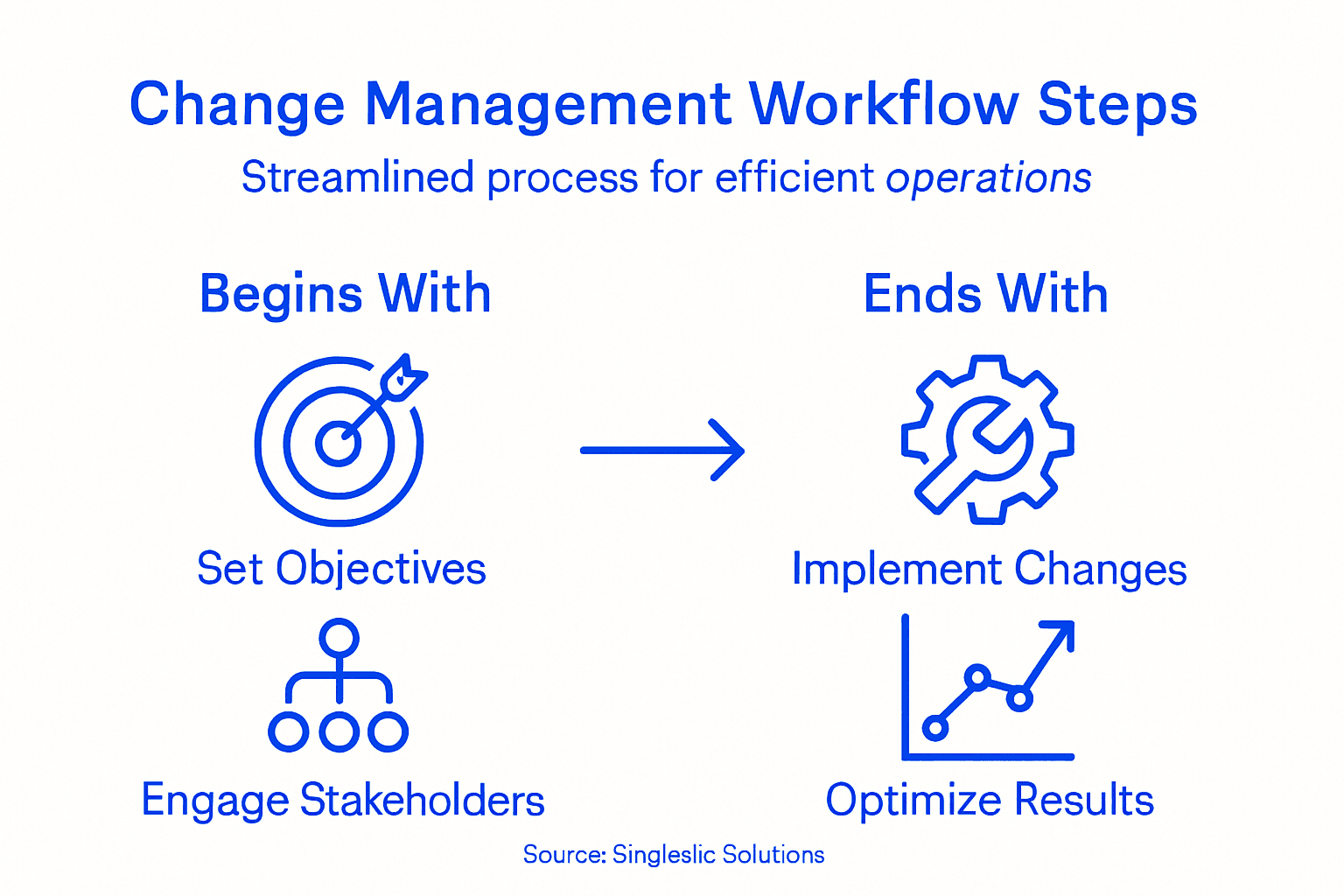
Continuous improvement models provide a structured approach to validating and enhancing workflow outcomes. This process involves comprehensive data analysis, stakeholder feedback collection, and evidence-based intervention strategies to drive meaningful organizational optimization.
Key validation and optimization actions include:
- Conduct comprehensive performance assessments
- Gather multidimensional stakeholder feedback
- Identify process bottlenecks and inefficiencies
- Develop targeted improvement strategies
Execute your workflow validation through these strategic steps:
- Compare actual outcomes against predefined objectives
- Analyze quantitative and qualitative performance data
- Facilitate structured feedback sessions
- Develop and prioritize optimization recommendations
Successful workflow optimization requires a commitment to continuous learning and adaptable organizational practices.
In dynamic business environments like Saudi Arabia and UAE, where digital transformation is rapidly evolving, workflow validation must remain agile and responsive. Our Cortex low-code platform enables organizations to create adaptive workflows that can quickly incorporate insights and drive ongoing performance improvements.
Pro tip: Implement a systematic review process that schedules regular workflow assessments and creates a culture of continuous, incremental improvement across all organizational levels.
This table compares common change management challenges and practical solutions:
| Challenge | Impact on Organization | Effective Solution |
|---|---|---|
| Resistance to Change | Slows implementation progress | Early stakeholder involvement |
| Unclear Roles | Causes confusion and delays | Detailed responsibility matrix |
| Poor Communication | Decreases buy-in and trust | Centralized communication dashboard |
| Ineffective Training | Hampers adoption of new processes | Ongoing, tailored training programs |
| Lack of Feedback Loops | Limits learning and adaptation | Scheduled review and feedback sessions |
Here’s a summary of the five-step change management process and its key focus at each stage:
| Step | Primary Objective | Critical Success Factor |
|---|---|---|
| 1. Define Objectives | Set clear change goals | Alignment with strategy |
| 2. Stakeholder Communication | Transparent engagement | Targeted communication plans |
| 3. Design Workflow | Assign roles and tasks | Clear accountability |
| 4. Implement Actions | Execute change activities | Consistent delivery and support |
| 5. Validate & Optimize | Measure and refine results | Continuous improvement culture |
Transform Your Change Management Process with Singleclic Solutions
The challenge of navigating complex change management workflows calls for a solution designed to align objectives, clarify roles, and maintain transparent stakeholder communication all while enabling continuous optimization. This article highlights how structured change management processes can minimize risks, enhance collaboration, and drive measurable outcomes. At Singleclic, we understand these pain points and goals including the need for clear accountability, agile communication protocols, and real-time workflow adjustments.
Our Cortex low-code platform empowers organizations across Saudi Arabia, UAE, and Egypt to build adaptive, on-premise workflows without coding. Cortex offers full Arabic UI/UX, real-time process optimization, and seamless integration with enterprise systems – all critical for executing and validating change management workflows efficiently. Combine this with our expertise in ERP & CRM Implementation and Business Process Automation to ensure your digital transformation journey moves beyond digitalization toward true operational optimization.
Ready to elevate your change management process with flexible, scalable technology and industry expertise? Visit Singleclic now to explore how we can help you turn transformational plans into sustained business success. Take the first step toward streamlined workflows and measurable results today.
Frequently Asked Questions
What are the first steps in the change management process workflow?
To kick off the change management process workflow, start by defining clear change management objectives. This involves conducting an organizational assessment to identify current challenges and strategic opportunities, aiming for alignment between your current state and desired goals.
How can I effectively engage employees during the change management process?
Engage employees by developing transparent communication protocols that ensure they are informed and involved throughout the transformation. Create opportunities for feedback and use various communication channels to address their concerns regularly.
What should I include in a responsibility matrix for change management?
Your responsibility matrix should clearly outline key stakeholder roles, individual tasks, and decision-making protocols. This clarity helps prevent confusion and enhances accountability throughout the change process, ensuring everyone knows their responsibilities.
How can I measure the effectiveness of my change management actions?
Measure effectiveness by establishing clear performance metrics aligned with your change objectives. Collect data on key performance indicators regularly, such as adoption rates and stakeholder feedback, to evaluate success and identify areas for improvement.
What steps should I take to optimize the change management workflow after implementation?
After implementation, conduct comprehensive performance assessments and gather feedback from all stakeholders to identify bottlenecks and inefficiencies. Prioritize actionable recommendations for improvement and establish regular review sessions to foster a culture of continuous enhancement.
Recommended
- Enterprise Workflow Optimization Process for Maximum ROI
- Business Process Reengineering Guide for Optimized Operations
- Business Process Mapping Guide for Operational Excellence
- Workflow Automation: Transforming Enterprise Efficiency
- Effiziente Facility Management Methoden: Qualität und Kosten optimieren