Most companies still treat Customer Relationship Management as just software, yet studies show over 50 percent of CRM projects fall short of their goals. The difference often comes down to understanding CRM as a holistic strategy, not just a digital tool. For American businesses and companies in Saudi Arabia and UAE, uncovering the real fundamentals of CRM can be the key to stronger customer connections and measurable business growth.
Table of Contents
- CRM Fundamentals: Core Concepts And Misconceptions
- Types Of CRM Systems And Key Differences
- Essential CRM Features And How They Work
- Business Benefits And Real-World Applications
- Critical Challenges, Risks, And Cost Considerations
Key Takeaways
| Point | Details |
|---|---|
| CRM is a Strategic Approach | CRM encompasses more than just technology; it integrates processes, people, and technology for effective customer engagement. |
| Types of CRM Systems | Different types of CRM systems (Operational, Analytical, Collaborative, Strategic) cater to varied organizational needs. |
| Key Features Enhance Engagement | Advanced CRM features, such as contact management and sales tracking, are essential for maximizing customer relationships. |
| Implementation Challenges Exist | Organizations must navigate implementation risks, including high costs and user resistance, to achieve successful CRM integration. |
CRM Fundamentals: Core Concepts and Misconceptions
Customer Relationship Management (CRM) is far more than just software or a technological tool. It represents a comprehensive strategic approach to managing an organization’s interactions with current and potential customers. At its core, CRM integrates people, processes, and technology to understand customer behaviors, preferences, and needs while optimizing business relationships.
Many organizations, especially in Saudi Arabia and UAE, misunderstand CRM as merely a database or contact management system. Research reveals that numerous misconceptions can significantly impact CRM project success rates. In reality, an effective CRM strategy involves a holistic transformation of how businesses perceive and engage with their customer ecosystem. It requires alignment across sales, marketing, customer service, and leadership teams to create a unified approach to customer interaction.
The fundamental components of a robust CRM strategy include:
- Data Collection: Gathering comprehensive customer information across multiple touchpoints
- Analysis: Transforming raw data into actionable customer insights
- Engagement: Developing personalized communication and interaction strategies
- Continuous Improvement: Regularly refining customer relationship approaches based on ongoing feedback
Businesses can leverage low-code platforms like our Cortex solution to streamline CRM implementation, enabling organizations to design custom workflows that adapt to unique operational requirements. By breaking down traditional siloed approaches, companies can create more responsive, customer-centric business models that drive long-term growth and customer loyalty.
Types of CRM Systems and Key Differences
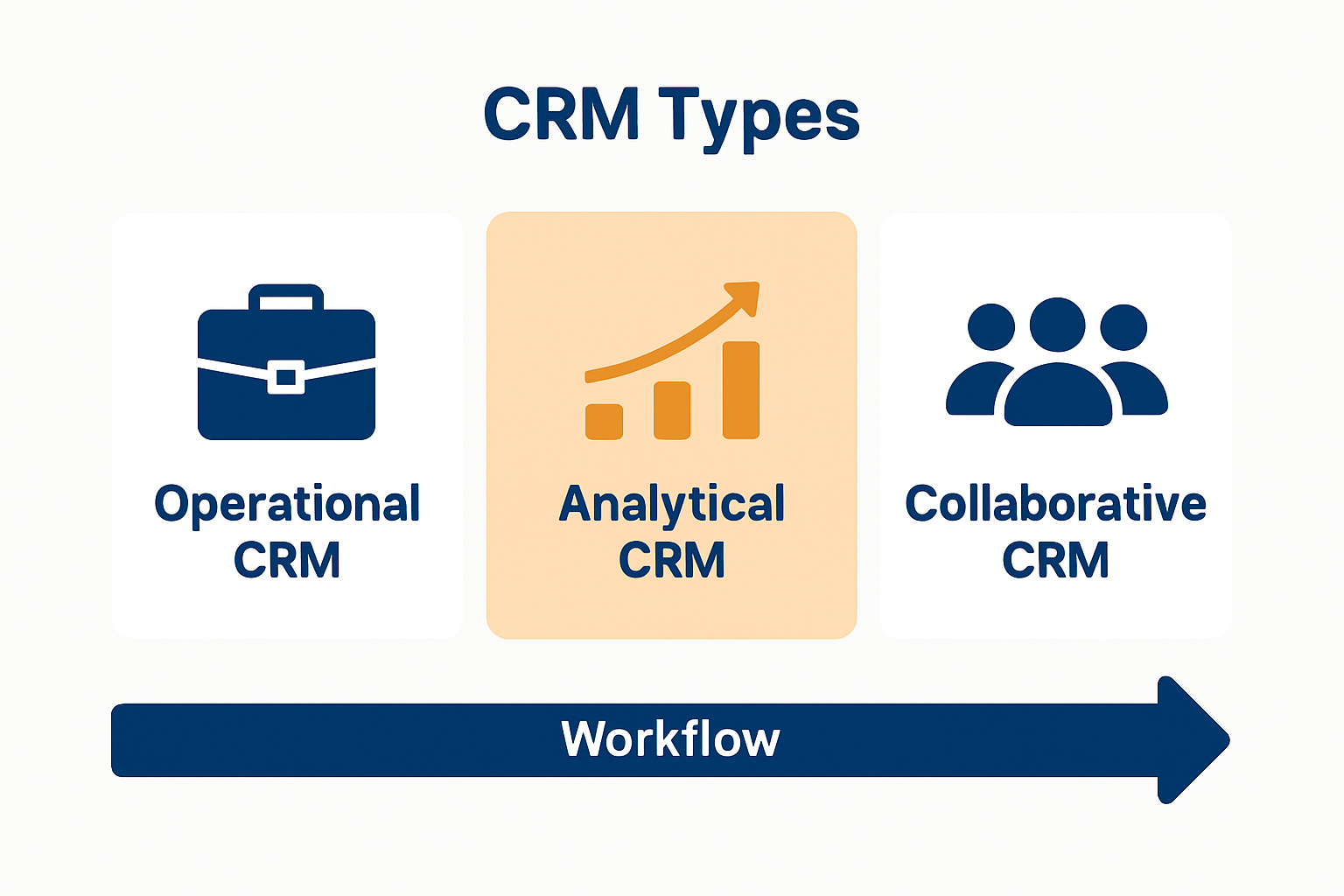
Customer Relationship Management (CRM) systems are not one-size-fits-all solutions. Researchers have categorized CRM systems into distinct types that serve different organizational needs, each designed to address specific business challenges and customer interaction strategies.
Operational CRM focuses on streamlining customer-facing processes across sales, marketing, and service departments. This type of system automates routine tasks, tracks customer interactions, and helps businesses manage contact information, sales pipelines, and communication histories. For organizations in Saudi Arabia and UAE looking to enhance operational efficiency, operational CRM provides a comprehensive approach to managing customer touchpoints.
The primary CRM system types include:
- Operational CRM: Automates core business processes and customer interactions
- Analytical CRM: Leverages data insights for strategic decision making
- Collaborative CRM: Facilitates communication across different departments and external stakeholders
- Strategic CRM: Aligns long-term business strategies with customer relationship goals
Advanced CRM systems now integrate multiple approaches, enabling businesses to create more sophisticated customer engagement models. By utilizing low-code platforms like our Cortex solution, organizations can design custom CRM workflows that adapt to their unique operational requirements, breaking down traditional technological barriers and creating more responsive, customer-centric business models.
Essential CRM Features and How They Work
Comprehensive research into CRM mechanisms reveals a complex ecosystem of features designed to transform customer relationship management. Modern CRM systems go far beyond simple contact management, offering sophisticated tools that integrate data, automate processes, and provide actionable insights for businesses across various industries.

The core features of advanced CRM systems typically include contact and lead management capabilities that enable organizations to track and nurture customer relationships comprehensively. These systems provide robust tools for recording detailed customer interactions, tracking communication histories, managing sales pipelines, and generating predictive analytics that help businesses anticipate customer needs. For organizations in Saudi Arabia and UAE seeking to enhance their customer engagement strategies, these features represent critical technological capabilities.
Key CRM system features include:
- Contact Management: Centralized database of customer information
- Sales Pipeline Tracking: Visual representation of sales stages and opportunities
- Interaction History Logging: Comprehensive record of all customer communications
- Reporting and Analytics: Advanced data visualization and insights generation
- Workflow Automation: Streamlined processes across sales, marketing, and customer service
Advanced CRM technologies now integrate multiple sophisticated mechanisms to create more intelligent, responsive customer relationship management systems. By leveraging low-code platforms like our Cortex solution, organizations can customize CRM workflows to match their unique operational requirements, transforming raw customer data into strategic business intelligence that drives growth and enhances customer satisfaction.
Business Benefits and Real-World Applications
CRM systems have transformed how organizations create and leverage customer knowledge, delivering strategic advantages across multiple business domains. These sophisticated platforms enable businesses to move beyond transactional interactions, creating deep, data-driven relationships that drive sustainable growth and competitive differentiation.
In practical applications, CRM technologies deliver measurable benefits across industries. For organizations in Saudi Arabia and UAE, these systems provide critical capabilities in tracking customer interactions, predicting market trends, and personalizing engagement strategies. Customer intelligence becomes a strategic asset, allowing businesses to anticipate needs, optimize communication channels, and create more targeted, responsive service models.
Key real-world business benefits include:
- Enhanced Customer Retention: Predictive analytics to identify at-risk customers
- Improved Sales Efficiency: Streamlined lead tracking and conversion processes
- Personalized Marketing: Targeted communication based on comprehensive customer profiles
- Performance Metrics: Real-time insights into sales team and customer interaction effectiveness
- Cost Reduction: Automation of repetitive administrative tasks
Advanced CRM implementations now provide comprehensive frameworks for transforming raw customer data into actionable strategic intelligence. By leveraging low-code platforms like our Cortex solution, organizations can design custom workflows that adapt to unique operational requirements, turning customer relationship management from a reactive process into a proactive strategic advantage.
Critical Challenges, Risks, and Cost Considerations
Research reveals significant challenges in CRM implementation that organizations must carefully navigate to ensure successful digital transformation strategies. While CRM systems offer tremendous potential, they also present complex technological, organizational, and financial considerations that can significantly impact their effectiveness.
For businesses in Saudi Arabia and UAE, understanding these challenges becomes crucial. Implementation risks often stem from multiple factors, including organizational culture resistance, data migration complexities, and the need for comprehensive staff training. The financial investment required goes beyond initial software costs, encompassing infrastructure modifications, ongoing maintenance, customization expenses, and potential productivity disruptions during system integration.
Key CRM implementation challenges include:
- High Initial Investment: Significant upfront software and hardware costs
- Data Quality Issues: Challenges in migrating and maintaining accurate customer information
- User Adoption Resistance: Organizational cultural barriers to technological change
- Complex Integration Requirements: Technical difficulties connecting with existing systems
- Ongoing Maintenance Expenses: Continuous training and technical support needs
Small service businesses face particularly nuanced challenges when implementing CRM technologies, requiring strategic planning and comprehensive risk assessment. By leveraging flexible low-code platforms like our Cortex solution, organizations can mitigate these risks through customizable workflows, reduced implementation complexity, and more adaptable technological frameworks that align with specific business requirements.
Unlock the Full Potential of CRM with Singleclic
Many businesses struggle with CRM implementation due to challenges like fragmented customer data, limited customization, and resistance to change. This article highlights key pain points such as the need for holistic customer engagement strategies, seamless integration of operational processes, and flexibility in adapting CRM workflows to unique business demands. Terms like “Operational CRM,” “low-code platforms,” and “workflow automation” showcase how complex CRM systems require not just technology but a strategic, tailored approach.
At Singleclic, we understand that effective CRM is more than software; it is a transformation that empowers your entire organization. Through our expertise in ERP & CRM Implementation, Business Process Automation, and low-code platform development — especially with the Arabic-enabled Cortex platform — we help businesses across KSA, UAE, and Egypt overcome these obstacles. Our solutions optimize customer interactions, automate workflows, and provide actionable insights to drive growth and loyalty.
Discover how to move beyond digitalization to true optimization with Singleclic.
Ready to elevate your CRM strategy and create responsive, customer-centric processes? Visit Singleclic to explore our advanced CRM implementations and low-code platforms like Cortex. Transform your customer relationship management today and harness strategic insights that fuel lasting success.
Frequently Asked Questions
What is CRM and why is it important for businesses?
CRM stands for Customer Relationship Management. It is a strategic approach that helps organizations manage interactions with current and potential customers. CRM is important because it enables businesses to understand customer behaviors and preferences, leading to improved customer relationships and increased loyalty.
What are the main types of CRM systems?
The main types of CRM systems are Operational CRM, Analytical CRM, Collaborative CRM, and Strategic CRM. Each type focuses on different aspects of customer relationship management, such as automating processes, leveraging data insights, enhancing communication, and aligning long-term business strategies with customer needs.
What are some key features of modern CRM systems?
Key features of modern CRM systems include contact management, sales pipeline tracking, interaction history logging, reporting and analytics, and workflow automation. These features help businesses streamline operations, improve customer interactions, and derive actionable insights from customer data.
What are the common challenges faced during CRM implementation?
Common challenges during CRM implementation include high initial investment costs, data quality issues, user adoption resistance, complex integration requirements, and ongoing maintenance expenses. Understanding and addressing these challenges is crucial for successful CRM integration.