Choosing the right partner for your business transformation means looking beyond flashy promises and hunting for real results. Many companies offer the promise of smarter processes, stronger data, and smoother operations, but the differences can be hard to spot at first glance. Some focus on industry-specific needs, others build flexible platforms, and a few specialize in complex integrations or rapid project delivery. The right choice could save you months of trial and error or help you unlock measurable improvements where it matters most. Curious about which approach will suit your team and goals? Get ready to discover how each provider brings something different to the table.
Table of Contents
- SingleClic
- Odoo
- Raqmiyat
- Link Development
- STS (Specialized Technical Services)
- Finesse Direct
- Cleverence
SingleClic
At a Glance
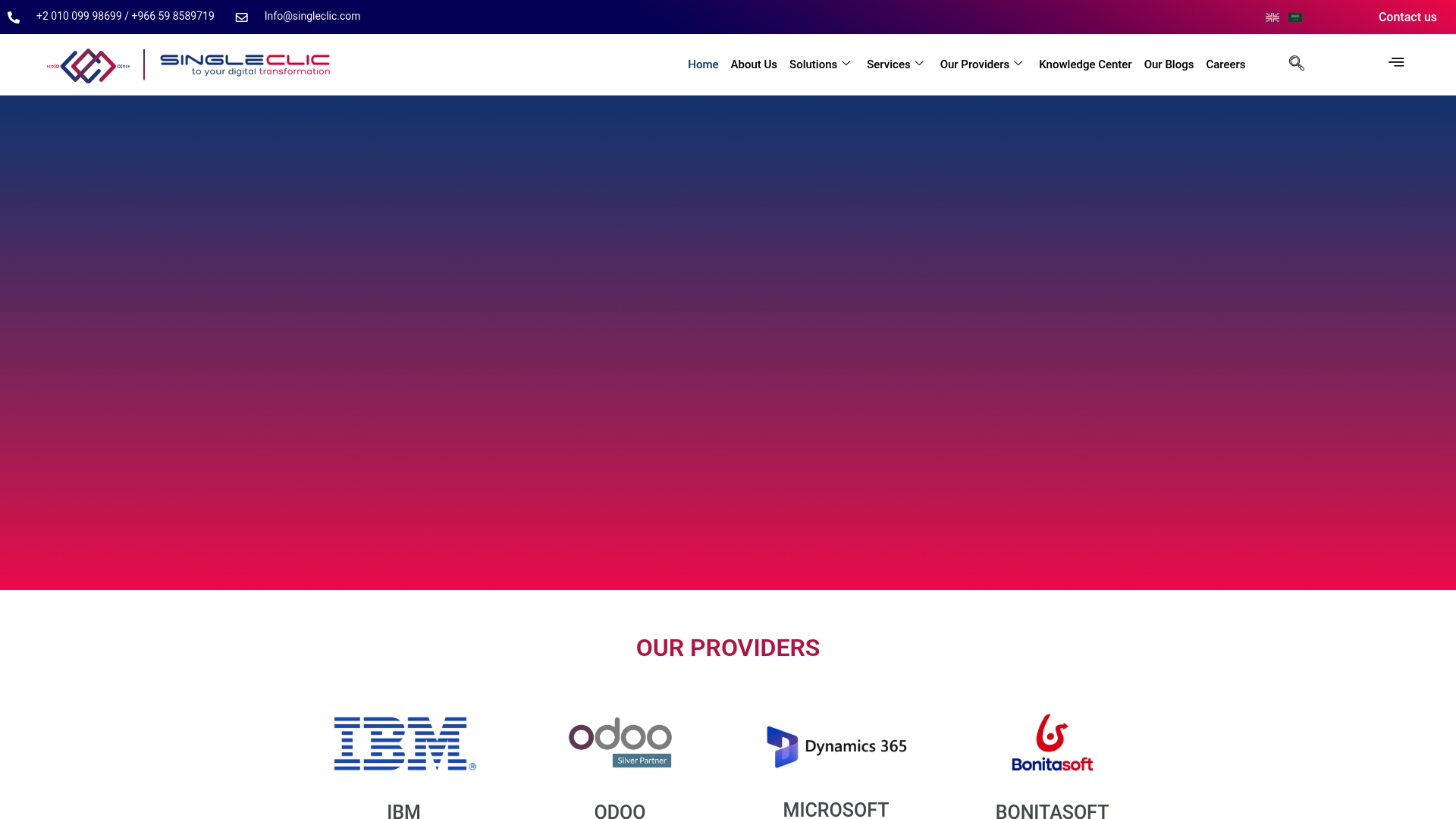
SingleClic is a MENA-focused digital transformation firm that combines ERP and CRM implementation with process automation and data analytics to deliver tailored, outcome-driven programs. The company positions itself as a partner for complex, regulated sectors—government, banking, and healthcare—where bespoke integration and strategic optimization matter most. If you need a vendor that moves beyond a one-time rollout to continuous operational improvement, SingleClic is built for that journey.
Core Features
SingleClic centers its offering around a low-code and automation platform (Cortex) that enables rapid application development with deep integration capabilities. Complementing Cortex are formal partnerships with Microsoft Dynamics, Odoo, IBM, and Bonitasoft, which broaden the technology stack available for ERP, CRM, BPM, and analytics projects. The firm emphasizes industry-specific solutions—particularly for healthcare, government, and banking—and focuses on strategic, customized transformation roadmaps rather than one-size-fits-all implementations.
Pros
- Regional presence and market knowledge: SingleClic’s MENA focus gives it direct experience with local regulations, language requirements, and procurement practices, which reduces implementation risk for regional enterprises.
- Multi-platform expertise: The team’s proficiency across Microsoft Dynamics, Odoo, IBM, and Bonitasoft means you can pick the right tool for the problem rather than shoehorning requirements into a single product.
- Industry-tailored solutions: The company designs workflows and data models specifically for banking, government, and healthcare, which shortens time to value and improves compliance outcomes.
- Commitment to ongoing optimization: SingleClic frames projects as continuous journeys—emphasizing process improvement and analytics after deployment so solutions evolve with changing operations.
Who It’s For
SingleClic is ideal for medium to large organizations in the MENA region—particularly Ministries, Healthcare Providers, and Financial Institutions—that require customized ERP, CRM, or automation programs. If you manage regulated processes, need deep integrations across legacy systems, or must maintain strict governance while modernizing operations, SingleClic’s approach aligns with your priorities.
Unique Value Proposition
What sets SingleClic apart is the combination of Cortex’s low-code speed with certified partnerships across major enterprise stacks and sector-specific delivery experience. Rather than selling a single product, SingleClic assembles a tailored solution mix and drives optimization post-implementation—turning digitalization into measurable operational improvement. For organizations that cannot tolerate generic implementations or long vendor ramp-up times, this targeted, integration-first model reduces customization overhead and accelerates measurable outcomes.
Real World Use Case
SingleClic’s work with Emirates Health Services and the development of Egypt’s Gahar system illustrate its capacity to deliver large-scale, mission-critical solutions for public healthcare and national systems. These projects show the firm’s ability to integrate ERP/CRM platforms, automate workflows, and embed analytics in environments where uptime, security, and compliance are nonnegotiable.
Pricing
Pricing is not specified on the website and appears to be customized per project, reflecting scope, integration complexity, and regulatory requirements.
Website: https://singleclic.com
Odoo
At a Glance
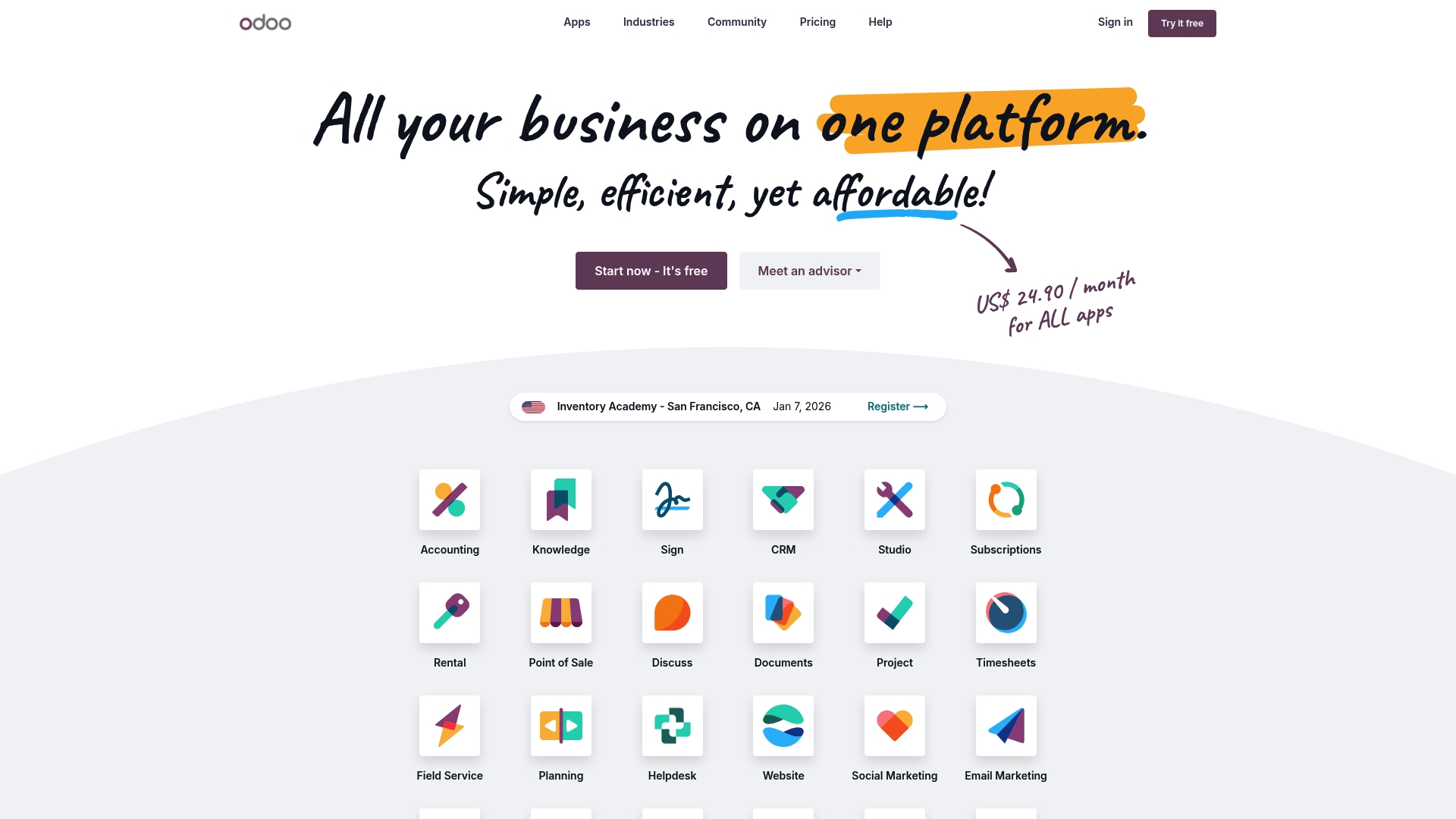
Odoo is an open source ERP and CRM suite that bundles sales, inventory, accounting, HR, manufacturing, and marketing into a single platform. Its two editions—Community (free) and Enterprise (paid)—let organizations choose between a community-driven stack or a professionally supported option. For businesses that value customization, open data ownership, and flexible deployment, Odoo delivers strong capability at a predictable price. Expect a platform that scales from simple deployments to complex, tailored workflows, though initial setup can demand technical skill.
Core Features
Odoo provides a wide range of business applications that integrate into one unified system: sales, inventory, accounting, human resources, manufacturing, and marketing. The platform emphasizes customization via Odoo Studio and supports thousands of community and third-party apps to extend functionality. Data lives in an open format on PostgreSQL, which avoids vendor lock-in, and deployment can be cloud-hosted or on-premise depending on your governance needs. The Enterprise plan packages additional features and professional services for organizations seeking a managed experience.
Pros
- Highly customizable and extendable with 40,000+ community apps, enabling niche workflows without rebuilding core systems.
- No proprietary data format or vendor lock-in, because data is stored in PostgreSQL and exportable for future flexibility.
- Affordable pricing with all features included under a clear subscription model makes budgeting straightforward for finance teams.
- Strong community support and regular updates keep the ecosystem active and evolving with new modules and bug fixes.
- Flexible deployment options let you choose cloud hosting or on-premise installations to meet security and compliance requirements.
Cons
- Potential complexity for beginners due to the breadth of features can lengthen implementation timelines and require change management.
- Customization may require technical expertise, so smaller organizations without in-house developers will often need partner support.
- Some advanced features and services involve additional costs beyond the base subscription, which can increase total cost of ownership for enterprise scenarios.
Who It’s For
Odoo is best for businesses of various sizes that require an integrated, customizable ERP and CRM solution and that prefer open source technology and ownership of their data. It suits organizations that are willing to invest in configuration or partner-led implementation to unlock tailored processes, especially those aiming to consolidate multiple point solutions into a single platform.
Unique Value Proposition
Odoo’s primary value lies in combining broad functional depth with open source flexibility: you get an integrated suite of business apps plus the ability to customize and extend through Odoo Studio and a large community ecosystem, all while retaining control of your data.
Real World Use Case
A mid-sized retail company can deploy Odoo to manage inventory, sales, and accounting within a single system, customize order and stock workflows with Odoo Studio, and install community modules to address specific retail needs—reducing manual reconciliation and improving inventory visibility across channels.
Pricing
US$24.90/month per user (standard plan, all apps, hosted on Odoo’s cloud infrastructure).
Website: https://odoo.com
Raqmiyat
At a Glance
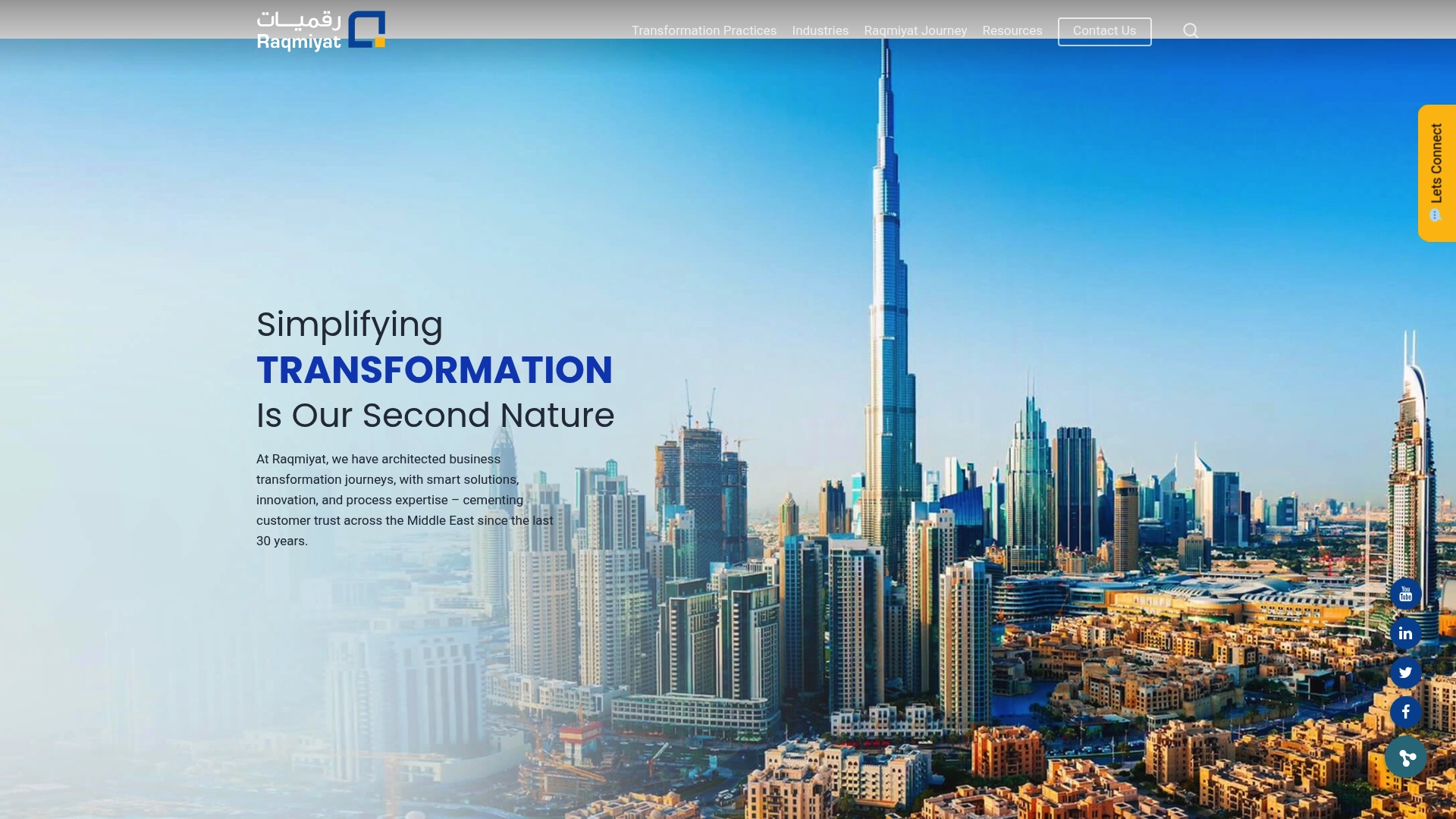
Raqmiyat is a veteran digital transformation partner with more than 30 years of regional experience, focused on end-to-end transformation for enterprise and financial clients. They combine smart business solutions, analytics partnerships, and managed technology services to drive data-driven decision making across the Middle East. If you need a partner who knows regional compliance, banking workflows, and enterprise-scale implementations, Raqmiyat is a serious contender. Expect deep industry experience, but plan to engage sales for detailed product and pricing clarity.
Core Features
Raqmiyat offers a broad portfolio centered on Smart Business Solutions for enterprise and IT operations, backed by technology support services that include IT sourcing, staffing, and managed support. Their domain capabilities extend into Banking & Finance—digital banking, blockchain, and payment systems—plus Cybersecurity for asset protection and threat monitoring. Analytics capabilities highlight enterprise data management and predictive analytics, reinforced by partnerships with Alteryx and Lumenore for accessible analytics. They also provide RPA consulting and implementation and a suite of digital value-add services across industries.
Pros
- Proven regional track record: Raqmiyat’s 30+ years in the Middle East signals institutional knowledge of local market dynamics, regulations, and stakeholder expectations.
- Wide technical breadth: The company combines cybersecurity, analytics, RPA, and banking solutions, allowing you to consolidate multiple transformation streams under one partner.
- Strategic analytics partnerships: Alliances with Alteryx and Lumenore strengthen their data and analytics offer, which is critical if you want faster time-to-insight.
- End-to-end transformation capability: From consulting to managed services and staffing, Raqmiyat can architect and operate complex transformation programs across industries.
- Documented client success: The presence of client testimonials and case studies suggests repeatable outcomes and referenceable implementations.
Cons
- Limited public product detail: The website does not provide granular product specifications, which makes initial technical evaluation and vendor shortlisting harder.
- Opaque pricing and licensing: There is no clear pricing or licensing information available online, so budgeting requires direct engagement with sales.
- Unclear small-business fit: Information about customization and scalable packages for startups or small enterprises is sparse, which may limit suitability for smaller projects.
Who It’s For
Raqmiyat is best suited for large enterprises and financial institutions in the Middle East that require comprehensive, compliant, and integrated transformation programs. If your organization needs analytics, RPA, and cybersecurity combined with regional delivery experience, this is a match. Not ideal if you are a bootstrapped startup seeking transparent, self-serve pricing.
Unique Value Proposition
Raqmiyat’s unique strength lies in decades of regional experience paired with a full-service approach: strategy, implementation, and ongoing managed operations. Their analytics partnerships add technical depth for data-driven programs, and their domain specialization in banking and finance accelerates modernization for regulated institutions. In short: local experience plus broad capability.
Real World Use Case
A bank in Dubai used Raqmiyat’s ICCS Corporate Solution to remotely scan customer cheques, cutting turnaround time and resource consumption while retaining 24/7 professional support—an example of operational efficiency delivered with continuous support.
Pricing
Not specified on the website; prospective buyers must contact Raqmiyat for tailored quotes and licensing details.
Website: https://raqmiyat.com
Link Development
At a Glance
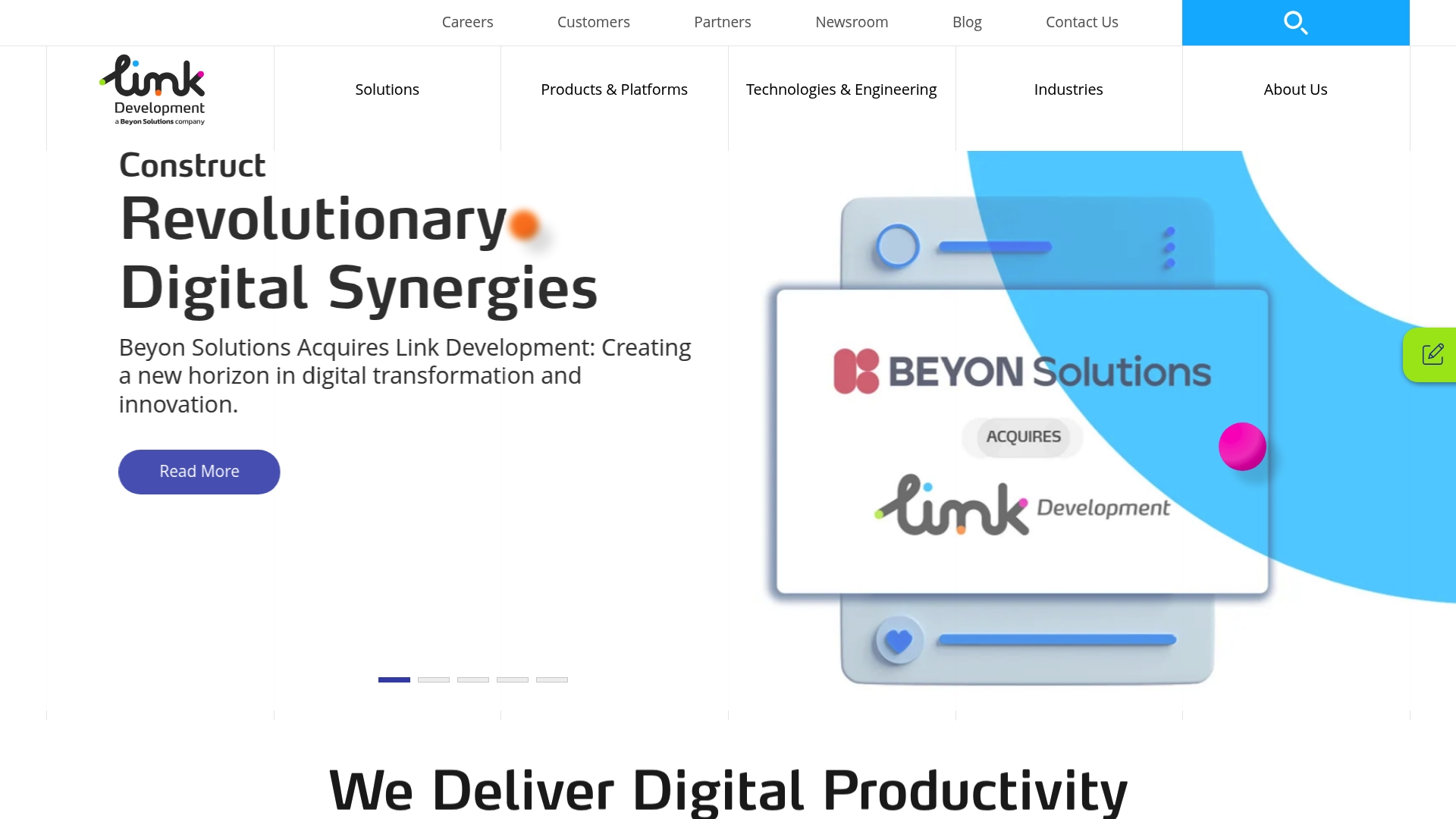
Link Development is a full-service digital transformation partner that helps enterprises modernize applications, migrate to Azure, and build integrated digital platforms. It combines consulting, product engineering, and outsourcing to deliver hybrid and cloud-first solutions across large organizations. The company emphasizes partnership and innovation, but its public materials are broad and may require direct engagement to clarify detailed deliverables.
Core Features
Link Development provides end-to-end digital transformation solutions: platform and product development, legacy application modernization and Azure migration, Dynamics 365 and Power Platform implementations, and outsourced IT engineering teams. The offering spans cloud, on-premise, and hybrid deployment models and focuses on delivering future-ready digital experiences through integrated ecosystems of technology, consulting, and business partners.
Pros
- Comprehensive digital capabilities: Link Development offers a wide range of services that cover strategy, engineering, and platform delivery, enabling a single partner to own complex transformation programs.
- Global presence and partnerships: The company maintains multiple offices and partner relationships that can support multinational rollouts and localized delivery.
- Expertise across deployment models: Its experience with cloud, on-premise, and hybrid architectures allows solutions to be tailored to regulatory or operational constraints.
- Flexible delivery and outsourcing options: You can scale engineering and product teams through outsourcing arrangements, which helps accelerate time to market.
- Clear focus on innovation: The firm positions itself around building futuristic platforms and modern experiences, signaling a commitment to evolving enterprise needs.
Cons
- Broad positioning may obscure specifics: The website’s wide scope can make it hard to determine exact capabilities for specialized requirements without a direct conversation.
- Browser compatibility caveat: Some site features may not function correctly on Internet Explorer, so stakeholders should use modern browsers for a full experience.
- Limited public feature details: There is a shortage of granular product or module-level documentation on the public site, which means prospective clients will likely need targeted briefings to assess fit.
Who It’s For
Link Development is best suited for large enterprises, public-sector organizations, and regional groups that require end-to-end modernization, cloud migration, or outsourced engineering capacity. If your organization faces complex legacy systems, strict deployment constraints, or needs an integrated partner for Dynamics 365 and Azure initiatives, this is a practical candidate.
Unique Value Proposition
Link Development’s edge lies in combining consulting, engineering, and long-term outsourcing under a single delivery model while supporting cloud, on-premise, and hybrid environments. That integrated ecosystem approach reduces vendor fragmentation and accelerates platform-level modernization backed by partner ecosystems.
Real World Use Case
A government agency engaged Link Development to modernize digital infrastructure and migrate critical applications to Azure; the engagement focused on improving service delivery and operational efficiency while retaining control over sensitive workloads through hybrid deployment.
Pricing
Pricing is not specified on the website; prospective buyers should contact Link Development for project-based or engagement-specific quotes and scoped commercial proposals.
Website: https://linkdev.com
STS (Specialized Technical Services)
At a Glance
STS delivers a broad, enterprise-ready portfolio for organizations pursuing digital transformation across the Middle East. The firm combines cloud and infrastructure work with cyber security, business transformation, and workplace modernization—backed by training and a multi-cloud platform. Strengths include a security-first mindset and regional experience; downsides are limited public pricing and sparse technical detail on the website. Overall: a capable integrator for large institutions that need a trusted local partner.
Core Features
STS offers a full-stack approach: Cloud & Infrastructure Solutions, Cyber Security Services, Business Transformation Solutions, and Workplace Modernization. Its Digital Experience Portfolio bundles Digital Workplace, Customer Experience, and Business Intelligence capabilities, while ComplyOne targets Internal Audit Digitization. The Training & Licensing Center and the Multi-cloud Platform (Ntegra) round out offerings designed to move organizations from legacy operations to modern, secure, cloud-ready estates.
Pros
- Comprehensive digital transformation offering: STS covers cloud, security, process digitization, and workplace modernization, which reduces the need for multiple vendors.
- Strong focus on security and innovation: The portfolio emphasizes cyber security as a core pillar, which is essential for regulated industries.
- Established partnerships with major cloud providers: Relationships with Azure, AWS, and Alibaba Cloud enable multi-cloud strategies and practical migration options.
- Customized training programs: The Training & Licensing Center helps upskill internal teams, accelerating adoption and reducing operational risk.
- Documented success stories and case studies: Proven engagements signal experience with complex, enterprise-class projects.
Cons
- Specific pricing details are not provided on the website, which makes initial budgeting and vendor comparisons harder for procurement teams.
- Limited detailed technical specifications in the web content provided, so you will need direct technical workshops to validate architecture and integration points.
- Potential regional focus may limit applicability elsewhere, which means global organizations should confirm international delivery and support commitments.
Who It’s For
STS is aimed at large enterprises, government entities, and financial institutions in the Middle East that require end-to-end digital transformation delivered by a regional specialist. If you are a CIO or CTO in Banking, Education, or Government seeking a partner to run cloud migrations, harden security, digitize audit trails, and train staff, STS fits that brief.
Unique Value Proposition
STS differentiates itself through a regional, security-first approach combined with practical enablement: a multi-cloud platform (Ntegra), an internal audit digitization solution (ComplyOne), and an on-the-ground Training & Licensing Center. That combination reduces vendor handoffs and speeds time to value. In short: strategy, technology, and people—bundled.
Real World Use Case
A Banking Institution partners with STS to upgrade its infrastructure, strengthen cyber defenses, digitize internal audit workflows with ComplyOne, and train operations teams—delivering more resilient, auditable, and staff-ready services without wholesale disruption.
Pricing
Not specified on the website. Prospective clients should request a tailored proposal and RFP response to get scope-based pricing and SLAs.
Website: https://stsarabia.com
Finesse Direct
At a Glance
Finesse Direct positions itself as an end-to-end technology partner for large organizations pursuing digital transformation, with a clear emphasis on cybersecurity, AI readiness, and automation. The company brings over a decade of experience and industry recognition, which bolsters credibility for complex, regulated projects. If you need a partner that combines advisory, implementation, and managed services under one roof, Finesse Direct is worth shortlisting — but expect to engage directly to clarify scope and costs.
Core Features
Finesse Direct bundles advisory and delivery across AI readiness assessments and transformation roadmaps, cybersecurity solutions (including AI and GenAI governance), Robotic Process Automation and managed services, Enterprise Content Management, BI & Analytics, and digital signature capabilities. The platform mix is designed to move organizations from strategy to execution: assess AI maturity, secure the estate, automate repetitive workflows, digitize documents, and surface insights through analytics. Services are presented as tailored engagements rather than off-the-shelf packages.
Think strategic. Think long-term.
Pros
- Comprehensive service portfolio: The company offers a broad suite of digital transformation and cybersecurity services that cover strategy, implementation, and ongoing management.
- Deep technical expertise: Finesse Direct emphasizes competence in AI, automation, and data security, which supports enterprise-grade deployments.
- Proven experience: With more than a decade in the market and a suite of awards and client testimonials, the vendor demonstrates sustained delivery capability.
- Tailored solutions: Services are customized to client needs, reducing the risk of misaligned implementations for complex organizations.
- Recognition and social proof: Awards and client feedback help validate claims and provide confidence for procurement teams.
Cons
- Broad website messaging may overwhelm new buyers: The site covers many services, which could make it hard for newcomers to quickly identify the right entry point.
- No public pricing information: Pricing is not specified on the website, requiring direct inquiry to understand commercial terms.
- Consultation often required to clarify offerings: Prospective clients should expect to schedule a discovery engagement to define scope and deliverables.
Who It’s For
Large enterprises and regulated organizations seeking an integrated partner for digital transformation, cybersecurity, and automation will benefit most from Finesse Direct. This includes institutions in Banking, Financial Services and Insurance, Healthcare, Education, and other sectors where data protection and process compliance matter. If your organization values a single accountable provider for advisory, implementation, and managed services, Finesse Direct fits that profile.
Unique Value Proposition
Finesse Direct differentiates by offering a combined advisory-to-operations approach: it pairs AI readiness and transformation planning with practical cybersecurity governance, RPA delivery, and managed services. That reduces vendor fragmentation and speeds time to value for enterprises that require coordinated, secure modernization.
Real World Use Case
In a regional engagement, Finesse Direct helped a leading Education Group automate onboarding and deploy BI & Analytics to drive data-informed decisions, which improved operational efficiency and student engagement. The engagement illustrates how strategy, automation, and analytics can be delivered together to produce measurable outcomes.
Pricing
Pricing is not specified on the website and requires direct inquiry to obtain quotes and commercial terms. Expect tailored proposals based on scope and regulatory requirements.
Website: https://finessedirect.com
Cleverence
At a Glance
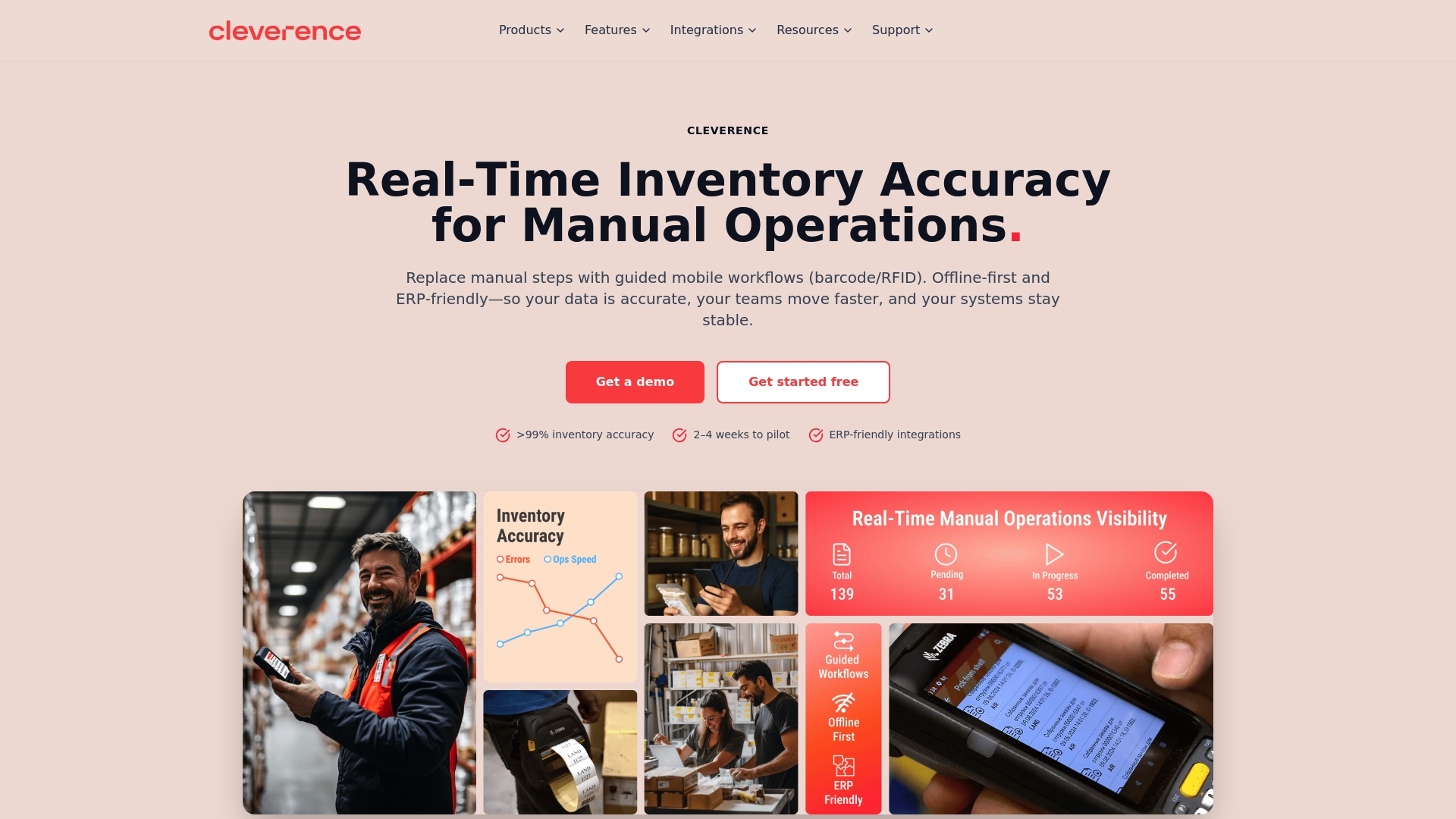
Cleverence brings real-time inventory accuracy to manual operations by replacing paper steps with guided mobile workflows that use barcode and RFID scanning. Its offline-first architecture and ERP-friendly integrations make it practical for environments with poor connectivity and existing enterprise systems. Fast deployments (2–8 weeks) and reported inventory accuracy above 99% make it compelling for operations-focused teams that need immediate, measurable gains.
Core Features
Cleverence centers on real-time inventory tracking using barcode and RFID scanning combined with guided workflows for receiving, picking, shipping, cycle counts, and validations. It supports offline-first mobile operation so teams can work in dead zones, and it integrates with major ERPs such as SAP, Oracle, and Microsoft Dynamics. Additional capabilities include route optimization and proof-of-delivery capture, asset tracking with scheduled maintenance and alerts, and a low-code platform to accelerate pilots and full implementations.
Pros
- High inventory accuracy: Customers report inventory accuracy above 99%, which directly reduces stock discrepancies and write-offs.
- Rapid deployment timelines: Implementations typically complete in 2–8 weeks, enabling quick realization of benefits and faster ROI.
- Offline-first mobile workflows: The platform is built to operate without continuous connectivity, keeping teams productive in warehouses, stores, and remote locations.
- ERP-friendly integrations: Native connectors for SAP, Oracle, and Microsoft Dynamics allow Cleverence to slot into existing enterprise landscapes without heavy middleware work.
- Comprehensive workflow coverage: Guided workflows cover receiving, picking, shipping, cycle counts, and asset maintenance, reducing manual errors across the operational lifecycle.
Cons
- Limited transparency on limitations: The publicly available information does not explicitly detail potential functional or scale limitations, making it harder to assess edge-case risks.
- Requires barcode/RFID infrastructure: Effective use depends on having existing barcode or RFID systems in place, which adds upfront hardware and integration costs for some organizations.
- Hardware dependency: Performance relies on mobile devices and scanning hardware, so device selection, durability, and management become critical projects in themselves.
Who It’s For
Cleverence is designed for businesses that need to lift manual inventory and operational workflows into a digital, ERP-aligned system quickly. Ideal users are retailers, warehouse operators, manufacturing plants, and delivery fleets that operate in connectivity-challenged environments and require high accuracy, fast deployments, and strong ERP integration.
Unique Value Proposition
Cleverence’s strength is its pragmatic, operations-first approach: guided mobile workflows plus offline-first architecture that integrates directly with ERPs. That combination targets the real pain point—day-to-day manual processes—delivering measurable improvements in speed and accuracy without a long, risky rip-and-replace program.
Real World Use Case
A warehouse operator implemented Cleverence to digitize picking and order assembly. By switching from paper checklists to guided barcode scanning, the company increased order assembly speed, cut picking errors, and achieved noticeably better inventory reconciliation during cycle counts.
Pricing
Pricing is not explicitly specified; Cleverence offers a free demo and trial to evaluate fit before committing to licensing or hardware investment.
Website: https://cleverence.com
Digital Transformation Tools Comparison
This table provides a comprehensive comparison of various digital transformation tools, summarizing key features, pros, cons, pricing, and target users to help you make an informed decision.
| Product | Key Features | Pros | Cons | Pricing |
|---|---|---|---|---|
| SingleClic | Low-code platform, ERP/CRM integration, industry-specific solutions | MENA market expertise, multi-platform expertise, continuous optimization | Customized solutions only, no pricing online | Custom pricing per project |
| Odoo | Open source ERP/CRM, customizable, enterprise & community editions | Highly customizable, data flexibility, strong community support | Technical expertise needed, additional costs for advanced features | $24.90/month per user |
| Raqmiyat | Smart Business Solutions, analytics partnerships, RPA consulting | Regional experience, wide technical breadth, end-to-end transformation capability | Limited online product detail, opaque pricing | Custom project-based pricing |
| Link Development | Platform development, cloud migration, outsourced IT engineering | Comprehensive capabilities, global presence, flexibility in delivery | Broad positioning can obscure specifics, limited public feature details | Custom pricing per project |
| STS | Cloud solutions, cybersecurity, business transformation, multi-cloud platform | Security-first approach, partnerships with top cloud providers, comprehensive digital transformation offering | Pricing and technical details not public, regional focus may limit applicability elsewhere | Custom project-based pricing |
| Finesse Direct | Cybersecurity, AI readiness, RPA, BI & Analytics | Broad service portfolio, deep technical expertise, proven experience | Broad website messaging, no public pricing | Tailored proposals required |
| Cleverence | Real-time inventory tracking, offline-first architecture, ERP integrations | High inventory accuracy, rapid deployment, extensive workflow coverage | Requires existing barcode/RFID systems, hardware dependency | Custom quotation needed |
Unlock True Digital Transformation with Singleclic
The article highlights how choosing the right digital transformation platform can be overwhelming amidst diverse ERP, CRM, and automation options. Many organizations face challenges such as complex legacy integrations, regulatory compliance in sectors like government and banking, and the need for ongoing process optimization rather than one-time implementations. If you are striving to move beyond basic digitalization toward continuous operational excellence, Singleclic offers a powerful solution.
Singleclic combines deep industry expertise with a flexible technology stack—including Odoo, Microsoft Dynamics 365, and IBM BAW—delivering tailor-made ERP and CRM implementations. Our Arabic-enabled low-code platform, Cortex, empowers MENA enterprises to rapidly automate and evolve business processes without downtime while ensuring real-time optimization and seamless integration with legacy systems. This means your organization can accelerate growth while maintaining compliance and operational agility.
Explore how you can transform your business with Singleclic’s cutting-edge solutions. Discover our expertise in ERP & CRM Implementation, Business Process Automation, and our specialized Low-Code Platform Cortex.
Ready to elevate your digital transformation journey now
Visit https://singleclic.com to connect with our team and start crafting your optimized future today
Frequently Asked Questions
What are the key features to compare in digital transformation platforms?
Comparing digital transformation platforms should focus on features such as integration capabilities, automation tools, user customization options, and data analytics functions. Evaluate how well each platform can adapt to your current infrastructure and scale over time. Start by creating a checklist of must-have features relevant to your organization’s specific needs.
How can I assess the value of a digital transformation platform?
To assess the value of a digital transformation platform, look for metrics like expected ROI, user adoption rates, and the speed of implementing desired features. Conduct a pilot program to gather data on performance improvements and ensure it aligns with your business goals. Measure specific outcomes within 30–60 days to evaluate effectiveness.
What types of organizations can benefit from digital transformation platforms?
Organizations across various sectors, including healthcare, finance, and manufacturing, can benefit from digital transformation platforms that streamline processes and improve data management. Identify your organization’s unique challenges and seek platforms that provide tailored solutions to those pain points for maximum benefit.
How long does it typically take to implement a digital transformation platform?
The implementation timeline for a digital transformation platform can vary, typically ranging from 3 to 12 months, depending on the complexity of the system and the level of customization required. Plan to allocate sufficient time for training users and ensuring a smooth transition to avoid disruptions in operations.
What are the common challenges organizations face during digital transformation?
Common challenges include resistance to change from employees, lack of clear strategy, and insufficient training and support for new systems. Address these challenges by fostering open communication and involving key stakeholders in the transformation process from the outset to ease transitions and promote user buy-in.
How can organizations ensure successful digital transformation?
To ensure successful digital transformation, establish a clear vision, engage stakeholders early, and invest in adequate training and resources. Continuously monitor progress through key performance indicators and adjust strategies based on feedback and results throughout the process.