For leaders in the Saudi Arabian and UAE construction or healthcare sectors, project success hinges on more than ambition. Aligning people, processes, and technology is the foundation for effective enterprise project planning. With the rise of digital transformation initiatives, organizations now rely on comprehensive readiness assessments and advanced collaboration tools to accelerate progress and minimize risk. This article uncovers practical steps and solutions that drive operational efficiency from assessment through continuous improvement.
Table of Contents
- Step 1: Assess Organizational Readiness And Set Clear Objectives
- Step 2: Configure Integrated Digital Tools For Seamless Collaboration
- Step 3: Map Critical Workflows And Prioritize Automation Opportunities
- Step 4: Deploy Solutions And Empower Teams With Real-Time Support
- Step 5: Validate Results And Fine-Tune For Continuous Improvement
Quick Summary
| Key Insight | Explanation |
|---|---|
| 1. Assess Organizational Readiness | Evaluate team capabilities and resource availability before project launch. This ensures preparedness and sets a clear strategic direction. |
| 2. Configure Collaborative Tools | Implement integrated digital tools that enhance communication and workflow management across departments for improved teamwork. |
| 3. Map Critical Workflows | Identify and document essential processes for automation opportunities to increase efficiency and streamline operations. |
| 4. Deploy User-Centric Solutions | Focus on comprehensive user training and support to empower team members and encourage effective tool adoption. |
| 5. Validate and Fine-Tune Strategies | Continuously measure and analyze project outcomes to drive improvements and foster a culture of systematic learning. |
Step 1: Assess organizational readiness and set clear objectives
Successfully launching enterprise projects starts with a comprehensive organizational assessment that prepares your team for seamless execution. This crucial first step helps you understand your current capabilities and establish a strategic roadmap for implementation.
To effectively assess organizational readiness, you’ll want to conduct a systematic evaluation across multiple dimensions. Operational readiness in project management involves examining three core components: people, processes, and technology. Start by gathering insights through these strategic approaches:
- Analyze current organizational capabilities
- Evaluate team skills and potential knowledge gaps
- Review existing technology infrastructure
- Identify potential resource constraints
Your assessment should focus on critical elements that determine project success. Key factors include:
- Clarifying the project vision
- Measuring organizational buy-in
- Determining dedicated implementation capacity
- Identifying potential risks and mitigation strategies
Successful project planning requires a holistic view of organizational readiness that goes beyond surface-level evaluations.
In Saudi Arabia and UAE, enterprises increasingly recognize the importance of thorough readiness assessments. Utilizing our low-code platform Cortex can streamline this evaluation process, providing real-time insights and workflow optimization.
As you move through this assessment, create detailed documentation of your findings. This record will serve as a critical reference point for stakeholders and help track progress throughout the project lifecycle.
The table below compares traditional vs. low-code platform approaches for enterprise projects:
| Approach | Implementation Speed | Customization Effort | User Empowerment |
|---|---|---|---|
| Traditional | Slow, labor-intensive | High, often complex | IT-driven only |
| Low-code | Fast, iterative | Lower, adaptable | Business users included |
Pro tip: Schedule cross-functional meetings to gather diverse perspectives during your organizational readiness assessment, ensuring comprehensive insights from multiple departments.
Step 2: Configure integrated digital tools for seamless collaboration
Configuring integrated digital tools is crucial for establishing a robust communication framework that enables your enterprise teams to collaborate effectively across different departments and geographical locations. By strategically selecting and implementing the right digital platforms, you can transform how your organization shares information and manages projects.
Enterprise collaboration tools are essential for creating a unified communication ecosystem that supports cross-functional teamwork. When setting up your digital collaboration infrastructure, consider these critical components:
- Centralized communication platforms
- Real-time messaging systems
- Document sharing capabilities
- Task tracking and workflow management
Implementing an integrated toolset requires careful evaluation of your organization’s specific needs. Follow these strategic steps:
- Assess current communication gaps
- Research compatible digital platforms
- Evaluate security and integration features
- Conduct pilot testing with key team members
Successful digital tool configuration goes beyond technology selection – it requires a holistic approach to team collaboration and workflow optimization.
In Saudi Arabia and UAE, enterprises are increasingly adopting advanced collaboration technologies. Our low-code platform Cortex can help streamline this process, offering seamless integration and customizable workflow solutions that adapt to your specific organizational requirements.
Ensure you select tools that provide comprehensive reporting and analytics to track team performance and identify potential improvements. The right digital infrastructure will not only enhance communication but also drive overall operational efficiency.
Pro tip: Prioritize user experience and intuitive interfaces when selecting collaboration tools to ensure high adoption rates across your organization.
Step 3: Map critical workflows and prioritize automation opportunities
Successfully optimizing enterprise operations requires a strategic approach to identifying and transforming your organization’s most critical workflows. By systematically analyzing your current processes, you can unlock significant efficiency gains and create a roadmap for targeted automation initiatives.

Strategic automation prioritization starts with a comprehensive evaluation of your existing business processes. This involves creating a detailed workflow map that exposes inefficiencies, bottlenecks, and opportunities for streamlining operations.
Begin your workflow mapping process by focusing on these key areas:
- Identify repetitive manual tasks
- Analyze current process complexity
- Evaluate time and resource consumption
- Measure potential impact of automation
To effectively prioritize automation opportunities, consider these critical evaluation criteria:
- Task frequency
- Volume of work processed
- Potential time savings
- Cost reduction potential
- Error reduction impact
Not all processes are equally suitable for automation. Prioritize workflows that offer the highest strategic value and immediate operational improvements.
In Saudi Arabia and UAE, enterprises are increasingly leveraging advanced technologies to optimize workflows. Our low-code platform Cortex provides powerful tools for rapid workflow analysis and transformation, enabling organizations to quickly identify and implement automation strategies.
When mapping workflows, create detailed documentation that captures each step, stakeholder interactions, and potential automation touchpoints. This comprehensive approach ensures a holistic understanding of your organizational processes.
Pro tip: Involve cross-functional team members during workflow mapping to gain diverse perspectives and uncover hidden optimization opportunities.
Step 4: Deploy solutions and empower teams with real-time support
Successfully deploying enterprise solutions requires a strategic approach that transforms technology implementation into a powerful team enablement mechanism. Your goal is to create an ecosystem that supports seamless collaboration and provides instant insights for better decision-making.
Enterprise solution deployment demands meticulous planning and a user-centric approach. This process involves carefully architecting your technological infrastructure to support team productivity and streamline communication channels.
Key considerations for effective solution deployment include:
- Comprehensive user training programs
- Seamless technology integration
- Role-based access controls
- Performance monitoring mechanisms
- Scalable support infrastructure
Implement your deployment strategy through these critical steps:
- Conduct thorough needs assessment
- Design role-specific access protocols
- Create customized training materials
- Establish real-time support channels
- Monitor and iterate deployment process
Successful technology deployment is not about implementing tools but about empowering teams to work more intelligently and efficiently.
In Saudi Arabia and UAE, enterprises are rapidly adopting advanced digital transformation strategies. Our low-code platform Cortex provides powerful deployment tools that enable organizations to quickly implement and customize solutions across diverse operational environments.
Ensure you develop comprehensive documentation that guides users through system functionalities, troubleshooting protocols, and best practices. This approach minimizes friction and accelerates user adoption.
Pro tip: Create a dedicated internal communication channel for real-time technical support to address deployment challenges and user questions promptly.
Step 5: Validate results and fine-tune for continuous improvement
Successfully transforming enterprise operations requires more than initial implementation – it demands a systematic approach to measuring, analyzing, and refining your strategic initiatives. Your goal is to create a dynamic environment of ongoing performance optimization and learning.
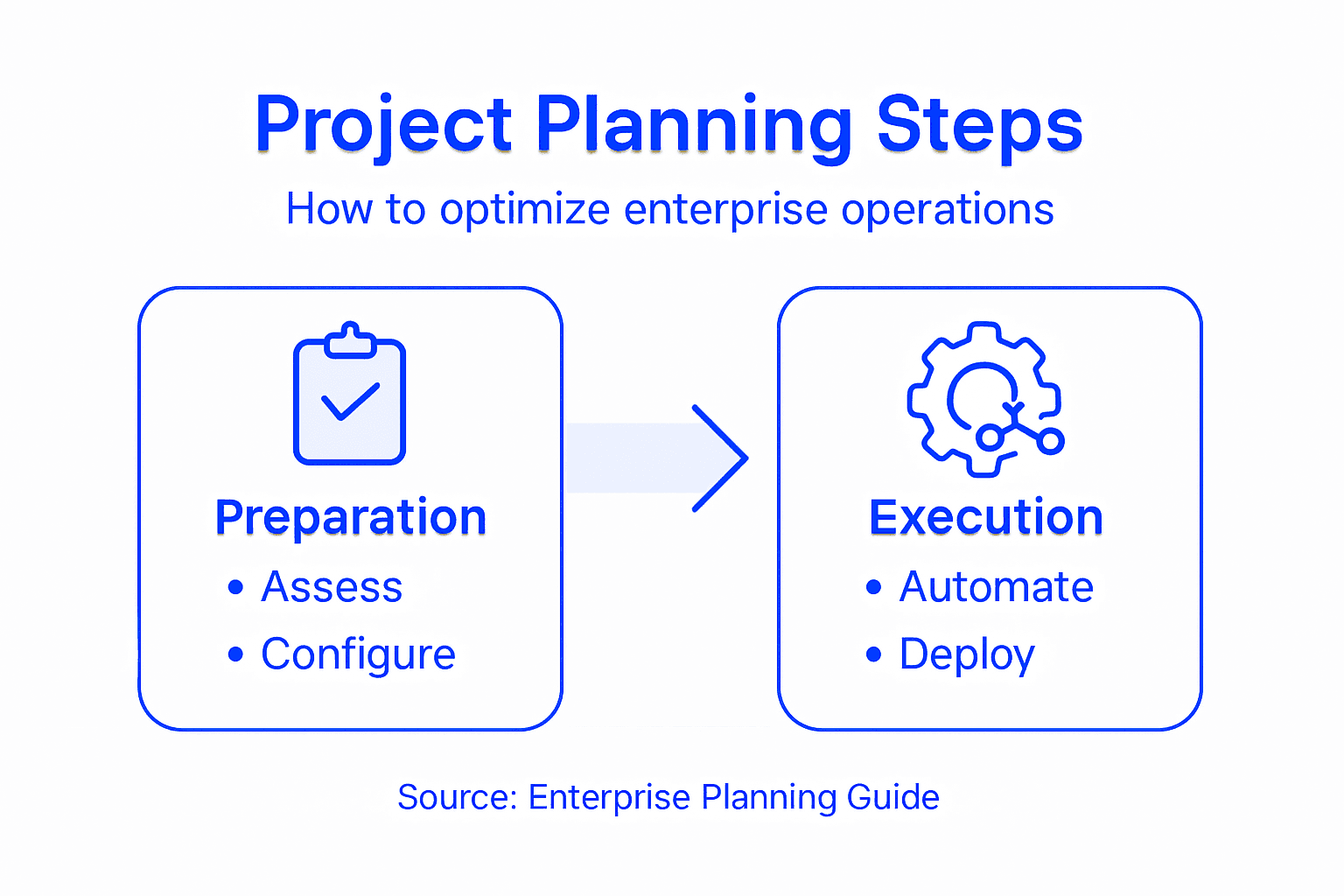
Continuous improvement methodologies provide a structured framework for evaluating project outcomes and driving incremental enhancements. This iterative process helps organizations adapt quickly and maintain competitive advantage.
Key components of result validation and improvement include:
- Comprehensive performance metrics
- Data-driven analysis techniques
- Stakeholder feedback mechanisms
- Root cause investigation
- Incremental refinement strategies
Implement your validation process through these strategic steps:
- Define clear performance benchmarks
- Collect quantitative and qualitative data
- Conduct thorough performance analysis
- Identify improvement opportunities
- Develop targeted refinement plans
Successful continuous improvement is not about achieving perfection, but about creating a culture of systematic learning and adaptation.
In Saudi Arabia and UAE, forward-thinking enterprises recognize the power of ongoing optimization. Our low-code platform Cortex provides advanced analytics and refinement tools that enable organizations to quickly assess and enhance operational performance.
Ensure you develop transparent reporting mechanisms that communicate progress, challenges, and strategic insights across all organizational levels. This approach fosters a culture of collaboration and shared accountability.
Pro tip: Schedule regular cross-functional review sessions to ensure diverse perspectives are incorporated into your continuous improvement strategy.
Here’s how each step in the enterprise transformation process contributes to project success:
| Step | Main Objective | Key Outcome |
|---|---|---|
| Assess readiness | Identify capabilities and gaps | Clear project roadmap |
| Configure tools | Build a collaboration framework | Unified communications |
| Map workflows | Reveal automation opportunities | Increased efficiency |
| Deploy solutions | Empower teams with support | Higher user adoption |
| Validate results | Optimize and refine process | Continuous improvement |
Optimize Your Enterprise Projects with Singleclic’s Proven Digital Solutions
Enterprise project planning demands a clear roadmap that aligns organizational readiness, seamless collaboration, and smart automation — precisely the challenges highlighted in “Enterprise Project Planning How To Optimize Operations Easily.” Pain points like inefficient workflows, disjointed communication, and slow deployment can stall progress and reduce team empowerment. By embracing concepts such as integrated digital tools, real-time support, and continuous improvement your business can break free from these obstacles.
Singleclic specializes in turning these challenges into growth opportunities through powerful solutions such as our Arabic-enabled low-code platform Cortex and advanced ERP/CRM implementations. Whether you are looking to map workflows, deploy scalable solutions, or gain actionable insights across KSA, UAE, and Egypt, we combine deep industry expertise with world-class technology. Explore how our services can help you move beyond digitalization to true operational optimization.
Transform your enterprise projects today by visiting Singleclic and discover our comprehensive offerings including Business Process Automation with Cortex and ERP & CRM Implementation.
Ready to elevate your project planning and optimize operations effectively? Connect with Singleclic now and empower your teams with the tools and strategies that deliver lasting results.
Frequently Asked Questions
How do I assess organizational readiness for enterprise project planning?
To assess organizational readiness, conduct a systematic evaluation of your people, processes, and technology. Gather insights about current capabilities and team skills, and document any knowledge gaps or resource constraints to build a clear roadmap for your project.
What are the key components to configure integrated digital tools for collaboration?
When configuring digital collaboration tools, focus on centralized communication platforms, real-time messaging systems, and document-sharing capabilities. Select tools that will enhance team communication and streamline project management across your organization.
How can I identify which workflows to prioritize for automation?
Identify workflows for automation by mapping out your current processes and highlighting repetitive tasks and bottlenecks. Evaluate each workflow based on criteria like task frequency and potential time savings to prioritize the most impactful opportunities.
What steps should I take to deploy enterprise solutions effectively?
To deploy enterprise solutions effectively, start with a thorough needs assessment followed by designing role-specific access protocols and creating customized training materials. Ensure to establish real-time support channels and continually monitor the deployment process for performance improvements.
How can I validate project outcomes and implement continuous improvement?
Validate project outcomes by defining performance benchmarks and collecting both quantitative and qualitative data for thorough analysis. Use this information to identify improvement opportunities and develop a targeted refinement plan for ongoing operational enhancements.
Recommended
- Mastering ERP System Project Management for Successful Implementations | Singleclic
- Why Project Planning is Key to IT Success | Singleclic
- The Implementation Stages of a Successful ERP | Singleclic
- How to Assess ERP Readiness for Seamless Implementation | Singleclic
- Role of Pest Management in Ohio Businesses Today