Most American companies now report that more than 60 percent of their operational improvements stem from smart process management strategies. For Saudi Arabian executives leading construction and healthcare organizations, facing rising competition and digital disruption is an everyday reality. This guide delivers practical insights on how Business Process Management empowers leaders to drive efficiency and respond swiftly to industry changes, drawing from proven global frameworks and advanced technologies.
Table of Contents
- Defining Business Process Management Today
- Types Of BPM Solutions And Methods
- How BPM Works Across Core Industries
- Critical Success Factors And Pitfalls
- Comparing BPM With Alternatives Like RPA
Key Takeaways
| Point | Details |
|---|---|
| Modern BPM is Strategic | Business Process Management has evolved into a critical organizational capability that integrates technology with human resources for operational excellence. |
| Technology Integration is Key | Successful BPM incorporates emerging technologies like artificial intelligence and low-code platforms to create intelligent, self-optimizing processes. |
| Industry-Specific Applications | BPM delivers tailored benefits across industries such as healthcare, construction, and financial services by improving efficiency and compliance. |
| Avoid Common Pitfalls | Organizations should ensure top management support and address change management challenges to maximize BPM implementation success. |
Defining Business Process Management Today
Business Process Management (BPM) represents a strategic approach to identifying, analyzing, designing, implementing, monitoring, and continuously improving organizational processes. Contemporary research highlights BPM as a critical discipline that integrates technology, human resources, and organizational strategy to drive operational excellence.
At its core, BPM is about transforming how businesses operate by creating systematic methods to understand, optimize, and streamline complex workflows. In Saudi Arabia and UAE, organizations increasingly recognize BPM as a fundamental strategy for digital transformation. Companies are leveraging advanced technologies like artificial intelligence and low-code platforms to reimagine their operational frameworks, enabling more agile and responsive business models.
Key characteristics of modern Business Process Management include:
- Holistic approach to organizational workflow optimization
- Integration of digital technologies and human expertise
- Continuous improvement and adaptation
- Data-driven decision making
- Cross-functional collaboration
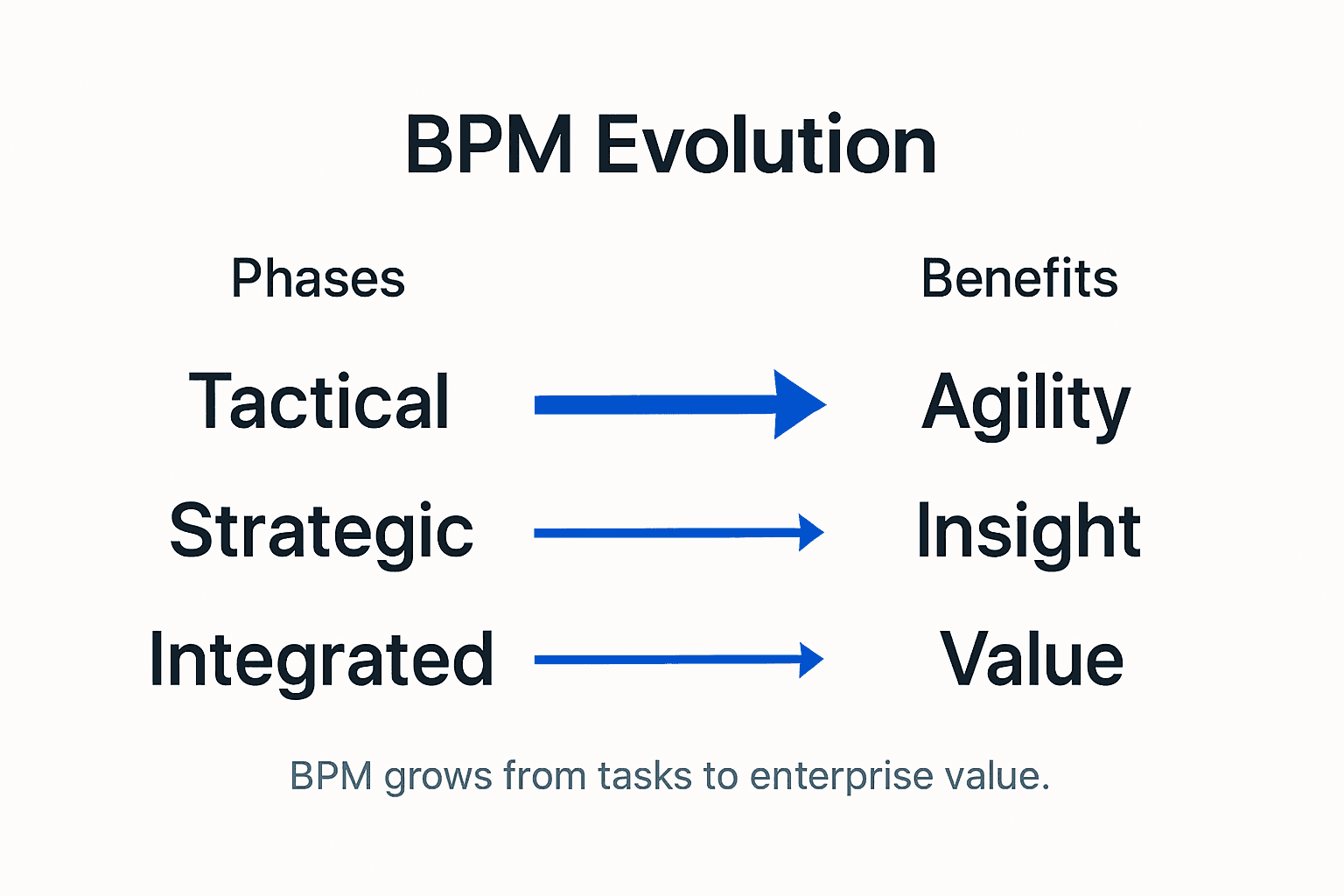
Bibliometric analyses of management literature demonstrate that BPM has evolved from a tactical operational tool to a strategic organizational capability. Modern BPM transcends traditional process mapping, incorporating emerging technologies like artificial intelligence, Internet of Things (IoT), and advanced analytics to create intelligent, self-optimizing business processes.
Pro tip: Implement a continuous feedback loop in your BPM strategy to ensure real-time process adaptation and sustained organizational efficiency.
Types Of BPM Solutions And Methods
Businesses today have access to multiple Business Process Management (BPM) solutions that enable comprehensive workflow optimization. Organizations can explore advanced BPM tools designed to address specific operational challenges across industries like construction, healthcare, and financial services in Saudi Arabia and UAE.
The primary types of BPM solutions can be categorized into several strategic approaches:
- Process Modeling Solutions
- Visual mapping of existing workflows
- Identification of bottlenecks and inefficiencies
- Creation of standardized process documentation
- Process Automation Solutions
- Rule-based workflow automation
- Integration of digital technologies
- Reduction of manual intervention
- Process Monitoring Solutions
- Real-time performance tracking
- Key performance indicator (KPI) measurement
- Continuous improvement analytics
- Process Optimization Solutions
- Advanced analytics and machine learning
- Predictive process enhancement
- Adaptive workflow redesign
In the context of regional markets like Saudi Arabia and UAE, BPM solutions are increasingly leveraging low-code platforms such as Cortex to enable rapid process design and implementation. These platforms allow organizations to quickly create and modify workflows without extensive programming knowledge, democratizing process management across different organizational levels.

Enterprise-grade BPM solutions typically offer comprehensive features including workflow design, automated routing, performance monitoring, and seamless system integration. By selecting the right BPM solution, organizations can transform complex operational challenges into streamlined, efficient processes.
Pro tip: Conduct a thorough assessment of your current workflows before selecting a BPM solution to ensure maximum alignment with your organizational objectives.
How BPM Works Across Core Industries
Business Process Management (BPM) has emerged as a transformative approach for driving operational excellence across diverse industry sectors. Recent bibliometric research demonstrates BPM’s critical role in integrating digital technologies to improve efficiency and competitiveness in strategic management, healthcare, manufacturing, and service-oriented industries.
In the Saudi Arabian and UAE markets, BPM implementation varies significantly across core industries:
Healthcare
- Patient flow optimization
- Electronic medical record management
- Regulatory compliance tracking
- Resource allocation efficiency
Construction
- Project management workflow standardization
- Resource tracking and allocation
- Risk management documentation
- Supply chain coordination
- Compliance and safety protocol monitoring
Financial Services
- Transaction processing automation
- Fraud detection workflows
- Customer onboarding streamlining
- Regulatory reporting processes
- Risk assessment optimization
These industry-specific applications demonstrate how BPM transcends traditional operational boundaries. By leveraging low-code platforms like Cortex, organizations can rapidly design, implement, and modify complex workflows tailored to their unique operational requirements. Such flexibility enables businesses to respond quickly to changing market dynamics and internal strategic shifts.
Enterprise-grade BPM solutions provide comprehensive capabilities that go beyond simple process documentation. They integrate advanced technologies such as artificial intelligence and machine learning to create adaptive, intelligent workflow systems that continuously learn and improve organizational performance.
Pro tip: Select BPM solutions with industry-specific customization capabilities to ensure maximum alignment with your organizational ecosystem.
Here is a summary of how BPM delivers value across core industries:
| Industry | Strategic BPM Benefit | Typical Technology Used |
|---|---|---|
| Healthcare | Enhances patient care coordination | Electronic records, analytics |
| Construction | Improves project workflow consistency | Resource tracking, IoT |
| Financial Services | Increases processing accuracy | Automation, fraud detection |
Critical Success Factors And Pitfalls
Business Process Management implementation requires strategic navigation through complex organizational challenges. Research reveals critical transition challenges that can significantly impact BPM success, highlighting the importance of understanding potential pitfalls and success factors across different industry contexts.
Key critical success factors for effective BPM implementation include:
- Top Management Support
- Providing clear strategic direction
- Allocating necessary resources
- Demonstrating commitment to process transformation
- Establishing performance accountability
- Organizational Culture
- Fostering continuous improvement mindset
- Encouraging cross-functional collaboration
- Supporting innovation and adaptive thinking
- Promoting transparency and knowledge sharing
- Strategic Intent
- Aligning BPM initiatives with organizational goals
- Developing clear implementation roadmaps
- Setting measurable performance objectives
- Creating feedback and iteration mechanisms
Common pitfalls organizations encounter during BPM implementation include:
- Insufficient stakeholder engagement
- Lack of comprehensive change management strategies
- Inadequate skills and training
- Resistance to process standardization
- Overemphasis on technology instead of human factors
In the Saudi Arabian and UAE markets, successful BPM implementation requires understanding unique regional business dynamics. Leveraging low-code platforms like Cortex enables organizations to create flexible, adaptable workflows that address specific operational challenges while maintaining cultural and regulatory sensitivity.
Implementing BPM is not a one-time event but a continuous journey of organizational transformation. Successful organizations view BPM as a strategic capability that evolves with changing business environments, technological advancements, and market demands.
Pro tip: Develop a comprehensive change management strategy that addresses both technological and human aspects of BPM implementation to maximize adoption and success.
Comparing BPM With Alternatives Like RPA
Business Process Management and Robotic Process Automation represent two distinct yet complementary approaches to organizational efficiency. Recent research reveals the nuanced differences between these automation technologies, highlighting their unique capabilities and strategic applications in modern enterprises.
Key Comparative Characteristics:
- Scope of Automation
- BPM: Comprehensive workflow management across entire organizational processes
- RPA: Task-level automation focusing on repetitive, rule-based activities
- Technological Complexity
- BPM: Deep system integration and process redesign
- RPA: Surface-level interaction mimicking human user actions
- Organizational Impact
- BPM: Strategic transformation and holistic process optimization
- RPA: Tactical efficiency improvement for specific operational tasks
In the context of Saudi Arabian and UAE markets, organizations are increasingly adopting hybrid approaches that combine BPM’s strategic insights with RPA’s tactical automation capabilities. By leveraging low-code platforms like Cortex, businesses can create flexible automation strategies that address both comprehensive process management and granular task optimization.
While RPA excels at automating repetitive, predictable tasks, BPM provides a more holistic approach to organizational efficiency. The most successful digital transformation strategies integrate both methodologies, creating intelligent, adaptive workflows that balance technological automation with strategic process design.
Enterprise-grade solutions now recognize the complementary nature of BPM and RPA, developing integrated platforms that allow seamless coordination between comprehensive process management and targeted task automation.
Pro tip: Conduct a thorough process assessment to identify which tasks are best suited for RPA versus comprehensive BPM redesign before implementing automation strategies.
See how BPM compares to RPA and when to use each approach:
| Aspect | BPM Strength | RPA Strength |
|---|---|---|
| Best Use Case | Process redesign, end-to-end | Repetitive tasks, legacy systems |
| Implementation Focus | Integration, transformation | Fast deployment, cost savings |
| Human Involvement | High, cross-functional teams | Low, minimal disruption |
Unlock True Operational Excellence with Singleclic’s BPM Expertise
Struggling to transform complex workflows into streamlined, high-performing processes in Saudi Arabia, UAE, or Egypt The article highlights critical challenges like continuous process optimization, integration of AI, and leveraging low-code platforms to overcome bottlenecks and enhance cross-functional collaboration. At Singleclic, we specialize in turning these BPM challenges into competitive advantages by combining world-class technology with deep industry expertise across construction, healthcare, banking, and telecom.
With our powerful low-code platform Cortex designed specifically for MENA enterprises, you can achieve real-time workflow adaptation without downtime While our IBM BAW and BonitaSoft solutions enable robust business process automation that fits your strategic goals, our AI and RPA services complement BPM to maximize efficiency and accuracy. Discover how to elevate your operational performance today.
Ready to move beyond basic digitalization and embrace true business process optimization Explore our comprehensive offerings at Singleclic and see why over 60 enterprises trust us as their digital transformation partner. Start your journey towards agile, scalable process management now by visiting Business Process Automation and learn how Cortex empowers you with Arabic-enabled, on-premise automation tailored for strategic growth.
Frequently Asked Questions
What is Business Process Management (BPM)?
Business Process Management (BPM) is a strategic approach focused on identifying, analyzing, designing, implementing, monitoring, and continuously improving organizational processes to drive operational excellence.
How can BPM benefit my organization?
BPM can help enhance workflow optimization, integrate digital technologies, support continuous improvement, enable data-driven decision making, and foster cross-functional collaboration, ultimately leading to improved efficiency and competitiveness.
What are the different types of BPM solutions available?
BPM solutions can be categorized into process modeling, process automation, process monitoring, and process optimization. Each type addresses specific operational challenges to streamline workflows and improve performance.
How does BPM differ from Robotic Process Automation (RPA)?
BPM provides a comprehensive approach to managing and optimizing entire workflows, while RPA focuses on automating repetitive, rule-based tasks. Both can be used together for enhanced organizational efficiency.