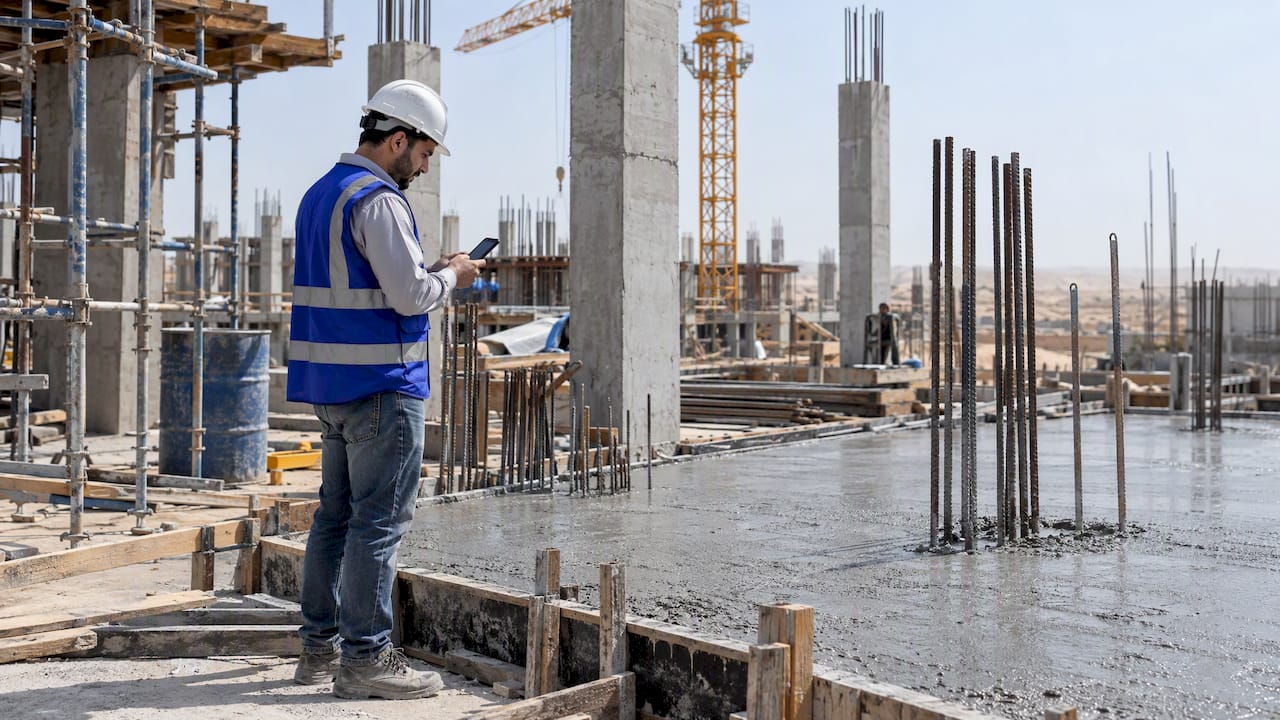
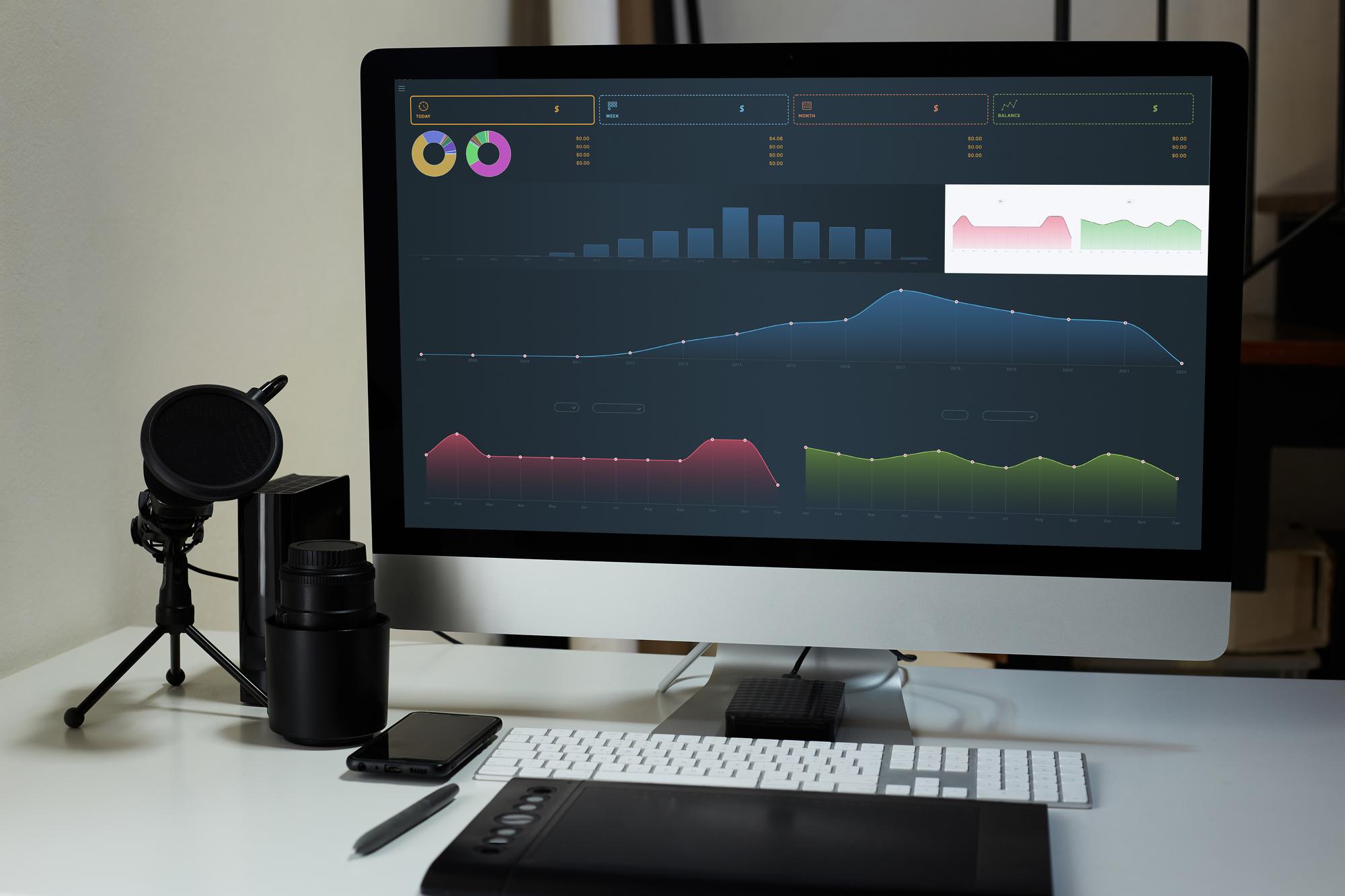
A construction ERP that captures daily site measurements and links them to the BOQ and IPC becomes the project’s single source of truth, revealing schedule and cost variance in near real time. When field quantities feed directly into billing and earned value calculations, managers see cost-to-complete and schedule slippage within days instead of months. That speed is what separates a system that merely stores data from one that actually drives decisions.
TL;DR:
- Map each BOQ line to a measurable deliverable and cost code; organize projects by block, floor, or zone to preserve accurate earned value rollups.
- Prioritize BOQ and estimation, project costing and WIP, IPC billing, subcontractor controls, and mobile reporting; require offline capture, approval workflows, retention rules, and audit trails.
- Roll out financial and procurement controls before field capture and IPC automation, then pilot mobile reporting through a full billing cycle on one active site.
- Move open commitments, approved variations, unbilled receivables, and retention schedules accurately, and appoint an operations change champion to build site team trust.
- Set a locked scope, schedule, and budget baseline, then review PV, EV, AC, CPI, and SPI monthly to update cost and cash flow forecasts.
Table of Contents
- How field data flows into BOQ, IPC, and accounting
- Which ERP modules and features actually enable progress tracking
- Rolling out progress tracking without disrupting active sites
- Measuring success after launch with EVMS principles
- Regional lessons: what Gulf construction projects need from an ERP
- How we help you connect site data to financial control
- FAQ
- Sources
How field data flows into BOQ, IPC, and accounting
Progress tracking starts on site, not in the finance office. A foreman or engineer logs a daily progress report (DPR), measured quantities, site photos, and, increasingly, IoT sensor readings from equipment or material sensors. These inputs need a destination, and that destination is the bill of quantities (BOQ) broken into a work breakdown structure (WBS). A measured quantity for “slab pour, block B, level 3” reconciles against the exact BOQ line it belongs to rather than a vague project total.
Once reconciled, the numbers move through a predictable sequence:
- Site teams submit DPRs and measured quantities against WBS-mapped BOQ items, often with photo evidence attached.
- The system validates measured quantities against committed and budgeted quantities, flagging variances for review.
- Approved measurements generate or update interim payment certificates (IPCs), adjusting commitments and subcontractor liabilities.
- Finance posts work-in-progress (WIP) and journal entries, updating actual cost and accrued revenue in the general ledger.
This chain only works when every BOQ line maps to a measurable site deliverable and a cost code. A production-ready construction management suite built on ERPNext illustrates this directly, with modules for BOQ management, estimation, project costing, and progress billing tied together through daily and weekly automation jobs, including daily variance recalculation and progress billing notifications. Treating a multi-floor project as a single job number breaks this chain, so hierarchical projects by block, floor, or zone keep daily data rolling up accurately into earned value figures.
Which ERP modules and features actually enable progress tracking
Not every ERP module touches progress tracking, and vendor demos tend to blur the line between nice-to-have and essential. When scoping a system, prioritize:
- BOQ and estimation, the foundation every other module reconciles against.
- Project costing and WIP, which turns measured quantities into financial position.
- Progress billing and IPC generation, automating what is otherwise a spreadsheet-heavy monthly scramble.
- Subcontractor management, tracking certifications, retention, and payment milestones.
- Procurement, linking material receipt to schedule and committed cost.
- Mobile site reporting, so DPRs get entered where the work happens.
Integration matters as much as the modules themselves: programme or BIM data, timekeeping, site stores inventory, and executive dashboards like Power BI all need to talk to the ERP without manual re-entry. Non-functional requirements deserve equal weight, including offline mobile capture, configurable approval workflows, retention logic specific to your contract terms, and audit trails that hold up under client or bank scrutiny.
Pro Tip: Validate the “last approved variation” field during any data migration; legacy spreadsheets often omit the approval date, which breaks retention schedules and IPC reconciliation downstream.
Rolling out progress tracking without disrupting active sites
A phased rollout protects ongoing projects from the disruption of a big-bang ERP switch while still delivering measurable value early. A sequence that works for most mid-size and enterprise contractors:
- Discovery and data audit, mapping existing BOQ structures, open commitments, and current reporting gaps.
- Financial and procurement controls, standing up BOQ, costing, and procurement before touching field workflows.
- Field capture and IPC automation, rolling out mobile DPRs and connecting them to automated billing.
- Analytics and IoT, layering dashboards and sensor data once the core data flow is trustworthy.
Migration deserves its own checklist: open commitments, approved variation orders, unbilled receivables, and retention schedules all need to move cleanly, or early reports will misstate project position. Appointing a change champion from operations, not IT, tends to matter more than any feature on the vendor’s datasheet, since site teams trust a peer’s endorsement of a new workflow far more than a corporate memo. Role-based training, split by what a site engineer, a quantity surveyor, and a finance controller each actually need to do in the system, shortens adoption time considerably.
Connectivity planning cannot be an afterthought. Site conditions in many regions mean mobile apps must capture data offline and sync automatically once a connection returns, rather than forcing engineers to find signal before logging a day’s work.
Pro Tip: Pilot the mobile DPR workflow on one active site for a full billing cycle before expanding fleet-wide; it exposes connectivity and approval bottlenecks while the stakes are still low.
Measuring success after launch with EVMS principles
Go-live is the starting line, not the finish. Set a performance measurement baseline (PMB) early, a locked combination of scope, schedule, and budget against which every later report gets compared, along with a formal change-control process for any approved rebaseline.
From there, an EVMS-style monthly rhythm gives leadership a consistent read on project health:
- Generate a cost performance report (CPR) each month, comparing PV, EV, and AC against the baseline.
- Track CPI (cost performance index) and SPI (schedule performance index) to spot trends before they become crises.
- Translate accumulated EV data into a latest revised estimate (LRE), updating cost-to-complete and cash-flow forecasts.
DOE’s EVMS guidance frames CPI and SPI as the disciplined mechanism for forecasting final cost and schedule outcomes and for triggering corrective action before a contract runs into real trouble. Contractors managing working capital around these forecasts often benefit from pairing EVMS discipline with dedicated cash-flow tools; resources like Emory Lending’s working capital forecasting guide walk through the levers available when WIP and retention tie up cash longer than planned.
Regional lessons: what Gulf construction projects need from an ERP
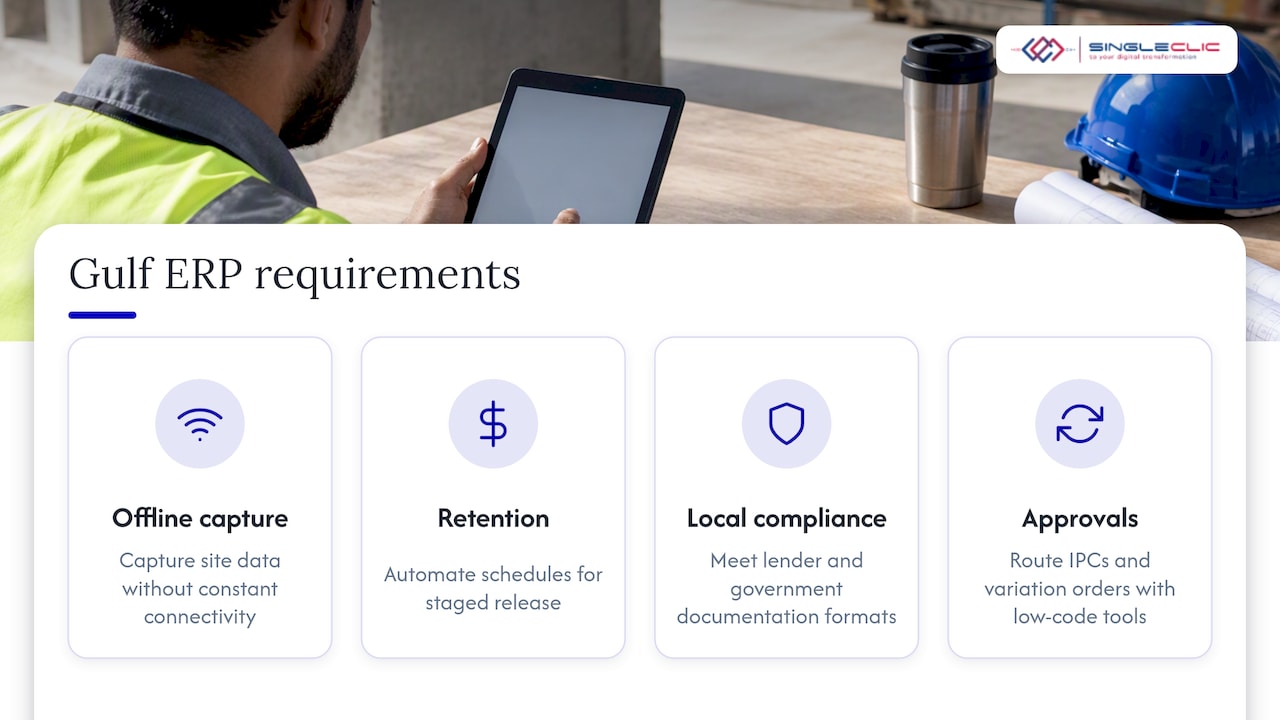
Projects across the Gulf tend to run into the same friction points regardless of contractor size: intermittent site connectivity, multilingual crews, and retention terms that commonly hold back a portion of billed value until staged release. Regional analysis of the market confirms that UAE construction projects get the most value from ERPs that automate retention schedules, integrate procurement with programme timelines, and support offline mobile capture rather than assuming constant connectivity.
A local implementation partner shortens the path to compliant retention logic and bank-ready reporting, since lenders and government clients across Saudi Arabia and the UAE expect specific documentation formats. We have seen phased delivery work best when low-code workflow tools sit between the ERP and site teams, automating approval routing for IPCs and variation orders without a custom development cycle for every change. For a closer look at how this plays out on live projects, see our construction ERP and CRM implementation examples.
— Tamer Badr
How we help you connect site data to financial control
We provide ERP implementations for construction and real estate clients, building the BOQ-to-IPC data flow described above into systems your teams already use daily. Where approvals, legacy tools, and ERP data need to move together without a long development cycle, we layer in a low-code platform to automate IPC routing, variation approvals, and dashboard updates across departments.
A typical engagement starts with an assessment of your current BOQ and reporting structure, moves through a phased rollout matching the sequence above, and ends with dashboards your finance and site teams both trust. Explore our Dynamics 365 implementation services or browse our full services overview to scope an assessment for your next project.
FAQ
Which ERP is best for a construction company?
The right choice depends on project scale, regional compliance needs, and whether BOQ, IPC, and WIP tracking are built in or require customization. Mid-size and enterprise contractors in the Gulf often favor Microsoft Dynamics 365 or Odoo implementations with construction-specific modules layered on top, since generic ERPs rarely handle retention logic or progress billing out of the box.
What is an ERP for construction?
A construction ERP is a unified system that connects estimation, procurement, project costing, subcontractor management, and progress billing into one data source instead of separate spreadsheets. It lets field measurements update financial records automatically, so cost and schedule reporting reflect actual site conditions rather than delayed manual entry.
How to monitor progress on a construction project?
Progress monitoring works best when daily site measurements reconcile against BOQ items to calculate earned value, then compare that figure against planned value and actual cost. Tracking CPI and SPI monthly, as outlined in EVMS guidance, reveals whether a project is trending over budget or behind schedule before the gap becomes unrecoverable.
What are the 7 stages of a construction project?
Construction projects generally move through initiation, planning, procurement, execution, monitoring and control, commissioning, and closeout, though naming conventions vary by firm and contract type. An ERP’s role grows heaviest during execution and monitoring, where daily progress data must reconcile continuously against the original plan.
How does an ERP handle retention and progress billing automatically?
A construction ERP applies the retention percentage defined in the contract automatically whenever it generates an interim payment certificate, holding back the agreed amount until staged release conditions are met. This removes a common source of manual error in markets where retention practices commonly run around 10% of certified value.
Sources
Progress tracking lives or dies on a short list of metrics, each pulled from a specific system record. Earned value (EV), planned value (PV), and actual cost (AC) form the backbone: PV comes from the baseline schedule and budget, EV derives from measured quantities against the BOQ, and AC comes from posted costs in accounting. Comparing the three surfaces variance before it becomes unrecoverable.
Beyond the core triad, track:
EVMS guidance from the U.S. Department of Energy defines these relationships formally: PV (BCWS), EV (BCWP), and AC (ACWP) integrate scope, cost, and schedule into one performance measurement baseline, the same baseline that monthly cost performance reports are built against. That discipline was built for government contracts, but the baseline and reporting cadence apply just as well to large private construction programs.