TL;DR:
- APIs enable seamless communication between software systems, playing a vital role in enterprise integration. They support over 80% of internet traffic, with REST, GraphQL, and Webhooks serving different operational needs. Proper management and budgeting of API maintenance are crucial for sustainable, scalable digital transformation.
APIs (Application Programming Interfaces) are defined as structured contracts that allow two software systems to communicate, exchange data, and trigger actions without sharing internal code. The role of APIs in integration is not peripheral. APIs now account for over 80% of total global internet traffic, driven by cloud-native microservices and AI-powered applications. For IT leaders in Saudi Arabia, the UAE, and Egypt, this means every ERP, CRM, payment gateway, and analytics tool your organization runs is either already connected through APIs or is waiting to be. Understanding how APIs work in enterprise integration is the difference between a technology stack that scales and one that stalls.
How do apis enable software integration in enterprises?
APIs in software integration work by exposing specific functions of one system so that another system can call them over a network. Think of it as a formal handshake: System A sends a request, the API processes it, and System B returns a response. No direct database access. No custom code bridges. Just a defined, repeatable contract.

The three dominant API communication styles each serve different integration needs:
| API type | Best use case | Key characteristic |
|---|---|---|
| REST | CRM syncing, payment processing, mobile apps | Stateless, uses HTTP, widely supported |
| GraphQL | Analytics aggregation, flexible data queries | Client specifies exact data needed |
| Webhooks | Shipping updates, real-time alerts, event triggers | Push-based, fires on events automatically |
REST APIs remain the most common choice for enterprise integration because they work over standard HTTP and are supported by virtually every modern platform, including Microsoft Dynamics 365, Odoo, and Salesforce. GraphQL is gaining ground in data-heavy environments where you need precise control over what gets returned. Webhooks handle the real-time side, pushing data the moment something happens rather than waiting for a scheduled pull.
Common integration scenarios where APIs deliver immediate value include payment processing between an ERP and a payment gateway, syncing customer records between a CRM and a marketing platform, pulling shipping status updates into an order management system, aggregating data from multiple sources into a single analytics dashboard, and enabling single sign-on authentication across enterprise tools.
Pro Tip: When evaluating API types for a new integration project, start with REST for general connectivity, then layer in webhooks for any workflow that requires real-time triggers. This combination covers 80% of enterprise integration needs without adding architectural complexity.
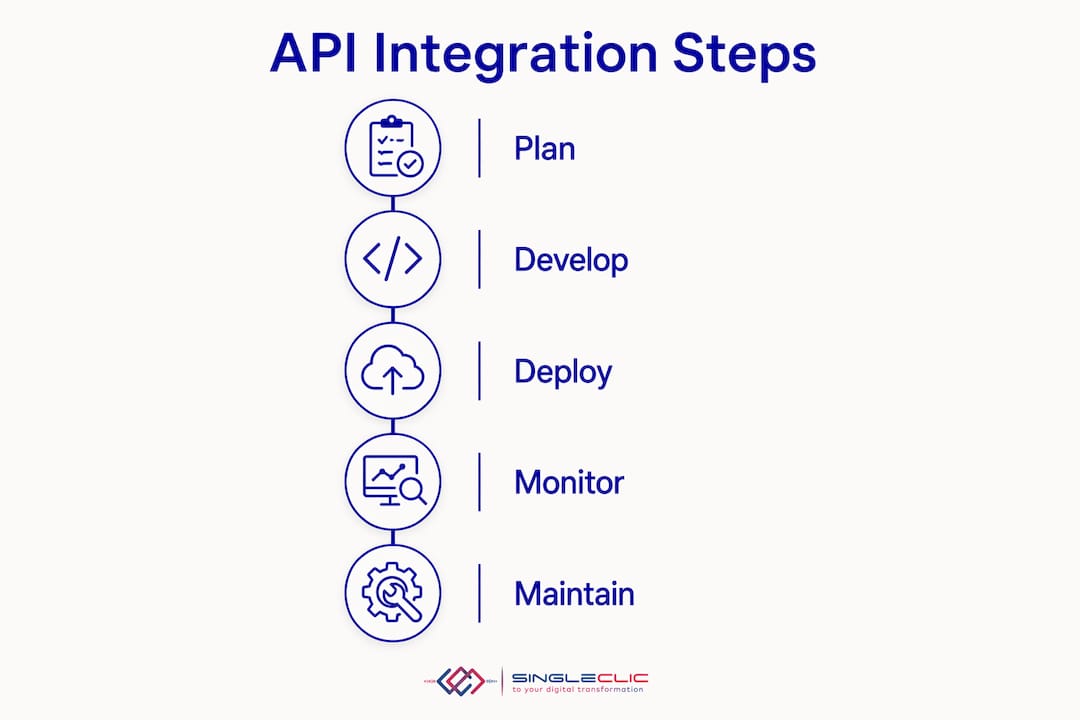
Why are apis important for business agility and operational efficiency?
The importance of APIs extends well beyond technical convenience. Replacing manual workflows with API integrations can reduce task times by up to 90%, with ROI payback achieved in as little as 2–6 months. Payment reconciliation is the clearest example: a process that once required a finance team to manually match hundreds of transactions daily can run automatically in seconds through an API connection between a bank and an ERP system.
The strategic concept that explains long-term API value is the API flywheel. The API flywheel effect increases an ecosystem’s value with each additional integration, raising switching costs for competitors and making your technology stack progressively harder to displace. Every new API connection you add makes your existing integrations more valuable. This is why enterprises that invest early in building a digital ecosystem through APIs compound their operational advantage over time.
Another underappreciated benefit is the ability to consume external capabilities rather than build them internally. APIs enable consumption of external, reliable services such as payments and identity verification, reducing in-house development time from months to days. Think of these as business “lego blocks.” Instead of building a payment processing engine from scratch, you connect to Stripe or a regional payment gateway via API and ship in days. This shifts your engineering focus to what actually differentiates your business.
The top five business benefits of API-based integration solutions are:
- Automation at scale — repetitive data transfers and approvals run without human intervention
- Faster product development — teams assemble existing API capabilities rather than building from zero
- Real-time data access — decision-makers see live data across systems rather than yesterday’s export
- Reduced operational costs — fewer manual processes means lower labor costs and fewer errors
- Ecosystem lock-in — each integration deepens your platform’s value and raises barriers for competitors
Pro Tip: Map your top five manual data transfer processes before starting any API integration project. These are your highest-ROI targets. Automating even two of them typically funds the entire integration investment within one quarter.
“The organizations winning in digital transformation are not the ones with the most software. They are the ones whose software actually talks to each other.” — Tamer Badr, Singleclic
What are the challenges and costs involved in API integration?
APIs for system connectivity are not free to implement or maintain. Understanding the real cost structure prevents budget overruns and failed projects. Simple point-to-point API integrations typically cost $3,000–$10,000, while complex enterprise orchestration projects cost $20,000–$50,000, with ongoing maintenance averaging $500–$2,000 monthly. Those maintenance figures are where most organizations get surprised.
| Cost category | Typical range | What drives it |
|---|---|---|
| Simple integration build | $3,000–$10,000 | Single system pair, standard REST API |
| Complex orchestration | $20,000–$50,000 | Multiple systems, custom logic, error handling |
| Monthly maintenance | $500–$2,000 | Version updates, security patches, monitoring |
| Emergency fixes | Variable | Breaking changes from vendor API updates |
Failing to budget ongoing maintenance costs is the most common reason integration projects exceed budgets within 12 months. Vendors update their APIs. Security patches require re-testing. A single breaking change in a third-party API can take down a critical workflow until your team responds. This “integration tax” is real and must be planned for from day one.
A second challenge is architectural. APIs alone do not manage data flow or state; integration platforms are required for orchestration to avoid chaotic architectures. Without an orchestration layer handling logic, error recovery, and scheduling, organizations end up with what practitioners call “spaghetti architecture.” Every system connects directly to every other system, and when one breaks, the failure cascades unpredictably. For a practical framework on avoiding this, Singleclic’s system integration guide for business leaders covers orchestration patterns in detail.
Key practices for managing API integration complexity:
- Centralize integration logic in a dedicated middleware or integration platform rather than embedding it in individual applications
- Version-lock external APIs where possible and monitor vendor release notes proactively
- Build error handling into every integration from the start, not as an afterthought
- Document every integration contract so your team can diagnose failures without reverse-engineering the connection
Pro Tip: Treat your integration maintenance budget as a fixed operational cost, not a project expense. Set aside 15–20% of your initial build cost annually for maintenance. This single habit prevents the majority of integration budget overruns.
How do AI and low-code platforms use apis for faster integration?
The most significant shift in enterprise integration over the past two years is the rise of AI-as-a-service delivered entirely through APIs. APIs are the primary mechanism for integrating AI features via AI-as-a-service platforms that expose machine learning, NLP, and computer vision functions. This means your existing applications can gain AI capabilities through a single API call, without training models or managing infrastructure.
Practical AI integration use cases through APIs include:
- Natural language processing for customer service chatbots connected to your CRM via API
- Recommendation engines that pull purchase history from an ERP and return personalized product suggestions
- Sentiment analysis applied to customer feedback collected through a support platform
- Document processing that extracts structured data from invoices and feeds it directly into accounting systems
- Fraud detection services called in real time during payment processing workflows
Low-code platforms accelerate this further. Platforms built on API-driven architecture in low-code environments allow non-technical teams to configure integrations visually rather than writing code for every connection. In Saudi Arabia and the UAE, where digital transformation timelines are aggressive and developer talent is competitive, this matters enormously. Singleclic’s own Cortex platform is an Arabic-enabled, on-premise low-code platform built specifically for MENA enterprises. It supports deep enterprise system integrations, runtime workflow changes without downtime, and full Arabic UI/UX, making it directly applicable to government, banking, and healthcare organizations across the region.
The combination of AI APIs and low-code platforms creates a multiplier effect. Your team can connect an AI service, configure the business logic visually, and deploy a working workflow in days rather than months. For organizations exploring how low-code improves business agility, the API layer is what makes that agility real at the enterprise level.
Pro Tip: When evaluating low-code platforms for API-driven integration in the MENA region, prioritize platforms with native Arabic support and on-premise deployment options. Regulatory requirements in Saudi Arabia and the UAE often make cloud-only solutions impractical for banking and government sectors.
Key takeaways
APIs are the foundational connectors in enterprise integration, and their strategic value compounds with every system you connect.
| Point | Details |
|---|---|
| APIs drive most digital traffic | Over 80% of global internet traffic runs through APIs, making them the backbone of modern software connectivity. |
| ROI is fast and measurable | API integrations can cut task times by up to 90%, with payback periods as short as 2–6 months. |
| Costs go beyond the build | Monthly maintenance of $500–$2,000 is standard; budget for it from day one to avoid overruns. |
| Orchestration is non-negotiable | APIs alone cannot manage state or logic; an integration platform or middleware layer is required to prevent fragile architectures. |
| AI and low-code multiply API value | Low-code platforms and AI-as-a-service APIs let enterprises deploy intelligent integrations in days, not months. |
Apis in integration: what i’ve learned after a decade of enterprise deployments
I’ve watched organizations in Saudi Arabia and the UAE spend significant budgets on ERP and CRM implementations, only to leave those systems as isolated islands because nobody planned the integration layer properly. The technology was excellent. The API connections were never built.
The mistake I see most often is treating APIs as a technical detail rather than a strategic decision. When a hospital in Jeddah connects its patient management system to its billing platform via API, that is not an IT project. That is a clinical efficiency decision. When a bank in the UAE automates its KYC verification through an identity API, that is a risk management decision. The API is just the mechanism.
What I’ve also learned is that the “API flywheel” concept is real, but it only spins if someone is managing the architecture. I’ve seen organizations build 30 point-to-point integrations with no orchestration layer, and the result is a system that nobody dares to change because every modification risks breaking something else. The organizations that get this right invest in an integration platform early, even when it feels like overhead. It pays back within a year.
My honest recommendation: before you add your next integration, audit the ones you already have. Map the data flows. Identify the maintenance owners. If you cannot answer those questions, you have an architecture problem, not an API problem.
— Tamer Badr
Build your integration strategy with Singleclic
If this article has clarified the role APIs play in connecting your enterprise systems, the next step is assessing whether your current technology stack is ready to support that integration at scale.
Singleclic works with organizations across Saudi Arabia, the UAE, and Egypt to design and implement API-driven integration strategies that connect ERP, CRM, and automation platforms into a unified operational layer. As a Microsoft Dynamics 365 integrator and Odoo Silver Partner, Singleclic brings both the technical depth and regional expertise to make integrations work in practice, not just in architecture diagrams. Start with the ERP integration checklist for the Middle East to identify where your integration gaps are and how to close them. For organizations evaluating automation alongside integration, the business process automation guide is a practical companion resource.
FAQ
What is the role of apis in integration?
APIs serve as the communication contracts between software systems, allowing them to exchange data and trigger actions without sharing internal code. They are the foundational mechanism behind every modern enterprise integration, from ERP to CRM to payment processing.
How do REST apis differ from webhooks in enterprise integration?
REST APIs use a request-response model where one system asks another for data on demand. Webhooks are push-based and fire automatically when a specific event occurs, making them better suited for real-time notifications like shipping updates or payment confirmations.
What does API integration actually cost for an enterprise?
Simple integrations typically cost $3,000–$10,000 to build, while complex enterprise orchestration projects range from $20,000–$50,000. Ongoing maintenance adds $500–$2,000 per month and must be budgeted as a recurring operational cost.
Can low-code platforms replace custom API development?
Low-code platforms significantly reduce the need for custom API code by providing visual configuration tools for common integrations. They do not eliminate APIs. They make it faster and easier to connect systems through APIs without writing every line of code manually.
Why do some API integration projects fail within the first year?
The most common cause is failing to budget for ongoing maintenance, including API version updates, security patches, and breaking changes from third-party vendors. Projects that treat integration as a one-time build rather than an ongoing operational cost consistently exceed budget within 12 months.