Nearly 60 percent of large enterprises in Saudi Arabian and UAE markets report persistent workflow inefficiencies despite adopting american process management frameworks. For construction and healthcare leaders, these bottlenecks often drain resources and slow decision making. This practical guide reveals proven strategies to assess, redesign, and implement effective business process reengineering, tailored for executives ready to drive measurable change without unnecessary complexity.
Table of Contents
- Step 1: Assess Current Processes And Identify Inefficiencies
- Step 2: Engage Stakeholders And Define Reengineering Objectives
- Step 3: Redesign Workflows Using Agile Methodologies
- Step 4: Implement Optimized Processes With Digital Tools
- Step 5: Validate And Monitor Process Improvements For Sustainability
Quick Summary
| Key Insight | Explanation |
|---|---|
| 1. Identify Workflow Inefficiencies | Create a process map to visualize workflows and detect bottlenecks that hinder performance. |
| 2. Engage Stakeholders Effectively | Develop a communication strategy to involve all relevant participants and gather diverse perspectives. |
| 3. Redesign with Agile Methodologies | Utilize frameworks like Scrum or Kanban to create flexible workflows that support continuous improvement. |
| 4. Implement Digital Tools Strategically | Choose appropriate technologies for automation, ensuring they integrate well and meet user needs. |
| 5. Monitor for Sustainable Improvements | Establish a performance dashboard for ongoing assessment of process changes and ensure long-term effectiveness. |
Step 1: Assess current processes and identify inefficiencies
Understanding your organization’s current operational landscape is crucial for successful business process reengineering. This step involves a systematic approach to identifying workflow bottlenecks and inefficiencies that hinder performance across your Saudi Arabian or UAE enterprise.
To begin, create a comprehensive process map that visually documents each workflow step. Start by documenting the entire process sequence including input sources, decision points, task handoffs, and output destinations. Pay attention to specific performance indicators like cycle time, error rates, and resource allocation. Gather insights through direct employee interviews and operational data analysis. Look for clear warning signs such as repeated manual interventions, excessive approval layers, communication gaps, and tasks that consume disproportionate time and resources.
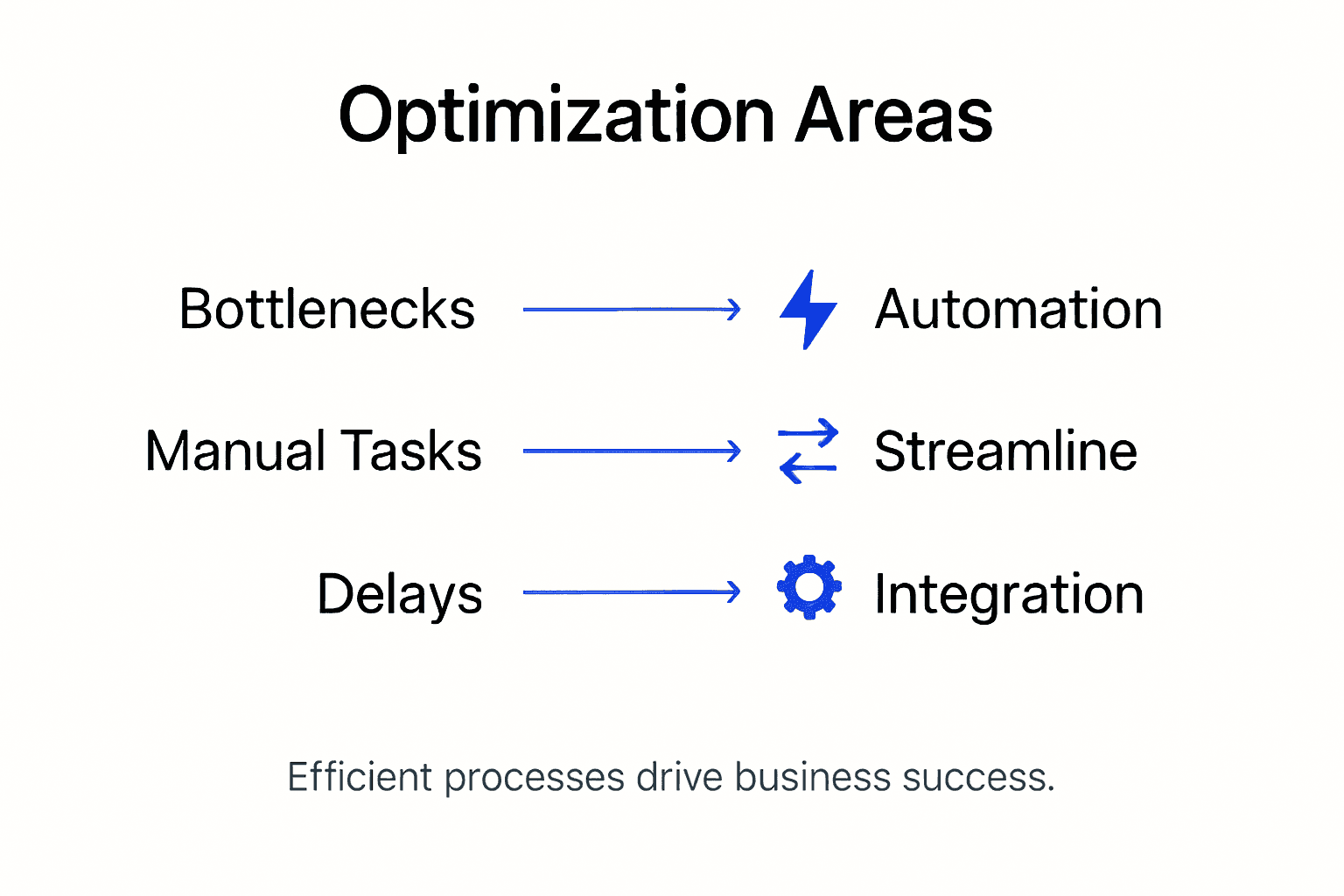
Carefully analyze each process stage for potential optimization opportunities. Examine where digital automation could replace manual tasks, where communication channels can be streamlined, and where unnecessary steps might be eliminated. Quantitative metrics like time spent per task, error frequency, and cost per process execution will provide objective evidence of inefficiencies.
Here’s a summary of key process optimization opportunities identified during assessment:
| Optimization Area | Potential Solution | Expected Business Impact |
|---|---|---|
| Manual interventions | Automate repetitive tasks | Reduce errors and speed up execution |
| Approval layers | Streamline decision making | Increase agility and cut cycle time |
| Communication gaps | Implement digital platforms | Improve collaboration and information flow |
| Resource allocation | Data-driven workload balancing | Enhance efficiency and cost control |
Pro Tip: Involve employees from multiple departments during your assessment to gain diverse perspectives and uncover hidden process bottlenecks that might not be immediately apparent from management reports.
Step 2: Engage stakeholders and define reengineering objectives
Successful business process reengineering hinges on effectively mobilizing your organization’s key stakeholders and establishing clear strategic objectives. This step involves creating a robust engagement strategy that ensures comprehensive buy-in and alignment across different departments in your Saudi Arabian or UAE enterprise.
Developing a comprehensive stakeholder engagement plan requires systematic identification of all relevant participants and defining precise interaction methods. Begin by mapping out your stakeholder landscape including executives, department heads, operational teams, and key external partners. Conduct targeted interviews and workshops to understand their perspectives, pain points, and expectations. Focus on uncovering potential barriers such as communication gaps or resistance to change, and develop strategies to address these proactively.
Craft clear reengineering objectives that are specific, measurable, and aligned with your organization’s broader strategic goals. Translate high-level aspirations into concrete metrics and desired outcomes. Ensure these objectives are communicated transparently, allowing stakeholders to understand the rationale behind proposed changes and their potential impact. Create collaborative platforms that enable continuous feedback and iterative refinement of your reengineering approach.
Pro Tip: Create a stakeholder communication matrix that tracks individual engagement levels, preferred communication channels, and specific concerns to tailor your approach and maintain sustained involvement throughout the reengineering process.
Step 3: Redesign workflows using agile methodologies
Redesigning organizational workflows demands a strategic approach that transforms rigid processes into dynamic, responsive systems. Your goal is to create a flexible framework that enables continuous improvement and rapid adaptation across your Saudi Arabian or UAE enterprise.
Agile workflow methodologies provide a powerful blueprint for iterative process transformation. Begin by breaking down existing workflows into smaller, manageable components that can be independently analyzed and optimized. Implement Scrum or Kanban frameworks to structure your redesign efforts, focusing on incremental improvements that deliver tangible value. Divide your reengineering project into short sprints where each iteration allows for rapid prototyping, testing, and refinement of workflow elements.
The table below compares three popular agile redesign approaches for workflow transformation:
| Methodology | Key Principle | Typical Use Case | Business Advantage |
|---|---|---|---|
| Scrum | Iterative sprints | Product development | Rapid prototyping, fast feedback |
| Kanban | Visual workflow management | Continuous delivery | Real-time bottleneck detection |
| Lean | Waste reduction | Process improvement | Streamlined, cost-effective processes |
Establish cross functional teams that represent diverse perspectives from different departments. Create transparent workflow visualization tools that allow real time tracking of process modifications and performance metrics. Prioritize continuous stakeholder feedback mechanisms that enable quick adjustments and maintain alignment with organizational objectives. Develop clear success criteria for each workflow redesign sprint, ensuring that changes directly contribute to improved efficiency, reduced bottlenecks, and enhanced operational agility.
Pro Tip: Document each workflow iteration meticulously, capturing lessons learned and performance deltas to build an organizational knowledge base that supports future process optimization efforts.
Step 4: Implement optimized processes with digital tools
Transforming your organization’s operational capabilities requires strategically integrating digital technologies that automate, streamline, and enhance existing workflows. Your implementation strategy must balance technological innovation with practical, human-centered approaches that drive meaningful organizational change across your Saudi Arabian or UAE enterprise.

Robotic Process Automation technologies offer powerful opportunities to reduce administrative burdens and eliminate repetitive tasks. Begin by identifying specific processes most suitable for digital transformation such as data entry, reporting, and routine administrative functions. Select tools that integrate seamlessly with your existing technological infrastructure, prioritizing solutions that offer scalability, security, and user friendly interfaces. Conduct thorough testing and pilot programs to validate the effectiveness of each digital implementation before full scale rollout.
Prioritize a collaborative approach that aligns automation goals with your organizational strategy. Engage stakeholders from multiple departments to ensure digital tools address genuine operational challenges and create tangible value. Develop comprehensive training programs that help employees understand and embrace new technologies, transforming potential resistance into enthusiastic adoption. Monitor key performance indicators to demonstrate the concrete benefits of your digital process optimization efforts.
Pro Tip: Create a dedicated change management team that provides ongoing support, collects user feedback, and continuously refines your digital implementation strategy to maintain momentum and relevance.
Step 5: Validate and monitor process improvements for sustainability
Ensuring the long-term effectiveness of your business process reengineering requires a robust validation and monitoring approach that goes beyond initial implementation. Your goal is to create a dynamic system of continuous assessment that maintains operational excellence across your Saudi Arabian or UAE enterprise.
Process mining technologies integrated with sustainability metrics provide powerful tools for tracking and validating process improvements. Develop a comprehensive performance dashboard that captures key indicators such as efficiency gains, resource utilization, error reduction, and environmental impact. Implement regular data collection mechanisms that allow real time tracking of process performance, enabling quick identification of potential bottlenecks or deviations from expected outcomes.
Prioritize transparent monitoring and evaluation practices that engage stakeholders across different organizational levels. Create periodic review sessions where process performance data is shared openly, allowing collaborative analysis and strategic adjustments. Establish clear benchmarks and success criteria that move beyond traditional efficiency metrics to include sustainability, employee satisfaction, and long term organizational adaptability. Use these insights to drive continuous improvement, ensuring your reengineered processes remain agile and responsive to changing business environments.
Pro Tip: Develop a standardized reporting template that captures both quantitative performance metrics and qualitative insights, creating a comprehensive view of your process improvement journey.
Unlock True Operational Excellence with Tailored Digital Solutions
The challenges of identifying inefficiencies and redesigning workflows outlined in this Business Process Reengineering Guide highlight one undeniable truth: modern enterprises in Saudi Arabia and the UAE need more than just surface-level digitalization. If you are facing obstacles like manual task bottlenecks, complex approval layers, or communication gaps, your business deserves a transformation that combines strategy with cutting-edge technology. Key terms such as automation, agile methodologies, and continuous monitoring are not just buzzwords here but essential steps to sustained growth and efficiency.
At Singleclic, we specialize in turning these critical concepts into real-world advantages. Our expertise in ERP & CRM Implementation, Business Process Automation, and Robotic Process Automation means your organization can streamline workflows with proven tools like IBM BAW and UiPath. With Cortex, our Arabic-enabled on-premise low-code platform, your team can automate complex processes without writing code while ensuring real-time optimization and seamless integration across your enterprise systems.
If you are ready to stop struggling with outdated processes and start building agile, digitally empowered operations that foster collaboration and measurable results visit Singleclic today. Explore how our tailored solutions can help you accelerate your digital transformation journey. Contact us now to transform inefficiencies into competitive advantages and lead your industry with confidence.
Frequently Asked Questions
What are the first steps in business process reengineering?
Begin by assessing your current processes and identifying inefficiencies. Create a comprehensive process map that documents each workflow step, including inputs, decision points, and performance indicators. This will help pinpoint bottlenecks and areas for improvement.
How can I engage stakeholders in the reengineering process?
Engage stakeholders by mapping out all relevant participants and conducting interviews and workshops to gather their insights. Develop a stakeholder communication matrix to maintain involvement and address concerns proactively throughout the reengineering process.
What methodologies should I consider for redesigning workflows?
Consider using agile methodologies such as Scrum, Kanban, or Lean to redesign workflows. These approaches allow for iterative process transformations that can deliver quick wins and maintain ongoing improvements.
How do I implement optimized processes with digital tools?
To implement optimized processes, identify tasks suitable for automation and choose digital tools that integrate well with your existing systems. Conduct thorough testing and training to ensure smooth adoption and maximize efficiency gains.
How can I monitor the sustainability of process improvements?
Monitor sustainability by developing a performance dashboard that tracks key indicators such as efficiency, resource utilization, and employee satisfaction. Conduct regular reviews of these metrics to identify trends and areas needing adjustments.
Recommended
- Business Process Mapping Guide for Operational Excellence
- Business Processes in ERP: Streamlining Operations for Maximum Efficiency | Singleclic
- Business Process Automation Solutions | Singleclic
- Best BPM Solutions for Business Efficiency | Singleclic
- How to Improve Workshop Efficiency for Diesel Injection Pros 2025 – My WordPress