Most organizations launch digital transformation initiatives with high hopes, yet only 8% achieve their targeted outcomes. The gap isn’t technology; it’s a fundamental misunderstanding of what digital maturity truly means. This guide clarifies the holistic nature of digital maturity, spanning technology, culture, leadership, and processes, and shows how measuring and advancing it drives measurable business growth.
Table of Contents
- Understanding Digital Maturity: Definition And Key Components
- Why Digital Maturity Matters: Business Outcomes And Risks Of Low Maturity
- Common Misconceptions And Barriers To Digital Maturity
- Digital Maturity Frameworks And Models
- From Understanding To Action: Building Your Digital Maturity Roadmap
- Accelerate Your Digital Maturity With Singleclic
Key takeaways
| Point | Details |
|——-|———||
| Digital maturity is multidimensional | It integrates technology, culture, people, and processes, not just software adoption. |
| Low maturity creates serious risks | Organizations miss growth opportunities and face higher transformation failure rates. |
| Myths undermine progress | Equating maturity solely with technology adoption ignores critical cultural and leadership factors. |
| Frameworks guide assessment | Structured models help measure current state and prioritize strategic investments. |
| Strategic roadmaps deliver results | Aligning initiatives with business outcomes and continuous improvement drives sustained advantage. |
Understanding digital maturity: definition and key components
Digital maturity measures how efficiently an organization uses digital technology combined with culture and networks as part of its DNA, far beyond simply digitizing legacy systems. It’s a holistic concept that evaluates 17 competencies across 8 capability dimensions, including strategy, leadership, governance, workforce readiness, and operational processes.
Think of digital maturity as the organization’s immune system. Technology is just one antibody. Without strong culture, engaged leadership, and adaptive processes, the system fails when challenged. High maturity organizations embed digital thinking into every decision, creating reflexive agility.
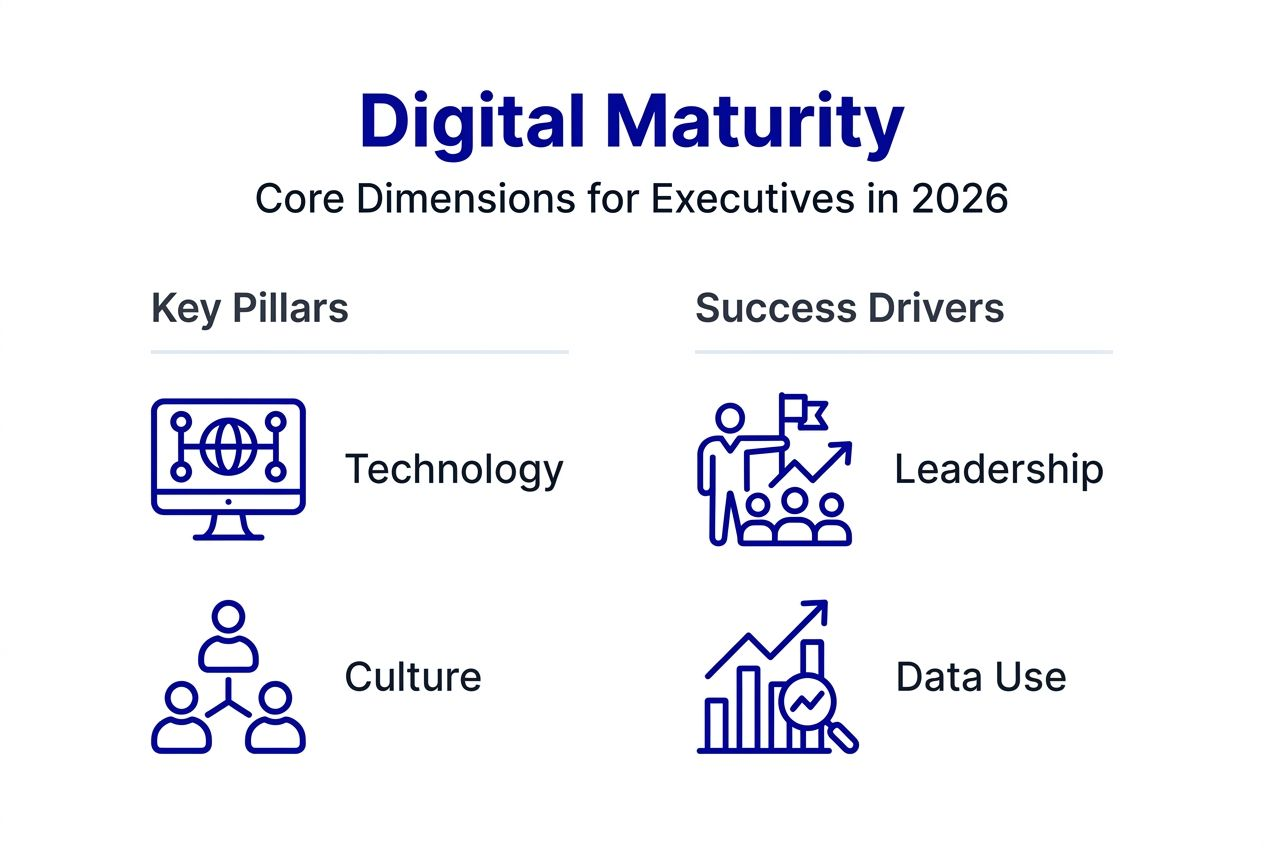
The core components span four pillars:
- Technology infrastructure: Cloud platforms, data analytics, automation tools, and integrated systems that enable real-time insights and scalable operations.
- Organizational culture: Mindset shifts toward experimentation, continuous learning, and comfort with ambiguity that support innovation.
- Leadership and governance: Executive sponsorship, clear accountability structures, and decision frameworks that align digital investments with strategic objectives.
- People and processes: Workforce skills, change management capabilities, and streamlined workflows that translate technology into tangible productivity gains.
Digital culture’s role cannot be overstated. Culture determines whether expensive technology sits unused or becomes a competitive weapon. Leadership sets the tone, allocating resources and modeling the behaviors that signal digital transformation is a strategic priority, not an IT project.
Digital maturity enables continuous adaptability. Markets shift, customer expectations evolve, and competitive threats emerge faster than ever. Organizations with high digital maturity pivot quickly because their people, processes, and technology are already synchronized.
Why digital maturity matters: business outcomes and risks of low maturity
Digital maturity directly correlates with revenue growth, operational efficiency, and market competitiveness. Organizations at higher maturity stages deploy innovations faster, scale operations efficiently, and capture customer insights that drive personalized experiences. Low maturity creates blind spots that competitors exploit.

The risks are quantifiable. 70% of digital initiatives fail due to cultural and leadership gaps, not technology shortcomings. Companies stuck at low maturity struggle with siloed data, manual processes that drain productivity, and employee frustration that fuels turnover. They invest in digital tools but see minimal ROI because the foundation isn’t ready.
Consider these tangible impacts:
- Revenue acceleration: High maturity organizations leverage data analytics to identify growth opportunities, personalize offerings, and optimize pricing strategies in real time.
- Cost reduction: Automation of repetitive tasks and integrated workflows eliminate redundancies, reducing operational expenses by 20 to 40%.
- Customer experience: Unified digital platforms enable seamless interactions across channels, boosting satisfaction scores and loyalty metrics.
- Risk mitigation: Robust governance and real-time monitoring detect threats early, reducing compliance violations and cybersecurity incidents.
“Organizations with strong leadership engagement in digital initiatives see success rates increase by 50%, proving that executive commitment is as critical as the technology itself.”
Leadership’s role extends beyond budget approval. Executives who actively champion digital maturity communicate the vision, remove bureaucratic obstacles, and hold teams accountable for measurable outcomes. This top-down commitment cascades through the organization, creating momentum that overcomes resistance.
Low digital maturity also limits agility. When market conditions shift, immature organizations react slowly because their technology, processes, and culture aren’t aligned. Competitors capture market share while they’re still debating next steps.
Common misconceptions and barriers to digital maturity
Many executives equate digital maturity with technology adoption, believing that deploying cloud platforms or AI tools automatically elevates organizational capability. This myth ignores the cultural and leadership dimensions that determine whether technology delivers value or becomes shelfware.
Another misconception treats digital transformation as a finite project with a clear endpoint. In reality, digital maturity is an ongoing journey requiring continuous investment, learning, and adaptation. Markets evolve, technologies advance, and customer expectations shift, demanding perpetual refinement.
The barriers are equally misunderstood:
- Employee resistance: 70% of digital initiative failures stem from workforce pushback, often rooted in fear of job displacement or inadequate training.
- Leadership gaps: Executives who view digital transformation as an IT responsibility fail to provide the strategic direction and resources needed for success.
- Siloed operations: Departments operating independently create fragmented customer experiences and duplicate efforts, wasting resources.
- Short-term focus: Quarterly earnings pressure incentivizes quick wins over foundational investments that yield long-term competitive advantage.
- Cultural inertia: Organizations with risk-averse cultures struggle to embrace experimentation and tolerate the failures that drive innovation.
Pro Tip: Address employee resistance early by involving teams in digital planning. When people help shape the transformation, they become advocates rather than obstacles.
Overcoming these barriers requires honest assessment. Leaders must acknowledge where their organization truly stands, not where they hope it stands. This clarity enables targeted interventions that address root causes rather than symptoms.
Digital culture development deserves dedicated attention. Culture change is slow, requiring consistent messaging, visible leadership behaviors, and incentive structures that reward digital adoption. Organizations that rush this step see technology investments underutilized.
Recognizing that technology, people, and processes must advance together prevents lopsided investments. A powerful analytics platform is worthless if employees lack the skills to interpret insights or the authority to act on them.
Digital maturity frameworks and models
Structured frameworks provide the roadmap for assessing current maturity and planning advancement. Most models define six stages, from organizations with no digital presence to those operating at fully optimized levels where digital capabilities are embedded enterprise-wide.
These stages typically progress as follows:
| Stage | Characteristics | Strategic Focus |
|---|---|---|
| Initial | Minimal digital presence, manual processes dominate, ad hoc technology use | Build awareness, secure executive sponsorship |
| Developing | Some digital tools deployed, limited integration, departmental silos persist | Pilot initiatives, develop digital skills |
| Defined | Clear digital strategy exists, integrated platforms emerging, governance forming | Scale successful pilots, standardize processes |
| Managed | Data-driven decision making, automated workflows, cross-functional collaboration | Optimize operations, enhance customer experience |
| Optimized | Continuous innovation, predictive analytics, agile adaptation to market changes | Sustain competitive advantage, explore emerging tech |
Frameworks assess multiple dimensions beyond technology:
- Strategy and vision: Clarity of digital objectives, alignment with business goals, roadmap completeness
- Leadership and culture: Executive commitment, change readiness, innovation mindset
- Governance and compliance: Decision rights, risk management, regulatory adherence
- Technology and data: Infrastructure robustness, integration levels, data quality and accessibility
- Processes and operations: Workflow efficiency, automation adoption, agility and flexibility
- Workforce and skills: Digital literacy, training programs, talent retention
Using standardized frameworks aligns leadership teams around a common language and shared understanding of priorities. This alignment prevents conflicting initiatives and ensures resource allocation supports strategic objectives.
Continuous improvement mindsets drive sustained gains. Organizations treating maturity as an evolution rather than a destination continuously reassess capabilities, benchmark against competitors, and invest in emerging opportunities.
Frameworks also enable meaningful progress measurement. Executives can track advancement across dimensions, identify lagging areas requiring attention, and demonstrate ROI to stakeholders. This visibility builds confidence in digital investments.
For Middle Eastern organizations, consider regional factors like regulatory environments in KSA, UAE, and Egypt, cultural preferences for on-premise solutions in banking and government, and Arabic language requirements that global frameworks may overlook.
Leveraging a digital maturity roadmap or digital transformation roadmap tailored to your industry and market accelerates progress by incorporating proven practices and avoiding common pitfalls.
From understanding to action: building your digital maturity roadmap
Translating frameworks into results requires a structured, phased approach that balances quick wins with foundational investments. Start by conducting an honest assessment of your organization’s current digital maturity across all dimensions, not just technology.
Follow these steps to build your roadmap:
-
Assess current state comprehensively: Use a digital maturity framework to evaluate technology, culture, leadership, governance, processes, and workforce capabilities. Involve stakeholders from multiple departments to capture diverse perspectives and identify hidden gaps.
-
Define target maturity and business outcomes: Determine which maturity stage aligns with your strategic objectives. Link digital initiatives to specific, measurable business outcomes like revenue growth, cost reduction, customer satisfaction, or market share expansion.
-
Prioritize initiatives based on impact and feasibility: Not all gaps require immediate attention. Focus first on high-impact, achievable initiatives that demonstrate value quickly, building momentum and stakeholder confidence for larger investments.
-
Develop a multi-year strategic roadmap: Align digital initiatives with business goals across a realistic timeline. Balance short-term wins with long-term capability building, ensuring each phase builds on previous achievements.
-
Invest in culture and leadership simultaneously: Technology investments fail without cultural readiness. Launch change management programs, leadership development, and communication campaigns that prepare the organization for transformation.
-
Implement governance and accountability structures: Establish clear decision rights, resource allocation processes, and performance metrics. Assign executive sponsors to major initiatives and empower cross-functional teams to drive progress.
-
Monitor progress and adapt continuously: Regularly evaluate initiatives against metrics, gather feedback, and adjust the roadmap based on results and market shifts. Digital maturity is dynamic, requiring ongoing refinement.
Pro Tip: Create a digital maturity dashboard visible to leadership, tracking key metrics across all dimensions. Transparency drives accountability and keeps transformation top of mind.
Change management is critical throughout. Communicate the “why” behind transformation, celebrate early wins, and provide training that empowers employees to embrace new tools and processes. Resistance diminishes when people see personal benefits.
Consider a digital transformation checklist to ensure no critical steps are overlooked. Checklists prevent common oversights like inadequate training budgets, unclear success metrics, or underestimating timeline requirements.
For organizations in growth phases, integrate digital maturity planning with your business growth roadmap to ensure digital capabilities scale in lockstep with business expansion.
The roadmap should be a living document, reviewed quarterly and updated based on progress, emerging technologies, competitive moves, and evolving customer expectations. Rigidity kills agility.
Accelerate your digital maturity with Singleclic
Navigating digital maturity requires expertise, proven methodologies, and technology partners who understand regional market dynamics. Singleclic brings over 10 years of digital transformation experience across KSA, UAE, and Egypt, helping organizations move beyond digitalization into true optimization.
Our ERP readiness assessment evaluates your organization’s preparedness for enterprise platform adoption, identifying gaps in processes, skills, and governance that could derail implementation. We ensure technology investments align with your digital maturity stage and business objectives.
Explore our business process automation guide to discover how streamlining workflows complements digital maturity initiatives, freeing resources for innovation. Our low-code platform Cortex enables rapid process optimization without extensive coding.
Leverage AI in digital transformation to accelerate maturity gains. From predictive analytics to intelligent automation, AI amplifies the impact of digital investments when implemented strategically.
Frequently asked questions
What exactly is digital maturity?
Digital maturity is the degree to which an organization integrates digital technology with culture, leadership, processes, and workforce capabilities to achieve strategic objectives. It goes far beyond deploying software, encompassing the mindset, skills, and governance structures that enable continuous adaptation and competitive advantage.
How do you measure digital maturity in practice?
Measurement uses structured frameworks assessing multiple dimensions: technology infrastructure, data capabilities, leadership commitment, cultural readiness, process optimization, workforce skills, governance structures, and customer experience. Organizations score themselves across these areas, identifying gaps and tracking progress over time through quantitative metrics and qualitative assessments.
What causes employee resistance to digital initiatives?
Resistance typically stems from fear of job displacement, inadequate training leaving people feeling incompetent, lack of involvement in planning creating “done to me” feelings, unclear communication about benefits, and past failed initiatives eroding trust. Addressing resistance requires transparent communication, comprehensive training, involvement in decision making, and demonstrating how digital tools make work easier, not redundant.
What are the benefits of reaching higher digital maturity?
Higher maturity delivers faster innovation deployment, improved operational efficiency reducing costs by 20 to 40%, enhanced customer experiences through personalized interactions, better risk management via real-time monitoring, data-driven decision making replacing gut instinct, and increased agility to adapt quickly to market changes. These benefits compound over time, creating sustained competitive advantage.
Which digital maturity models are most widely used?
Common models include the six-stage frameworks ranging from initial to optimized, MIT’s digital maturity matrix examining digital intensity and transformation management intensity, Deloitte’s digital maturity model focusing on customer experience and operations, and industry-specific frameworks tailored to sectors like healthcare, banking, or manufacturing. The best model aligns with your industry, organizational size, and strategic priorities.
Recommended
- Singleclic: Download the 7-step digital transformation checklist for leaders to drive growth, align stakeholders, and optimize operations—start today.
- Digital Transformation Roadmap for C-Level Success
- Digital Readiness: Optimizing Healthcare Operations Today
- What Is Digital Strategy? Complete Executive Guide | Singleclic