Cloud ERP adoption is surging across the globe, with over 60 percent of american businesses now exploring cloud-based management solutions for greater efficiency and agility. As companies face rising competition and complex regulatory demands, the push for integrated, scalable tools has never been stronger. This guide unpacks the core principles, deployment models, and benefits of cloud ERP, offering a clear path for organizations eager to modernize how they manage resources and drive growth.
Table of Contents
- Defining Cloud ERP and Core Principles
- Deployment Models and Integration Options
- Essential Features and Capabilities of Cloud ERP
- Business Benefits and Strategic Advantages
- Common Risks, Challenges, and Alternatives
Key Takeaways
| Point | Details |
|---|---|
| Cloud ERP Benefits | Cloud ERP enhances operational efficiency by centralizing functions and providing real-time data access, leading to improved decision-making. |
| Deployment Models | Businesses can choose between public, private, and hybrid cloud deployments to align with their specific needs and growth objectives. |
| Key Features | Effective cloud ERP systems offer integrated financial, supply chain, and human resources management capabilities, promoting streamlined workflows. |
| Risks and Challenges | Organizations must address potential data security risks and integration complexities to successfully implement cloud ERP solutions. |
Defining Cloud ERP and Core Principles
Cloud Enterprise Resource Planning (ERP) represents a transformative approach to business management software, delivering comprehensive operational capabilities through internet-based infrastructure. Unlike traditional on-premise systems, cloud ERP solutions provide organizations unprecedented flexibility, scalability, and accessibility.
At its core, cloud ERP enables businesses to centralize and streamline critical functions like finance, human resources, supply chain management, and customer relationship management into a single, integrated platform. By leveraging distributed computing technologies, these systems offer real-time data synchronization, enhanced collaboration, and powerful analytics capabilities that traditional software cannot match.
The fundamental principles of cloud ERP systems revolve around several key characteristics:
- Accessibility: Instant access from any device with internet connectivity
- Scalability: Seamless expansion of computing resources based on organizational needs
- Cost-Effectiveness: Reduced infrastructure investments and maintenance expenses
- Automatic Updates: Continuous system improvements without manual interventions
- Advanced Security: Robust protection mechanisms integrated at infrastructure and application levels
For businesses in Saudi Arabia and UAE, cloud ERP solutions represent a strategic investment in digital transformation, enabling regional enterprises to compete more effectively in increasingly complex market environments. By adopting these sophisticated platforms, organizations can dramatically improve operational efficiency, decision-making speed, and overall business agility.
Deployment Models and Integration Options
Cloud ERP deployment represents a strategic approach that offers businesses multiple architectural frameworks for implementing enterprise resource planning systems. Organizations can choose from several deployment models that align with their specific operational requirements, technological infrastructure, and business goals.
Traditional deployment options have evolved, with modern cloud ERP systems now supporting flexible infrastructure integration models that enable seamless adaptation to diverse technological ecosystems. These models typically encompass three primary deployment strategies: public cloud, private cloud, and hybrid cloud configurations, each offering unique advantages for businesses in Saudi Arabia and UAE seeking digital transformation.
The key deployment models include:
-
Public Cloud Deployment
- Shared infrastructure managed by third-party providers
- Lower initial investment
- Rapid scalability
- Minimal internal IT management required
-
Private Cloud Deployment
- Dedicated infrastructure for single organization
- Enhanced security controls
- Customizable architecture
- Complete infrastructure sovereignty
-
Hybrid Cloud Deployment
- Combination of public and private cloud resources
- Flexible workload distribution
- Balanced approach to security and accessibility
- Optimized cost management
By integrating cloud infrastructure standards, modern ERP solutions provide unprecedented flexibility in connecting disparate business systems. This approach allows organizations to create comprehensive, interconnected technological ecosystems that streamline operations, enhance data visibility, and support agile decision-making processes across finance, human resources, supply chain, and customer relationship management domains.
For businesses in the Middle East, selecting the right deployment model requires careful evaluation of organizational complexity, regulatory requirements, and strategic growth objectives. Cloud ERP solutions from providers like Singleclic offer tailored approaches that can transform traditional operational frameworks into dynamic, responsive business platforms.
Essential Features and Capabilities of Cloud ERP
Cloud ERP systems represent a sophisticated technological solution that goes beyond traditional enterprise resource planning software, offering businesses unprecedented capabilities for operational management and strategic decision-making. These advanced platforms integrate multiple business functions into a cohesive, intelligent ecosystem that adapts dynamically to organizational needs.

Research highlights that successful cloud ERP adoption depends on critical features that transform how organizations manage their core business processes. The most compelling cloud ERP solutions provide comprehensive modules that seamlessly connect different departments, enabling real-time data exchange, enhanced visibility, and streamlined operational workflows.
Key capabilities of modern cloud ERP systems include:
-
Financial Management
- Real-time financial reporting
- Advanced budgeting tools
- Multi-currency support
- Automated compliance tracking
-
Supply Chain Optimization
- Inventory management
- Procurement automation
- Vendor performance tracking
- Predictive demand forecasting
-
Human Resources Integration
- Employee lifecycle management
- Performance tracking
- Payroll processing
- Recruitment workflow automation
By enhancing organizational agility through integrated cloud technologies, these systems enable businesses in Saudi Arabia and UAE to respond rapidly to market changes, optimize resource allocation, and drive strategic growth. ERP system features have evolved from simple data repositories to intelligent platforms that provide predictive analytics, machine learning capabilities, and comprehensive insights across all business domains.
Modern cloud ERP solutions represent more than technological infrastructure. They are strategic tools that transform how organizations operate, enabling businesses to move beyond traditional management approaches and embrace a more dynamic, data-driven future of enterprise management.
Business Benefits and Strategic Advantages
Cloud ERP systems deliver transformative strategic advantages that extend far beyond traditional technological solutions, empowering organizations to reimagine their operational capabilities and competitive positioning. These sophisticated platforms represent more than mere software implementations they are comprehensive business transformation engines that fundamentally reshape how companies approach resource management and strategic decision-making.
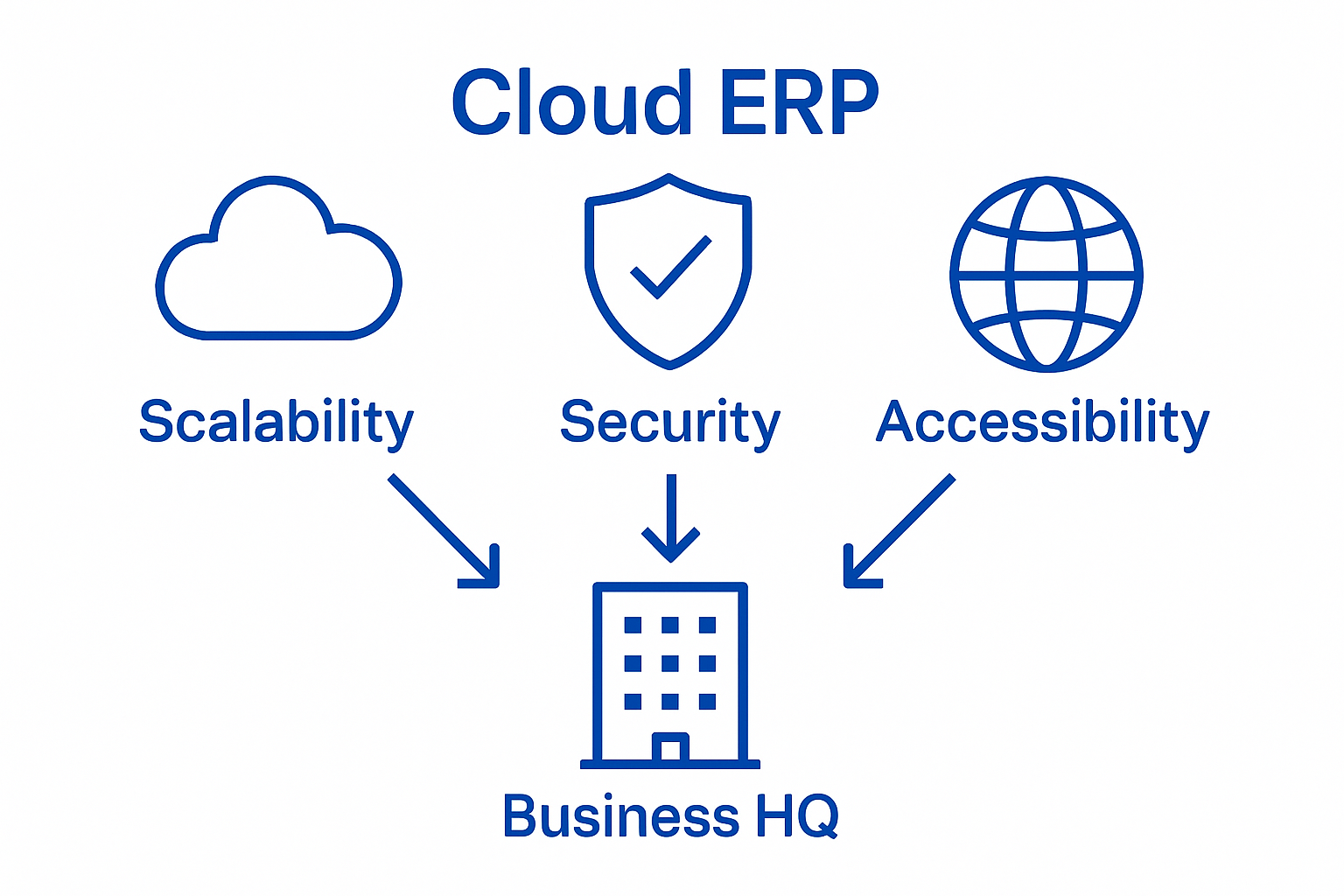
Comprehensive research on operational efficiency reveals that cloud ERP adoption generates substantial strategic advantages for businesses, particularly in dynamic markets like Saudi Arabia and UAE. Organizations implementing these systems experience dramatic improvements in decision-making quality, operational transparency, and organizational responsiveness.
The key strategic advantages include:
-
Operational Efficiency
- Reduced administrative overhead
- Streamlined cross-departmental workflows
- Automated repetitive processes
- Minimized manual data entry errors
-
Financial Performance
- Lower infrastructure investment costs
- Real-time financial insights
- Enhanced budget allocation
- Predictive financial modeling
-
Competitive Adaptability
- Rapid technology integration
- Scalable infrastructure
- Quick market response capabilities
- Continuous technological upgrades
Global operational innovations demonstrate that cloud ERP systems are not just technological tools but strategic assets that enable businesses to transcend traditional operational boundaries. Best ERP solutions now offer intelligent platforms that provide predictive analytics, machine learning capabilities, and comprehensive business insights.
For enterprises in the Middle East, cloud ERP represents a critical pathway to digital transformation, offering unprecedented opportunities to optimize operations, reduce costs, and create more agile, responsive organizational structures that can quickly adapt to rapidly changing market dynamics.
Common Risks, Challenges, and Alternatives
Cloud ERP implementation presents organizations with a complex landscape of potential risks and strategic challenges that require meticulous planning and proactive management. While these systems offer transformative capabilities, businesses must navigate a nuanced terrain of technological, operational, and security considerations to ensure successful digital transformation.
Security perspectives in cloud-based systems highlight critical vulnerabilities that organizations must carefully evaluate before full-scale ERP deployment. These risks range from data privacy concerns to potential integration complexities that can compromise operational efficiency, especially in sensitive industries like finance, healthcare, and government sectors in Saudi Arabia and UAE.
The primary risks and challenges include:
-
Data Security Risks
- Potential unauthorized data access
- Vulnerability to cyber attacks
- Compliance with regional data protection regulations
- Risk of data breaches
-
Integration Challenges
- Complex legacy system migrations
- Compatibility with existing infrastructure
- Potential workflow disruptions
- Performance inconsistencies
-
Operational Limitations
- Initial productivity learning curve
- Dependency on internet connectivity
- Potential vendor lock-in scenarios
- Customization restrictions
E-commerce platform integration strategies suggest multiple alternatives to mitigate these challenges, including hybrid deployment models and phased implementation approaches. Best ERP solutions now offer sophisticated risk management frameworks that help organizations minimize potential disruptions.
For businesses in the Middle East, understanding these risks is crucial. Successful cloud ERP adoption requires a strategic approach that balances technological innovation with robust risk mitigation strategies, ensuring that digital transformation efforts enhance rather than compromise organizational capabilities.
Unlock the Full Potential of Cloud ERP for Your Business
Many organizations struggle with navigating the complex challenges of cloud ERP adoption such as data security concerns, integration with legacy systems, and selecting the right deployment model. This article highlights critical pain points like scalability, seamless collaboration, and operational agility that modern businesses in Saudi Arabia, UAE, and beyond must overcome to stay competitive. Singleclic understands the urgency to transform these challenges into growth opportunities by leveraging proven ERP and CRM implementations designed for regional market demands.
Experience real transformation through tailored cloud ERP solutions that deliver:
- Scalable infrastructure adapted to your unique business needs
- Robust security measures aligned with regional compliance
- Seamless integration across finance, HR, and supply chain domains
Take control of your digital transformation journey today with Singleclic’s expert ERP & CRM Implementation IMAGE:cta_image] Empower your enterprise with trusted partners offering industry-leading solutions including Odoo, Microsoft Dynamics 365, and IBM automation platforms. Visit our site to discover how your organization can elevate beyond digitalization to true operational optimization. Don’t wait. Start reshaping your business for tomorrow at [Singleclic now.
Frequently Asked Questions
What is Cloud ERP?
Cloud ERP (Enterprise Resource Planning) is a comprehensive business management software solution delivered over the internet, which centralizes various operational functions such as finance, human resources, and supply chain management into a single platform.
What are the key benefits of using Cloud ERP?
The key benefits of Cloud ERP include enhanced accessibility, scalability, cost-effectiveness, automatic updates, and advanced security features, allowing organizations to improve operational efficiency and decision-making.
How are Cloud ERP systems deployed?
Cloud ERP systems can be deployed through public cloud, private cloud, or hybrid cloud models, each offering different levels of security, cost, and management requirements based on organizational needs.
What features should I look for in a Cloud ERP solution?
Essential features to look for in a Cloud ERP solution include financial management tools, supply chain optimization functionalities, human resources integration, real-time reporting capabilities, and predictive analytics.