Over 60 percent of C-level executives in North American firms identify digital innovation as a critical driver for operational efficiency. For leaders in Saudi Arabian and UAE healthcare and construction sectors, understanding these american-led advances can shape the way organizations adapt to rapid market changes. This guide offers a clear look at the concepts and proven applications that are transforming traditional business models into modern, agile enterprises.
Table of Contents
- Defining Digital Innovation and Key Concepts
- Types of Digital Innovation in Business
- How Digital Innovation Optimizes Processes
- Real-World Applications in Healthcare and Construction
- Risks, Challenges, and Cost Implications
- Comparing Digital Innovation and Digital Transformation
Key Takeaways
| Point | Details |
|---|---|
| Digital Innovation Redefines Business | Organizations must embrace digital innovation by integrating technology, adapting business models, and fostering ecosystem collaboration for value creation. |
| Types of Digital Innovation | Understand the primary categories of digital innovation—product, process, platform, and organizational innovation—to optimize business operations. |
| Challenges in Digital Transformation | Be aware of significant risks such as cybersecurity threats, skill gaps, and cultural resistance that can hinder successful implementation. |
| Distinction Between Innovation and Transformation | Recognize that digital innovation focuses on specific advancements while digital transformation involves comprehensive organizational change. |
Defining Digital Innovation and Key Concepts
Digital innovation represents a strategic transformation far beyond traditional technological upgrades, fundamentally reshaping how organizations operate and create value. Emerging research on digital innovation ecosystems reveals a complex framework integrating technological execution, business model evolution, and collaborative networks across industries.
At its core, digital innovation encompasses three critical dimensions: technological implementation, organizational adaptation, and ecosystem collaboration. In the context of Saudi Arabian and UAE markets, this means leveraging digital technologies to redesign business processes, enhance customer experiences, and develop new revenue streams. Digital transformation goes beyond mere digitization, requiring organizations to reimagine their entire operational approach.
Our low-code platform, Cortex, exemplifies this strategic approach by enabling businesses to design, automate, and optimize complex processes without extensive coding. Comprehensive academic reviews confirm that digital innovation is increasingly becoming a networked, ecosystem-driven phenomenon that integrates emerging technologies to reshape global value creation.
Key characteristics of digital innovation include:
- Technological integration across multiple platforms
- Continuous process optimization
- Adaptive business model design
- Collaborative ecosystem development
- Rapid experimentation and iterative improvement
Pro tip: Start your digital innovation journey by conducting a comprehensive audit of existing technological infrastructure and identifying potential areas for strategic digital transformation.
Types of Digital Innovation in Business
Digital innovation encompasses multiple strategic approaches that transform organizational capabilities and competitive positioning. Comprehensive research mapping digital innovation types reveals distinct categories of innovation that drive business optimization across industries, particularly in technology-forward markets like Saudi Arabia and the United Arab Emirates.
The primary types of digital innovation include product innovation, process innovation, platform innovation, and business model innovation. Each type represents a unique pathway for organizations to leverage technological advancements. For instance, product innovation might involve developing digital solutions like our low-code platform Cortex, which enables businesses to design complex workflows without extensive programming expertise. Academic categorizations of innovation demonstrate how these innovation types interact across individual, organizational, and international levels.
Specific digital innovation types can be further broken down:
- Product Innovation: Creating new digital products or digitally enhanced offerings
- Process Innovation: Redesigning internal workflows using digital technologies
- Platform Innovation: Developing digital platforms that enable new forms of interaction
- Organizational Innovation: Transforming internal structures and collaboration methods
- Market Innovation: Discovering new market segments through digital insights
Pro tip: Conduct a systematic digital innovation assessment by mapping your current technological capabilities against emerging industry trends and identifying potential transformation opportunities.
How Digital Innovation Optimizes Processes
Digital process optimization represents a transformative approach to enhancing organizational efficiency through strategic technological integration. Advanced research on digital innovation mechanisms demonstrates how businesses can systematically streamline operations by leveraging automation, data analytics, and improved interoperability across critical workflow domains.

In markets like Saudi Arabia and the United Arab Emirates, digital innovation enables organizations to achieve unprecedented levels of operational performance. Our low-code platform Cortex exemplifies this optimization strategy by allowing businesses to redesign complex workflows rapidly. Digital competency frameworks highlight the critical role of skill development and collaborative networks in driving continuous process improvements and sustainable operational transformation.
Key mechanisms of process optimization through digital innovation include:
- Real-time Data Analytics: Enabling instant decision-making capabilities
- Workflow Automation: Reducing manual intervention and human error
- Intelligent Process Redesign: Continuously improving operational efficiency
- Cross-functional Integration: Breaking down organizational silos
- Predictive Performance Modeling: Anticipating and mitigating potential bottlenecks
Pro tip: Implement a comprehensive digital process mapping exercise to identify optimization opportunities and prioritize technological interventions based on potential impact and organizational readiness.
Real-World Applications in Healthcare and Construction
Digital innovation is transforming critical industries through targeted technological interventions that address unique operational challenges. Comprehensive digital transformation research reveals how advanced technologies like AI and data analytics are revolutionizing workflows in healthcare and construction sectors across Saudi Arabia and the United Arab Emirates.
In healthcare, digital innovations are enabling unprecedented improvements in patient care and operational efficiency. Technologies such as telemedicine, AI-driven diagnostics, and integrated patient management systems are streamlining medical processes. Similarly, the construction industry benefits from building information modeling (BIM), IoT sensors, and predictive maintenance technologies. Multilevel digital transformation frameworks demonstrate how these technological integrations drive performance and responsiveness.
Key digital innovation applications include:
-
Healthcare Applications:
- Telemedicine platforms
- AI-powered diagnostic tools
- Electronic health record systems
- Remote patient monitoring
- Predictive health analytics
-
Construction Applications:
- Building Information Modeling (BIM)
- Drone-based site monitoring
- Predictive maintenance technologies
- Real-time project management platforms
- Advanced safety monitoring systems
Pro tip: Develop a strategic roadmap for digital innovation by conducting thorough technology assessments and identifying specific use cases that align with your organization’s unique operational requirements.
Here is a summary of how digital innovation is applied in key industries:
| Industry | Major Technologies | Main Benefits |
|---|---|---|
| Healthcare | AI diagnostics, Telemedicine | Faster care, better outcomes |
| Construction | BIM, IoT sensors | Reduced delays, higher safety |
| Retail | E-commerce, Mobile apps | Enhanced customer experience |
| Finance | Blockchain, Digital banking | Secure transactions, access |
Risks, Challenges, and Cost Implications
Digital innovation, while transformative, presents significant challenges that organizations must strategically navigate. Systematic risk assessment research reveals complex economic, technological, and organizational barriers that can impede successful digital transformation in markets like Saudi Arabia and the United Arab Emirates.
The primary risks and challenges encompass multiple interconnected dimensions. Cybersecurity vulnerabilities emerge as a critical concern, with potential financial and reputational damages threatening organizational stability. Organizational digital innovation challenges highlight significant obstacles such as skill gaps, cultural resistance, and substantial financial investments required for effective implementation. Our low-code platform Cortex addresses these challenges by providing flexible, secure, and cost-effective digital transformation solutions.
Key risks and challenges include:
-
Technological Risks:
- Cybersecurity vulnerabilities
- Legacy system integration complexity
- Technology obsolescence
- Data privacy concerns
- Technical skill deficiencies
-
Financial Challenges:
- High initial implementation costs
- Ongoing maintenance expenses
- Uncertain return on investment
- Resource allocation complexities
- Potential productivity disruptions
-
Organizational Barriers:
- Cultural resistance to change
- Management skepticism
- Employee skill gaps
- Communication challenges
- Inadequate change management strategies
Pro tip: Develop a comprehensive risk mitigation strategy that includes phased implementation, continuous skills training, and robust change management protocols to minimize digital innovation challenges.
Comparing Digital Innovation and Digital Transformation
Digital innovation and digital transformation represent interconnected yet distinctly different strategic approaches to technological advancement in modern organizations. Comprehensive research on digital innovation frameworks reveals crucial nuances between these concepts, particularly relevant for businesses in Saudi Arabia and the United Arab Emirates seeking competitive technological strategies.
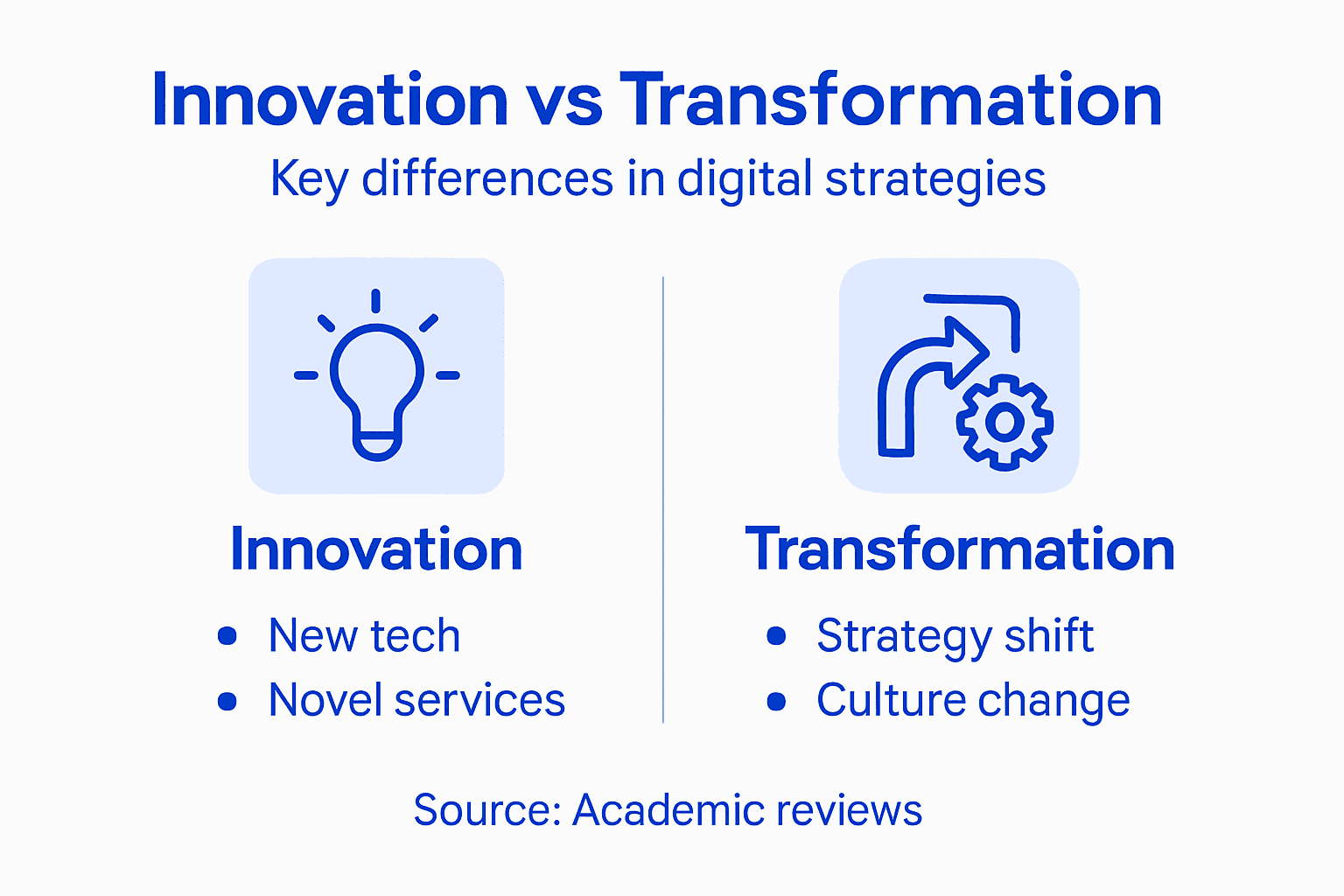
Multidisciplinary academic reviews clarify that digital innovation focuses on creating novel technological products, services, and processes, while digital transformation encompasses a more holistic organizational change. Our low-code platform Cortex exemplifies this distinction by enabling businesses to not just innovate technologically but fundamentally reimagine their operational models and strategic approaches.
Key comparative aspects include:
This table outlines key differences between digital innovation and digital transformation:
| Aspect | Digital Innovation | Digital Transformation |
|---|---|---|
| Scope | Specific processes or products | Entire organization |
| Focus | Novel solutions and quick wins | Long-term restructuring |
| Typical Timeline | Short to medium term | Medium to long term |
| Success Metric | Adoption of new tools or features | Cultural and operational alignment |
-
Digital Innovation:
- Targeted technological advancements
- Specific product or service improvements
- Incremental technological changes
- Focused on novel digital solutions
- Shorter implementation cycles
-
Digital Transformation:
- Comprehensive organizational redesign
- Systemic strategic realignment
- Cultural and operational restructuring
- Enterprise-wide technological integration
- Long-term strategic vision
Pro tip: Develop a strategic roadmap that distinguishes between digital innovation initiatives and broader digital transformation goals, ensuring alignment with your organization’s long-term technological vision.
Unlock True Business Optimization Through Digital Innovation
The article highlights major challenges such as the need for real-time process optimization, overcoming organizational resistance, and integrating complex digital ecosystems in fast-growing markets like Saudi Arabia and the United Arab Emirates. If your business struggles with these hurdles or seeks powerful digital innovation strategies including low-code platforms and enterprise AI solutions, you are not alone. The goal is clear: move beyond digitization to strategic, adaptable, and efficient process transformation that drives measurable growth.
At Singleclic, we specialize in empowering organizations across KSA, UAE, and Egypt to redefine their operations with solutions tailored to these exact needs. Our Arabic-enabled low-code platform Click Flow and Cortex enables you to build and automate workflows without writing code, streamline cross-functional collaboration, and respond instantly to changing business demands. Combined with our expert services in ERP/CRM implementation and business process automation using IBM BAW and UiPath, we help turn digital innovation concepts into scalable reality.
Transform your business and embrace digital innovation the right way. Explore how Singleclic’s proven expertise and world-class technology can make a difference for your organization today.
Ready to optimize your business processes with industry-leading digital innovation? Visit Singleclic now and take the first step toward transforming your operational efficiency with customized low-code solutions and enterprise AI. Explore our Business Process Automation services and discover how we help organizations in healthcare, construction, banking, and more thrive in the digital era.
Frequently Asked Questions
What is digital innovation?
Digital innovation refers to the strategic transformation of organizations through the integration of technology, fundamentally reshaping operations and creating value beyond traditional upgrades.
How can digital innovation optimize business processes?
Digital innovation optimizes business processes by leveraging technologies such as automation, data analytics, and real-time integration, enhancing operational efficiency and streamlining workflows.
What are the main types of digital innovation in business?
The main types of digital innovation include product innovation, process innovation, platform innovation, and business model innovation, each providing unique pathways for leveraging technology to enhance organizational capabilities.
What risks are associated with digital innovation?
Risks associated with digital innovation include cybersecurity vulnerabilities, integration challenges with legacy systems, high initial implementation costs, cultural resistance to change, and skill gaps among employees.
Recommended
- 7 Key Benefits of Digital Transformation for Business Leaders
- what are the 4 main areas of digital transformation
- Digital Transformation Trends in Retail | singleclic
- Enterprise Digitalization: Transforming Business for Growth
- Role of Digital Print Technology in Modern Branding
- Back Office Cloud Technology – Samtouch Point of Sale