Over 60 percent of american companies now rank digital culture as the top driver of organizational change. For C-level leaders in Saudi Arabia and UAE, understanding how digital culture reshapes efficiency is not a luxury—it is a strategic necessity. This article uncovers how targeted digital practices can accelerate operational improvement and drive lasting transformation in construction and healthcare, offering practical insights that leaders can apply across their enterprises.
Table of Contents
- Defining Digital Culture In Modern Business
- Key Elements Shaping Digital-First Organizations
- Types Of Digital Culture Across Industries
- How Digital Culture Powers Transformation
- Risks And Challenges In Cultural Shift
- Best Practices For Sustainable Digital Adoption
Key Takeaways
| Point | Details |
|---|---|
| Digital Culture is Transformational | Digital culture drives a fundamental change in how organizations operate, encouraging agility, innovation, and collaboration. |
| Leadership and Ethics Matter | Successful digital transformation requires strong leadership commitment and a focus on ethical practices in technology use. |
| Adaptation to Cultural Types is Key | Organizations must understand their unique digital culture type to effectively align technological initiatives with existing values. |
| Continuous Learning is Essential | Fostering a culture of continuous learning and experimentation supports sustainable digital adoption and innovation. |
Defining Digital Culture in Modern Business
In the rapidly evolving business landscape, digital culture represents more than just technological adoption – it’s a fundamental transformation of organizational mindset and operational practices. Digital transformation strategies reveal that modern enterprises are fundamentally reimagining how they create value, interact with customers, and drive innovation.
At its core, digital culture encompasses six critical dimensions: collaboration, customer-centricity, agile decision making, innovation mindset, risk tolerance, and data-driven strategic planning. These dimensions transcend traditional hierarchical structures, enabling organizations in Saudi Arabia and UAE to respond dynamically to market changes. Companies embracing this culture recognize technology not as a tool, but as an integrated approach to solving complex business challenges.
Unlike traditional corporate environments, digital culture promotes continuous learning, experimentation, and rapid adaptation. Our low-code platform Cortex, for instance, embodies these principles by allowing teams to design and automate complex processes without extensive coding knowledge. This approach democratizes technological innovation, empowering employees across all organizational levels to contribute to digital transformation efforts.
Pro tip: Assess your organization’s digital culture maturity through structured evaluations that measure technological literacy, collaboration capabilities, and innovative thinking across departments.
Key Elements Shaping Digital-First Organizations
Successful digital transformation requires a strategic integration of multiple organizational dimensions. Organizational digital transformation frameworks highlight three critical driving elements: leadership, organizational culture, and technological enablers that fundamentally reshape how businesses operate in the digital age.
The strategic components of digital-first organizations span multiple interconnected domains. In Saudi Arabia and UAE, forward-thinking enterprises are focusing on key actions such as resource alignment, continuous operational improvement, and comprehensive talent development. These organizations recognize that digital transformation is not merely about implementing new technologies, but about creating an adaptive ecosystem where technology, processes, and human capabilities are seamlessly integrated.
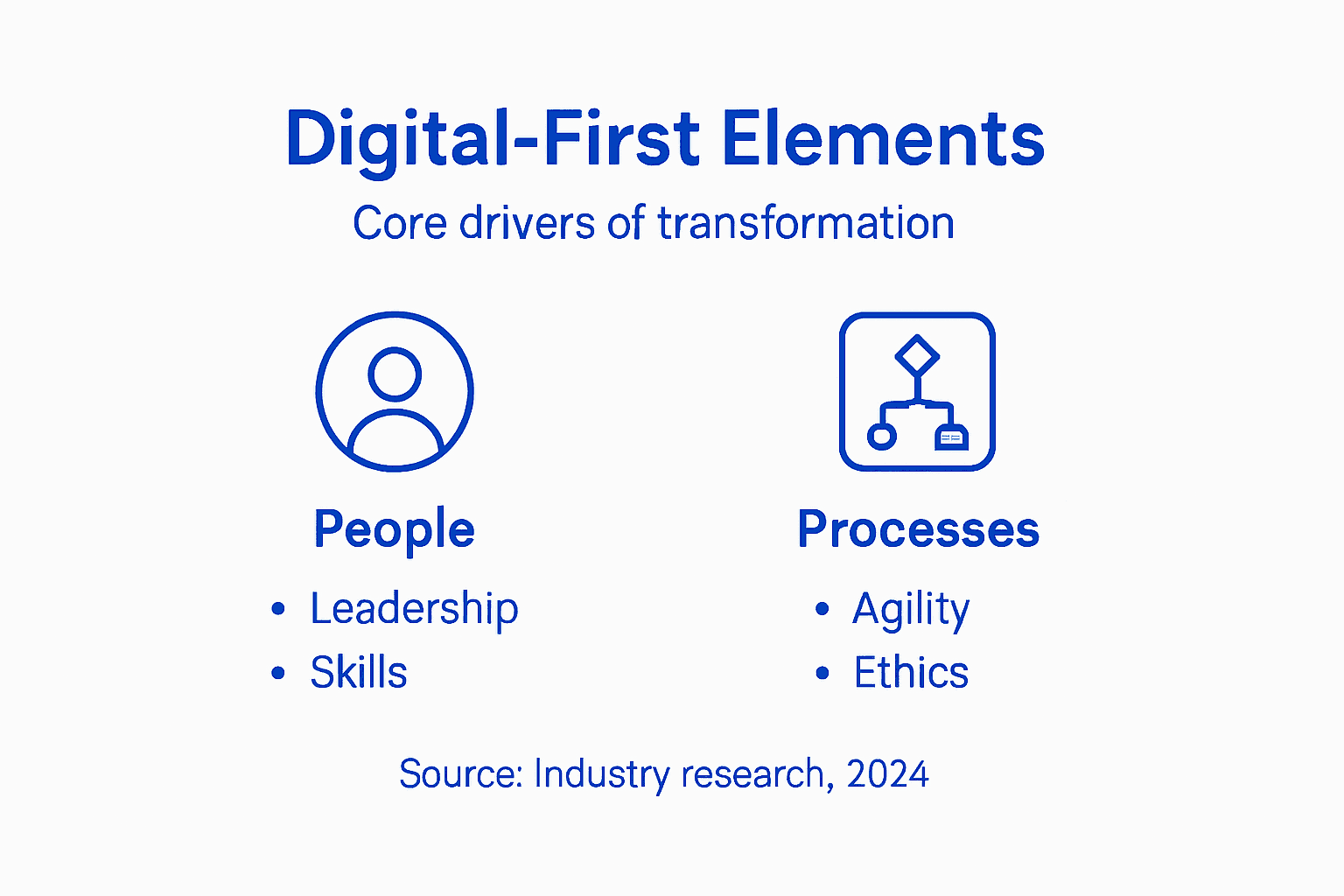
Ethical considerations have become paramount in shaping digital strategies. Modern organizations must prioritize data privacy, AI morality, and responsible technological innovation. Our low-code platform Cortex exemplifies this approach by providing tools that democratize technology while maintaining robust governance frameworks. By empowering employees with accessible technological solutions, companies can foster a culture of innovation that balances technological advancement with strategic intentionality.
Pro tip: Conduct regular digital maturity assessments that evaluate not just technological capabilities, but also organizational readiness, cultural adaptability, and ethical technological practices.
Types of Digital Culture Across Industries
Digital culture varies significantly across different sectors, reflecting unique organizational priorities and technological approaches. Systematic literature reviews have identified distinct cultural archetypes that shape digital transformation strategies, revealing how industries like healthcare, construction, and technology adapt differently to technological change.
In the context of Saudi Arabia and UAE, organizations are exploring four primary digital culture types derived from the Competing Values Framework: clan, adhocracy, hierarchy, and market-oriented cultures. Each type represents a unique approach to technological integration. For instance, healthcare organizations tend to prioritize structured, hierarchical approaches with robust compliance mechanisms, while technology startups often embrace more agile, adhocracy-driven cultures that emphasize rapid innovation and experimentation.
The multifaceted nature of digital culture demands nuanced understanding beyond technological implementation. Our low-code platform Cortex enables organizations to bridge cultural gaps by providing flexible tools that accommodate diverse operational styles. By recognizing that digital transformation is fundamentally a human process, companies can design strategies that align technological capabilities with existing organizational values and workforce capabilities.
Pro tip: Conduct periodic cross-functional workshops that map your organization’s current digital culture type and identify targeted strategies for evolving toward more adaptive, innovation-friendly cultural models.
Here’s a summary comparing the four main digital culture types across industries:
| Culture Type | Key Characteristics | Typical Industry Examples | Impact on Transformation |
|---|---|---|---|
| Clan | Collaborative, team-oriented | Education, Non-profits | Strong engagement, slower change |
| Adhocracy | Innovative, flexible, experimental | Startups, Technology | Rapid innovation, adaptable |
| Hierarchy | Structured, controlled, compliance-led | Healthcare, Government | Reliable, slower innovation |
| Market-Oriented | Competitive, results-focused, dynamic | Retail, Finance | Performance-driven, fast response |
How Digital Culture Powers Transformation
Digital culture serves as a critical catalyst for organizational metamorphosis, driving profound changes in operational approaches and strategic thinking. Organizational transformation research demonstrates how digital culture fundamentally reshapes norms, behaviors, and processes across industries, enabling companies to respond dynamically to technological disruptions.

In Saudi Arabia and UAE, enterprises are experiencing transformative impacts through digital culture’s unique ability to foster innovation and adaptability. The cultural shift goes beyond technological implementation, encompassing a holistic reimagining of how work gets accomplished. Key attributes like entrepreneurial mindsets, continuous learning, and data-driven decision making become embedded in organizational DNA, replacing traditional hierarchical and static operational models with more fluid, responsive frameworks.
Our low-code platform Cortex exemplifies this transformational approach by providing tools that empower employees to participate actively in digital evolution. By democratizing technology and encouraging cross-functional collaboration, organizations can create an ecosystem where innovation is not just encouraged but systematically integrated into daily operations. The power of digital culture lies in its capacity to align technological capabilities with human potential, creating a synergistic environment that drives sustainable competitive advantage.
Pro tip: Implement a quarterly digital culture assessment that measures organizational adaptability, technological literacy, and innovation readiness across different departments and hierarchical levels.
Risks and Challenges in Cultural Shift
Digital transformation represents a complex journey fraught with significant cultural obstacles that can derail organizational progress. Organizational cultural transformation research reveals that misalignment between technological initiatives and existing corporate cultures leads to substantial failure rates, highlighting the critical importance of understanding potential risks.
In Saudi Arabia and UAE, enterprises face unique challenges when navigating digital cultural shifts. Employee resistance emerges as a primary barrier, with workers often feeling threatened by technological changes that challenge traditional work methodologies. Key risks include widespread digital skill gaps, uncertainty surrounding change processes, and difficulties embedding continuous learning and adaptation within established organizational frameworks. These challenges are particularly pronounced in sectors with deeply ingrained hierarchical structures that resist rapid technological transformation.
Our low-code platform Cortex addresses these transformation challenges by providing intuitive tools that democratize technological adoption and reduce cultural friction. By offering flexible, user-friendly solutions that bridge technological gaps, organizations can systematically mitigate resistance and create more inclusive digital environments. The platform enables gradual cultural integration, allowing companies to transform incrementally while maintaining operational stability and employee confidence.
Pro tip: Develop a comprehensive change management strategy that includes continuous training, transparent communication, and incremental technological introduction to minimize cultural resistance and maximize employee buy-in.
This table highlights major risks and strategies for overcoming digital culture challenges:
| Challenge | Organizational Impact | Recommended Mitigation Approach |
|---|---|---|
| Employee resistance | Low adoption, morale decline | Deliver ongoing training, clear communication |
| Digital skill gaps | Slowed transformation efforts | Implement tailored upskilling programs |
| Hierarchical rigidity | Inflexibility, innovation lag | Encourage open collaboration, gradual integration |
| Change process uncertainty | Strategic misalignment | Foster transparency, incremental rollout |
Best Practices for Sustainable Digital Adoption
Sustainable digital adoption requires a strategic approach that transcends technological implementation. Digital transformation guidelines reveal eight core principles that organizations must carefully navigate to ensure successful and meaningful technological integration.
In Saudi Arabia and UAE, enterprises are recognizing that sustainable digital adoption involves more than technological investment. The process demands comprehensive strategies that align leadership engagement, stakeholder involvement, continuous learning, and responsible technology management. Key best practices include creating cross-functional transformation teams, developing adaptive learning frameworks, establishing clear digital vision and roadmaps, and fostering a culture of innovation that encourages experimentation and calculated risk-taking.
Our low-code platform Cortex embodies these best practices by providing flexible tools that enable gradual, responsible digital transformation. By offering intuitive interfaces and scalable solutions, the platform helps organizations systematically reduce technological barriers, democratize digital skills, and create inclusive technological ecosystems. The platform’s design prioritizes user empowerment, allowing businesses to transform incrementally while maintaining operational stability and employee confidence.
Pro tip: Implement a quarterly digital maturity assessment that measures technological readiness, identifies skill gaps, and tracks progress against your organization’s digital transformation objectives.
Elevate Your Organization with a Strong Digital Culture and Tailored Solutions
Digital culture is the foundation for true transformation in today’s fast-paced markets. If your enterprise in Saudi Arabia, UAE, or beyond is struggling with employee resistance, digital skill gaps, or aligning technology with existing culture as highlighted in the article, you are not alone. Embracing an innovation mindset, agile decision making, and data-driven strategies is critical to stay ahead. That is why organizations need more than just technology; they require expert guidance and adaptive tools that align with their unique digital culture.
At Singleclic, we specialize in turning digital challenges into opportunities through business process automation and AI & low-code platform development. Our Arabic-enabled low-code platform, Cortex, empowers your teams to automate complex workflows without coding. This means reducing cultural friction and accelerating adoption with real-time optimization and incremental change management. We combine deep industry expertise and proven technologies like ERP, CRM, and RPA to embed continuous learning and innovation into your operations.
Ready to transform your digital culture into a competitive advantage today
Discover how to conquer cultural barriers and unlock sustainable growth by partnering with the regional leader in digital transformation. Visit Singleclic now and start your journey beyond digitalization toward true optimization.
Frequently Asked Questions
What is digital culture in the context of business operations?
Digital culture refers to the transformation in organizational mindset and operational practices that prioritize technology as an integrated approach to solving business challenges. It emphasizes collaboration, customer-centricity, innovation, and data-driven decision-making.
How can organizations assess their digital culture maturity?
Organizations can assess their digital culture maturity through structured evaluations that measure aspects such as technological literacy, collaboration capabilities, and innovative thinking across various departments.
What are the key elements driving digital transformation in organizations?
The key elements driving digital transformation include strong leadership, fostering an adaptive organizational culture, and leveraging technological enablers that reshape how businesses operate in the digital age.
What are some common challenges organizations face when shifting to a digital culture?
Common challenges include employee resistance to change, digital skill gaps, hierarchical rigidity, and uncertainty surrounding change processes. Addressing these requires effective change management strategies and continuous training.