More than 60 percent of business leaders in KSA and UAE now view process digitization as the most impactful driver for operational efficiency, echoing trends across american markets. In busy construction and healthcare sectors, outdated manual methods limit growth and agility. Understanding the principles behind digital transformation gives CIOs and CTOs the clarity to convert complex workflows into agile, future-ready systems that improve decision making and compliance.
Table of Contents
- Defining Process Digitization And Core Concepts
- Types Of Process Digitization Solutions
- How Process Digitization Works In Practice
- Real-World Applications In Construction And Healthcare
- Risks, Costs, And Common Mistakes To Avoid
Key Takeaways
| Point | Details |
|---|---|
| Importance of Process Digitization | Organizations in the Middle East, particularly Saudi Arabia and UAE, must adopt digitization to enhance operational efficiency and competitiveness. |
| Types of Digitization Solutions | Businesses can utilize Business Process Digitization (BPD) for converting analog workflows and Business Process Automation (BPA) for automating repetitive tasks. |
| Implementation Strategy | Successful digitization requires holistic planning, including comprehensive process mapping and effective change management to ensure technology adoption. |
| Risk Management | Companies should anticipate challenges such as integration difficulties and financial costs while implementing contingency plans and performance evaluations. |
Defining Process Digitization and Core Concepts
Process digitization represents a fundamental transformation of analog business operations into digital workflows and systems. At its core, digitization involves converting manual, paper-based processes into digital formats that can be managed, tracked, and optimized through technology. In the Middle East, particularly in Saudi Arabia and UAE, organizations are increasingly recognizing digitization as a strategic imperative for enhancing operational efficiency.
The conceptual framework of process digitization goes beyond mere digital conversion. Systematic digital transformation involves converting analog information into digital representations while simultaneously reimagining how workflows can be streamlined and enhanced through technological capabilities. This approach enables businesses to move from traditional linear processes to agile, interconnected digital ecosystems that support real-time decision making and continuous improvement.
Key characteristics of effective process digitization include standardization of workflows, elimination of redundant steps, and integration of intelligent automation technologies. Organizations in construction, healthcare, and government sectors across KSA and UAE can leverage low-code platforms like Cortex to design, build, and evolve complex business processes without extensive programming knowledge. These platforms allow rapid transformation of manual processes into efficient digital workflows that support Arabic language interfaces and enterprise-grade system integrations.
Pro tip: Start your process digitization journey by mapping current manual workflows and identifying repetitive tasks that can be automated using low-code platforms.
Types of Process Digitization Solutions
Process digitization solutions encompass a diverse range of technological approaches designed to transform organizational workflows across industries. In the Middle East, particularly in Saudi Arabia and UAE, businesses are increasingly adopting comprehensive digital transformation strategies that leverage multiple digitization methodologies to enhance operational efficiency and competitiveness.
Two primary categories of process digitization solutions emerge as critical frameworks for organizational transformation. Business Process Digitization (BPD) focuses on converting analog processes into digital formats, enabling improved accessibility, tracking, and data management. Complementing BPD, Business Process Automation (BPA) utilizes advanced technologies like Robotic Process Automation (RPA), artificial intelligence, and machine learning to automate repetitive, rule-based tasks. These solutions enable organizations to streamline complex workflows, reduce human error, and allocate human resources to more strategic, value-added activities.
Here’s a comparison of Business Process Digitization (BPD) and Business Process Automation (BPA) to help clarify their unique benefits and uses:
| Approach | Key Focus | Main Technologies | Business Impact |
|---|---|---|---|
| Business Process Digitization (BPD) | Converting analog to digital workflow | Document management, cloud storage | Improves data accessibility and tracking |
| Business Process Automation (BPA) | Automating repetitive tasks | RPA, AI, machine learning | Reduces errors, boosts productivity |
Specific types of process digitization solutions include workflow management systems, digital collaboration platforms, intelligent automation tools, and enterprise integration platforms. Low-code solutions like Cortex offer organizations in construction, healthcare, and government sectors the flexibility to design and implement custom digital workflows without extensive programming expertise. These platforms support Arabic language interfaces and provide enterprise-grade system integrations, making them particularly valuable for businesses operating across the Middle East region.
Pro tip: Conduct a comprehensive audit of existing manual processes and prioritize digitization efforts based on potential impact, complexity, and strategic alignment with organizational goals.
How Process Digitization Works in Practice
Process digitization transforms organizational operations through a strategic, systematic approach that goes far beyond simple technological implementation. Practical digital transformation strategies involve multiple interconnected stages designed to convert analog processes into efficient, streamlined digital workflows that enhance productivity and operational agility.

The implementation typically begins with comprehensive process mapping, where organizations meticulously document existing manual workflows and identify potential areas for digital optimization. Critical steps include digitizing documentation, replacing paper-based systems with electronic records, and implementing intelligent automation technologies such as Robotic Process Automation (RPA), machine learning algorithms, and workflow management platforms. In the Middle East, particularly in Saudi Arabia and UAE, businesses are leveraging low-code platforms like Cortex to rapidly design and deploy custom digital solutions that support Arabic language interfaces and meet region-specific operational requirements.
Successful process digitization requires a holistic approach that balances technological implementation with organizational change management. This involves securing leadership support, providing comprehensive employee training, and creating a culture of continuous improvement. Organizations must also prioritize data security, compliance requirements, and seamless integration between different digital systems. By adopting a phased approach that focuses on incremental improvements and measurable outcomes, businesses can effectively transform their operational capabilities while minimizing disruption and maximizing return on digital investment.
Pro tip: Develop a cross-functional digitization team that includes both technical experts and process owners to ensure comprehensive understanding and successful implementation of digital transformation initiatives.
Real-World Applications in Construction and Healthcare
Process digitization is transforming critical sectors like construction and healthcare through innovative technological implementations that drive unprecedented operational efficiency. Digital transformation strategies are revolutionizing how organizations approach complex workflows, project management, and service delivery across these traditionally paper-intensive industries.
In construction, digital technologies such as Building Information Modeling (BIM), blockchain, and smart contract systems are reshaping project planning and execution. These tools enable precise project tracking, enhanced collaboration, and real-time documentation management. Organizations in Saudi Arabia and UAE are leveraging low-code platforms like Cortex to develop custom digital solutions that support Arabic language interfaces and meet region-specific regulatory requirements. By implementing digital workflows, construction companies can significantly reduce project timelines, minimize errors, and improve overall resource allocation.
Healthcare organizations are experiencing similarly transformative benefits through digital process integration. Electronic medical records, telemedicine platforms, and AI-driven diagnostic tools are streamlining patient care and administrative processes. Low-code platforms enable healthcare providers to create custom workflow solutions that address unique operational challenges, from patient registration to complex medical record management. These digital solutions not only improve operational efficiency but also enhance patient experiences by reducing wait times, improving communication, and enabling more personalized care delivery across various healthcare settings.
Pro tip: Prioritize employee training and change management when implementing digital transformation initiatives to ensure smooth technology adoption and maximize the potential of new digital workflows.
Risks, Costs, and Common Mistakes to Avoid
Process digitization initiatives are complex undertakings that demand strategic planning and careful risk management. Digital transformation risks can potentially derail organizational efforts if not addressed comprehensively, making it crucial for businesses in Saudi Arabia and UAE to understand potential pitfalls before embarking on digital modernization projects.
Organizations frequently encounter several critical challenges during digitization efforts. Technological integration problems, vendor dependency, and unexpected financial costs represent significant risks that can compromise project success. Common mistakes include misaligned digital strategies, poor stakeholder communication, and insufficient change management protocols. In the Middle East region, companies must also navigate unique challenges such as ensuring robust cybersecurity, maintaining compliance with local regulations, and developing solutions that support Arabic language interfaces while meeting international technology standards.
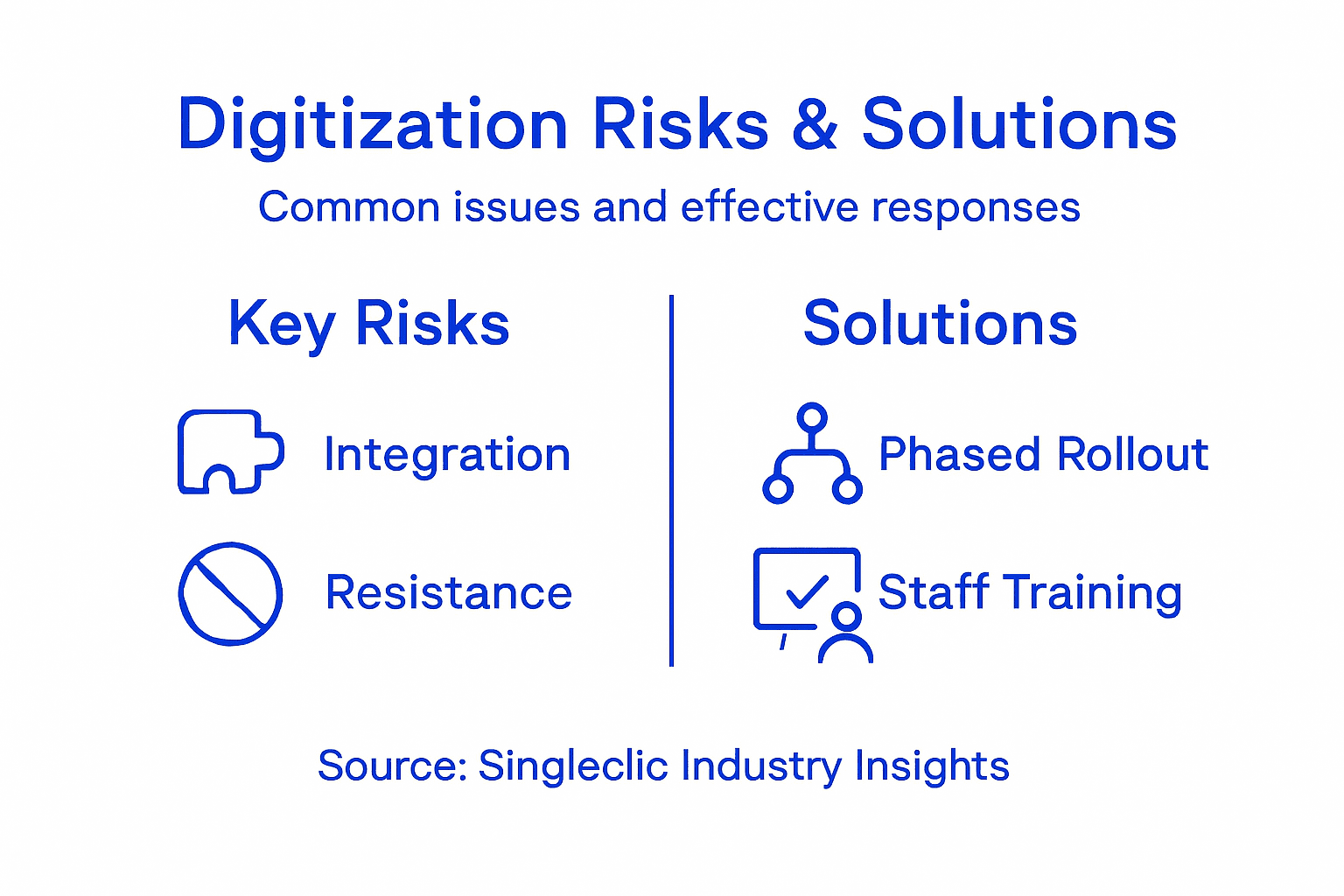
Financial considerations play a pivotal role in successful process digitization. Organizations should anticipate not just initial implementation expenses, but ongoing costs related to technology maintenance, staff training, and continuous system optimization. Low-code platforms like Cortex can help mitigate some of these challenges by providing flexible, cost-effective solutions that reduce dependency on extensive custom development. Careful vendor selection, thorough due diligence, and establishing clear performance metrics are essential strategies for minimizing financial risks and ensuring a return on digital investment.
The following table summarizes major risks and mitigation strategies for process digitization projects:
| Risk Area | Example Challenge | Recommended Mitigation |
|---|---|---|
| Technological | Integration difficulties | Select robust, compatible platforms |
| Financial | Unexpected costs | Plan both initial and maintenance budgets |
| Organizational | Poor change management | Invest in staff training and communication |
| Regulatory | Compliance with local standards | Ensure solutions meet regional laws |
Pro tip: Conduct a comprehensive digital readiness assessment and develop a phased implementation strategy that includes contingency planning and regular performance evaluations.
Unlock Operational Excellence with Intelligent Process Digitization
The challenge of transforming manual, paper-based workflows into agile, digital ecosystems is real for many organizations in Saudi Arabia and UAE. This article highlights key pain points such as workflow standardization, automation of repetitive tasks, and integration of intelligent technologies—all crucial for achieving lasting operational efficiency. If you are seeking to overcome complexities in business process digitization and automation, Singleclic offers tailor-made solutions designed to propel your organization beyond basic digitalization.
Our Arabic-enabled low-code platform Cortex empowers you to design, automate, and optimize complex workflows without writing code. We combine this with world-class ERP/CRM implementation using Odoo and Microsoft Dynamics 365, complemented by advanced Robotic Process Automation and AI capabilities. Whether you operate in construction, healthcare, or government sectors, Singleclic delivers seamless integrations and real-time process improvements to help your teams collaborate smarter and scale rapidly.
Experience the transformation today with Singleclic’s proven approach and regional expertise. Explore how you can start optimizing your workflows now by visiting Singleclic Digital Transformation Solutions. See how our powerful tools and deep industry knowledge can convert your operational challenges into opportunities for growth and efficiency.
Take the first step toward a resilient, efficient future by connecting with Singleclic. Get started on your journey to operational excellence and unlock the true potential of your business today at Singleclic.
Frequently Asked Questions
What is process digitization?
Process digitization is the transformation of analog business operations into digital workflows and systems, enabling better management, tracking, and optimization through technology.
How does process digitization improve operational efficiency?
By converting manual, paper-based processes into digital formats, organizations can streamline workflows, eliminate redundant steps, and leverage intelligent automation, ultimately enhancing productivity and decision-making.
What are the main types of process digitization solutions?
The main types include Business Process Digitization (BPD), which focuses on converting analog processes into digital formats, and Business Process Automation (BPA), which uses technologies like RPA and AI to automate repetitive tasks.
What are common challenges in implementing process digitization?
Common challenges include technological integration issues, unexpected financial costs, misaligned digital strategies, and insufficient change management. Organizations need to address these risks through careful planning and stakeholder communication.