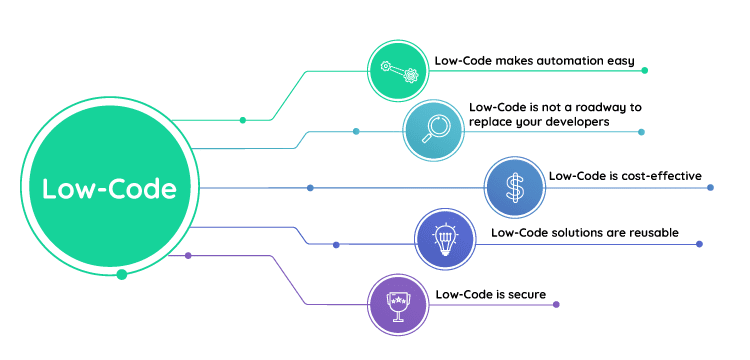
Prototyping is one of the most critical stages in modern software development. Today’s enterprises need faster iteration, reduced development cycles, and the ability to validate ideas quickly. Low-code platforms have emerged as a game-changing solution, enabling teams to build rapid prototypes without the traditional complexities of manual coding.
As a leading IT solutions provider in the MENA region since 2013, Singleclic supports organizations in accelerating innovation using advanced low-code capabilities.
What Is Rapid Prototyping in Software Development?
Rapid prototyping is the process of quickly building functional models of an application to validate ideas, gather user feedback, and refine features before full-scale development.
Unlike traditional development—which often requires long cycles and extensive coding—rapid prototyping focuses on speed, efficiency, and early iteration.
Why Rapid Prototyping Matters for Enterprises
- Saves time and development costs
- Allows early user testing and feedback
- Reduces overall project risk
- Speeds up digital transformation initiatives
- Enables business and IT teams to collaborate more effectively
How Low-Code Platforms Enable Faster Prototyping
Low-code platforms eliminate the heavy lifting of manual programming, empowering teams to assemble application components using visual interfaces, drag-and-drop tools, reusable modules, and pre-built integrations.
1. Visual Development Accelerates UI/UX Creation
Low-code tools allow developers and business teams to design interfaces visually. This significantly reduces the time needed to build and adjust screen layouts, workflows, and user interactions.
2. Reusable Components Reduce Time to Market
Instead of building features from scratch, teams can use prebuilt components for:
- Forms
- Workflows
- Data models
- Automations
- Integrations
This speeds up prototype creation and ensures consistency across applications.
3. Faster Integration with Enterprise Systems
Most low-code platforms support quick integrations with:
- ERP and CRM systems
- Databases
- Cloud services (Azure, AWS, GCP)
- Legacy applications
This allows prototypes to behave like real apps, improving validation accuracy.
4. Built-In Automation Enhances Prototype Functionality
By using process automation, rule engines, and AI features, low-code prototypes can simulate actual operations, giving stakeholders a realistic view of outcomes.
Benefits of Using Low-Code for Rapid Prototyping
Shorter Development Cycles
Low-code platforms minimize manual coding, enabling prototypes to be built in days—not weeks.
Lower Technical Barriers
Even non-technical team members can participate in building and refining prototypes, improving cross-department collaboration.
High Flexibility for Continuous Iteration
Changes can be applied instantly, making it easy to adjust features based on user feedback.
Reduced Project Risks
Rapid prototyping allows early detection of flaws, preventing costly issues during full production.
Cost Efficiency for Enterprises
Faster builds and fewer development hours directly translate into lower operational costs.
Why Enterprises Choose Singleclic for Low-Code Solutions
Since 2013, Singleclic has helped businesses across the Arab world transform their operations with low-code, ERP, CRM, networking, cybersecurity, and cloud-native solutions.
The company provides:
- Custom software development tailored to unique business needs
- Digital transformation consulting
- Secure network infrastructure design and maintenance
- 24/7 technical support
- Cloud hosting and enterprise-grade deployment services
👉 Learn more about our full low-code capabilities here:
Low-Code Development Services
Use Cases of Rapid Prototyping with Low-Code
1. Enterprise Workflow Applications
Organizations can test automated approval cycles, onboarding processes, and task management systems before building final versions.
2. Customer-Facing Web & Mobile Applications
Low-code enables rapid creation of customer portals, service apps, and booking systems for early validation.
3. Operational Dashboards
Teams can prototype dashboards with real-time insights to understand data needs before implementing BI systems.
4. Integration Scenarios
Enterprises can simulate integrations between internal systems without writing complex API code.
The Future of Prototyping with Low-Code
The next evolution of rapid prototyping integrates:
- AI-assisted development
- Predictive analytics
- Automated testing
- Real-time collaboration environments
Low-code tools will continue to empower enterprises to innovate faster, reduce technical debt, and enhance digital transformation efforts.
Conclusion
Rapid prototyping is essential for accelerating innovation—and low-code platforms make it accessible, efficient, and scalable.
With its extensive experience across software development, networking, cybersecurity, and cloud-native services, Singleclic is uniquely positioned to help organizations turn ideas into reality faster than ever before.
For enterprise-grade low-code solutions, visit:
https://singleclic.com/
📞 +2 010 259 99225 — +971 42 475421 — +966 58 1106563