
Agriculture Solutions
Solutions / • Agriculture Solutions
Agriculture Solutions
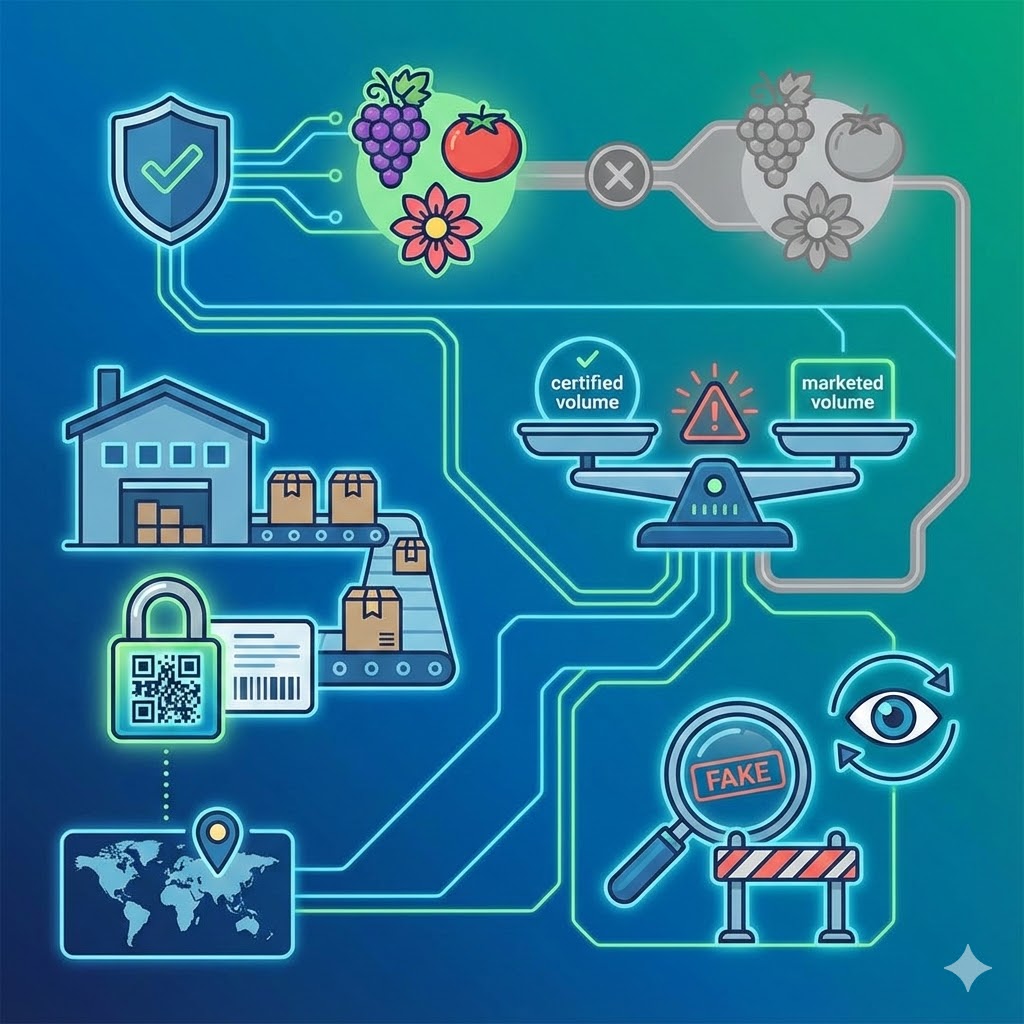
Agriculture today needs more than operational software — it needs traceability, certified origin control, and secure labeling to protect product value and prevent fraud. That’s why we start with ePrime, our solution for Identification + Labeling + Monitoring + Insights across the full journey from production to packing and distribution.
After establishing trusted product data with ePrime, we then use ERP and CRM to manage resources, supply chain, and customer relationships efficiently.
ePrime — Certified Origin & Secure Labeling
ePrime helps organizations control high value-added agricultural products (fruits, vegetables, floriculture, and more) by:
Managing certified crops and differentiating certified vs non-certified production
Registering delivered volumes to packing houses and controlling labeling
Identifying products using secure QR/2D labels for origin and traceability
Monitoring “mass balance” (certified volume vs marketed volume) with real-time alerts
Supporting anti-fraud control and preventing illegal marketing through continuous monitoring
Elevating Agricultural Businesses with CRM, ERP, and BPM Solutions
Agriculture Solutions, a prominent player in the agricultural space, understands the unique challenges that farmers and growers face. They have curated a range of organic gardening and sustainable farming products to aid in the production of high-quality food. In addition to their retail offerings, Agriculture Solutions recognizes that digital transformation is essential to the future of agriculture. Let’s delve into how the convergence of technology and agriculture can shape the future.
CRM Solutions for Enhanced Customer Relations
Customer Relationship Management (CRM) software, such as Microsoft Dynamics 365, plays a pivotal role in modern agriculture. It enables agricultural businesses to not only manage their customer relationships effectively but also gain valuable insights into market demands and consumer preferences. With CRM, farmers and agricultural retailers can tailor their offerings to meet the evolving needs of their clients, fostering stronger relationships and improving overall customer satisfaction.

ERP Systems for Comprehensive Resource Management
Enterprise Resource Planning (ERP) systems, exemplified by IBM’s solutions, offer a holistic approach to managing the diverse aspects of agricultural operations. These systems streamline processes related to inventory management, supply chain optimization, and financial tracking. For agriculture, this translates to improved resource allocation, reduced waste, and enhanced profitability.


BPM Software for Streamlining Workflows
Business Process Management (BPM) software, such as Odoo’s, is invaluable for optimizing workflows in agriculture. Whether it’s crop planning, pest control management, or irrigation scheduling, BPM solutions automate routine tasks, reduce manual errors, and ensure compliance with best practices. This automation frees up valuable time and resources, allowing agricultural businesses to focus on sustainable farming practices and innovation.
Shaping the Future of Agriculture
The future of agriculture lies in sustainability, with smart farming solutions playing a crucial role. As the global population grows, technology becomes essential in optimizing resource management and minimizing environmental impact. By integrating CRM, ERP, and BPM solutions, agricultural businesses can leverage data-driven insights to enhance efficiency and sustainability.
In collaboration with digital transformation consultancy firms, agricultural businesses benefit from advanced software like IBM, Odoo, and Microsoft Dynamics 365. These technologies empower farmers and agricultural retailers to meet consumer demands while maintaining profitability and sustainable practices. Technology is driving innovation, ensuring food security, and promoting environmental stewardship.
FAQs
Agricultural technology, including precision agriculture and farm management software, helps farmers optimize resources, monitor soil moisture levels, and enhance crop health, leading to higher agricultural productivity.
Sustainable agricultural practices, such as regenerative agriculture and climate-smart agriculture, focus on improving soil health, reducing chemical pesticides, and enhancing farm efficiency while minimizing environmental impact.
Digital technologies like artificial intelligence, big data analytics, and computer systems enable farmers to enhance farm operations, optimize farm productivity, and make data-driven decisions for better crop production.
Precision farming leverages digital agriculture tools to monitor soil moisture levels, reduce carbon dioxide emissions, and increase food production efficiency, ultimately boosting productivity.
Farm management software provides innovative solutions to track farm operations, improve digital agriculture adoption, and support growing crops efficiently while ensuring higher agricultural productivity.



