More than 70 percent of modern organizations now prioritize process automation to stay ahead in a competitive global market. As American companies set new standards for operational efficiency, this approach is rapidly gaining momentum in regions like Saudi Arabia and UAE. Understanding these core concepts helps business leaders reduce manual work, minimize costly mistakes, and transform productivity through smart, adaptable technology.
Table of Contents
- Defining Process Automation And Core Concepts
- Major Types Of Process Automation Solutions
- How Process Automation Transforms Operations
- Real-World Applications Across Key Industries
- Risks, Costs, And Common Implementation Pitfalls
Key Takeaways
| Point | Details |
|---|---|
| Process Automation Enhances Efficiency | It leverages technology to streamline workflows, reduce manual errors, and optimize operations. |
| Diverse Automation Solutions Increase Value | Organizations can adopt various strategies like RPA, BPM, and low-code platforms tailored to specific needs. |
| Human Factors are Crucial for Success | A holistic approach is needed that integrates technology with organizational culture and employee skills. |
| Strategic Planning is Essential | Careful consideration of risks, costs, and potential operational disruptions is vital during implementation. |
Defining Process Automation and Core Concepts
Process automation represents a strategic approach to transforming organizational workflows by leveraging technology to execute repeatable tasks and business processes with minimal human intervention. At its core, process automation aims to streamline operations, reduce manual errors, and enhance overall business efficiency.
The fundamental components of process automation encompass several critical technological elements. Process control systems like PLCs and distributed control systems enable precise measurement and management of industrial processes, covering critical parameters such as temperature, pressure, flow rates, and system composition. These technological frameworks allow businesses to monitor and adjust operational parameters in real time, creating more responsive and adaptive organizational structures.
Businesses across Saudi Arabia and UAE are increasingly recognizing process automation’s transformative potential. The key automation strategies typically involve:
- Identifying repetitive, rule-based tasks suitable for automation
- Implementing workflow management systems
- Integrating intelligent software that can learn and adapt
- Developing custom solutions using low-code platforms like Cortex
- Establishing robust monitoring and optimization mechanisms
While technological capabilities continue evolving, successful process automation requires more than just implementing new tools. It demands a strategic approach that aligns technological solutions with specific business objectives, ensuring that automation genuinely enhances operational efficiency rather than merely replacing existing processes. Organizations must carefully map their current workflows, identify optimization opportunities, and design automation strategies that complement their unique operational dynamics.
Major Types of Process Automation Solutions
Process automation encompasses diverse technological approaches designed to enhance organizational efficiency and reduce manual intervention. Organizations can leverage multiple automation strategies, each targeting specific operational challenges and delivering unique performance improvements across different business contexts.
Robotic Process Automation (RPA) represents a fundamental automation approach, focusing on software robots that mimic human interactions with digital systems. Recent comparative studies of RPA and large language model agents reveal fascinating insights into emerging automation paradigms, highlighting the evolving landscape of enterprise workflow optimization. RPA solutions excel at executing repetitive, rule-based tasks across various platforms like enterprise resource planning systems, customer relationship management software, and financial transaction processing.
The primary categories of process automation solutions include:
- Robotic Process Automation (RPA): Rule-based software robots automating repetitive digital tasks
- Business Process Management (BPM): Comprehensive approach to designing, executing, and optimizing complex business workflows
- Intelligent Process Automation (IPA): Advanced solutions combining RPA with artificial intelligence and machine learning capabilities
- Low-Code Automation Platforms: Drag-and-drop tools enabling rapid development of custom automation workflows
- Workflow Automation Tools: Software solutions designed to streamline sequential tasks and approvals
Companies in Saudi Arabia and UAE are increasingly adopting these automation technologies to drive operational excellence. The systematic literature review of RPA technologies underscores the importance of selecting appropriate automation strategies tailored to specific organizational needs. Success requires not just implementing tools, but understanding their nuanced capabilities and aligning them strategically with business objectives to create meaningful productivity improvements.
How Process Automation Transforms Operations
Process automation fundamentally reshapes organizational operations by systematically reducing manual interventions and optimizing workflow efficiency. By integrating advanced technological solutions, businesses can transform complex, time-consuming processes into streamlined, intelligent systems that dramatically improve productivity and strategic decision-making.

Research on human-automation interaction reveals critical insights into technological integration, highlighting the complex engagement between technology, process participants, managers, and developers. This nuanced understanding demonstrates that successful automation goes beyond mere technological implementation and requires a holistic approach that considers human factors, organizational culture, and strategic objectives.
The transformative impact of process automation manifests through several key operational dimensions:
- Operational Efficiency: Reducing manual processing time and minimizing human errors
- Cost Optimization: Decreasing labor expenses and improving resource allocation
- Scalability: Enabling organizations to handle increased workloads without proportional staff expansion
- Data Accuracy: Ensuring consistent and precise information processing
- Strategic Focus: Allowing employees to concentrate on high-value, creative tasks
Insights from automation research underscore the potential unintended consequences of technological interventions, emphasizing the importance of carefully designed implementation strategies. In Saudi Arabia and UAE, forward-thinking organizations are leveraging process automation through platforms like Cortex to drive digital transformation, recognizing that successful automation requires a balanced approach that enhances human capabilities rather than simply replacing them. The ultimate goal remains creating intelligent, adaptive systems that empower workforce productivity and organizational agility.
Real-World Applications Across Key Industries
Process automation has emerged as a transformative force driving efficiency and innovation across diverse industry sectors, enabling organizations to reimagine traditional operational frameworks and unlock unprecedented productivity potential. From manufacturing and healthcare to finance and government services, automation technologies are fundamentally reshaping how businesses approach complex workflow challenges.
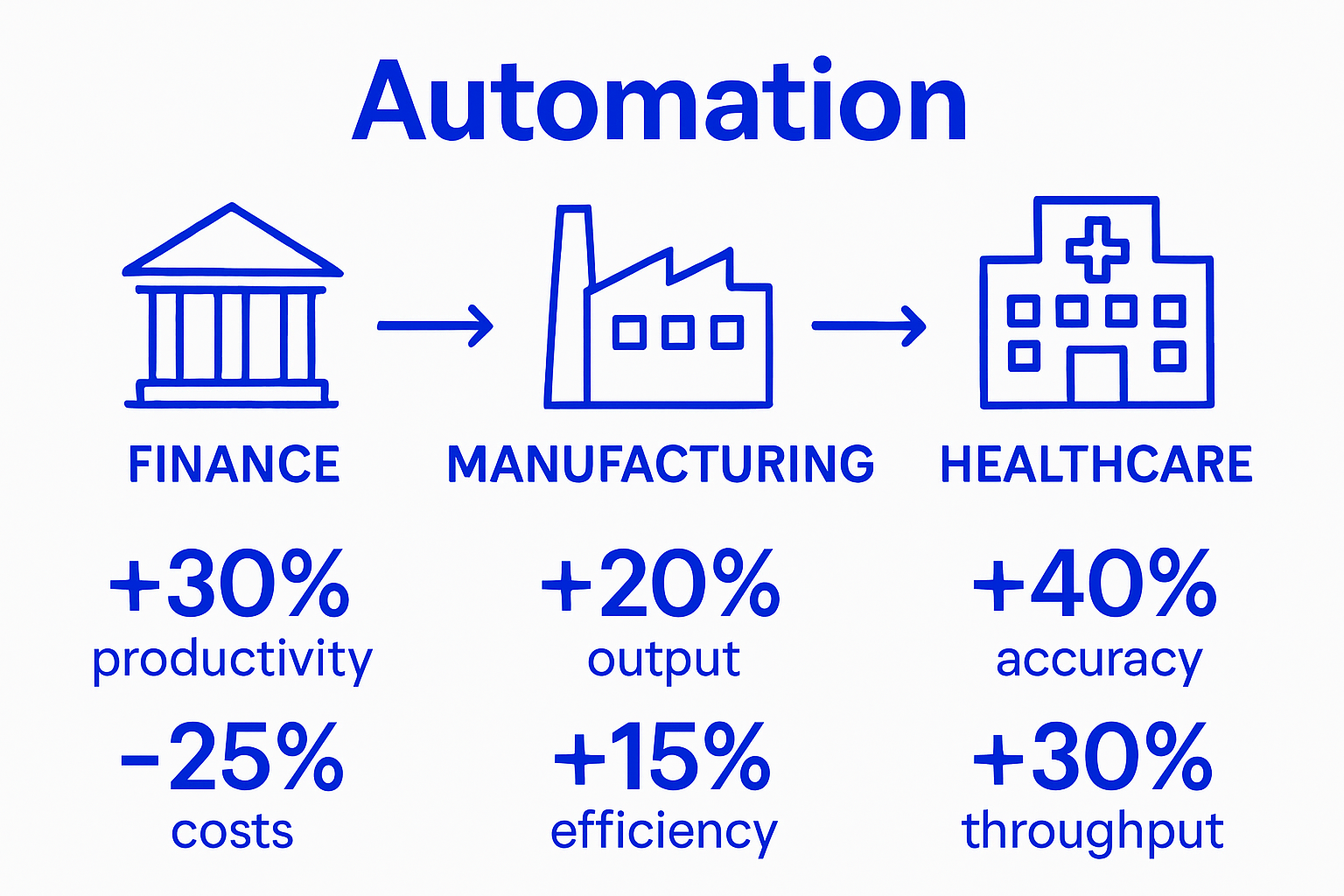
Autonomation principles demonstrate the sophisticated integration of human expertise with technological capabilities, particularly evident in manufacturing environments where intelligent systems can detect production anomalies and automatically halt processes for immediate human intervention. This approach ensures quality control while maintaining the critical balance between technological precision and human judgment.
Key industry applications of process automation include:
- Manufacturing: Implementing smart quality control systems and predictive maintenance protocols
- Healthcare: Streamlining patient record management and administrative workflows
- Finance: Automating transaction processing, compliance monitoring, and risk assessment
- Government: Enhancing citizen service delivery and administrative efficiency
- Real Estate: Optimizing property management and transaction processing systems
Automata-based programming techniques offer sophisticated approaches to developing complex control systems, enabling organizations in Saudi Arabia and UAE to design reliable, adaptable automation solutions. By leveraging advanced platforms like Cortex, businesses can create intelligent workflows that not only reduce operational friction but also provide strategic insights, transforming process automation from a mere technological intervention into a powerful mechanism for continuous organizational improvement and competitive advantage.
Risks, Costs, and Common Implementation Pitfalls
Process automation demands strategic planning and comprehensive risk assessment to ensure successful technological integration. Organizations must navigate complex challenges that extend beyond technological implementation, considering financial investments, operational disruptions, and potential workforce implications that can significantly impact overall digital transformation efforts.
Research on hybrid automation approaches reveals critical insights into managing human-technological transitions, emphasizing the importance of designing solutions that adapt to existing business operations while mitigating potential negative social impacts. This nuanced approach requires careful consideration of workforce dynamics and strategic change management to minimize resistance and maximize technological adoption.
Potential risks and implementation challenges include:
- Financial Risks: High initial investment costs and uncertain return on investment
- Technical Complexity: Integration challenges with legacy systems
- Workforce Displacement: Potential job role transformations and skill adaptation requirements
- Security Vulnerabilities: Increased cybersecurity risks with expanded digital infrastructure
- Operational Disruption: Temporary productivity losses during transition periods
Automation implementation research highlights the potential unintended consequences of technological interventions, underscoring the critical need for comprehensive operator training and skill maintenance. In Saudi Arabia and UAE, forward-thinking organizations like those leveraging Cortex are developing strategic approaches that balance technological advancement with human expertise, recognizing that successful automation requires more than technological implementation—it demands a holistic understanding of organizational ecosystem dynamics.
Unlock True Business Efficiency with Singleclic’s Process Automation Solutions
The journey to transforming your organization with process automation requires more than just technology. As the article highlights, challenges such as technical complexity, workforce adaptation, and seamless integration with legacy systems are common hurdles. Singleclic understands these pain points and delivers tailored solutions designed to align with your unique business goals, helping you reduce manual errors, optimize costs, and scale operations efficiently across Saudi Arabia, UAE, and Egypt.
Our expertise spans Business Process Automation with top platforms like IBM BAW and BonitaSoft, Robotic Process Automation using UiPath, and cutting-edge low-code development with Cortex—our Arabic-enabled, on-premise platform built specifically for MENA enterprises. Cortex enables real-time workflow optimization and rapid process evolution, empowering your organization to move beyond digitalization into true optimization.
Elevate your operations now. Explore how Singleclic’s deep industry knowledge and world-class technology can help you master process automation and drive sustainable growth. Visit Singleclic to begin your transformation and experience the future of streamlined efficiency.
Frequently Asked Questions
What is process automation?
Process automation is a strategic approach that uses technology to perform repeatable tasks and business processes with minimal human intervention, aiming to streamline operations and improve efficiency.
What are the key components of process automation solutions?
Key components include robotic process automation (RPA), business process management (BPM), intelligent process automation (IPA), low-code automation platforms, and workflow automation tools, each targeting specific operational challenges.
How can process automation transform business operations?
Process automation enhances operational efficiency, reduces costs, improves data accuracy, provides scalability, and allows employees to focus on high-value tasks by optimizing traditional workflows and minimizing manual interventions.
What are some common risks associated with implementing process automation?
Common risks include financial concerns due to high initial costs, integration challenges with legacy systems, potential workforce displacement, cybersecurity vulnerabilities, and temporary productivity losses during the transition phase.