Bold decisions about digital talent can either propel or stall your enterprise transformation in Saudi Arabia and the UAE. For healthcare and banking executives, the stakes are high as evolving roles now demand professionals skilled in software development, cybersecurity, and user experience design who collaborate across departments. Understanding how digital talent drives transformation and innovation is crucial to building a resilient organization ready for regulatory changes and rapid technological advances.
Table of Contents
- Defining Digital Talent For Modern Enterprises
- Types Of Digital Talent Roles And Skills
- How Digital Talent Enables Transformation
- Requirements And Challenges In Building Digital Talent
- Risks, Costs, And Industry-Specific Implications
Key Takeaways
| Point | Details |
|---|---|
| Understanding Digital Talent | Digital talent encompasses a blend of technical skills, business acumen, and adaptability to drive organizational change. It involves roles across various functions, emphasizing teamwork and collaboration. |
| Diverse Roles and Skills Required | Organizations need a wide range of digital talent, including software developers, data scientists, and UX designers, to address their industry’s unique challenges. Hiring solely for technical expertise is insufficient for achieving transformation. |
| Talent Scarcity Challenge | The demand for skilled digital professionals significantly outstrips supply, leading to fierce competition and rising salaries. A strategic approach to talent acquisition and development is essential to overcome this barrier. |
| Implications of Talent Gaps | Ignoring digital talent deficiencies can result in operational inefficiencies and cybersecurity vulnerabilities, ultimately jeopardizing competitive advantage. Investing in the right talent is crucial for successful digital transformation. |
Defining Digital Talent for Modern Enterprises
Digital talent represents far more than just IT specialists writing code. Today’s definition extends to professionals equipped with the right blend of technical skills, business acumen, and adaptability to drive genuine organizational change. For your enterprise in Saudi Arabia or the UAE, this means building teams that understand both your core operations and the digital tools reshaping them.
At its core, digital talent encompasses professionals with expertise in software development, cybersecurity, and user experience design who work across functional boundaries. These professionals don’t operate in isolation. They collaborate with finance teams, healthcare administrators, banking executives, and operations leaders to translate business challenges into digital solutions.
But defining digital talent also requires understanding the organizational context. The OECD Framework identifies digital talent as a workforce equipped to support digital transformation through the right skills, environment, and organizational culture. This means technical capabilities alone won’t succeed without the right environment to nurture them.
For banking and healthcare organizations in your region, digital talent includes professionals who understand compliance frameworks, patient privacy regulations, and financial security protocols alongside their technical abilities. They’re change agents who bridge the gap between legacy systems and modern platforms like low-code solutions that enable faster innovation without requiring deep coding expertise.
The evolving nature of digital roles demands flexibility and innovation. Your teams need individuals who can adapt quickly as technology shifts, mentor others in new approaches, and challenge conventional thinking. In the context of your organization’s digital transformation strategy, this means recruiting and developing talent that’s both technically proficient and strategically minded.
Pro tip: When evaluating digital talent internally or externally, prioritize candidates who demonstrate both technical skills and proven ability to communicate complex digital concepts to non-technical stakeholders in your organization.
Types of Digital Talent Roles and Skills
Your organization needs multiple types of digital talent working in concert. This isn’t about hiring one skilled person and expecting transformation. Banking and healthcare organizations in Saudi Arabia and the UAE require diverse expertise spread across teams that understand both technology and your industry’s unique challenges.
Start with the technical specialists. Software developers, data analysts, and cybersecurity experts form the backbone of digital operations. These roles require deep programming knowledge, systems architecture understanding, and the ability to translate business requirements into functional systems. But technical skills alone don’t cut it anymore.
Data scientists have become indispensable. They extract insights from your banking transactions, patient records, and operational metrics that drive smarter decisions. Problem-solving capabilities matter more than any single programming language. Your teams need individuals who can ask the right questions about your data and communicate findings to executives who don’t speak code.
AI specialists and cybersecurity professionals represent emerging talent categories your organization can’t ignore. AI expertise helps automate complex workflows and optimize operations. Cybersecurity talent protects sensitive banking and healthcare information that regulators require you to safeguard. Both roles command premium compensation because demand significantly exceeds supply globally.
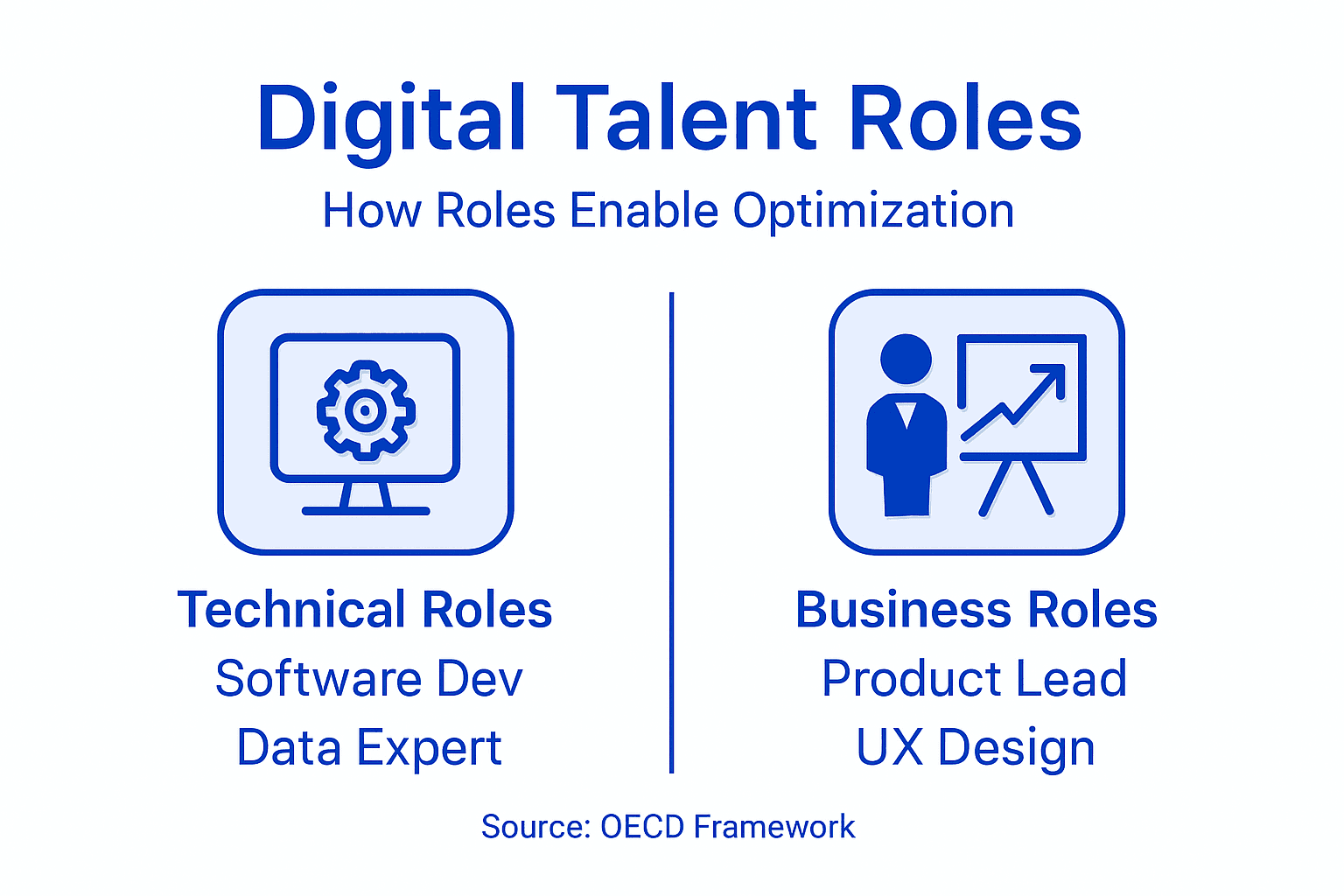
Don’t overlook the business-facing roles. Product managers bridge technical teams and organizational strategy. UX designers ensure your digital solutions actually serve users. Process architects working with platforms like low-code solutions map your current workflows and reimagine them for efficiency. These professionals need technical literacy combined with business acumen.
Your organization also needs digital champions within existing departments. These are finance professionals understanding automation, healthcare administrators grasping analytics platforms, and operations leaders recognizing where technology solves real problems. Build your internal talent by developing foundational digital literacy across all staff.
Here’s a summary of digital talent roles and their contributions in banking and healthcare:
| Role Type | Key Contribution | Banking Example | Healthcare Example |
|---|---|---|---|
| Software Developer | Builds custom systems | Online banking apps | Electronic health records |
| Data Scientist | Extracts strategic insights | Credit risk analytics | Patient outcome analysis |
| Cybersecurity Expert | Secures sensitive data | Fraud prevention tools | Patient privacy protection |
| UX Designer | Improves user experience | Mobile banking design | Patient portal usability |
Pro tip: Create a skills matrix mapping current talent against your transformation roadmap, then identify critical gaps—this focused approach beats randomly hiring digital generalists who may not fit your specific industry needs.
How Digital Talent Enables Transformation
Digital talent isn’t a luxury. It’s the engine driving actual business transformation. Without skilled people, your most expensive technology investments sit idle. The right team applies innovation systematically across your organization, turning strategy into measurable results.
Your digital talent drives process optimization directly. Skilled professionals apply technologies like AI, cloud computing, and data analytics to optimize processes, extract hidden inefficiencies, and eliminate bottlenecks strangling your operations. In banking, this means faster loan approvals. In healthcare, it means reduced patient wait times. Data engineers working with your systems identify where your workflows leak money and redesign them for speed.
They also reshape how you serve customers. Your digital talent understands user pain points your executives may never see directly. They design interfaces, workflows, and experiences that make customers want to use your services repeatedly. This isn’t theoretical. Better user experience directly correlates with retention and revenue growth across both banking and healthcare sectors.
Digital workforce capabilities empower enterprises to realize effective digital transformation by fostering agile organizational cultures. This means your team adapts when market conditions shift. They implement changes faster. They embrace platforms like low-code solutions that let business users build workflows without bottlenecking IT. This cultural shift from command-and-control to collaborative agility matters as much as any technology.
Your talent also builds sustainable competitive advantage. Digital experts don’t just solve today’s problems. They anticipate tomorrow’s challenges and position your organization ahead of competitors. In Saudi Arabia and the UAE’s rapidly evolving markets, this forward-thinking capability separates market leaders from followers.
But here’s what many executives miss: transformation requires talent at every level. Your board needs people who understand digital strategy. Your operations teams need professionals who can configure and optimize new systems. Your frontline staff need enough digital literacy to embrace new ways of working. Building this multi-level capability takes intentional effort and investment.
Pro tip: Identify your transformation’s critical success factors first, then recruit talent specifically for those priorities rather than filling generic “digital” positions that may not address your actual bottlenecks.
Requirements and Challenges in Building Digital Talent
Building digital talent doesn’t happen by accident. Your organization faces real constraints that require deliberate strategy and sustained investment. Understanding these barriers helps you navigate them effectively instead of being blindsided halfway through transformation.
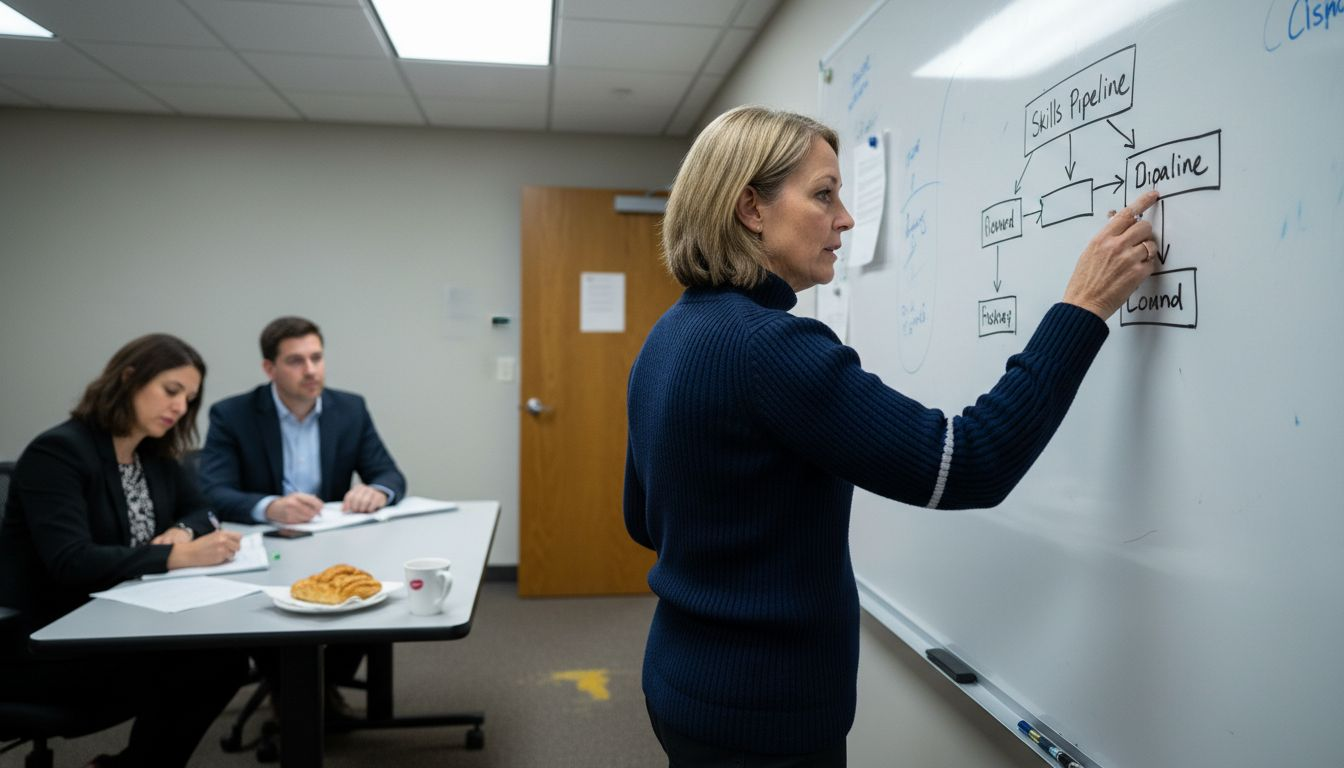
The first challenge hits immediately: talent scarcity. Demand for skilled digital professionals vastly outpaces supply globally. Banking and healthcare organizations across Saudi Arabia and the UAE compete fiercely for the same experienced developers, data scientists, and architects. Premium salaries are only the beginning. You’re competing against tech giants offering stock options, remote flexibility, and prestige that traditional enterprises struggle to match.
Rapid skill obsolescence and gaps in education create ongoing challenges in building sustainable talent pipelines. The skills your team needs today won’t be the same skills required in two years. AI expertise matters now. Tomorrow, something else will. This constant evolution demands continuous learning cultures where your people invest time in reskilling themselves.
There’s also the skills mismatch problem. You hire talented people, but their expertise doesn’t align perfectly with your specific needs. A data scientist with strong academic credentials might lack practical experience in banking regulations or healthcare compliance. Organizations struggle with slow adaptation of workforce planning, meaning your talent acquisition strategies lag behind your actual transformation requirements.
Diversity represents another challenge many executives underestimate. Building truly diverse digital teams requires intentional effort and inclusive policies. Women, minorities, and underrepresented groups face barriers entering and advancing in technology roles. Your organization benefits from diverse perspectives solving problems, yet attracting and retaining this talent demands more than posting job openings.
Internal development requires significant infrastructure. Training programs, mentorship systems, and career pathways don’t materialize overnight. Your organization needs committed leadership, budget allocation, and patience as people develop expertise. Many executives expect instant results from reskilling initiatives that actually take months or years to deliver value.
Don’t overlook cross-sector collaboration requirements for building sustainable talent ecosystems. Universities, government programs, private employers, and industry associations all play roles. Your individual hiring efforts matter less than participating in broader workforce development initiatives that strengthen the entire regional talent pool.
Below is a comparison of common challenges in building digital talent and strategies to address each:
| Challenge | Business Impact | Effective Strategy |
|---|---|---|
| Talent Scarcity | Limited innovation, high costs | Partner with universities |
| Skills Mismatch | Slow project delivery, compliance risks | Align training with industry needs |
| Rapid Skill Obsolescence | Outdated systems, weak competitiveness | Promote continuous learning |
| Lack of Diversity | Narrow problem-solving, missed ideas | Implement inclusive hiring policies |
Pro tip: Start building internal talent development programs now rather than waiting until critical skill gaps paralyze your transformation efforts.
Risks, Costs, and Industry-Specific Implications
Ignoring digital talent gaps doesn’t make them disappear. The costs compound silently until they explode into operational crises. Your organization faces real financial and strategic consequences if you underinvest in building the right team.
Cybersecurity vulnerability tops the risk list for banking and healthcare. Inadequate digital talent means weaker security protocols, slower threat detection, and exposure to breaches that regulators penalize severely. A single data breach costs far more than salaries for competent security professionals. Your customers’ trust evaporates instantly when their financial data or health information leaks. In Saudi Arabia and the UAE, regulatory fines for security failures are substantial and reputational damage lingers for years.
Digital talent deficits create operational inefficiencies and heightened cybersecurity vulnerabilities that undermine transformation efforts. Your legacy systems remain in place longer. Your digital initiatives move slower. Competitors with stronger talent benches outpace you in market responsiveness. What seemed like a budget savings becomes competitive disadvantage.
For healthcare specifically, talent gaps mean delayed patient care improvements. Electronic health records don’t get optimized properly. Diagnostic systems don’t deliver full value. Your organization provides adequate care but misses opportunities to deliver exceptional care that differentiates you from competitors. Patient outcomes plateau when they could improve dramatically.
For banking, the stakes are equally high. Inadequate talent means slower fintech adoption, weaker AI-driven fraud detection, and customer experience lagging digital-native competitors. Loan processing takes longer. Mobile banking features lag peers. Your cost of operations stays elevated while others automate intelligently. Over time, you lose market share to organizations with stronger digital capabilities.
Training and retention costs accelerate when you can’t attract top talent initially. You end up hiring less experienced people and investing heavily in their development, only to lose them to competitors offering higher compensation. This creates exhausting cycles where your team burns out from overwork and tight deadlines.
The broader implication is uneven adoption across your organization. Some departments embrace new systems enthusiastically. Others resist or struggle with implementation. This fragmentation prevents you from achieving the unified, optimized operations that true digital transformation promises.
Pro tip: Calculate the true cost of your current digital talent gaps by quantifying lost revenue from delayed initiatives, security incidents, and competitive disadvantages rather than just recruiting expenses.
Unlock the Power of True Enterprise Optimization with Singleclic
The article highlights the pressing challenge modern enterprises face: finding and building the right digital talent that bridges technical skills with business acumen to fuel genuine transformation. If your organization in Saudi Arabia, the UAE, or Egypt struggles with talent scarcity, skills mismatches, or the need for agile, cross-functional teams that can harness low-code platforms and AI innovations, you are not alone. Your digital transformation journey demands partners who understand how to translate these challenges into sustainable solutions.
At Singleclic, we specialize in empowering businesses to move beyond digitalization and achieve true optimization. Our expertise in Business Process Automation, AI-driven solutions, and ERP & CRM implementation helps build and extend your digital talent capabilities by enabling teams to automate, innovate, and adapt faster. Whether it is leveraging our Arabic-enabled, on-premise low-code platform Cortex or implementing enterprise AI that secures sensitive data for banking and healthcare sectors, Singleclic delivers the tools and expertise that drive measurable growth and operational efficiency.
Transform your organization today by partnering with a leader who understands your industry and the digital talent you need to win.
Explore how Singleclic can solve your digital talent challenges and accelerate your digital transformation at Singleclic. Take the first step toward building resilient teams that innovate continuously and optimize your enterprise beyond what technology alone can achieve.
Frequently Asked Questions
What is digital talent?
Digital talent includes professionals with a combination of technical skills, business knowledge, and adaptability who drive organizational change through digital transformation.
Why is digital talent important for businesses?
Digital talent is crucial as it drives process optimization, enhances customer service, and fosters a culture of innovation, ensuring organizations can respond quickly to market changes.
What types of roles are considered part of digital talent?
Digital talent roles include software developers, data scientists, cybersecurity experts, UX designers, and product managers, each contributing uniquely to business operations and strategy.
How can organizations effectively build their digital talent pool?
Organizations can build a robust digital talent pool by partnering with educational institutions, implementing continuous learning cultures, fostering diversity, and actively developing internal talent through training and mentorship programs.